March 15 Outside Budapest: Where the Real Revolution Party Happens (2026)
Skip the capital’s chaos. Experience Hungarian independence like a local—with better views, actual elbow room, and wine.
There’s a universal truth about national holidays: capital cities get all the glory while smaller towns throw the parties you actually want to attend. March 15 in Hungary is no exception. While 50,000 people sardine themselves at Kossuth Square, places like Eger, Szentendre, and Debrecen deliver the same patriotic feels—minus the crowd anxiety and with way better food options.
Quick Facts
- What: March 15 National Day—Hungary’s 1848 Revolution commemoration
- When: Sunday, March 15, 2026 (most events 10:00-18:00)
- Where: Szentendre, Eger, Győr, Esztergom, Veszprém, Kecskemét, Szeged, Keszthely, Debrecen, Pécs, Tokaj, Békéscsaba
- Cost: Most ceremonies are free. Museums? That’s where they get you (but not by much).
- Getting there: 30 min to 3 hours from Budapest by train
- Weather reality check: 8-14°C. Pack layers. Yes, even if the app says otherwise.
What’s March 15 Actually About?
In 1848, a bunch of Hungarian poets, lawyers, and dreamers decided Habsburg rule was trash. They were right. On March 15th, led by poet Sándor Petőfi—basically Hungary’s Hamilton but with better verse—they sparked a peaceful revolution demanding freedom of the press and an independent government.
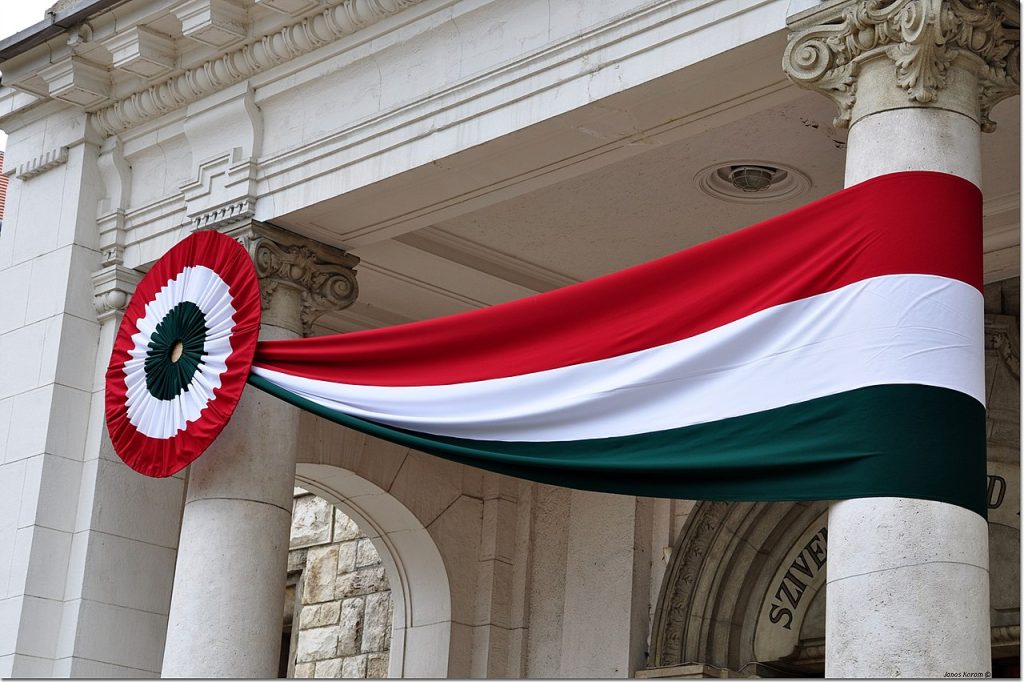
Petőfi’s poem “Nemzeti Dal” (National Song) became the revolution’s anthem, starting with “Rise up, Magyar, the homeland calls!” Spoiler: the Austrians and Russians eventually crushed the rebellion, but the spirit stuck. Now Hungarians celebrate by wearing the nemzeti kokárda (a red-white-green rosette), attending ceremonies, and feeling deeply patriotic about a revolution that technically failed but spiritually won.
Why does this matter for your trip? Because experiencing March 15 is like getting an emotional passport stamp into Hungarian identity. The ceremonies are solemn, the atmosphere is electric, and you’ll understand why Hungarians get misty-eyed about events from 178 years ago.
Why Ditch Budapest for the Countryside?
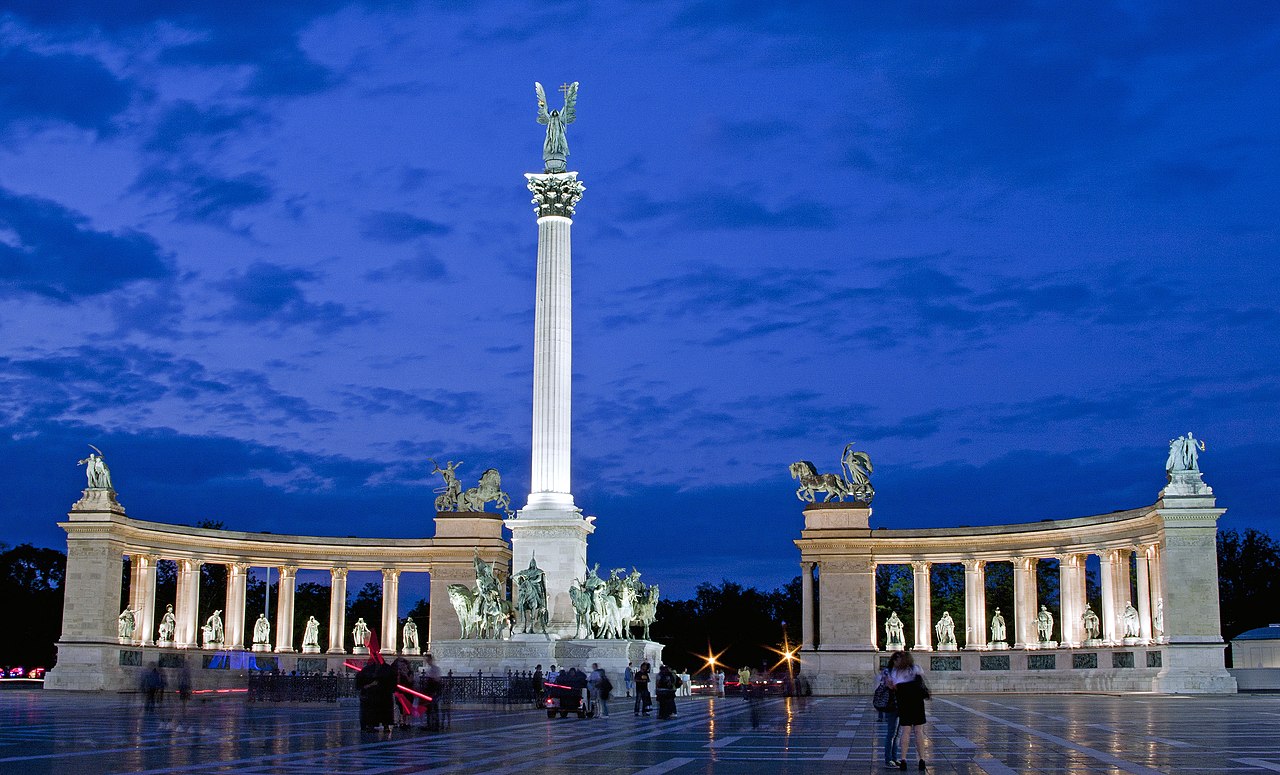
Budapest’s March 15 celebrations are impressive. They’re also exhausting. Tens of thousands of people, packed metro cars, and you’ll spend more time looking at the back of someone’s head than at any actual ceremony.
Here’s what countryside celebrations offer:
- Actually see the ceremonies. In smaller towns, you’re meters from the action, not straining behind a sea of smartphones.
- Real community vibes. Locals notice you, appreciate your interest, and might invite you for pálinka after.
- Regional character. Each town adds its own flavor—Eger brings wine culture, Debrecen brings Calvinist gravitas, Tokaj brings… well, more wine.
- Zero surge pricing. Restaurants don’t triple their prices for the holiday.
- Photography that doesn’t include 47 strangers. Your Instagram will thank you.
Plus, you can actually combine the commemoration with actual exploration. Revolutionary history + castle visit + thermal bath + wine tasting = a significantly better Sunday than standing in Pest crowds.
Szentendre Skanzen: The Living History Jackpot
If you want full 1848 immersion without a time machine, this is it. The Hungarian Open-Air Museum transforms into a revolutionary-era fantasy during the “Huszáros Hétvége” (Hussar Weekend).
Picture this: 60 hectares of relocated historic villages, everyone in period costume, hussar cavalry demonstrations, and a performance of Petőfi’s epic poem “János Vitéz” with actual theatrical magic. Kids love it. Adults love it. Your camera definitely loves it.
The Skanzen isn’t just buildings—it’s a living museum where blacksmiths actually smithe, weavers actually weave, and the smell of kürtőskalács (chimney cake) follows you everywhere. Staff and visitors dress up, creating an atmosphere that’s somewhere between educational and theatrical.
Pro tip: Arrive when they open. By noon, everyone in Budapest has had the same “escape the capital” idea.
Practical Details
Hungarian Open-Air Museum (Skanzen) – 📍 Sztaravodai út 75, 2000 Szentendre – 🎫 4,200 HUF (~€10.50) adults | 2,100 HUF (~€5.25) students/seniors | Free under 6 – 🕐 Tue-Sun 9:00-17:00 (April-October) | Closed Mondays – 🔗 skanzen.hu – 📞 +36 26 502 501 – 🚇 Getting there: HÉV from Batthyány tér to Szentendre (40 min), then bus 878 or 879 to the Skanzen (10 min). Or drive via M0 motorway—free parking available.
Note: March falls outside regular high season, but the Hussar Weekend is a special event with full access. Check the website closer to the date for exact 2026 March 15 programming.
Combine with Szentendre Town
After the Skanzen, the town itself is worth an evening wander. Baroque squares, Serbian Orthodox churches, art galleries, and restaurants serving both Hungarian and Serbian specialties. It’s basically an artist colony that kept its charm despite knowing tourists would come.
Eger: Where History Meets Bull’s Blood
Eger is the overachiever of Hungarian towns. Gorgeous baroque architecture? Check. A castle that famously held off the Ottoman Empire? Check. A valley full of wine cellars? Oh, very check.
March 15 ceremonies center on Petőfi tér, where wreath-laying, speeches, and poetry recitals happen with the town’s baroque buildings as backdrop. The atmosphere combines historical gravitas with small-town warmth.
But here’s why Eger deserves a full day or overnight: after the ceremonies wrap (usually by early afternoon), you’ve got an entire historic town to explore, plus thermal baths to relax in, plus the Szépasszony-völgy (Valley of Beautiful Women) waiting with dozens of wine cellars carved into hillsides.
The valley’s name isn’t just marketing—it’s legitimately romantic, especially when you’re three glasses of Egri Bikavér (Bull’s Blood) deep and watching the sunset from a cellar terrace.
What to See in Eger
Eger Castle – 📍 Vár köz 1, 3300 Eger – 🎫 2,500-3,500 HUF (~€6-9) adults | Reduced rates for students/seniors – 🕐 April-Oct: Daily 9:00-18:00 | Nov-March: 10:00-16:00 – 🔗 egrivar.hu/en – 📞 +36 36 312 744 – ⏱️ Plan 2-3 hours minimum. The casemates (underground tunnels) are especially cool—literally and figuratively.
Szépasszony-völgy (Valley of Beautiful Women) – 📍 2km southwest of town center (15-min walk or cheap taxi) – 🎫 Free entry to the valley; wine tastings typically 500-2,000 HUF (~€1.25-5) per wine – 🕐 Most cellars open 12:00-22:00, but hours vary by season and weather – 🔗 szepasszonyvolgy.info.hu – 🍷 Don’t leave without trying: Egri Bikavér (red blend), Egri Csillag (white blend)
Thermal Bath Options: Turkish-era baths perfect for post-ceremony relaxation. Multiple options in town with varying prices (typically 2,500-5,000 HUF).
Getting to Eger
- 🚂 Train: Direct from Budapest Keleti, ~2 hours, ~4,000 HUF one-way
- 🚗 Car: M3 motorway east, then Route 3. ~90 minutes.
Győr: Baroque Beauty With Serious Food Game
Győr doesn’t brag, but it probably should. This city at the confluence of three rivers has one of Hungary’s best-preserved baroque centers, a surprisingly vibrant cultural scene, and restaurants that put many Budapest spots to shame.
March 15 brings a formal díszközgyűlés (commemorative assembly) followed by a procession through the old town. It’s dignified, community-focused, and ends with families wandering the stunning streets wearing their cockades.
The Széchenyi tér main square is genuinely gorgeous—one of Hungary’s finest urban spaces, with baroque facades, outdoor cafés, and the Column of the Virgin Mary anchoring everything.
Practical Details
Széchenyi tér (Main Square) – Free to wander, ceremonies typically here
Bishop’s Castle – 📍 Káptalaндomb 1, 9021 Győr – 🎫 1,500-2,500 HUF (~€4-6) – 🕐 Varies by season; check locally – Great views of the Rába River
Rába Quelle Thermal Bath – 📍 Fürdő tér 1, 9025 Győr – 🎫 ~3,500-5,500 HUF (~€9-14) depending on duration – 🕐 Daily 9:00-21:00 – Modern spa complex with indoor/outdoor pools
Getting to Győr
- 🚂 Train: Direct from Budapest Keleti, ~1h 20min, ~3,500 HUF one-way
- 🚗 Car: M1 motorway west, ~120 km
Dining tip: Try La Mareda for upscale Hungarian-Mediterranean fusion, or Komédiás for traditional fare in a historic building.
Esztergom: Hungary’s Spiritual HQ
The basilica is so big it’s visible from space. Okay, from neighboring Slovakia. Esztergom was Hungary’s first capital, birthplace of Saint Stephen, and remains the seat of Hungarian Catholicism. The massive basilica—Hungary’s largest church and third-largest in Europe—dominates everything.
March 15 ceremonies at the Vármegyeháza (County Hall) carry extra gravitas here. There’s something profound about celebrating revolutionary ideals in a place that represents Hungary’s oldest traditions.
Basilica Visitor Info
Esztergom Basilica – 📍 Szent István tér 1, 2500 Esztergom – 🎫 Church entry: Free | Combined ticket (dome + treasury): 4,200 HUF (~€10.50) | Dome only: 2,800 HUF (~€7) | Treasury only: 1,900 HUF (~€4.75) – 🕐 Daily 9:00-18:00 (summer) | Reduced hours in winter – 🔗 bazilika-esztergom.hu – 📞 +36 33 402 354 – 📧 info@bazilika-esztergom.hu
⚠️ Important 2026 note: The Basilica may be closed January 12 – February 27, 2026 for maintenance. Should reopen well before March 15, but confirm before visiting.
Don’t miss: The dome climb. Yes, it’s steep. Yes, it’s worth it for Danube Bend views that extend into Slovakia.
Getting to Esztergom
- 🚌 Bus: From Budapest Árpád híd station, ~1h 15min, ~1,800 HUF
- 🚗 Car: Route 10 along the Danube, ~1 hour. Scenic drive through the Danube Bend.
Combine with: Walk across the Mária Valéria Bridge to Štúrovo, Slovakia. Quick border crossing, lunch in another country, excellent bragging rights.
Debrecen: Where the Independence Was Declared
This isn’t just any March 15 location—this is THE location. The Hungarian Declaration of Independence was proclaimed right here on April 14, 1849, in the Reformed Great Church. Debrecen was briefly Hungary’s capital during the revolution.
The city’s Calvinist heritage gives it a different vibe from baroque western Hungary. The Nagytemplom (Great Church) is stark, imposing, and deeply meaningful. March 15 ceremonies here connect directly to revolutionary history in ways other towns can’t match.
Key Sites
Reformed Great Church (Nagytemplom) – 📍 Kossuth tér, 4025 Debrecen – 🎫 ~1,500-2,500 HUF (~€4-6) for tours/tower climb – 🕐 Varies; typically daily 9:00-17:00 – 🔗 nagytemplom.hu – 📞 +36 30 190 4409 – Tower climb rewards with city panoramas and close-up of the 4.6-ton Rákóczi Bell
Reformed College – 📍 Kálvin tér 16, 4026 Debrecen – 🎫 ~2,000-3,000 HUF (~€5-7.50) – Historic institution with rare manuscript library and religious history museum
Nagyerdő (Great Forest) – Urban park with thermal spa complex, walking paths, and amusement park. Free entry to park; spa has separate admission.
Getting to Debrecen
- 🚂 Train: InterCity from Budapest Nyugati, ~2h 30min, ~6,000 HUF one-way
- 🚗 Car: M3 and M35 motorways east, ~220 km
Keszthely: Lake Balaton’s Cultural Capital
March 15 with a lakeside backdrop? Keszthely delivers the elegant small-town experience at the western tip of Lake Balaton. Ceremonies at Fő tér feature baroque church views and a procession through streets that feel like they’ve barely changed in 200 years.
The real draw is combining the commemoration with the Festetics Palace—Hungary’s third-largest palace, with a legendary 80,000-volume library.
March is off-season at Balaton, which means: hotel discounts, no summer crowds, and experiencing the lake as locals do. The promenade is peaceful, and you might have entire museums nearly to yourself.
Festetics Palace (Helikon Castle)
- 📍 Kastély u. 1, 8360 Keszthely
- 🎫 Palace Museum: ~3,500-5,000 HUF (~€9-12.50) | Combined tickets: 6,000-10,000 HUF (~€15-25) for multiple exhibitions
- 🕐 Tue-Sun 10:00-17:00 (varies seasonally)
- 🔗 helikonkastely.hu
- 📞 +36 83 314 194
- ⏱️ Plan 3-4 hours for palace + gardens. The Helikon Library alone deserves 45 minutes of book-smelling reverence.
Getting to Keszthely
- 🚂 Train: From Budapest Déli, ~2h 45min, ~5,500 HUF one-way (scenic southern shore route)
- 🚗 Car: M7 motorway to Balatonszentgyörgy, then Route 71
More Destinations Worth Considering
Veszprém – The City of Queens
2023 European Capital of Culture, perched on five hills with a stunning castle district. Ceremonies happen in the Vár (castle district) with theatrical charm.
- 📍 ~15 km from Balatonfüred
- 🚂 Train from Budapest Déli, ~1h 45min, ~3,500 HUF
Pécs – Mediterranean Vibes in Southern Hungary
UNESCO early Christian sites, Ottoman mosque-turned-church, and the artistic Zsolnay Cultural Quarter. March 15 here has a distinctly cosmopolitan flavor.
- 📍 Near the Villány wine region
- 🚂 Train from Budapest Déli, ~3 hours, ~6,500 HUF
Szeged – The Sunshine City
Hungary’s third-largest city, rebuilt beautifully after an 1879 flood. Famous for fish soup, paprika, and the stunning Dóm tér (Cathedral Square).
- 🚂 Train from Budapest Nyugati, ~2h 20min, ~5,000 HUF
Tokaj – Wine Village Revolution
Intimate March 15 in a UNESCO wine town. Celebrations are small and genuine, followed by cellar hopping through some of the world’s finest dessert wine territory.
- 🚂 Train from Budapest Keleti, ~2h 30min, ~5,000 HUF
Kecskemét – Art Nouveau in the Great Plain
The town hall is so gorgeous it belongs on a postcard. Famous for pálinka (fruit brandy). Ceremonies feature theatrical performances at the stunning Katona József Theater.
- 🚂 Train from Budapest Nyugati, ~1h 15min, ~3,000 HUF
Békéscsaba – Authentic Great Plain
Zero tourists, maximum authenticity. Térzene (outdoor band concerts), spicy csabai sausage, and the genuine rhythm of Hungarian provincial life.
- 🚂 Train from Budapest Keleti, ~2h 30min, ~5,000 HUF
Planning Your Trip
The Sunday Factor
March 15, 2026 falls on Sunday, creating natural long-weekend possibilities. Hungarians travel too, so:
- Book accommodation 2-4 weeks ahead for popular destinations
- Check train schedules early—popular routes fill up
- Expect a festive atmosphere even Saturday evening
What to Wear
The nemzeti kokárda (national cockade) is everywhere—vendors sell them on every corner. Wearing one shows respect for the holiday. Nobody expects foreigners to do this, but those who do earn genuine appreciation.
Weather-wise: layers, comfortable walking shoes, and something rain-resistant. March in Hungary is unpredictable.
Transportation from Budapest
| Destination | Transport | Duration | ~Cost (one-way) |
|---|---|---|---|
| Szentendre Skanzen | HÉV + bus | 50 min | 800 HUF |
| Eger | Train | 2h | 4,000 HUF |
| Győr | Train | 1h 20min | 3,500 HUF |
| Esztergom | Bus | 1h 15min | 1,800 HUF |
| Debrecen | IC Train | 2h 30min | 6,000 HUF |
| Keszthely | Train | 2h 45min | 5,500 HUF |
| Pécs | Train | 3h | 6,500 HUF |
| Szeged | Train | 2h 20min | 5,000 HUF |
Pro tip: Buy train tickets at jegy.mav.hu a day or two early. IC trains require seat reservations.
Driving? Most motorways require an e-vignette. Buy online at ematrica.hu before you leave.
Ceremony Etiquette (So You Don’t Look Clueless)
Timing: Main ceremonies typically 9:00-11:00. Arrive 30-45 minutes early for good spots.
What happens: 1. Flag raising 2. National anthem (Himnusz)—everyone stands 3. Speeches by officials 4. Poetry recitals (usually Petőfi’s National Song) 5. Wreath-laying at monuments 6. Music (bands, folk groups)
Your role: Stand respectfully during the anthem. Photography is fine but be discreet during solemn moments. If someone offers you pálinka afterward, the correct answer is yes.
Essential Hungarian Phrases
| Hungarian | Pronunciation | Meaning |
|---|---|---|
| Boldog Március 15-ét! | BOL-dog MAR-tsee-oosh ti-zen-ö-tö-dayt | Happy March 15! |
| Éljen Magyarország! | AY-yen MAW-dyar-or-sag | Long live Hungary! |
| Köszönöm | KÖ-sö-nöm | Thank you |
| Egészségére! | eh-GAYS-shay-geh-reh | Cheers! (you’ll need this) |
The Bottom Line
Budapest’s March 15 is famous. The countryside’s March 15 is memorable.
The 1848 revolutionaries fought for all of Hungary—not just the capital. Celebrating in places like Eger, Debrecen, or Szentendre honors that democratic spirit while delivering a richer, more personal experience.
You’ll see genuine patriotism, explore stunning towns, eat better food, and probably end up with new Hungarian friends and a deeper appreciation for a revolution that shaped a nation.
Éljen a magyar szabadság! (Long live Hungarian freedom!)
Last updated: January 2026
Prices are approximate and subject to change. Always verify current rates on official websites before visiting.
Related Articles: – Budapest March 15: Complete Guide to Capital Celebrations – Hungarian Train Travel: Complete Guide for Visitors – Szentendre Day Trip: Art, History, and Serbian Heritage – Eger Wine Tasting: Valley of Beautiful Women Guide


