How to Save Money at Budapest Thermal Baths: 9 Insider Tactics (2026)
On this page
- Introduction: Welcome to the City of (Expensive) Spas
- Tip #1: The “Lukács” Arbitrage (Or, How to Bathe for Free)
- The Budapest Card Hack
- Why Lukács is actually better (Unpopular Opinion)
- Tip #2: The Decathlon Protocol (Equipment Logistics)
- The Slippers Mandate
- The Solution: The Decathlon Run
- Tip #3: The “Dandár” Alternative (Escaping the Influencers)
- The Experience
- Tip #4: The Buffet Mafia (Hydration & Nutrition Economics)
- The Water Fountain Strategy
- The Lángos Rule
- Tip #5: Veli Bej and the Capacity Cap Anxiety
- Tip #6: Time-of-Day Arbitrage (Morning vs. Night)
- The “Good Morning” Ticket (Széchenyi)
- Avoid the “Night Bath” at Rudas (Budget Warning)
- Tip #7: The Gender Game (The Rudas Protocol)
- Tip #8: Avoid the “Sparty” and Fast Track Scams
- The “Fast Track” Scam
- Tip #9: Medical Restrictions (The “No Kids” Rule)
- Tip #10: The “Local” Mindset (Etiquette = Savings)
- Which Bath Should You Actually Pick?
- Conclusion
Introduction: Welcome to the City of (Expensive) Spas
Let’s be honest with each other right from the start. You didn’t book a trip to Budapest just to look at the Parliament building from the Danube bank (though, admittedly, it’s gorgeous at night). You came here to soak. You’ve seen the Instagram photos: the steam rising off the yellow neo-baroque courtyard of Széchenyi, the “Grand Budapest Hotel” vibes of Gellért (Closed Until 2028), the moody, cinematic lighting of Rudas. You want to float in medicinal water, ideally with a beer in hand, pretending you are a 19th-century aristocrat curing your gout rather than a 21st-century tourist curing a hangover.
But here is the cold splash of reality: Budapest in 2026 is not the budget paradise it was in 2015.
I’ve lived here long enough to remember when a beer cost less than a bus ticket and entering a thermal bath was a casual Tuesday activity that cost pocket change. Fast forward to 2026, and inflation has hit Hungary like a freight train. Energy costs skyrocketed, meaning heating millions of liters of water to a toasty 38°C (100°F) isn’t cheap. Consequently, the ticket prices for the “Big Three” baths—Széchenyi, Gellért, and Rudas—have adjusted to match Western European wallets, not local salaries.
As of early 2026, a weekend ticket to Széchenyi with a cabin will set you back 15,800 HUF. That’s roughly $43 USD or €37 EUR. For one person. Just to get in the door. If you add a towel rental, a massage, and a couple of beers, you are looking at a $100 day. For a bath.
But don’t panic. I am not here to tell you to skip it. I’m here to tell you how to hack it.
The thermal baths are the soul of this city. We sit on a geological fault line that blesses us with over 100 thermal springs. This water is our heritage, our medicine, and our social club. It smells like sulfur (rotten eggs, to the uninitiated), it stains your silver jewelry black, and it is absolutely magical.
I have spent years soaking in every tiled tub in this city, listening to the gossip of octogenarian locals and watching tourists make rookie mistakes that cost them thousands of Forints. I have compiled this report to ensure you are not one of them. We are going to go deep—deeper than the Artesian well under Heroes’ Square—into the logistics, economics, and etiquette of Hungarian bathing.
This is **HungaryUnlocked Case #**20: The Budget Bathing Protocol.
Tip #1: The “Lukács” Arbitrage (Or, How to Bathe for Free)
If you only take one piece of advice from this entire manifesto, let it be this: Respect the Lukács Bath.
While Széchenyi gets the postcards and Rudas gets the movie shoots, Szent Lukács Gyógyfürdő (St. Luke’s Thermal Bath) is where the real Budapest happens. It is the bath of the intellectuals, the writers, and the locals who actually need to fix their aching backs. And for the budget traveler in 2025, it is the Holy Grail.
The Budapest Card Hack
Here is the math, plain and simple. You are likely going to buy a public transport pass anyway because ticket inspectors in Budapest are legendary for their ruthlessness (and they will catch you if you try to ride free).
- Option A: You buy a 72-hour travel pass and a separate ticket to a bath.
- Option B: You buy the Budapest Card.
In 2026, the Budapest Card includes one completely free entry to the Lukács Bath.
Let’s look at the numbers. A weekend ticket to Lukács in 2026 costs roughly 8,000 HUF ($22 USD) if you want a cabin. The Budapest Card creates an immediate offset. By purchasing the card, you are effectively getting your transport and your bath ticket bundled, often for the price of just the bath and a few metro rides if you bought them separately.
Why Lukács is actually better (Unpopular Opinion)
I can hear the influencers screaming, “But it’s not yellow! It doesn’t have the big outdoor carousel pool!”
True. Lukács is not “pretty” in the Disney sense. It is a sprawling, labyrinthine complex that feels a bit like a hospital mixed with a monastery. And that is exactly why it’s cool.
- The Wall of Gratitude: As you walk in, look at the marble plaques lining the courtyard walls. These are “Thank You” notes from patients spanning over a century, written in Hungarian, German, French, and English, thanking St. Luke for curing their arthritis, sciatica, and paralysis. It sets a tone of reverence you don’t get at the party baths.
- The Vibe: It is quiet. People here are serious about relaxation. You won’t find a bachelorette party screaming in the corner. You will find a group of Hungarian men debating politics in the steam room.
- The Facilities: It has everything. A “Sauna World” (often requiring a small supplement, but the basic saunas are usually included), a tepidarium, huge indoor thermal pools, and two outdoor swimming pools.
- Warning: The outdoor pools are for swimming. If you hang out in the middle of the lane, a lifeguard with a whistle will shame you publicly. Also, swimming caps are mandatory in the swimming pools (not the thermal soaking pools).
Insider Experience: I remember taking a visiting friend to Lukács last winter. We used our Budapest Cards, skipped the ticket line (which can get long on Saturdays), and walked right in. We spent three hours rotating between the 40°C hot pool and the freezing cold plunge pool. We didn’t take a single selfie because nobody else was doing it. We just soaked. Afterward, we felt like jelly. Total cost for the bath: 0 HUF (out of pocket at the door).
How to get there: Take Tram 4 or 6 to Margit híd, budai hídfő, then hop on Tram 17, 19, or 41 to Szent Lukács Gyógyfürdő. Or just walk from the bridge; it’s a nice stroll along the Buda side.
Tip #2: The Decathlon Protocol (Equipment Logistics)
This is where they get you. This is where the budget goes to die. The Rental Counter.
In the “good old days,” you could rent a towel for a couple of dollars and a deposit. In 2026, the rental economy inside the baths has largely collapsed or become predatory. Many baths, including Széchenyi, have stopped renting towels entirely or charge fees so high you might as well be buying a towel made of gold thread.
If you arrive at Széchenyi empty-handed, you will be forced to buy a towel. The price? 6,000 HUF to 10,000 HUF ($16 – $27 USD) depending on the “brand” quality. For a towel. A towel that isn’t even that nice. It will have the bath logo on it, so I guess it’s a souvenir, but do you really want a $27 souvenir that you used to wipe your armpits?
The Slippers Mandate
Then there is the slipper situation. Hygiene regulations in 2026 are strict. You must wear slippers (flip-flops/slides) in the indoor corridors and pool decks. This is enforced. If you show up barefoot, the staff (who have seen it all and take zero prisoners) will point you to the shop.
- Cost of slippers at the bath shop: 4,000+ HUF ($11+ USD). These are usually cheap, uncomfortable plastic slabs that will give you blisters.
The Solution: The Decathlon Run
Before you even think about dipping a toe in thermal water, go to Decathlon. There is a massive one right next to Nyugati Railway Station (Westend City Center Mall).
- Microfiber Towel: ~1,500 – 3,000 HUF ($4 – $8 USD). It dries instantly, folds up into the size of a fist, and saves you $20 immediately.
- Flip-Flops: ~1,500 HUF ($4 USD). Basic rubber flip-flops.
- Swim Cap: ~1,000 HUF ($2.50 USD). Essential if you plan to swim laps.
Total Savings: potentially 10,000 HUF ($27 USD) per person. That’s enough for a very nice dinner with wine.
Insider Hack: If you aren’t near a Decathlon, pop into a Pepco, KiK, or even a larger Rossmann or DM drugstore. They often have cheap flip-flops and travel towels in the seasonal aisle. Just don’t buy them at the bath. Never buy them at the bath.
Tip #3: The “Dandár” Alternative (Escaping the Influencers)
If you are reading this and thinking, “I don’t care about statues or tourists, I just want hot water and to not spend a fortune,” then let me introduce you to my personal favorite: Dandár Gyógyfürdő.
Located in the 9th District (Ferencváros), Dandár is the working-class hero of Budapest baths. It is not pretty. It is an art-deco brick building tucked away on a side street near the Zwack Unicum factory. It doesn’t have a grand dome. It doesn’t have a wave pool.
What it does have is:
- Authenticity: The crowd is 90% local. You will see grandmas gossiping, grandpas playing chess (yes, really), and people actually using the water for therapy.
- Price: As of 2026, a ticket is around 3,400 – 3,500 HUF ($9 USD). That is one-quarter of the price of Széchenyi.
- Quality: The water comes from the same thermal springs as Gellért. It’s the same medicinal soup, just served in a simpler bowl.
The Experience
Dandár has a fantastic outdoor section with two thermal pools (36°C and 38°C) that are open year-round. There is something profoundly satisfying about sitting in steaming hot water while snow falls on your nose, surrounded by brutalist apartment blocks, paying $9 while tourists uptown are paying $40 for the same sensation.
It also has a dedicated “Wellness” section with saunas and a cold plunge pool. It’s clean, it’s functional, and it’s arguably the friendliest bath in the city because the staff aren’t burnt out by dealing with thousands of confused tourists daily.
How to get there: Take Tram 2 (the scenic route along the Danube) to Haller utca / Soroksári út, then walk a few blocks. Or take Tram 24 to Mester utca / Haller utca.
Pro Tip: After your bath, walk over to the Zwack Unicum Museum nearby. You’ve just saved enough money on the bath ticket to buy a bottle of the national herbal liqueur. You’re welcome.
Tip #4: The Buffet Mafia (Hydration & Nutrition Economics)
There is a universal law in Budapest: The closer you are to a thermal pool, the more expensive the beer becomes.
Inside Széchenyi or Gellért, the buffets operate as unregulated monopolies. They know you are trapped. They know you are dehydrated. They know you are hungry.
- Beer Price Inside: 1,500 – 2,500 HUF ($4 – $7 USD).
- Beer Price Outside (Local Pub): 800 – 1,000 HUF ($2.50 USD).
- Sandwich Inside: 4,000 HUF ($11 USD) for stale bread and a sad slice of ham.
The Water Fountain Strategy
Thermal bathing dehydrates you faster than you realize. You are sweating in the water, even if you don’t feel it. If you rely on buying 0.5L bottles of water inside the bath, you will bleed money.
The Hack: Bring an empty plastic water bottle (1.5L is standard). Do not bring glass. Glass is strictly prohibited and will get you yelled at. Most historic baths have drinking fountains (ivókút).
- At Széchenyi: There are drinking fountains in the indoor corridors. Look for the signs. The water is often mineral water—slightly warm and sulfurous—but it’s hydration, and it’s free.
- At Rudas: There is a specific drinking hall (Hungária, Attila, Juventus springs) offering “drinking cures.” Access might require a separate small ticket or checking specific opening hours , but regular tap water is available in the locker rooms. Tap water in Budapest is universally safe and high quality.
The Lángos Rule
Do not eat the Lángos (fried dough with sour cream and cheese) inside the bath unless you are desperate. It is usually mass-produced, greasy, and double the price. The Play: Bathe first. Starve a little. Then, leave the bath and go to a dedicated Lángos stand nearby.
- Near Széchenyi: There are kiosks in City Park or the buffet at the nearby Zoo (okay, also pricey), but better yet, hop on the yellow Metro (M1) to Oktogon and grab a street food Lángos for ~1,500 – 2,000 HUF.
- Near Lukács: There are great little bakeries on Frankel Leó street.
Tip #5: Veli Bej and the Capacity Cap Anxiety
If you want the Rudas experience (Ottoman history, dome, octagonal pool) without the Rudas price tag or the weird gender schedule, Veli Bej (Irgalmasok Veli Bej Fürdője) is your spot.
But there is a catch. A big one.
Veli Bej is owned by the Hospitaller Order of Saint John of God. It is technically part of a hospital. It was beautifully renovated a few years ago, exposing the original 16th-century Turkish pipes and masonry. It is stunning, silent, and affordable (~5,700 – 7,200 HUF).
The Problem: They have a strict capacity limit. I believe it’s around 80 people at a time. They do not care if you flew 5,000 miles to see it. If there are 80 people inside, you wait outside. It operates on a “one out, one in” basis. I have seen queues of hopeful tourists standing in the hospital hallway for an hour, looking miserable.
The Strategy:
- Go at Opening Time: The bath usually has two shifts. A morning shift (e.g., 6 AM – 12 PM) and an afternoon shift (3 PM – 9 PM).
- Arrive 20 minutes before the afternoon opening. Be in line at 2:40 PM. You will get in.
- The 3-Hour Limit: Unlike Széchenyi where you can stay all day, Veli Bej tickets are typically for 3 hours. Honestly? 3 hours is plenty. After 3 hours in thermal water, you turn into a prune anyway. The lower price reflects this time limit. It is the perfect budget option because it forces you not to waste your whole day there.
Historical Flavor: While soaking in the central octagon pool, look up at the dome. Light filters through tiny star-shaped holes. This is exactly how Pashas bathed 500 years ago. The acoustics are incredible. If you hum a low note, the whole room resonates. (Don’t be too loud, though. The locals will glare at you).
Tip #6: Time-of-Day Arbitrage (Morning vs. Night)
In the world of Hungarian baths, time is currency.
The “Good Morning” Ticket (Széchenyi)
This is a legacy hack that still exists in 2026. Széchenyi offers a discounted ticket if you enter before 9:00 AM.
- The Deal: You save about 2,700 HUF ($7 USD).
- The Hidden Benefit: Between 7 AM and 9 AM, Széchenyi is magical. The mist is rising off the outdoor pools. The only other people there are hardcore locals playing chess (floating chessboards!) and maybe a few jet-lagged tourists. It is peaceful.
- The Reality: By 11:00 AM, the tour buses arrive. The pool becomes “human soup.” The noise level rises. By going early, you pay less and get a superior experience.
Avoid the “Night Bath” at Rudas (Budget Warning)
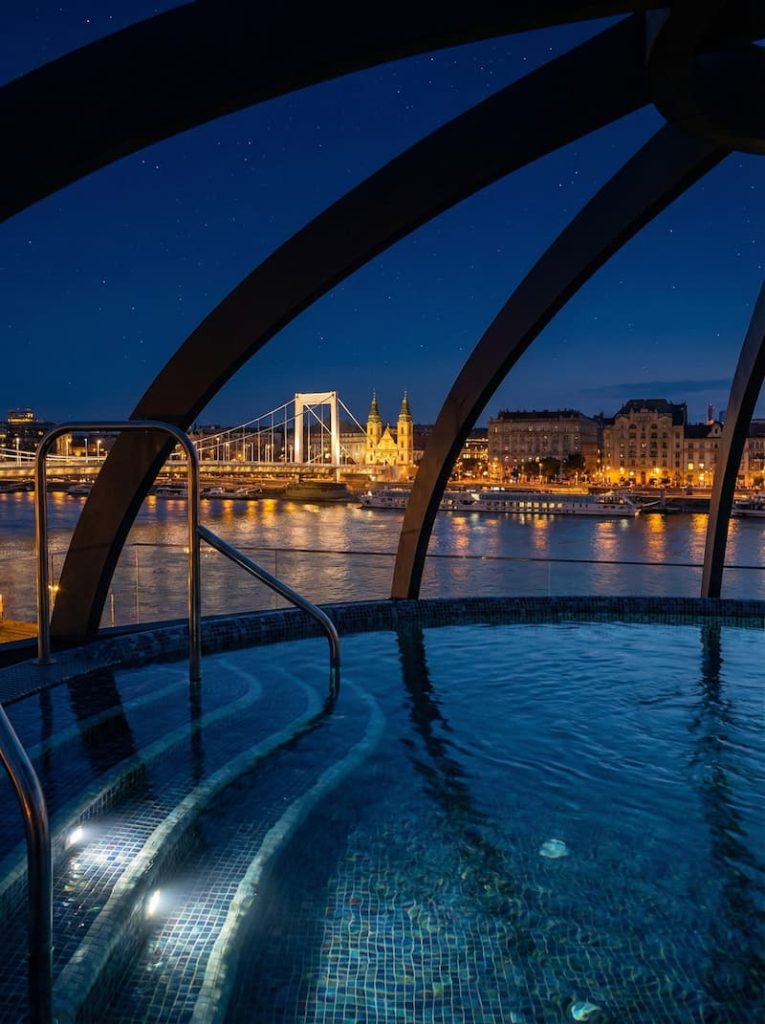
Rudas is famous for its Friday/Saturday night bathing (10 PM – 3 AM). It sounds romantic—soaking in a rooftop tub looking at the city lights.
- The Cost: ~15,000 HUF ($41 USD).
- The Reality: It is packed. It is loud. It is expensive.
- Budget Alternative: Go to Rudas on a weekday morning. The view from the rooftop is just as good in daylight (you can see the bridges and the Danube), and the ticket is significantly cheaper (~12,000 HUF).
Tip #7: The Gender Game (The Rudas Protocol)
Rudas is the only major bath that sticks to its Turkish roots regarding gender segregation. This confuses the hell out of tourists every year.
- Mondays, Wednesdays, Thursdays: MEN ONLY.
- Tuesdays: WOMEN ONLY.
- Fridays (after 11 AM), Weekends: CO-ED (Mixed).
Why this matters for your budget: The single-sex days are cheaper (~12,000 HUF) than the co-ed weekend days (~14,000 HUF). If you are a solo traveler or a couple willing to split up for a few hours, go on a weekday.
The Apron Situation: On single-sex days, swimwear is optional. Most locals wear a “kötény” (apron)—a small loincloth that covers the front but leaves your backside breezing in the wind.
- Culture Shock Warning: If you go on a men’s day, you will see a lot of naked old men. Like, a lot. They are comfortable. They are chatting. They do not care about you. If you are modest, you can wear your swim trunks. It’s allowed. But you will be the minority.
- Reddit Reality Check: I read a thread recently where a tourist was traumatized by seeing a “softie” (penis) in the changing room. Look, it’s a changing room. People change. Grow up. But be prepared.
Tip #8: Avoid the “Sparty” and Fast Track Scams
You’ve probably seen the ads for the “Sparty” (Spa Party) at Széchenyi. Lasers! Techno! Booze in the pool!
My Honest Opinion: If you are on a budget, skip it.
- Cost: Tickets start around €60 and go up to €100+ for “express” options.
- Value: The drinks are expensive (you have to buy a pre-loaded card).
- Hygiene: Let’s just say that when you mix thousands of drunk people with warm water… accidents happen. The water quality degrades significantly during these events. Locals do not go to Sparties. Sparties are for British stag dos and study abroad students.
The “Fast Track” Scam
You will see websites selling “Skip the Line” tickets for €45+.
- The Truth: In 2025, you can buy tickets on the official website or at the self-service kiosks at the entrance. The “Fast Track” line is often just as long as the normal line because everyone bought the “Fast Track” ticket thinking they were smart.
- Save your money: Just arrive early (before 10 AM) or buy directly from the official bath site (usually ends in
.hu) to avoid the reseller markup.
Tip #9: Medical Restrictions (The “No Kids” Rule)
This is a critical rule to know for 2026. There is strict enforcement regarding children under 14 in thermal pools.
The Science: Thermal water is potent. It stresses the cardiovascular system. It affects hormone levels. It is not “fun pool water”; it is medicine. The Rule: Children under 14 are generally banned from the thermal sitting pools. They can often use the swimming pools (cold water) or adventure pools, but not the hot medicinal ones.
The Budget Impact: If you buy a full-price ticket for your 10-year-old at Széchenyi, they might be restricted to one or two cold pools while you want to soak in the hot ones. You just wasted money.
The Family Alternative: Palatinus If you have kids, go to Palatinus on Margaret Island.
- Price: ~3,900 HUF ($11 USD).
- Vibe: It’s a massive complex with huge slides, wave pools, and kid-friendly zones, BUT it also has a thermal section for the adults. It’s the best hybrid value in the city.
Tip #10: The “Local” Mindset (Etiquette = Savings)
How does etiquette save you money? By preventing you from getting kicked out or fined.
- Shower First: This isn’t a suggestion. Shower before entering the pool. The lifeguards are watching.
- Silence: In the indoor thermal pools (especially at Rudas or Lukács), silence is golden. If you are loud, a local will shush you. If you persist, staff can ask you to leave.
- Lost Watch Fee: When you enter, you get a “proxy watch” (a plastic wristband) that opens your locker. Do not lose this. The fee for a lost watch is steep—often 3,000 – 5,000 HUF. Strap it on tight.
- Overstaying: At baths with time limits (like Veli Bej), you are charged by the minute if you overstay. Watch the clock.
Which Bath Should You Actually Pick?
That’s the tactics covered. If you want a straight price-by-price ranking of Budapest’s baths, cheapest to priciest, with current 2026 tickets for Dandár, Dagály, Palatinus and the rest, I keep that running as its own guide: Cheapest Thermal Baths in Budapest. This piece is only about the tactics that shave forints off whichever bath you end up choosing.
Conclusion
Exploring Budapest’s thermal baths in 2026 doesn’t have to bankrupt you, but it requires strategy. The days of wandering in for $5 are gone.
My advice? Buy the Budapest Card. Go to Lukács for free. Go to Decathlon for your gear. Drink tap water. Eat street Lángos.
And for the love of God, wear your flip-flops.
Prices verified: January 2026. All prices in HUF with approximate USD equivalents at ~370 HUF/Jo sz.
_Jo szórakozást! (Have fun!)
_
Book it, skip the counter


Prices checked 2026-08-24. Booking through these links supports the site at no extra cost to you. How this works.