March 15 in Budapest 2026: Hungary’s Revolutionary Day (And Why You Should Care)

TL;DR Box
The Quick Version: March 15, 2026 is Hungary’s biggest patriotic party—think July 4th meets historical reenactment meets really good street food. The day kicks off with a 9:00 AM flag ceremony at Kossuth Square, features hussars on horseback (yes, actual hussars), and includes the Prime Minister giving a speech that locals will either love or hate-watch. Best part? The Parliament opens for free tours, most museums are free, and you get to witness a million Hungarians wearing matching red-white-green ribbons without any irony whatsoever.
At a Glance
| Detail | Info |
|---|---|
| Date | Sunday, March 15, 2026 |
| Main Locations | Kossuth Square, National Museum, Buda Castle, Várkert Bazár |
| Official Ceremonies | 9:00 AM – 12:00 PM |
| Open Parliament | 10:00 AM – 6:00 PM (free entry!) |
| Museum Entry | Free at most national museums |
| Public Transport | Modified Sunday schedules, city center closures |
| Weather (typical) | 5-12°C (41-54°F)—pack layers and hope for the best |
What March 15 Actually Is (And Why Hungarians Get Emotional About It)
March 15 marks the anniversary of the 1848 Hungarian Revolution against Habsburg rule. It’s one of Hungary’s three national holidays, featuring official ceremonies, free museum entry, cultural programs, and the entire city basically wearing the same three colors. The day honors the revolutionaries who fought for Hungarian independence and civil liberties—and spoiler alert: it didn’t end well for them, which somehow makes it even more meaningful.
Here’s the thing about March 15: unlike some national holidays that feel like glorified days off, this one actually moves people. Walk through Budapest on this day and you’ll witness something remarkable—a nation collectively remembering its heroes, wearing the national tricolor cockade (called a kokárda), and celebrating the spirit of freedom with the kind of genuine emotion that’s increasingly rare in our cynical age.
For visitors, March 15 offers something extraordinary: a chance to experience Hungary at its most authentic. The city transforms into an open-air celebration of history, culture, and national identity. Streets fill with people wearing red, white, and green. Museums throw open their doors for free. Historical reenactors bring the past to life. And the atmosphere crackles with a pride that’s palpable yet surprisingly welcoming to outsiders.
2026 marks the 178th anniversary of the revolution. That’s a lot of years to keep caring about something—which tells you how much this day matters to Hungarians.
The beauty of March 15 lies in its accessibility. Unlike some national celebrations that feel exclusive or overly formal, Hungary’s National Day welcomes everyone. Tourists mingle with locals at ceremonies. Children wave flags alongside veterans. And the entire city becomes a classroom for understanding what Hungary means to Hungarians.
The 1848 Revolution: A History Lesson That’s Actually Interesting
On March 15, 1848, a group of young revolutionaries in Pest ignited a peaceful revolution against Habsburg Austrian rule. Led by poet Sándor Petőfi (think Hungary’s combination of Bob Dylan and Che Guevara, but with better hair), they demanded press freedom, national government, and civil rights. The revolution succeeded—initially. Then it was crushed. The date became a symbol of Hungarian freedom and national identity, which is why people still get choked up about it nearly two centuries later.
The Europe of 1848
The year 1848 became known as the “Spring of Nations” across Europe. Revolutionary movements erupted everywhere—Paris, Vienna, Berlin, Rome. People demanded constitutional governments, civil liberties, and the right to govern themselves. Hungary was no exception.
At the time, Hungary existed within the Habsburg Empire, ruled from Vienna by the Austrian monarchy. Hungarians had limited self-governance and faced restrictions on their language, press, and political freedoms. A generation of reformers had been pushing for change through legal channels, but progress was frustratingly slow. Sound familiar?
The Revolutionary Youth
On the morning of March 15, 1848, a group of young intellectuals and students gathered at the Pilvax Café in Pest. Among them was Sándor Petőfi, a 25-year-old poet whose verses would become the revolution’s anthem.
The group had been planning for weeks, inspired by news of revolution in Paris and Vienna. They drafted a list of demands called the 12 Points, which included:
- Freedom of the press (revolutionary concept in 1848)
- A Hungarian national government (not run by Vienna)
- Annual parliament in Pest
- Civil and religious equality
- A national guard
- The release of political prisoners
- Union with Transylvania
- The end of serfdom
The Day Unfolds
The revolutionaries first went to a print shop, where they printed the 12 Points and Petőfi’s poem “Nemzeti Dal” (National Song) without submitting them for censorship—a revolutionary act in itself. The famous opening lines became the day’s rallying cry:
“Rise up, Magyar, the country calls! The time is here, now or never!”
From the print shop, the crowd marched to the National Museum, where thousands gathered on the steps. Petőfi recited his poem to the growing masses. The crowd swelled as workers, students, and citizens joined the movement.
By afternoon, the revolutionaries crossed to Buda to confront the governing council. Without violence, they secured the release of political prisoner Mihály Táncsics and extracted promises of reform. By evening, the revolution had succeeded peacefully.
The (Sad) Aftermath
The initial success was remarkable. Within weeks, Hungary had a new government led by Lajos Kossuth and Count Lajos Batthyány. Serfdom was abolished. The press was freed. Hungary seemed on the path to independence.
But—and there’s always a but—the victory was short-lived. By 1849, the Habsburgs, with Russian military assistance, crushed the Hungarian forces. Batthyány was executed. Kossuth fled into exile. Thirteen Hungarian generals were executed in Arad (now in Romania) on October 6, 1849—a date still mourned in Hungary.
Why It Still Matters
Despite the military defeat, March 15 became a powerful symbol. The revolution demonstrated that Hungarians could unite for freedom. The 12 Points articulated principles that eventually became reality. And the martyrs who died for the cause became national heroes.
During the communist era (1948-1989), March 15 took on additional significance. The government tried to co-opt the holiday, but Hungarians used it to express dissent. The 1956 Hungarian Revolution began partly as a March 15-style commemoration that turned into an uprising.
Today, March 15 represents the continuous Hungarian aspiration for freedom and self-determination. It’s a day when Hungarians reflect on their history, honor their heroes, and recommit to the values the revolutionaries championed. And yes, some of those reflections get pretty political—but that’s part of the experience.
Official State Ceremonies 2026: Where to Be and When
The 2026 official ceremonies begin at 9:00 AM with a flag-raising at Kossuth Square, followed by a hussar parade at 9:30 AM to the National Museum. The main ceremony at 10:30 AM in the Museum Garden features the Prime Minister’s speech—which is either inspiring or infuriating depending on your political views. The Parliament opens for free tours from 10:00 AM to 6:00 PM, and honestly, that alone is worth planning your trip around.
9:00 AM – Flag Raising Ceremony at Kossuth Square
The day’s official events begin at Kossuth Lajos tér (Kossuth Square), the grand plaza in front of the Hungarian Parliament building.
What to expect:
The ceremony starts precisely at 9:00 AM with the raising of the Hungarian national flag. Military honor guards in ceremonial uniforms perform the flag-raising with precise, choreographed movements. A military band plays the Hungarian national anthem, “Himnusz,” and often other patriotic songs.
Fair warning: the anthem is beautiful but absolutely heartbreaking. It literally translates to a plea to God to have mercy on Hungary after centuries of suffering. Not exactly a party song, but you’ll understand why Hungarians tear up.
Practical tips: – Arrive by 8:30 AM to secure a good viewing position – The square fills quickly; earlier is better – Dress warmly—early March mornings can be brutal – Photography is permitted but be respectful – The ceremony lasts approximately 20-30 minutes
Location:
| Detail | Info |
|---|---|
| Address | Kossuth Lajos tér, 1055 Budapest |
| Metro | M2 – Kossuth Lajos tér station |
| Best viewing | Center-south side of the square |
9:30 AM – Hussar Parade to the National Museum
Following the flag ceremony, a festive hussar procession departs from the Parliament area toward the Hungarian National Museum in central Pest.
What to expect:
Hungarian hussars in traditional 19th-century uniforms ride on horseback through the city streets. The hussars wear the distinctive attila jacket, featuring elaborate braiding and the characteristic busby (fur hat). Their horses are equally decorated in ceremonial regalia.
This is the Instagram moment, folks. Grown men dressed like extras from a historical epic, riding actual horses through modern Budapest. It’s simultaneously ridiculous and genuinely impressive.
The route: The procession travels from Kossuth Square through central Pest to the National Museum on Múzeum körút. The exact route may vary slightly year to year, but typically follows major boulevards for maximum public viewing.
Practical tips: – Position yourself along the parade route by 9:15 AM – Múzeum körút and the streets approaching the Museum offer good viewing – Children especially enjoy the horses—bring them to the front – The parade takes approximately 30-40 minutes
10:30 AM – Main Ceremony at the Museum Garden
The main official event takes place in the Múzeumkert (Museum Garden) behind the Hungarian National Museum—the very spot where Petőfi addressed the crowds in 1848.
What to expect:
This is the most significant ceremony of the day. Prime Minister Viktor Orbán traditionally delivers the main commemorative speech. Whether you’re a fan or not, it’s an interesting experience to watch a nation’s leader address tens of thousands of flag-waving citizens at the exact location where history was made.
The ceremony includes: – Speeches by government leaders – Musical performances of patriotic songs – Readings of the 12 Points and Petőfi’s National Song – Wreath-laying at the Museum’s steps – Military honor guard presentations
Practical tips: – Arrive by 10:00 AM for a viewing spot; earlier for front positions – The event is free and open to the public – Seating is limited—most attendees stand – Expect large crowds (tens of thousands typically attend) – The ceremony lasts approximately 60-90 minutes – Loudspeakers broadcast speeches throughout the garden
Historical note: The Museum’s steps have profound significance. This is where Petőfi recited his poem in 1848. Standing here, you’re literally on revolutionary ground. That fact hits differently when you’re surrounded by people who genuinely care about it.
10:00 AM – 6:00 PM – Open Parliament (FREE!)
One of the day’s highlights is the opportunity to visit Hungary’s spectacular Parliament building without the usual tour fees or reservations.
What to expect:
The Parliament opens its doors for free public tours throughout the day. Visitors can see: – The magnificent central dome hall – The Holy Crown of Hungary – The main staircase with its Gothic-revival architecture – Selected chambers and corridors – Historical exhibitions
This building is legitimately one of the most impressive parliamentary buildings in the world. The fact that you can see it for free on March 15 is insane. Regular tours cost 6,000-10,500 HUF depending on your nationality.
Practical tips: – Entry is free of charge – Lines can be extremely long (2-3 hours during peak times) – Morning visitors face the longest waits; consider going after 2:00 PM – Bring identification (passport for foreign visitors) – Security screening is required (similar to airports) – Large bags may not be permitted – Photography is generally allowed (no flash)
Practical Information:
| Detail | Info |
|---|---|
| Address | Kossuth Lajos tér 1-3, 1055 Budapest |
| March 15 Hours | 10:00 AM – 6:00 PM (free entry) |
| Regular Price | 6,000 HUF (EU citizens) / 10,500 HUF (non-EU) |
| Metro | M2 – Kossuth Lajos tér |
| Website | parlament.hu |
Hungarian National Museum: Ground Zero of the Revolution
The Hungarian National Museum offers free entry all day on March 15, featuring special exhibitions about the 1848 Revolution, historical artifact displays, children’s programs, and guided tours. The Museum Garden hosts outdoor performances and activities. This is where the revolution began, making it the holiday’s spiritual center—and yes, that’s worth repeating.
The Magyar Nemzeti Múzeum (Hungarian National Museum) holds special significance on March 15. As the site where Petőfi rallied the crowds in 1848, the Museum becomes the spiritual epicenter of the celebrations.
Free Entry All Day
On March 15, 2026, the National Museum offers free admission to all permanent and temporary exhibitions. This is exceptional value, as regular adult admission costs 3,200 HUF (approximately €8).
What to See
The permanent exhibitions span Hungarian history from prehistory to the present:
- Medieval and Early Modern Hungary – Including royal regalia, weapons, and religious artifacts
- 19th Century Hungary – The revolution period, with original documents, weapons, and personal effects of revolutionary leaders
- 20th Century Hungary – World Wars, communism, and the 1956 Revolution
- Coronation Mantle – The medieval royal mantle is one of Hungary’s most precious artifacts
Special March 15 exhibitions: The Museum typically mounts special temporary exhibitions related to 1848, featuring original copies of the 12 Points, Petőfi’s manuscripts and personal items, weapons and uniforms from the revolutionary army, and contemporary artworks inspired by 1848.
Museum Garden Activities
The Múzeumkert (Museum Garden) transforms into an activity hub:
- Historical reenactments throughout the day
- 1848-era military encampments with costumed interpreters
- Traditional craft demonstrations
- Children’s activities including flag-making and kokárda workshops
- Food vendors offering Hungarian specialties
- Musical performances on outdoor stages
Practical Information:
| Detail | Info |
|---|---|
| Address | Múzeum körút 14-16, 1088 Budapest |
| March 15 Hours | 10:00 AM – 6:00 PM (extended holiday hours) |
| Admission | FREE on March 15 (normally 3,200 HUF) |
| Metro | M3 or M4 to Kálvin tér (5-min walk) / M2 to Astoria (5-min walk) |
| Website | mnm.hu |
| Phone | +36 1 338 2122 |
Tips: – Expect crowds, especially 11:00 AM – 2:00 PM – Start with indoor exhibitions when outdoor ceremony ends – The café offers coffee and light refreshments – Accessibility ramps available at main entrance – Audio guides available (may require deposit)
Várkert Bazár: The Prettiest Celebration Venue
The Várkert Bazár (Castle Garden Bazaar) at the base of Buda Castle hosts a full day of family-friendly activities including traditional craft workshops, hussar demonstrations, folk music, dance performances, and artisan markets. Entry to outdoor programs is free, and you get stunning Danube views as your backdrop. It’s basically the Instagram-worthy version of March 15.
About Várkert Bazár
Designed by Miklós Ybl (the architect behind the State Opera House), the Várkert Bazár was built in the 1870s as a grand garden and commercial space connecting the waterfront to Buda Castle above. After decades of neglect, it was magnificently restored and reopened in 2014.
The neo-Renaissance architecture, with its ornate staircases, pavilions, and gardens cascading up the hillside, creates a fairytale atmosphere. On March 15, this setting hosts one of Budapest’s best celebration programs.
2026 Program Highlights
Traditional Craft Workshops: – Kokárda-making – Create your own tricolor cockade – Hungarian embroidery – Learn basic folk patterns – Candle-making – Traditional techniques – Pottery demonstrations – Watch master craftspeople at work – Leather working – Creating traditional Hungarian items
Military and Historical Demonstrations: – Hussar horsemanship displays – Watch skilled riders demonstrate traditional cavalry techniques – 19th-century military drills – Reenactors in period uniforms – Weapons demonstrations – Saber, rifle, and cannon (blank fire) – Historical camp life – See how revolutionary soldiers lived
Musical and Dance Performances: – Folk music ensembles throughout the day – Traditional Hungarian dance performances – Verbunkos – The recruitment dance that inspired Brahms and Liszt – Children’s folk dance workshops
Food and Artisan Market: – Traditional Hungarian street food – Artisan vendors selling handcrafted goods – Hot wine (forralt bor) and pálinka tastings – Hungarian pastries and chimney cake (kürtőskalács)
Practical Information:
| Detail | Info |
|---|---|
| Address | Ybl Miklós tér 2-6, 1013 Budapest |
| Hours | Typically 10:00 AM – 6:00 PM for March 15 programs |
| Cost | Outdoor programs FREE; some workshops may charge materials fees |
| Tram | 19 or 41 to Clark Ádám tér (2-min walk) |
| Website | varkertbazar.hu |
Tips: – Combines well with Castle District visit – Arrive before noon for craft workshops (materials may run out) – The upper gardens connect directly to Buda Castle – Café and restaurant on-site – Public restrooms available – Excellent photo opportunities with Danube and Parliament views
Buda Castle District Programs
The Budavári Palotanegyed (Buda Castle Palace Quarter) offers extensive March 15 programming at the Castle Riding Hall (Lovarda) and Csikós Courtyard. Expect equestrian shows, traditional Hungarian horsemanship demonstrations, historical exhibitions, and family activities. Most programs are free with occasional ticketed premium seating. If you like horses, history, or both—this is your spot.
The Lovarda (Castle Riding Hall)
The recently restored Lovarda, originally built for the royal household’s equestrian activities, hosts spectacular horsemanship displays:
Equestrian Programs: – Traditional Hungarian horsemanship demonstrations – Csikós (Hungarian cowboy) shows featuring the famous “Hungarian post” (one rider standing atop multiple horses—it’s as crazy as it sounds) – Historical cavalry reenactments depicting 1848 battles – Carriage driving exhibitions – Horse archery demonstrations
Schedule notes: – Shows typically run at 11:00 AM, 2:00 PM, and 4:00 PM – Arrive 30 minutes early for seating – Some shows are free; premium seating may be ticketed
Csikós Courtyard Programs
The Csikós Udvar (Cowboy Courtyard) offers interactive experiences:
- Meet the horses – Photo opportunities with Hungarian horse breeds
- Horsemanship for children – Supervised pony experiences
- Traditional tack and equipment displays
- Blacksmith demonstrations – Watch horseshoes being made
- Leather craft – Traditional Hungarian saddle-making
Castle Palace Events
Hungarian National Gallery: – Free entry on March 15 – Special exhibition of 1848-related Hungarian art – Works by revolutionary-era painters
Budapest History Museum: – Free entry – Medieval castle remains in the basement – Special March 15 historical programs
Practical Information:
| Detail | Info |
|---|---|
| Address | Szent György tér, 1014 Budapest |
| Programs | 10:00 AM – 6:00 PM typically |
| Cost | Most programs FREE; premium seating ticketed |
| Bus | 16 or 16A from Széll Kálmán tér or Deák tér |
| Funicular | From Clark Ádám tér (1,800 HUF one-way) |
| Website | budacastlebudapest.com |
Getting to Buda Castle: – Funicular (Budavári Sikló): Scenic but expect long lines on March 15. One-way: 1,800 HUF; Round-trip: 3,200 HUF – Bus 16: From Széll Kálmán tér or Deák Ferenc tér – On Foot: Free staircases from Clark Ádám tér, or escalators from Várkert Bazár (free)
Tips: – Wear comfortable walking shoes—the district is hilly – Allow 3-4 hours to explore fully – Combine with Várkert Bazár visit – Less crowded than Pest-side venues – Beautiful sunset views over the city
The Kokárda: That Ribbon Everyone’s Wearing
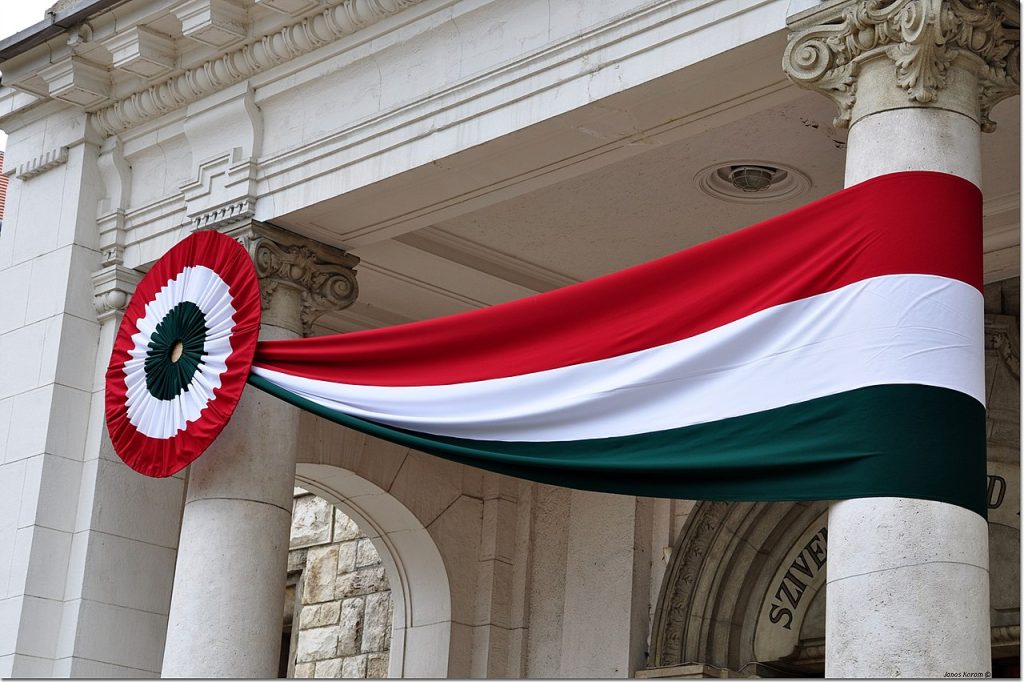
The kokárda is a ribbon rosette in Hungary’s red, white, and green national colors. Originating in the 1848 Revolution as a symbol of solidarity, it’s now worn by millions of Hungarians every March 15. The tradition symbolizes national pride, remembrance, and unity. And yes—tourists are warmly welcomed to participate. In fact, wearing one is basically the easiest way to get approving nods from strangers.
Historical Origins
On March 15, 1848, the revolutionaries pinned tricolor cockades to their chests as symbols of their cause. The red, white, and green had been associated with Hungarian identity for centuries, but the cockade gave individuals a way to visibly declare their allegiance.
Wearing the cockade in 1848 was politically meaningful—it showed you supported the revolution. The Habsburg authorities initially tried to suppress the symbol, making it even more powerful.
Color Symbolism
The Hungarian tricolor has multiple interpretations:
Traditional meanings: – Red – Strength and blood shed for the homeland – White – Faithfulness and purity – Green – Hope and the verdant Hungarian landscape
Where to Get One
- Street vendors sell them everywhere on March 15 (usually 100-500 HUF)
- Craft workshops at celebration venues (make your own)
- Beforehand at newsstands, shops, and some supermarkets in the days before March 15
Kokárda Etiquette
When to wear it: – March 15 (all day) – March 14-16 (acceptable range)
Where to wear it: – Left chest area (over the heart) – Lapel – Hat or bag (acceptable alternatives)
As a tourist: You’re absolutely welcome to wear a kokárda. Hungarians appreciate when visitors participate in their traditions. It’s not considered appropriation—it’s seen as respectful participation. Think of it like wearing green on St. Patrick’s Day, except with more historical weight and less beer.
What to Eat and Drink
March 15 celebrations feature traditional Hungarian street food including lángos, kürtőskalács, kolbász, and gulyás. Hot drinks like forralt bor (mulled wine) and pálinka (fruit brandy) warm the crowd. Food stalls operate at all major celebration venues, offering an edible introduction to Hungarian cuisine—and potentially your new favorite hangover.
Street Food Staples
Lángos – The undisputed king of Hungarian street food. This deep-fried flatbread is traditionally topped with sour cream and grated cheese (the classic), garlic sauce, or various toppings from ham to Nutella (controversial but delicious). Price: 800-1,500 HUF depending on toppings
Kürtőskalács (Chimney Cake) – Sweet spiral-shaped pastry cooked over charcoal, coated in sugar and cinnamon, walnut, cocoa, or vanilla. Price: 600-1,000 HUF
Kolbász (Sausage) – Grilled Hungarian sausage, often served with fresh bread, mustard, and pickles. Price: 800-1,200 HUF
Gulyás (Goulash) – The famous Hungarian beef soup with paprika, served in bread bowls or regular dishes. Not the stew you’re thinking of—that’s pörkölt. Price: 1,500-2,500 HUF
Warm Drinks
Forralt Bor (Mulled Wine) – Hot spiced wine, essential for staying warm during outdoor celebrations. Made with red wine, cinnamon, cloves, and citrus. Price: 600-1,000 HUF
Pálinka – Traditional Hungarian fruit brandy, typically 40-50% alcohol. Varieties include barack (apricot—the most famous), szilva (plum), and körte (pear). Price: 500-1,500 HUF per shot
Fair warning: pálinka is not for the faint of heart. It’s essentially fruit-flavored rocket fuel. Start with one, see how you feel, then probably stop there.
Where to Find Food
Major celebration venues all have food stalls: – National Museum Garden – Várkert Bazár – Buda Castle District – Kossuth Square area
What to Wear (Spoiler: Layers)
March weather in Budapest averages 5-12°C (41-54°F) with possible rain, possible sunshine, and possible existential confusion about what season it is. Dress in layers, bring a warm coat, and wear waterproof comfortable shoes. The essential accessory is the kokárda—but beyond that, comfort beats fashion when you’re standing outside for three hours.
Weather Expectations
Typical March 15 conditions in Budapest: – Temperature: 5-12°C (41-54°F) – Morning: Can be quite cold, especially for early ceremonies – Afternoon: Often warms up but not reliably – Rain: Possible—check the forecast and bring an umbrella – Wind: Can be brisk, especially near the Danube
Practical Clothing Guide
Layers are essential: – Base layer: Long-sleeve shirt or thermal top – Middle layer: Sweater or fleece – Outer layer: Warm coat (down jacket or wool coat), water-resistant preferred
Footwear: – Comfortable walking shoes (you’ll be on your feet for hours) – Waterproof or water-resistant – Broken-in (not new—blisters ruin revolutions)
Accessories: – Scarf, gloves, hat – Small umbrella – Sunglasses (March sun can be surprisingly bright) – And of course, a kokárda
Getting Around on March 15
Expect modified public transport schedules and street closures in central Budapest on March 15. Metro, trams, and buses run on Sunday schedules with extra services. The city center (especially around Kossuth Square and National Museum) is partially closed to traffic. Walking is honestly the best way to experience the celebrations—and the crowds mean you’ll be walking anyway.
Street Closures
Expect closures around: – Kossuth Square and surrounding streets (morning ceremonies) – Múzeum körút and streets near the National Museum (all day) – Chain Bridge may have restrictions – Castle District streets
Public Transportation
General schedule: March 15 is a public holiday, so public transport runs on Sunday/holiday schedules.
Metro: All four lines operate with reduced frequency. M2 (Kossuth tér station) may be crowded.
Trams: Tram 2 (along the Danube) is excellent for reaching multiple venues. Tram 4-6 (Grand Boulevard) runs as usual. Some routes may be diverted.
BKK Apps: Download BudapestGO app for real-time transport information.
Walking is Best
Honestly, the best way to experience March 15 is on foot.
Walkable route example: 1. Morning: Kossuth Square (flag ceremony) 2. Follow hussar parade to National Museum 3. Lunch at nearby restaurants or street food 4. Walk to Várkert Bazár (20 minutes along Danube) 5. Up to Buda Castle (via escalators or stairs) 6. Evening: Walk back across Chain Bridge
Total walking: About 5-7 km if you do all venues, spread over the day.
Don’t Drive
Don’t drive to central Budapest on March 15. Street closures make navigation frustrating, parking is extremely limited, and walking is faster for short distances.
Family-Friendly Activities
March 15 is highly family-friendly with activities designed for children: craft workshops (kokárda-making, flag-making), pony rides, historical reenactments, interactive museum programs, and child-sized traditional costumes. Most activities are free. The festive atmosphere, horses, and hussar uniforms captivate children of all ages—and honestly, most adults too.
Best Venues for Families
Várkert Bazár: – Kokárda and flag-making workshops – Child-friendly craft activities – Horses and hussar demonstrations – Open spaces for kids to run – Food vendors with kid-friendly options
Buda Castle District: – Csikós Courtyard with horses – Pony rides for young children – Interactive historical displays – Castle grounds for exploration
National Museum Garden: – Children’s activity area – Historical camp experiences – Costumed interpreters engaging with kids
Activities Kids Love
Horses everywhere: The hussar parades, riding demonstrations, and csikós shows captivate children. Many venues offer photo opportunities with horses, petting experiences, and pony rides.
Costumes: Seeing adults in elaborate period costumes fascinates kids and makes the day feel special.
Craft workshops: Making kokárdák, creating Hungarian flags, and face painting (at some locations).
Food: Kürtőskalács (chimney cake)—the sweet smell draws kids like magnets.
Practical Tips for Families
Timing: – Skip the early morning flag ceremony with young children (too early, too crowded, too long to stand) – Arrive at activity venues mid-morning (10:30-11:00 AM) – Plan lunch for 12:00-1:00 PM before afternoon crowds peak – Leave by 3:00-4:00 PM if children are young
Strollers: Cobblestones in Buda make strollers challenging. Consider baby carriers for Castle areas. Pest-side venues (National Museum) are more stroller-friendly.
Lost children: The crowds are significant—hold hands. Dress children in bright colors. Establish meeting points.
Quick Reference: Prices and Practical Info (2026)
| Attraction | Address | March 15 Price | Normal Price | Hours |
|---|---|---|---|---|
| Parliament | Kossuth tér 1-3 | FREE | 6,000-10,500 HUF | 10:00-18:00 |
| National Museum | Múzeum krt 14-16 | FREE | 3,200 HUF | 10:00-18:00 |
| Hungarian National Gallery | Szent György tér 2 | FREE | 3,400 HUF | 10:00-18:00 |
| Budapest History Museum | Szent György tér 2 | FREE | 2,800 HUF | 10:00-18:00 |
| Várkert Bazár programs | Ybl Miklós tér 2-6 | FREE | — | 10:00-18:00 |
| Castle Funicular | Clark Ádám tér | 1,800 HUF | 1,800 HUF | 7:30-22:00 |
Useful Links: – Parliament – National Museum – Várkert Bazár – BKK Transport – Official Budapest Tourism
The Bottom Line
March 15 in Budapest is one of those rare travel experiences where you get to witness something genuinely meaningful rather than manufactured for tourists. The ceremonies are real, the emotion is real, and the street food is really, really good.
Whether you’re a history buff who wants to stand where Petőfi stood, a family looking for a memorable cultural experience, or just someone who appreciates free museum entry and horses in fancy uniforms—March 15 delivers.
Come for the history. Stay for the lángos. Leave with a kokárda pinned to your heart (literally) and a better understanding of why Hungarians still care about something that happened 178 years ago.
And honestly? In a world that often forgets its past, there’s something beautiful about a country that remembers.
Last updated: January 2026


