A history lover’s guide to the bullet holes, bunkers, and buried stories of 1944-45
The 52 Days That Changed Budapest Forever
Here’s a sobering thought: when you’re walking through the picturesque streets of Budapest’s Castle District, admiring the Baroque facades and sipping overpriced coffee, you’re standing on one of the most brutally contested battlegrounds of World War II.
Between December 24, 1944 and February 13, 1945—exactly 52 days—Budapest became hell on earth. The Soviet Red Army encircled the city, trapping roughly 100,000 German and Hungarian soldiers along with nearly a million civilians. When the guns finally fell silent, 80% of Budapest’s buildings lay in ruins. The Castle District? Nearly erased from existence.
Yet somehow, miraculously, the scars remain visible for those who know where to look. This isn’t your typical “top 10 things to see” guide. This is a deep dive into the bullet holes, the bunkers, the ruins, and the ghosts that still haunt Buda’s ancient hilltop.
Why the Castle District Became Ground Zero
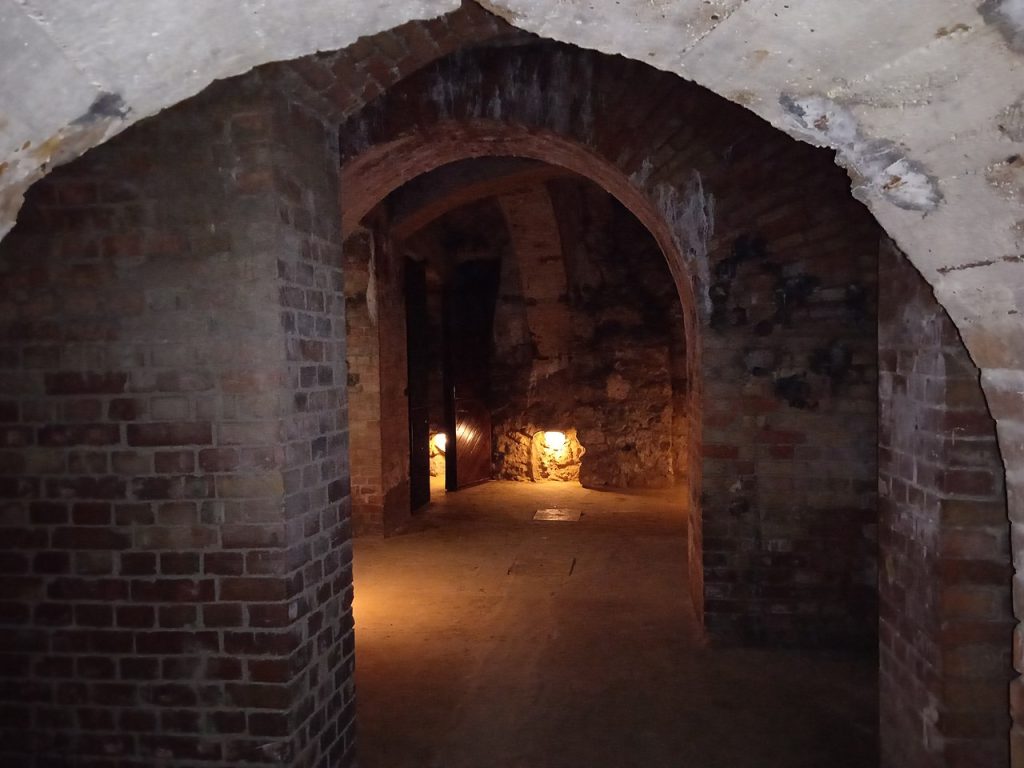
The Castle District wasn’t just unfortunate real estate—it was strategic gold. Sitting atop Castle Hill, the area offered commanding views of the Danube and both sides of the city. More importantly, the hill was honeycombed with a massive cave system that had been used for centuries as wine cellars, storage, and—during the Ottoman occupation—escape routes.
When the Soviet encirclement began, the Germans and Hungarians realized these caves could serve a new purpose: bunkers, hospitals, and headquarters for the last stand of a desperate army.
The result? Some of the most intense urban combat of the entire war, fought street by street, building by building, cave by cave.
Hospital in the Rock Nuclear Bunker Museum (Sziklakórház)
The absolute must-visit for WWII history lovers.
Hidden beneath the Castle District lies a secret hospital that operated during the siege, treating thousands of wounded soldiers and civilians in conditions that make modern emergency rooms look like five-star hotels.
The History
Built in the 1930s as Hungary prepared for potential conflict, the Hospital in the Rock was carved directly into the natural cave system beneath Castle Hill. During the siege, it was designed to handle 60-70 patients. At its peak, it held over 700—with doctors performing surgeries by candlelight as bombs shook the ceiling above.
The hospital continued operating after WWII, playing a crucial role again during the 1956 Hungarian Uprising when Soviet tanks rolled through Budapest. After 1956, it was upgraded into a nuclear bunker (because Cold War), complete with decontamination chambers and blast doors.
Then it was classified top secret for decades. The Hungarian government didn’t even acknowledge its existence publicly until 2002.
What You’ll See
The museum preserves the original hospital setup with chilling authenticity. Over 200 wax figures depict the cramped, horrific conditions: surgeons operating on makeshift tables, nurses caring for rows of wounded, civilians huddling in terror.
One room recreates a surgery mid-operation. Another shows the primitive ventilation system that kept patients from suffocating. The Cold War-era additions—radiation suits, Geiger counters, decontamination showers—add another layer of historical paranoia.
This isn’t a sanitized museum experience. It’s deliberately uncomfortable, and that’s the point.
Practical Information
Hospital in the Rock Nuclear Bunker Museum (Sziklakórház Atombunker Múzeum)
📍 Address: Lovas út 4/c, 1012 Budapest (entrance via a nondescript door in the Castle District)
🎫 Tickets:
– Adult (Public Benefit Program/Donation): 24 EUR / 7,500 HUF
– Adult (Simple Visit with VAT): 30 EUR / 9,500 HUF
– Student (18-26 with ISIC): 17 EUR / 5,500 HUF
– Child (6-18): 12 EUR / 3,750 HUF
– Senior 70+ (EU citizens): Practically free (0.01 EUR / 1 HUF)
– Budapest Card holders: 10% discount
🕐 Hours: Guided tours only (no self-guided). English tours run regularly—check their website for current schedule.
⏱️ Duration: Approximately 1 hour
🔗 Website: sziklakorhaz.eu
Pro Tips
- Book ahead online—English tours fill up, especially in peak season.
- Bring a light jacket—it’s a cave. It’s cool down there year-round.
- Not suitable for young children—the 6+ rule is there for a reason. The wax figures and subject matter can be genuinely disturbing.
- Claustrophobic? Some passages are tight. You’ve been warned.
- The “Public Benefit” ticket is cheaper and identical to the regular visit—the museum just frames it as a donation to their foundation. Pick this option unless you need a VAT invoice for business purposes.
The Castle Cave WW2 Tours
While the Hospital in the Rock is the polished museum experience, the broader castle cave system offers something rawer—a chance to walk through the actual tunnels where thousands of soldiers and civilians sheltered during the siege.
The Cave System
Castle Hill sits on approximately 10 kilometers of interconnected caves and cellars, formed by thermal springs millions of years ago. Over centuries, residents expanded and connected these natural cavities for various purposes: wine storage, emergency shelters, even a medieval prison.
During WWII, this labyrinth became the last refuge for thousands. German and Hungarian military command set up headquarters in some sections. Civilians crowded into others, living underground for weeks as artillery and aerial bombardment destroyed everything above.
What the Tours Offer
Several operators run WWII-focused cave tours. The best ones combine:
– Walking through original bomb shelters with their ventilation shafts and emergency exits
– Exploring cellars that served as supply depots and ammunition storage
– Seeing traces of wartime occupation—carved inscriptions, modified passages, reinforced sections
– Above-ground portions showing bullet holes and shrapnel damage on buildings
The guides point out details you’d never notice on your own: secret doorways in buildings that connected to the cave system, ventilation shafts camouflaged as architectural features, Soviet soldier graffiti from the liberation/occupation.
Practical Information
Buda Castle WW2 Tour with Cave Visit
📍 Meeting Point: Matthias Fountain, Hunyadi Courtyard (Buda Castle)
🎫 Tickets: Approximately €15/person (adults only—not suitable under 14)
🕐 Schedule: Fridays, 2-4 PM (check booking calendar for availability)
⏱️ Duration: 2 hours
📏 Distance: 1,500-2,000 meters of walking (stairs involved—must be reasonably mobile)
🔗 Booking: GetYourGuide
Pro Tips
- Wear sturdy shoes—cobblestones above, uneven surfaces below.
- Not for claustrophobes or mobility-limited visitors—some passages are narrow and there are stairs.
- Friday-only tours mean you need to plan your visit accordingly.
- Combine with Hospital in the Rock for the ultimate WWII history day—they’re both in the Castle District.
The “Twelve Weeks in Hell” Walking Tour
For the deepest dive into siege history, this specialized tour (Tizenkét Hét a Pokolban in Hungarian) takes participants through the Castle District guided by personal accounts from survivors.
What Makes It Different
While other tours focus on military history and infrastructure, “Twelve Weeks in Hell” centers on human stories. The tour draws from diaries and memoirs of people who lived through the siege: Where did they hide? How did they find food and water? What did Christmas 1944 look like in a bomb shelter?
The tour includes a descent into the Castle Cave system, but the focus remains on civilian experience rather than military strategy.
Practical Information
📍 Starting Point: Palota Info Palace Visitor Center, Hunyadi Courtyard, Buda Castle
📍 Ending Point: Bécsi Kapu Square (Vienna Gate Square)
⏱️ Duration: 120 minutes
👤 Suitable for: Ages 14+ (content involves wartime trauma)
☔ Weather: Tours run rain or shine—dress appropriately
👟 Accessibility: Cobblestone streets, caves with uneven terrain, steep narrow passages—NOT wheelchair accessible
🔗 Tickets: jegy.hu (Hungarian booking site)
Bullet Holes: Budapest’s Open-Air War Memorial
Here’s something most tourists completely miss: many buildings throughout Budapest—especially in the Castle District—still bear visible bullet holes and shrapnel damage from 1945 (and 1956).
Why Are They Still There?
It’s a mix of preservation philosophy and limited renovation budgets. Some building owners deliberately maintain the damage as a memorial. Others simply haven’t gotten around to (or can’t afford) full facade restoration. Either way, the effect is striking: you’re walking past buildings that still carry the scars of combat from 80 years ago.
Where to Look
Castle District (1st District):
– Úri utca (especially the lower numbers)
– The walls around Kapisztrán tér
– Several buildings near Bécsi kapu tér
Beyond the Castle:
– Práter utca / Nap utca intersection (8th District)—these are from 1956
– Király utca 49 courtyard (7th District)—accessible if the gate is open
– Szentkirályi utca 32b courtyard
– Various buildings along Rákóczi út
What to Look For
- Small circular holes clustered together: Machine gun or rifle fire
- Larger, irregular gouges: Artillery or tank shells
- Widespread pockmarking: Shrapnel from explosions
- Inscriptions in Cyrillic: Soviet soldiers sometimes marked buildings they’d cleared of explosives or enemies—some of these markings survive
The Historian’s Warning
Be careful about dating damage. Budapest saw intense fighting in both 1944-45 AND 1956. Castle District damage is almost certainly WWII (the 1956 fighting was concentrated elsewhere), but in other neighborhoods it can be ambiguous.
Mary Magdalene Tower: The Ruin That Speaks
Standing alone in Kapisztrán tér, the Gothic tower of the Church of Mary Magdalene is perhaps the Castle District’s most poignant WWII monument—though its story involves both Nazi destruction AND Communist demolition.
The History
The Church of Mary Magdalene dated back to the 13th century and served as the parish church for Hungarian-speaking residents of the Castle District (while Germans used Matthias Church). It was one of the oldest and most significant churches in Buda.
During the siege, the church was heavily damaged by artillery and bombing. But here’s the twist: it could have been rebuilt. The Matthias Church was similarly devastated and was successfully restored.
Instead, in 1950, the anti-religious Communist regime—allegedly on the personal order of dictator Mátyás Rákosi—ordered the church demolished. Only the medieval tower was spared, left standing as a lonely reminder of what once existed.
What You’ll See Today
The tower now functions as a small museum and observation point. The “ruin garden” around it contains scattered architectural fragments from the destroyed church—arches, carved stones, pieces of walls arranged almost like a memorial sculpture garden.
The tower itself offers views over the Castle District, but the real draw is the symbolism: a single Gothic spire surrounded by the ghosts of its vanished church, destroyed twice over—once by war, once by ideology.
Practical Information
Mary Magdalene Tower (Mária Magdolna Torony)
📍 Address: Kapisztrán tér, 1014 Budapest
🎫 Tickets: Check current status—the tower has periodically opened and closed to visitors
🕐 Hours: Variable—verify before visiting
🔗 Website: budatower.hu
⚠️ Note: As of early 2025, the tower was temporarily closed. Check for reopening updates.
The Siege in Numbers: What Actually Happened
For history buffs who want the full picture:
Timeline
- October 29, 1944: Soviet forces reach Budapest’s outskirts
- December 24, 1944: Complete encirclement (Budapest becomes a “Festung”—fortress city)
- December 26, 1944: Siege officially begins; Germans lose Ferihegy Airport
- January 18, 1945: Pest falls to Soviet forces
- February 11, 1945: German/Hungarian breakout attempt—a catastrophic failure with 90% casualties
- February 13, 1945: Last resistance ends; siege concludes
The Human Cost
- Axis defenders: ~100,000 (German and Hungarian combined)
- Soviet attackers: ~170,000
- Civilian deaths: Estimated 38,000-40,000
- Buildings destroyed/damaged: Over 80% of the city
- All seven Danube bridges: Destroyed
- Castle District population: Halved
Why It Matters
The Siege of Budapest was one of the bloodiest urban battles of WWII—longer and deadlier than Stalingrad’s urban phase. Yet it remains relatively unknown outside Hungary, overshadowed by more famous Eastern Front engagements.
Walking the Castle District with this knowledge transforms the experience. Every restored facade represents a building that was reduced to rubble. Every bullet hole is a reminder that this postcard-perfect neighborhood was once an apocalyptic warzone.
Self-Guided WWII Walking Route
For those who prefer exploring independently, here’s a suggested route hitting the major WWII-related sites in the Castle District:
Route (approximately 2-3 hours, not including museum visits)
- Start: Bécsi kapu tér (Vienna Gate Square)
- The Vienna Gate was completely destroyed during the siege and rebuilt in 1936 style
- Note the bullet damage on surrounding buildings
- Walk to: Kapisztrán tér
- Mary Magdalene Tower and ruin garden
- Military History Museum (if open—check current status)
- Continue to: Táncsics Mihály utca
- One of the oldest streets; look for damage on building facades
- Medieval Jewish prayer house at #26
- Proceed to: Szentháromság tér
- Matthias Church—heavily damaged, magnificently restored
- Holy Trinity Column (Plague Column)—survived the siege
- Walk to: Fisherman’s Bastion
- Neo-Romanesque fantasy built 1895-1902
- Relatively minor siege damage; offers views over devastated Pest
- Descend to: Hunyadi Courtyard (Buda Castle)
- Starting point for Hospital in the Rock and cave tours
- Matthias Fountain—a rare survivor
- Explore: The Castle Palace grounds
- The entire palace complex was gutted; what you see is postwar reconstruction
- The Hungarian National Gallery and Budapest History Museum occupy the restored wings
- End at: Dísz tér
- The Honvéd Memorial commemorates soldiers (including WWII)
- Facade damage visible on several buildings
What to Bring
- Comfortable walking shoes (cobblestones everywhere)
- Water and snacks (limited options once you start)
- A camera with zoom for spotting bullet holes
- This guide (or download it for offline reading)
Combining WWII Sites Beyond the Castle
If you’re doing a full WWII history day in Budapest, consider adding:
Shoes on the Danube
Memorial to the Jews shot into the Danube by Arrow Cross fascists during the siege. Located on the Pest embankment, about 15 minutes’ walk from Parliament.
House of Terror (Terror Háza)
Covers both Nazi and Soviet occupation. Located at Andrássy út 60—the building served as headquarters for both the Arrow Cross (Hungarian Nazis) and later the ÁVH (Communist secret police).
📍 Andrássy út 60, 1062 Budapest
🎫 4,000 HUF (~$10.50) adult
🕐 Tue-Sun 10:00-18:00
🔗 terrorhaza.hu
Soviet War Memorial at Szabadság tér
The last remaining Communist-era Soviet memorial in central Budapest, erected in May 1945—when surrounding buildings were still in ruins. Controversial but historically significant.
Hungarian Jewish Museum and Memorial Room
At the Great Synagogue (Dohány Street). Covers the wartime experience of Budapest’s Jewish community, including the siege period.
Final Thoughts: Why This Matters
It’s easy to visit Budapest and see only the Instagram version: the pretty architecture, the ruin bars, the thermal baths. And there’s nothing wrong with enjoying those things.
But the city’s WWII history isn’t just educational—it’s essential context for understanding modern Hungary. The siege explains why so many buildings look “old” but feel somehow “new” (rebuilt after near-total destruction). It explains the complicated relationship with both Germany and Russia. It explains why Hungarians have a particular fatalism mixed with dark humor about politics and catastrophe.
You don’t have to make your entire trip about WWII history. But spending even a few hours engaging with these sites will deepen your understanding of Budapest immeasurably.
The bullet holes are still there. The caves are still there. The stories are still there.
All you have to do is look.
Last updated: January 2026. Prices and hours change—verify before visiting.
Quick Reference: All WWII Sites in This Guide
| Site | Price | Duration | Booking Required? |
|---|---|---|---|
| Hospital in the Rock | €24-30 | 1 hour | Yes (English tours) |
| Castle Cave WW2 Tour | ~€15 | 2 hours | Yes |
| “Twelve Weeks in Hell” | Varies | 2 hours | Yes |
| Mary Magdalene Tower | Check status | 30 min | No |
| Bullet holes walking tour | Free | 1-2 hours | No (self-guided) |
| House of Terror | ~€10.50 | 2-3 hours | Recommended |
Related Hungary Unlocked Articles:
– [Hospital in the Rock full guide]
– [House of Terror: What to Know Before You Visit]
– [Budapest Castle District Complete Guide]
– [March 15th in Budapest: History and Events]


