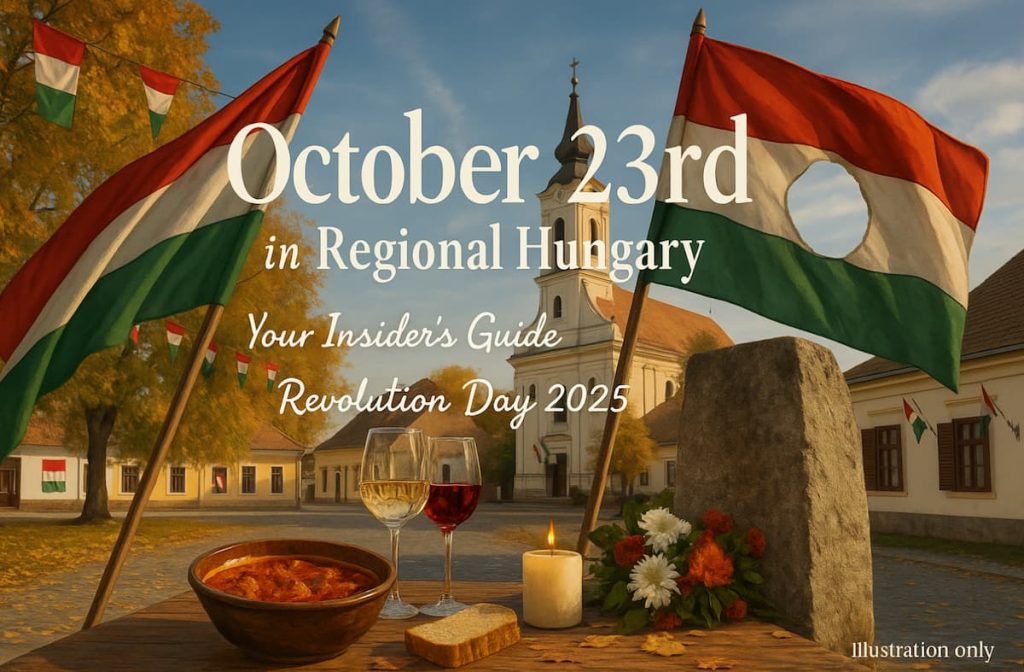
The real Hungary doesn’t live in Budapest. It lives in places where babushkas still argue politics at market stalls and where October 23rd means something deeper than tourist photo ops.
Forget every October 23rd guide you’ve read. They’re all Budapest-centric written by people who think Hungary ends at the city limits. The truth is, the most authentic Revolution Day experiences happen in regional cities where locals still remember their grandparents’ stories about ’56, where ceremonies aren’t performed for Instagram, and where you won’t queue for three hours to see a museum.
Here’s your no-bullshit guide to experiencing October 23rd like a Hungarian, not like a tourist.
Why Regional Hungary Gets Revolution Day Right
The Budapest Problem: Every October 23rd guide sends you to the same overcrowded spots. Parliament? Three-hour queue. House of Terror? Packed like a metro at rush hour. I’ve watched locals literally cross the street to avoid the Terror Háza area on October 23rd because of the tourist madness.
The Regional Reality: In cities like Debrecen, Szeged, and Pécs, October 23rd feels like what it actually is—a day of remembrance, not a tourist attraction. The ceremonies are intimate, the museums are empty, and locals will actually talk to you about what ’56 meant to their families.
Your City-by-City Revolution Day Playbook
DEBRECEN: Hungary’s Protestant Rome Does Remembrance Right
Why Debrecen wins: This is where Hungarian Protestantism was born, where independence movements took root, and where locals still take Revolution Day seriously as hell.
The Morning Perfect Storm (8:30-10:00):
- 8:30 – Kossuth Square Flag Ceremony: Military honor guard, zero tourists, maximum authenticity
- 9:00 – ÁVH Memorial (Kossuth utca 8): Most tourists skip this. Don’t. This memorial commemorates victims of Hungary’s secret police—heavy stuff that locals respect deeply
- 10:00 – University Square Memorial: Debrecen University students perform “Mert olyanokat éltünk meg, amire ma sincs ige…” (We lived through things for which there are still no words)
The University Performance Hit: I’ve watched this student performance twice now. It’s not actors—these are actual students, some whose grandparents lived through ’56. The emotional weight is palpable.
The Zsuzsi Forest Railway Hack (9:30): While everyone’s at ceremonies, take the vintage 1950s train at Ruyter utca 1. It’s running special heritage service with period cars. Locals call it “riding in their parents’ childhood.”
Free Museum Triple-Hit:
Déri Museum – Home to Munkácsy’s biblical trilogy—those massive paintings every Hungarian grows up seeing in textbooks. The “Christ Before Pilate” alone is worth the trip. The building itself is gorgeous Art Nouveau, and on October 23rd, you’ll have the place almost to yourself.
MODEM – Contemporary art that actually doesn’t suck. They rotate exhibitions frequently, but always include Hungarian contemporary pieces that give you insight into how modern Hungarians process their history. The building is striking modern architecture in a city full of baroque churches.
Tímárház – Watch traditional Hungarian craftspeople actually work. It’s living history—leather workers, blacksmiths, and textile artisans using techniques unchanged since the 1800s. Kids love it, adults find it meditative.
Why Debrecen Works: I’ve experienced both Budapest’s tourist circus and Debrecen’s authentic memorial atmosphere. Debrecen treats this like what it is—a day of remembrance, not a photo opportunity.
SZEGED: Where the Student Revolution Actually Started
The Hidden History: Everyone knows about Budapest’s October 23rd, but Szeged is where MEFESZ (Hungarian University Students Federation) was reborn on October 16, 1956. This is literally ground zero for the student movement that triggered everything.
9:00 – SZTE Campus Memorial: You’re standing where Hungarian university students first organized against Soviet rule. The ceremony happens at the exact spot where MEFESZ was reconstituted. When I attended, a history professor explained how without October 16th in Szeged, there would be no October 23rd in Budapest.
Free Cultural Overload:
Móra Ferenc Museum – Incredible archaeology and local history. The folk art collection shows you what Hungarian village life looked like before collectivization destroyed traditional culture. The Roman and medieval artifacts are world-class, but it’s the ethnographic collection that tells the real story of Hungarian identity.
János Kass Gallery – Contemporary Hungarian art with a focus on graphic design and illustration. Kass was one of Hungary’s most important 20th-century artists, and this gallery showcases both his work and contemporary pieces that engage with Hungarian cultural identity.
Bonus: 28th Autumn Cultural Festival runs October-November with 300+ programs across 70 venues. More info here.
PÉCS: European Cultural Capital Meets Revolution Memory
The Evening Program That Actually Works (17:00-19:30):
- 17:00 – “Szabadság, Szerelem!” Concert (48-as Square): Hungarian pop classics with historical context—think revolution nostalgia that doesn’t suck
- 19:30 – “Megáll az idő” Screening (Kodály Center): Gothár Péter’s cult film about the communist era
The Free Museum Bonanza:
Janus Pannonius Museum Complex – Six locations including:
- Zsolnay Museum: The famous Hungarian ceramics that made Pécs internationally known. The Art Nouveau pieces are stunning, and you’ll understand why Zsolnay ceramics are on buildings from Budapest to New York.
- Csontváry Museum: Hungary’s most eccentric and brilliant painter. His massive canvases of Middle Eastern scenes and Hungarian landscapes are like nothing else in European art.
- Vasarely Museum: The father of Op Art was born here. Mind-bending geometric works that influenced everything from psychedelic posters to modern graphic design.
Zsolnay Cultural Quarter – 88 sculptures scattered across 15 protected buildings. It’s like an outdoor museum where you can touch everything. The ceramic roof decorations alone are worth the walk.
Sopianae World Heritage Visitor Center – Early Christian tombs and frescoes from the 4th century. These underground burial chambers predate most of European Christianity and give you a sense of how ancient Pécs really is.
Local Reality: Pécs on October 23rd shows its real cultural muscles without the summer tourist markup or crowds.
MISKOLC: Working-Class Revolution Memory
8:00-16:00 Széchenyi István út Memorial Series: Focus on Diósgyőri steelworkers who joined the ’56 uprising. This is blue-collar revolution history you won’t get in sanitized Budapest presentations.
18:00 – National Theater Performance: “Ünnepi megemlékezés az 1956-os forradalomról” – local theater company processing Miskolc’s specific role in the revolution.
The Miskolc Bonus Round:
Miskolctapolca Cave Baths – Thermal springs in natural caves with special sauna programs (15:00-21:00). Swimming in underground caves while outside people are attending memorials? Peak Hungarian surrealism.
Hermann Ottó Museum – Natural history and local culture. The mineral collection is world-class (this is mining country), and the folk art shows you what Hungarian mountain culture looked like before industrialization.
Diósgyőr Castle – Medieval fortress with a surprisingly intact keep. The museum inside covers the castle’s role in Hungarian royal history, plus you get great views over industrial Miskolc.
SOPRON: Border Town, Escape Route History
October 21-23 Multi-Day Program: Sopron’s proximity to Austria made it a crucial escape route. An estimated 200,000 Hungarians fled through this region after ’56 was crushed.
The Border Story: Museum exhibitions focus on Sopron’s role as an escape corridor—heavy, important history that gets glossed over in more sanitized presentations.
Every Sopron Museum Free on October 23rd:
Lenck Villa – Bourgeois life in early 20th century Sopron. The period rooms show you what wealthy Hungarian-German families lived like before two world wars destroyed this world.
Central Mining Museum – Sopron sits on ancient mining territory. The museum covers 2000 years of mining technology, from Roman-era techniques to modern extraction.
Old Synagogue – One of Europe’s oldest synagogues, with medieval foundations and stunning 17th-century interior. A reminder of Sopron’s multicultural past before the Holocaust.
Macskakő Children’s Museum – Interactive exhibits about traditional Hungarian childhood, from folk toys to traditional games. Kids can try medieval crafts and traditional Hungarian toys.
GYŐR: Automotive Capital Remembers
The Morning Circuit (9:15-10:00):
- 9:15 – City Hall Memorial: Szigethy Attila commemoration (local ’56 hero)
- 9:30 – Szent István út Memorial: Danube National Council memorial site
- 10:00 – Bisinger Walk Golgota Memorial: Mayor Pintér Bence’s annual address, Győr National Theater performance
Esterházy Palace Collections – Baroque palace housing art collections that span centuries. The period rooms show you how Hungarian aristocracy lived, while the art collection includes everything from medieval religious pieces to 19th-century Hungarian landscapes.
Győr’s Automotive Angle: This is Hungary’s Detroit, so Revolution Day here connects industrial heritage with political freedom—a unique perspective you won’t get elsewhere. Visit Győr for more.
Your National Free Museum Cheat Sheet
Here’s every museum you can hit for free on October 23rd, organized by region:
NORTHERN HUNGARY:
- Hermann Ottó Museum (Miskolc) – Natural history and mining heritage in Hungary’s industrial heartland
- Peleház – Hermann Ottó Memorial House (Lillafüred) – The famous polymath’s summer cottage where Hungary’s “last Renaissance man” spent his final years with his writer wife Kamilla Borosnyay. The house preserves original furniture and personal belongings, plus fascinating displays of his zoological, ethnographic, and archaeological collections.
- Kazinczy Ferenc Museum (Sátoraljaújhely) – Language reform and Hungarian literature history
- Hungarian Language Museum – How Hungarian survived centuries of foreign domination
- Tokaj Museum – Wine culture and the history of Hungary’s most famous vintage
- Matyó Museum (Mezőkövesd) – Traditional Hungarian embroidery and folk art
WESTERN HUNGARY:
- Esterházy Palace Collections (Győr) – Baroque aristocratic life and Hungarian art
- ALL Museums in Sopron’s Museum Quarter – Medieval, mining, Jewish, and folk heritage
- Savaria Museum (Szombathely) – Roman Pannonia and early Hungarian settlement
- Iseum Savariense – Reconstructed Roman temple to Isis
SOUTHERN HUNGARY:
- ALL Janus Pannonius Institutions (Pécs) – Zsolnay ceramics, Csontváry paintings, Vasarely Op Art
- Móra Ferenc Museum (Szeged) – Archaeology, ethnography, and Great Plains culture
- Municipal Museums (Kalocsa) – Paprika heritage and folk traditions
- Türr István Museum (Baja) – Danube culture and 19th-century Hungarian military history
EASTERN HUNGARY:
- Déri Museum + MODEM + Tímárház (Debrecen) – Fine art, contemporary culture, and living crafts
- Jósa András Museum (Nyíregyháza) – Regional history and Hungarian folk culture
- Sóstó Museum Village – Open-air museum of traditional Hungarian village life
- Bihari Museum (Berettyóújfalu) – Great Plains agricultural heritage
- Bocskai Museum (Hajdúszoboszló) – Thermal spa culture and regional history
CENTRAL HUNGARY (Non-Budapest):
- Skanzen + Ferenczy Museum Center (Szentendre) – Hungarian village life and Serbian-Hungarian cultural mix
- Katona József Museum (Kecskemét) – Great Plains culture and Art Nouveau architecture
- ALL Szent István Museum Institutions (Székesfehérvár) – Medieval Hungarian royal heritage and coronation history
Transportation Intel That Actually Helps
The 24-Hour Pass Strategy:
- MÁV Magyarország24: 4,999 HUF for unlimited train travel nationwide
- Megyei24: 999 HUF for unlimited county travel
- October 23rd = Sunday schedule: Factor this into your timing
Guaranteed Extra Cars: MÁV adds extra carriages on these routes for October 23rd:
- Budapest-Debrecen-Nyíregyháza
- Budapest-Miskolc-Debrecen
- Budapest-Pécs
- Budapest-Szeged
Pro Tip: Arrive at 9:45 AM for 10:00 AM museum openings. This 15-minute window saves you from standing in lines.
Where NOT to Go (Tourist Trap Alert)
Budapest October 23rd = Tourist Hell:
- Parliament: Multi-hour queues
- Terror Háza: Overcrowded beyond belief
- Most central Budapest museums: Lines longer than airport security
Instead, Try These Hidden Gems:
- Szentendre Skanzen: “1956 in the Village” program—perfect for families
- Eger: City programs + free castle visits
- Veszprém: Laczkó Dezső Museum + historic walking tours
The Food & Logistics Reality Check
Restaurant Reality: October 23rd = national holiday = many restaurants closed or booked solid. Pre-booking is MANDATORY if you want to eat at an actual restaurant.
Thermal Bath Bonus: Most thermal baths run normal hours with slightly smaller crowds than usual. Perfect for post-museum relaxation.
Parking Hack: Free parking in most regional cities on October 23rd (except Debrecen city center, which stays paid).
Family Travel Intel
Kid-Friendly Rating: Museums are great for kids 8+. Memorial ceremonies are more serious and better suited for older children who can appreciate the historical significance.
Language Barrier: Major museums have English audio guides. Memorial ceremonies are in Hungarian but the emotional impact transcends language barriers.
The Bottom Line
October 23rd in regional Hungary offers something Budapest can’t: authenticity without crowds, depth without tourist traps, and genuine Hungarian experiences without the Instagram performance.
Best First-Timer City: Debrecen (most programs, best transportation connections) Most Beautiful Setting: Pécs (European Cultural Capital infrastructure)
Deepest Historical Significance: Szeged (where it all started) Most Unique Perspective: Sopron (border/escape route history)
Timing Sweet Spot: Leave Budapest by 8:00 AM train, you’ll be anywhere in Hungary by 10:00 AM when programs start.
This is how you experience October 23rd like it means something—because in regional Hungary, it still does.


