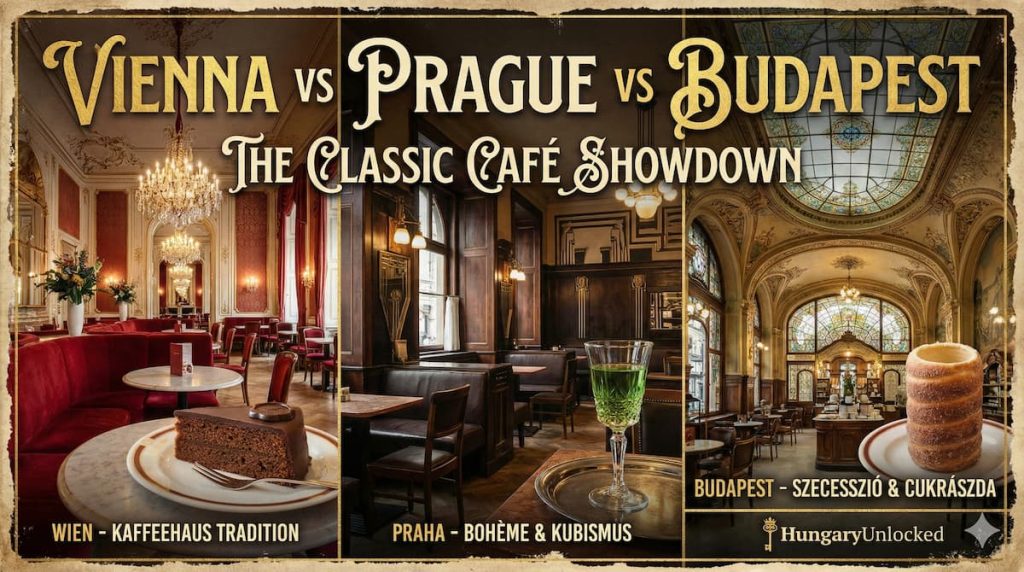
Three Habsburg cities. Three coffee cultures. Which capital has the best historic cafés in 2026?
🎯 TL;DR
Vienna has the most authentic, living café culture—locals still use these spaces daily. Budapest has the most dramatic interiors (New York Café is unmatched). Prague has the best balance of atmosphere and actually-good coffee. All three are worth experiencing, but Vienna’s cafés feel most like genuine social institutions rather than tourist attractions.
☕ Quick Comparison at a Glance
| Category | Vienna 🇦🇹 | Prague 🇨🇿 | Budapest 🇭🇺 |
| Coffee Quality | ⭐⭐⭐ | ⭐⭐⭐⭐ | ⭐⭐⭐ |
| Historic Atmosphere | ⭐⭐⭐⭐⭐ | ⭐⭐⭐⭐ | ⭐⭐⭐⭐⭐ |
| Local Authenticity | ⭐⭐⭐⭐⭐ | ⭐⭐⭐ | ⭐⭐⭐ |
| Cake Selection | ⭐⭐⭐⭐⭐ | ⭐⭐⭐⭐ | ⭐⭐⭐⭐ |
| Average Price | €5-8 coffee + cake | €4-6 | €5-10 |
| Tourist Trap Risk | Low | Medium | High |
The Habsburg Coffee House Legacy
Before we dive into specific cafés, let’s understand why Vienna, Prague, and Budapest all share this coffee house tradition in the first place.
The answer is: empire. All three cities were major centers of the Austro-Hungarian Empire, and coffee house culture spread from Vienna throughout imperial territories in the 18th and 19th centuries. The Viennese coffeehouse model—marble tables, newspapers on wooden racks, waiters in formal attire, the right to linger for hours over a single mélange—became the template for cafés across Central Europe.
By the early 20th century, Budapest alone had over 500 coffeehouses. Prague’s café scene was equally vibrant, hosting writers like Franz Kafka and Max Brod. Vienna, the imperial capital, naturally had the most developed scene, with coffeehouses serving as de facto living rooms, offices, and political meeting places for a population living in cramped apartments.
The 20th century was brutal to this culture. World wars destroyed many buildings. Communist regimes viewed bourgeois café culture with suspicion, converting some spaces to workers’ canteens or simply neglecting them. By 1989, the grand coffeehouses that remained were often decrepit shells.
The post-communist decades brought restoration—sometimes authentic, sometimes Disney-fied. Today, these three cities offer different versions of what remains of this shared heritage.
Vienna: The Living Tradition
Vienna is where coffee house culture originated in its Central European form, and it’s where it remains most alive as a genuine social practice rather than pure tourism.
Why Vienna’s Cafés Feel Different
Walk into Café Central or Café Sperl on any weekday afternoon and you’ll find something remarkable: actual Viennese people reading actual newspapers, conducting actual conversations, or simply sitting alone for hours in what can only be described as productive melancholy. The cafés still function as the “third place” they were designed to be—neither home nor work, but a space for being.
This isn’t true in Budapest or Prague, where the grandest cafés have become primarily tourist attractions that locals avoid except for special occasions.
Vienna’s café culture is also UNESCO-recognized as Intangible Cultural Heritage since 2011—a status that comes with certain preservation expectations and local pride.
The Must-Visit Vienna Cafés
Café Central
The most famous, for good reason. Leon Trotsky played chess here. Adolf Hitler was a regular. The vaulted ceilings and marble columns create a space that feels both grand and intimate. Yes, it’s touristy, but it maintains standards. The Apfelstrudel is excellent. Go for afternoon Kaffee und Kuchen rather than meals.
Coffee + cake: €8-12 | Herrengasse 14 | Daily 10:00-22:00
Café Sperl
The locals’ favorite among the grand cafés. Less polished than Central, more atmospheric. The billiard tables remain. The light through the windows in late afternoon is exceptional. Waiters have worked here for decades and carry themselves accordingly.
Coffee + cake: €6-9 | Gumpendorfer Str. 11 | Mon-Sat 7:00-23:00, Sun 10:00-20:00
Café Landtmann
The power café. Politicians, journalists, theater people—this has been the meeting place for Vienna’s establishment since 1873. More formal atmosphere. Excellent cakes. Outdoor terrace facing the Burgtheater in good weather.
Coffee + cake: €8-12 | Universitätsring 4 | Daily 7:30-22:00
Café Prückel
1950s interior preserved like a time capsule—the only major café that looks mid-century rather than fin-de-siècle. Attracts an intellectual crowd. Good coffee by traditional standards. Live piano some evenings.
Coffee + cake: €6-9 | Stubenring 24 | Daily 8:30-22:00
Demel
Imperial confectioner since 1786. This is where Empress Sisi bought her candied violets. More patisserie than café, but the hot chocolate and Sachertorte are exceptional. Waitresses still wear traditional uniforms and refer to themselves in the third person (“May she bring you another coffee?”). Expensive but justified.
Coffee + pastry: €10-15 | Kohlmarkt 14 | Daily 10:00-19:00
Café Hawelka
The bohemian alternative—smaller, darker, smokier (when that was allowed) than the grand establishments. Open since 1939, this was the artists’ and writers’ café when the grander venues felt too bourgeois. The famous Buchteln (sweet yeast dumplings) are served fresh after 10 PM. Unpretentious in a city of pretension.
Coffee + buchteln: €7-10 | Dorotheergasse 6 | Wed-Mon 8:00-1:00
Café Schwarzenberg
The first café on the Ringstrasse, opened 1861. Less touristed than Central or Landtmann, more neighborhood feel despite the grand location. Live piano sometimes. Good breakfast menu. The terrace overlooking the Ringstrasse is prime people-watching territory.
Coffee + cake: €6-9 | Kärntner Ring 17 | Daily 7:00-24:00
The Vienna Verdict
Vienna’s cafés are the real deal. They’re expensive (this is Vienna), often crowded with tourists at the famous ones, but still functioning as genuine social spaces. The service style—formal but not cold, allowing you to sit for hours without pressure—is something you won’t fully experience elsewhere. If you only have time for café culture in one city, Vienna should be it.
Prague: The Restored Elegance
Prague’s café scene was devastated by the communist era more than Vienna’s or Budapest’s—the regime specifically targeted “bourgeois” gathering places. What exists today is largely restoration, some painstaking and authentic, some more commercially motivated.
Why Prague’s Cafés Surprise
Two things set Prague apart: the quality of the coffee itself (surprisingly good, often better than Vienna), and the literary heritage that haunts certain spaces. Kafka’s Prague is not a marketing gimmick—the man genuinely spent countless hours in these rooms, writing and brooding and probably not being much fun at parties.
The restoration quality varies wildly. Some Prague cafés are gorgeous reconstructions that happen to serve mediocre coffee to tourists; others are genuinely excellent. Knowing which is which matters.
The Must-Visit Prague Cafés
Café Savoy
The best Prague café, full stop. Restored neo-Renaissance interior with soaring ceilings and period details. The kitchen is serious—this is restaurant-quality food in a café setting. Coffee is excellent by European standards. Locals actually come here.
Coffee + cake: €5-8 | Vítězná 5 | Mon-Fri 8:00-22:00, Sat-Sun 9:00-22:00
Café Louvre
Einstein gave lectures upstairs. Kafka was a regular. The space feels like what it is—a gathering place for thinkers, artists, and students, now mixed with tourists. The pool room (billiards) maintains old-world charm. Good cake selection.
Coffee + cake: €4-7 | Národní 22 | Mon-Fri 8:00-23:00, Sat-Sun 9:00-23:00
Café Slavia
The most famous Prague café, facing the National Theatre with river views. Art Deco interior, green booths, massive windows. Somewhat resting on its reputation—the coffee and cakes are average. Go for the location and views, not the food.
Coffee + cake: €5-8 | Smetanovo nábřeží 2 | Daily 8:00-24:00
Café Imperial
Absolutely stunning Art Deco ceramic tiles covering every surface—the interior alone is worth visiting. Now part of a hotel but maintains café service. The food is better than the coffee. Instagram gold.
Coffee + cake: €6-10 | Na Poříčí 15 | Daily 7:00-23:00
Grand Café Orient
The only Cubist café in the world, inside the House of the Black Madonna. The interior is a museum-worthy example of Czech Cubism applied to furniture and space. The coffee and cakes are secondary to the design experience.
Coffee + cake: €4-7 | Ovocný trh 19 | Mon-Fri 9:00-22:00, Sat-Sun 10:00-22:00
The Prague Verdict
Prague offers excellent café experiences, but they’re more fragmented than Vienna’s. Café Savoy is genuinely world-class; Café Slavia is living on reputation. The modern coffee scene (third-wave specialty) is strong—if quality coffee matters more than historical atmosphere, Prague might actually be your top choice. But for the classic Habsburg coffeehouse experience, Prague feels more reconstructed than continuous.
Budapest: The Grand Spectacles
Budapest takes a different approach: go big or go home. The Hungarian capital’s surviving grand cafés are some of the most visually stunning interiors in Europe—spaces designed to overwhelm with gilt, marble, and chandeliers.
The trade-off? These are largely tourist experiences now. Budapest’s historic coffeehouses function more as attractions than living social spaces. Locals rarely use them for casual coffee—the prices, crowds, and atmosphere don’t support that.
Why Budapest’s Cafés Amaze
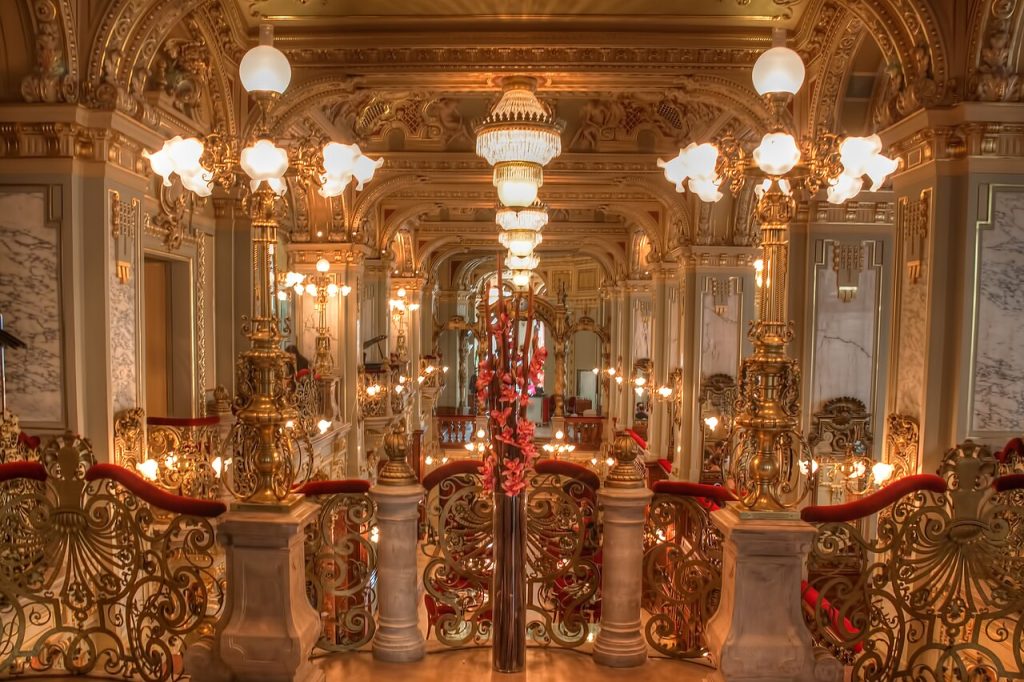
Pure architectural spectacle. The New York Café is objectively one of the most beautiful café interiors on Earth. These weren’t just coffee houses—they were statements of Hungarian ambition, designed to rival Vienna itself. When restored (often by international hotel chains), no expense was spared.
The coffee and food quality is inconsistent—some places rest entirely on visual appeal while serving mediocre products at premium prices. Others, especially the older family-run establishments, maintain standards.
The Must-Visit Budapest Cafés
New York Café
The most beautiful café in the world. That’s not hyperbole. Renaissance revival architecture, frescoed ceilings, marble columns, gold everything—the interior is genuinely staggering. Now owned by a hotel, which means professional but impersonal service. The coffee is fine; the cakes are fine; you’re paying for the room. Every tourist should experience it once. No local goes here for actual coffee.
Coffee + cake: €12-18 | Erzsébet krt. 9-11 | Daily 8:00-24:00
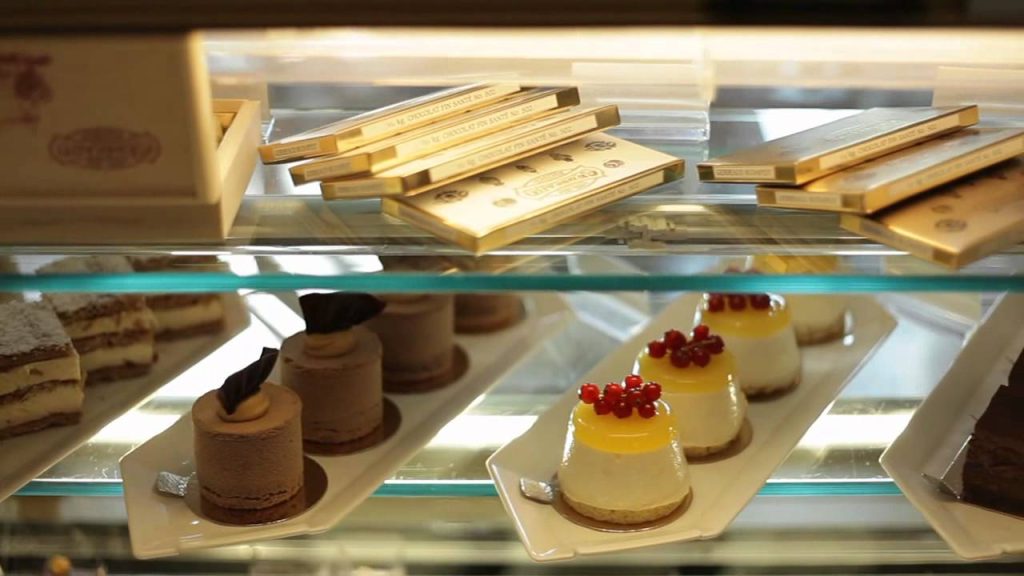
Café Gerbeaud
Budapest’s most famous historic patisserie, on Vörösmarty Square. Swiss-Hungarian confectionery tradition since 1858. The cakes are actually excellent—Gerbeaud slice is the signature. Multiple rooms with different atmospheres. More local presence than New York, especially in quieter back rooms.
Coffee + cake: €8-12 | Vörösmarty tér 7-8 | Daily 9:00-21:00
Central Kávéház
The attempt to revive Budapest’s most legendary literary café. The original closed in 1949; this 2000 reconstruction attempts to recapture the magic. Results are mixed—the space is pleasant, the food decent, but it lacks the authentic patina of Vienna’s equivalent. Still worth visiting.
Coffee + cake: €6-10 | Károlyi Mihály u. 9 | Daily 8:00-22:00
Művész Kávéház
Across from the Opera House, more approachable than the grand showpieces. Ornate but not overwhelming. Actually used by locals for pre-theater coffee. Decent cakes at reasonable (for the area) prices.
Coffee + cake: €5-8 | Andrássy út 29 | Daily 9:00-23:00
Café Hadik
The local’s choice—less famous, less ornate, but authentically atmospheric. A genuine neighborhood café that happens to have historic character. Near the Technical University, attracting students and professors. Much cheaper than the tourist circuit.
Coffee + cake: €3-5 | Bartók Béla út 36 | Daily 8:00-24:00
The Budapest Verdict
For sheer visual impact, nothing beats Budapest’s grand cafés. New York and Gerbeaud are genuinely breathtaking spaces. But they’re attractions, not living coffeehouses—you visit once, take photos, accept the tourist prices, and return to normal life. The smaller, less famous establishments (like Hadik) offer more authentic experiences at more reasonable prices. Budapest has the highest highs and the highest tourist-trap risk.
Understanding Coffee Culture: What Makes These Different from Starbucks
If you’re used to modern coffee chains—or even contemporary third-wave specialty coffee shops—historic Central European cafés operate on completely different principles. Understanding these differences helps you enjoy the experience rather than fight it.
The Right to Linger
In Viennese tradition, ordering a single coffee gives you the right to sit for hours. No side-eye from staff. No subtle table-clearing hints. The café is your temporary living room, rented for the price of a Melange.
This tradition emerged from practical origins: in the 19th century, many people lived in cramped apartments without space for guests or comfortable reading. The café was where you received visitors, wrote letters, read newspapers, or simply existed in comfortable surroundings.
Modern coffee shops optimize for turnover—customers in, caffeinated, and out. Historic cafés optimized for retention. The longer you stayed, the more you’d eventually order. But even one order bought you as much time as you wanted.
Today, this tradition survives strongest in Vienna. Budapest’s touristy cafés subtly push for turnover; Prague varies by establishment. But the principle remains: you’re not just buying coffee, you’re buying time and space.
The Newspaper Tradition
Traditional Viennese cafés provide newspapers on wooden racks—a custom dating from when newspapers were expensive and not everyone could afford subscriptions. The café aggregated news sources; patrons read communally.
You’ll still find newspaper racks in Café Sperl, Café Central, and other traditional establishments. Pick one up. Read it. Feel slightly superior to your phone-scrolling countrymen. This is the experience as designed.
The Water Glass
A glass of water always accompanies coffee in traditional Viennese service—usually tap water, served on a small silver tray alongside your coffee. This isn’t minimalist hospitality; it’s the complete experience. The water cleanses the palate before the coffee.
In some establishments, the water glass is the signal for attentive service: when you want the bill or another order, turn your water glass upside down. This custom isn’t universal anymore but persists in traditional venues.
The Waiter Relationship
The classic Central European café waiter is a specific type: formally dressed (often in vests or even tuxedos at grander establishments), professionally distant, slightly intimidating to newcomers, and deeply knowledgeable about both the menu and regular customers’ preferences.
These waiters are professionals, often career servers who’ve worked the same venue for decades. They’re not your friend. They’re not performing warmth. They’re providing precise, dignified service that includes leaving you alone unless you signal otherwise.
American-style chatty service doesn’t fit here. Neither does the rushed efficiency of modern coffee shops. The appropriate interaction is: place your order, receive your order, signal when you want something else, eventually ask for the bill (which may require assertive flagging—no automatic check-drop here).
Don’t mistake this formality for coldness or bad service. It’s a different service philosophy altogether.
The Coffee Vocabulary
Vienna has the most elaborate traditional coffee vocabulary, developed over centuries:
- Melange – The Viennese “cappuccino”: espresso with hot steamed milk
- Brauner – “Brown one”: espresso with a dash of milk
- Verlängerter – “Extended”: espresso diluted with hot water (like Americano)
- Einspänner – Espresso in a glass with whipped cream on top
- Mokka – Strong black coffee
- Kapuziner – Espresso with a little milk and a lot of whipped cream
- Maria Theresia – Espresso with orange liqueur and whipped cream
Prague and Budapest simplified this vocabulary over time, though remnants remain. If you’re overwhelmed, “Melange” or “Kapuziner” in Vienna, “cappuccino” in Prague, and “kávé tejszínhabbal” (coffee with whipped cream) in Budapest are safe starting points.
The Big Questions Answered
Which City Has the Best Coffee?
Prague, surprisingly. The Czech Republic embraced the third-wave coffee movement earlier and more thoroughly than Austria or Hungary. Even traditional cafés often source better beans than their Viennese counterparts.
Vienna’s coffee traditions are about the preparation rituals (various milk and water ratios) more than bean quality. Budapest’s grand cafés often serve quite average espresso dressed up in beautiful cups.
If coffee quality itself matters, look for specialty coffee shops in any of these cities rather than historic cafés. In Prague, that’s easy to find even in traditional settings; in Vienna and Budapest, the specialty and traditional scenes are more separate.
Which Has the Best Cakes?
Vienna, followed closely by Budapest’s Gerbeaud. Austrian and Hungarian baking traditions are legitimate, with centuries of refinement behind signature pastries.
The top tier:
- Sachertorte (Vienna) – dense chocolate cake with apricot jam
- Dobos torta (Budapest) – layered sponge with chocolate buttercream and caramel
- Gerbeaud szelet (Budapest) – walnut and apricot layered slice
- Apfelstrudel (Vienna) – apple strudel, paper-thin pastry
- Esterházy torta (Both) – almond meringue layers with vanilla buttercream
Prague’s cake tradition is less distinguished but still pleasant—Czech desserts tend toward fruit-filled pastries and simpler preparations.
Which Has the Best Atmosphere?
Depends what you’re seeking:
For grandeur: Budapest (New York Café)
For authenticity: Vienna (Café Sperl, Landtmann)
For intellectual heritage: Prague (Café Louvre, Savoy)
For local experience: Vienna (any of the main ones)
For photography: Budapest (New York) or Prague (Imperial)
For actually enjoying your coffee: Vienna or Prague’s better establishments
Which Is the Best Value?
Prague, then Budapest, then Vienna.
Vienna is expensive by any measure—€8-12 for coffee and cake at a famous establishment. Budapest’s grand cafés charge similar prices, but the secondary options (Hadik, Művész) are more reasonable. Prague offers the best combination of quality and price, with excellent experiences available for €5-8.
If You’re Visiting All Three Cities
Many travelers do the Vienna-Prague-Budapest triangle on a single trip. If you’re planning your café stops strategically:
Vienna (pick 2-3)
- Café Central (famous, worth it)
- Café Sperl (the local choice)
- Demel (for pastries, not coffee)
Prague (pick 2)
- Café Savoy (best overall)
- Grand Café Orient (architectural interest)
Budapest (pick 2-3)
- New York Café (once, for the spectacle)
- Ruszwurm (small, authentic, Castle District)
- Gerbeaud (best cakes)
- Or try our complete guide to Budapest’s historic cafés
This gives you 6-8 café experiences across three cities, covering the major styles and avoiding redundancy.
The Tourist Trap Warning
Historic cafés are prime tourist trap territory. A few defensive strategies:
Check prices before sitting. Most cafés post menus outside or have them visible. If a coffee is €15, that’s your warning.
Go at off-peak times. Early morning or late afternoon avoids the worst crowds and sometimes gets you better service.
The famous name doesn’t guarantee quality. Café Slavia in Prague rests on reputation; the actual experience is mediocre. Research specific establishments rather than just visiting “the famous one.”
Smaller often means better. The grand showpiece cafés optimize for photos and turnover. The slightly hidden locals’ spots optimize for repeat visitors.
Service attitude matters. In authentic cafés, the slightly grumpy waiter who lets you sit for three hours is part of the experience. In tourist traps, rushed service trying to flip tables is a bad sign.
Practical Information
Tipping
- Vienna: Round up or add 5-10% for good service
- Prague: 10% if service isn’t included
- Budapest: 10-15%, check if already added
Best Times to Visit
- Morning (before 10 AM): Quieter, more local feel
- Afternoon (3-5 PM): Traditional Kaffee und Kuchen time
- Evening: More romantic, often live music
Reservations
Generally not needed for café visits. New York Café in Budapest can have queues at peak times—no reservations accepted, just arrive early or late.
Dress Code
None of these cafés enforce dress codes anymore, but you’ll feel more comfortable matching the slightly elevated atmosphere. “Smart casual” is about right—no need for suits, but maybe not your most worn-out travel clothes.
The Final Verdict
If you’re genuinely interested in coffee house culture as a living tradition, Vienna is the clear winner. The cafés still function as social spaces, not just tourist attractions. The service style, the right to linger, the newspapers on racks—it’s not theater, it’s actually how people use these places.
If you want the most visually spectacular single experience, Budapest’s New York Café is unmatched. Nothing else looks like that. But it’s a museum you happen to drink coffee in, not a functioning café in the traditional sense.
If you want excellent coffee in a historic setting without the full Habsburg grandeur, Prague’s Café Savoy might actually be the best single recommendation—great atmosphere, great food, great coffee, manageable prices, not overwhelmingly touristy.
All three cities offer worthwhile café experiences. But if coffee house culture itself matters to you—the sitting, the lingering, the watching life pass by over a single cup—Vienna remains the authentic keeper of that flame.
📍 Continue Your Budapest Café Journey
This guide covers the comparison across three cities. For deeper Budapest coverage:
Frequently Asked Questions
Are these cafés expensive?
By Central European standards, yes. Expect €5-15 for coffee and cake at famous establishments. Vienna is most expensive, Prague most affordable. But compared to London or Paris café prices, they’re reasonable.
Can I just order coffee and sit for hours?
In traditional Viennese cafés, absolutely—that’s the entire point. In Budapest’s tourist-heavy spots, you’ll feel subtle pressure to order more. In Prague, it varies by establishment.
Do I need to speak German/Czech/Hungarian?
No. English menus and English-speaking staff are universal at tourist-visited cafés. Service might be slightly warmer if you try a few words of the local language.
Which café has the best Sachertorte?
Technically, Café Sacher in Vienna has the “original.” Hotel Sacher’s recipe is legally protected. Demel has a rival recipe that some prefer. Both are excellent; the “which is better” debate has raged for over a century.
Are any of these cafés good for working (laptop)?
Not really the traditional ones—that’s not the cultural norm. For laptop work, look for modern third-wave coffee shops in any of these cities. The historic cafés are for disconnecting, not connecting.
What’s “melange”?
The Viennese equivalent of cappuccino—espresso with steamed milk and foam. The terminology varies by city; Vienna has the most elaborate coffee vocabulary (Einspänner, Verlängerter, Brauner, etc.).
Prices verified: January 2026
Related articles: