🎯 TL;DR
Agárd Spa medicinal waters come from 58°C alkaline water drilled 1,000 metres underground, officially certified for rheumatic and musculoskeletal treatment. Modern complex includes thermal pools, sauna park, and kids’ areas. Entry prices are lower than Budapest’s famous baths — roughly 8–14 USD depending on day and season. Train from Budapest takes 45 minutes. Combine with Lake Velence for a proper day out.
📋 At a Glance
| Best For | Therapeutic soaking, family wellness days, escaping Budapest crowds without flying anywhere |
| Time Needed | 3–5 hours (full day if you add Lake Velence to the itinerary) |
| Cost | Verify current rates at agarditermal.hu — estimated 3,000–5,200 HUF adult entry |
| Hours | Check agarditermal.hu — varies by season and pool area |
| Getting There | Train from Budapest Kelenföld to Agárd station (~45 min), then walk or local bus to the complex |
| Skip If | You want Habsburg-era grandeur and Instagram-worthy neoclassical domes — this is functional, not ornate |
Why Agárd’s Thermal Waters Actually Work
There’s a version of Hungarian thermal bathing that’s sold purely on vibes — the golden light, the chess players, the tourist-facing marketing copy about “centuries of wellness tradition.” Agárd Spa medicinal waters belong to the other version: the one where a government authority has actually reviewed the mineral analysis and signed off that yes, this water does something useful to human bodies. That distinction matters more than most visitors realise when they’re choosing between Budapest’s famous baths and a 45-minute train ride into Fejér County.
What the 58°C Source Temperature Means for Your Body
The water rises from 1,000 metres below the Bika Valley at 58°C — hot enough that the spa needs to cool it before you get anywhere near it, which is actually a good sign. Source temperatures this high indicate deep geological origin, meaning the water has spent significant time in mineral-rich rock formations. By the time it reaches the pools, you’re typically looking at 34–38°C in the thermal pools, warm enough for therapeutic effect without turning you into a slow-cooked vegetable. The heat works on your musculature by increasing blood flow to peripheral tissues, reducing muscle spasm, and making joints temporarily more mobile — which is why physiotherapists have been recommending thermal bathing for post-operative recovery for decades. The warmth also activates the parasympathetic nervous system, which is a fancy way of saying your body relaxes, not just psychologically but at a physiological level.
Breaking Down the Mineral Composition
The Agárd thermal water mineral composition benefits come from a specific geological cocktail that distinguishes it from the run-of-the-mill warm water you’d get from a boiler. The water is classified as alkaline hydrogen-carbonate, chloride, sulphate, calcium, and fluoride-rich — each of those components carrying its own therapeutic implications. Calcium supports bone density and has mild anti-inflammatory effects when absorbed transdermally. Fluoride in therapeutic concentrations contributes to joint cartilage health. Sulphates support liver function and improve the excretion of metabolic waste through the skin. Chloride enhances the water’s capacity to draw toxins outward through osmotic processes. The alkaline pH — well above neutral — helps neutralise the low-grade metabolic acidosis that accumulates in inflamed joints, which is one reason people with rheumatic conditions consistently report feeling better after soaking here. This isn’t warm water with good marketing. It’s warm water that earned its label.
Medical Indications: What Agárd’s Water Is Officially Recognised For
Hungarian health authorities classify medicinal waters under a formal regulatory system, and Agárd’s water has been certified for specific therapeutic indications — not a vague wellness claim, but actual medical categories. The primary indications for medicinal water rheumatic treatment Hungary-wide include degenerative joint diseases (osteoarthritis being the most common), inflammatory rheumatic conditions during remission phases, musculoskeletal disorders following injury or surgery, and certain gynaecological conditions. Agárd fits squarely within these categories. My aunt, who has managed rheumatoid arthritis for the better part of two decades, has made Agárd a regular fixture in her treatment routine — not instead of medication, but alongside it, in a way that her rheumatologist actively supports. That’s not anecdote dressed up as evidence; it reflects the established role of balneotherapy within Hungarian medical practice, which takes thermal treatment far more seriously than Western European medicine tends to.
Alkaline vs. Chloride vs. Sulphate: Plain-Language Benefits
Understanding what does alkaline hydro-carbonated thermal water do to the body doesn’t require a biochemistry degree. Think of the alkaline component as a pH buffer for your skin and underlying tissue — it reduces localised inflammation and makes the therapeutic minerals more bioavailable. Chloride waters are excellent for circulation: they dilate peripheral blood vessels and stimulate metabolic activity, which is why chloride-rich baths are often prescribed for post-injury recovery. Sulphate waters act on the musculoskeletal system specifically — they have a mild analgesic effect and help reduce the stiffness associated with chronic joint conditions. The calcium and fluoride content supports connective tissue and cartilage health over repeated exposure. Combined, these elements make the Agárd thermal water mineral composition benefits cumulative: a single visit produces noticeable relaxation and temporary pain relief; a course of visits over two to three weeks — which is the classic balneotherapy prescription — produces measurable functional improvement in mobility and pain levels.
Indoor and Outdoor Pool Complex
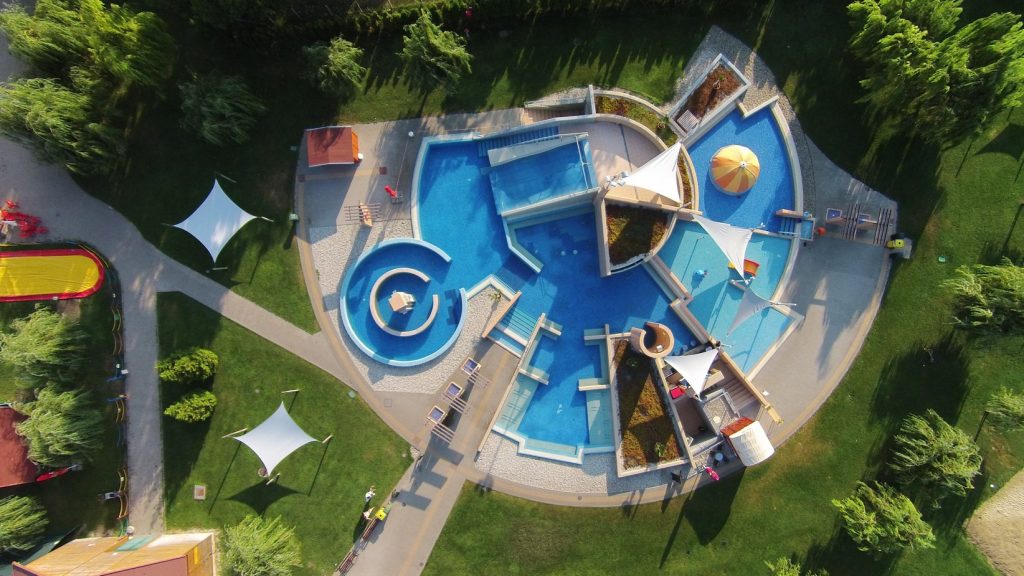
Agárd operates what is effectively two different spas depending on when you visit. The winter version is a quiet, steam-hazed indoor complex where the ratio of locals to tourists tilts heavily toward locals. The summer version opens up a sprawling outdoor area that transforms the experience entirely — more families, more noise, more sunscreen. Both versions are built around the same certified medicinal water, but the atmosphere is different enough that repeat visitors often have a strong seasonal preference.
Indoor Thermal Pools: Year-Round Options
The indoor thermal pools at Agárd are the backbone of the complex — accessible year-round and maintained at therapeutic temperatures regardless of what Hungarian winter is doing outside. These pools range from the primary therapeutic thermal pool, where the medicinal water concentration is highest and the temperature sits in the range most beneficial for musculoskeletal conditions, to secondary pools at slightly lower temperatures suited for longer soaks and general relaxation. The indoor environment means condensation, mineral smell, and a certain atmospheric density that either relaxes you immediately or takes some getting used to. For anyone using the spa therapeutically, the indoor pools are where the serious work happens. The water is the same water that earned the medicinal certification, piped in and carefully temperature-managed.
Outdoor Pools: The Summer Transformation
When the agárd spa outdoor pools summer season opens — typically from late May or June depending on conditions — the complex doubles in effective size and character. The outdoor section adds recreational and leisure pools alongside thermal options, with the additional benefit of fresh air and, on a good day, actual Hungarian sunshine. The outdoor pool area is where the family demographic increases significantly: parents who booked for the therapeutic water find themselves sharing space with teenagers who are there for the wave pool. This isn’t a criticism — the complex is large enough that the zones don’t significantly interfere with each other — but it’s useful to know going in.
Adventure and Leisure Pools
The adventure and leisure pools at Agárd include a wave pool, a lazy river circuit, and recreational water features that have nothing to do with the medicinal water certification but everything to do with making this a viable full-day destination rather than a two-hour therapeutic stop. The wave pool is popular — the kind where adults who arrived intending to soak therapeutically end up staying twenty minutes longer than planned. The lazy river functions as a low-effort active recovery option between sauna sessions, keeping blood moving without requiring any actual effort. These facilities keep the complex competitive with larger water park complexes in the region while retaining the genuine thermal bathing credentials that distinguish Agárd from a simple leisure centre.
Children’s Pool Areas and Shallow Zones
The children’s pools agárd family spa provisions are extensive enough to make this a legitimate family destination rather than an adults-only therapeutic facility that tolerates children. Dedicated shallow pools with appropriate temperatures for younger visitors, water play elements scaled to smaller humans, and supervised areas mean parents can actually relax — which is theoretically the point of a spa, though Hungarian families seem to view it primarily as an endurance sport. Infants and toddlers have their own designated areas with water temperatures adjusted downward from the main thermal pools, which is a necessary safety provision given that therapeutic temperatures are not appropriate for very young children.
Off-Season vs. Summer: Two Different Spas
The agárd thermal bath indoor winter visit is a fundamentally quieter experience than the summer version — and for many visitors, that’s the whole point. Between November and March, you’re typically sharing space with a much smaller crowd that skews older and more therapeutically motivated. The indoor pools feel more contemplative, the sauna section is more accessible, and the staff are less stretched. Summer weekends at Agárd can feel like an entirely different venue — which it sort of is, given the outdoor expansion. Neither version is superior; they serve different needs. My personal preference is shoulder season: outdoor pools beginning to open, crowds not yet at peak, and the water doing exactly what it’s supposed to do without requiring you to navigate around school groups.
Sauna Park and Wellness Section
The sauna facilities at Agárd are a separate proposition from the thermal pools — they require understanding and a certain willingness to voluntarily sit in extreme heat, which the Finns have been doing for centuries and which the rest of Europe has been gradually coming around to. The agárd spa sauna park aufguss schedule is worth checking before you visit if sauna sessions are part of your agenda, because the guided aufguss ceremonies run at specific times and missing them reduces the experience to solitary sweating, which is fine but less memorable.
Finnish Sauna and Bio Sauna
The Finnish sauna at Agárd operates at the temperatures a Finnish sauna should — somewhere between 80°C and 100°C, with humidity kept deliberately low to allow the heat to do its work without overwhelming the respiratory system. This is the version of sauna that produces the most pronounced cardiovascular effect: your heart rate increases, peripheral blood vessels dilate aggressively, and you sweat considerably more than you expected. The bio sauna runs at lower temperatures — typically 50–60°C — with higher humidity, which many visitors find more tolerable as an introduction to the format. The bio sauna is also gentler on elderly visitors and those with cardiovascular conditions who want the thermal benefit without the extreme temperature exposure.
Steam Room and Other Heat Cabins
The steam room operates on a different physiological principle from the saunas — high humidity at lower temperatures (typically 40–50°C) that saturates the airways and opens pores aggressively. The effect on the respiratory system is significant, which makes steam rooms particularly useful for visitors with sinus conditions or mild respiratory complaints, and particularly inadvisable for anyone with asthma who hasn’t cleared it with a physician first. Additional heat cabin options at the complex vary by season and configuration — checking the current wellness section layout on agarditermal.hu before arrival is sensible, as facilities are occasionally reconfigured during maintenance periods.
Aufguss Sessions: What They Are and When They Run
An aufguss — the German term that Hungary has adopted wholesale, because if you’re going to borrow a sauna tradition you may as well borrow the vocabulary — is a guided sauna ceremony in which a sauna master pours scented water over heated stones and then fans the resulting steam across the room using towels, creating intense heat waves that cycle through the cabin. The thermal bath sauna Hungary tradition has absorbed aufguss as a premium offering, and Agárd’s sessions typically run at scheduled times throughout the day, particularly in the afternoon and evening. The experience is social, theatrical, and significantly more intense than sitting alone in a sauna. First-timers should position themselves on lower benches where temperatures are more manageable and leave if they feel lightheaded — the ceremony is supposed to be challenging, not dangerous.
Relaxation and Cool-Down Areas
The relaxation areas between sauna sessions are not optional extras — they’re physiologically necessary. The hot-cold-rest cycle that structures proper sauna use requires cool-down periods between heat exposures, during which your cardiovascular system re-regulates and the therapeutic benefit consolidates. Agárd provides cold plunge options and rest zones within the wellness section, though the quality and availability of these areas varies. The agárd wellness section facilities include seating areas away from direct pool noise where the sauna circuit can be completed properly rather than interrupted by the general chaos of a busy family complex.
Medical Treatments and Balneotherapy Services
Beyond recreational and therapeutic bathing, Agárd offers structured medical treatments administered by qualified personnel — a category of service that separates genuine medicinal spas from leisure centres with warm water. Balneotherapy booking agárd spa Hungary is possible both on-site and, for specific periods, by advance arrangement — which is strongly advisable if you’re visiting with a specific therapeutic goal rather than general wellness.
What Is Balneotherapy and Who Is It For
Balneotherapy is the medical application of thermal mineral water for therapeutic purposes — a practice with a longer clinical history in Central Europe than most people realise. It’s not a spa treatment in the marketing sense; it’s a physiotherapy modality with documented efficacy for specific conditions, prescribed and supervised in the same way that a physiotherapist would prescribe exercise. Physician supervised thermal treatment Hungary operates under a formal medical framework: a balneologist or general practitioner assesses the patient, identifies appropriate treatment parameters (temperature, duration, frequency, mineral concentration), and monitors progress. The primary candidates are people with osteoarthritis, inflammatory arthritis in remission, post-surgical musculoskeletal recovery, chronic back pain, and certain circulatory disorders. It is not appropriate for people with acute infections, certain cardiovascular conditions, or during active inflammatory phases of rheumatic disease — which is exactly why physician supervision exists.
Medicinal Massage and Mud Treatments
The medicinal mud treatment agárd thermal bath offering uses Hungarian thermal mud — a mineral-dense material extracted from thermal lake beds that retains heat exceptionally well and delivers minerals directly to skin and underlying tissue. Mud packs are applied to affected joints or the lower back, wrapped to maintain temperature, and left for a prescribed period before removal and rinsing. The heat retention properties of therapeutic mud are significantly better than water alone, making it useful for deeper tissue treatment of chronic joint conditions. Medicinal massage at Agárd is distinct from relaxation massage: it’s applied with therapeutic intent and specific pressure protocols targeting musculoskeletal dysfunction. A sludge sheet or treatment wrap is required for mud applications — available to rent on-site if not brought from home.
How to Book a Treatment Session
Treatment bookings at Agárd can be made on-site at the medical services reception on the day of your visit, though availability during peak periods — summer weekends, national holiday weeks — is not guaranteed without advance planning. For specific treatment types or if your visit is medically motivated rather than recreational, calling ahead or checking the current booking system at agarditermal.hu is the practical approach. Some visitors with formal prescriptions from their Hungarian GP find the process considerably smoother, as they arrive with documentation that positions the treatment within the medical rather than the spa framework. International visitors can arrange treatments directly on-site, but bringing a written summary of any relevant medical history in simple language is useful given that not all treatment staff operate in English.
What to Expect During Your First Treatment
A first balneotherapy session at Agárd typically begins with a brief assessment — current symptoms, any contraindications, treatment history — before the specific modality is applied. For pool-based balneotherapy, this means supervised thermal bathing at prescribed temperatures for specific durations, often combined with underwater exercises or manual therapy. The immediate experience is considerably quieter and more clinical than recreational bathing: treatment areas are typically separated from the main pool complex, sessions are timed, and the emphasis is on therapeutic protocol rather than leisure. Most first-time visitors experience pronounced fatigue for the remainder of the day — this is a normal physiological response to significant cardiovascular and musculoskeletal stimulation, not a sign that something went wrong. Plan a quieter evening.
Group and Corporate Wellness Bookings
Group bookings at Agárd are available for corporate wellness programmes, rehabilitation groups, and organised visits from healthcare facilities. The complex has the capacity and infrastructure to handle group arrivals, including therapeutic groups that visit on a regular scheduled basis. Corporate wellness bookings — which are a growing category in Hungary as employers take occupational health more seriously — can include a combination of recreational access and structured treatment sessions. For groups with specific therapeutic needs, advance coordination with the medical services team is essential.
Getting to Agárd from Budapest
The logistics of getting to Agárd are more straightforward than the spa’s relative obscurity among international visitors might suggest. It’s a functioning Hungarian commuter destination — local families do this trip regularly, which means the infrastructure exists, the connections work, and you’re unlikely to end up stranded. That said, the specific routing matters if you want to avoid an unnecessarily complicated journey.
By Train from Budapest Kelenföld
The most reliable public transport option for how to get to agárd spa from Budapest by train is the MÁV service from Budapest Kelenföld station, which is accessible from the city centre via metro line 4 or various tram connections. The direct service to Agárd station runs approximately 45 minutes and operates with regular frequency during daytime hours. Budapest Keleti and Déli also have connections, sometimes requiring a change at Székesfehérvár, but Kelenföld is typically the most direct departure point. Standard MÁV tickets apply — purchase at the station counter, from automated machines, or via the MÁV app. The journey is scenic in a flat, Central European agricultural plain kind of way, which is to say moderately pleasant if you have a window seat and a podcast.
From the Station to the Spa Entrance
Agárd station deposits you approximately 10 minutes’ walk from the spa complex, with the route being straightforward enough that the agárd spa bus connection from train station is an option rather than a necessity for most visitors. Local bus services connect the station to Fürdő tér if you’d prefer not to walk — useful in high summer when the walk becomes unpleasantly hot, or in winter when it becomes unpleasantly cold. The walk itself passes through a quiet residential area with reasonable pavement; nothing that requires careful navigation but not a particularly exciting stroll either. Signage for the spa from the station exists and is adequate.
Driving from Budapest: Route and Parking
For agárd thermal bath parking driving from Budapest, the standard route takes the M7 motorway in the direction of Székesfehérvár and Balaton, exiting at the Agárd junction. Total driving time from central Budapest is approximately 50 minutes under normal traffic conditions — slightly longer during Friday afternoon exodus or on summer holiday weekends when the Balaton-bound traffic builds on the M7. The route is straightforward and well-signed. The spa complex at Fürdő tér 1 has dedicated parking.
Parking Costs and the Free First 20 Minutes
Parking at the Agárd spa complex includes a free first 20 minutes — which is long enough to determine you’ve arrived in the right place and collect your bearings, but not long enough to significantly reduce your parking costs on a full-day visit. After the initial free period, standard parking fees apply. The system has been updated periodically, so checking the current rate structure on agarditermal.hu or at the parking kiosk on arrival is advisable. The car park is directly adjacent to the complex entrance, which is a meaningful quality-of-life improvement over the parking situations at several Budapest baths where you can spend considerable time and distance getting from vehicle to water.
English-Language Signage and Staff
Agárd is a spa that serves primarily Hungarian visitors, which means English-language signage exists but is not comprehensive, and English-speaking staff are available but not guaranteed at every interaction point. The core visitor journey — buying a ticket, finding the lockers, reaching the pools — can be navigated by someone with zero Hungarian, as the process is largely procedural and visual. For medical treatment bookings or detailed enquiries, some patience and potentially a translation app may be required. This is not a complaint about the staff, who are generally helpful; it’s simply an accurate description of a spa that has not built its infrastructure around international tourism in the way that Széchenyi or Gellért have.
Ticket Prices and Entry Options (2026)
Agárd spa ticket prices 2026 are best verified directly at agarditermal.hu before your visit, as the complex updates its pricing seasonally and the estimates below reflect general ranges rather than guaranteed current figures. What can be said with confidence is that Agárd thermal bath entry fee adult child pricing is structured to be more accessible than Budapest’s central baths, with weekday rates notably lower than peak-time charges at Széchenyi or Gellért.
Adult and Child Entry Prices
Adult entry to the Agárdi Gyógy- és Termálfürdő is estimated in the range of 3,000–5,200 HUF (~$8–$14 USD) depending on the day, season, and which pool areas are included. Children’s entry is typically discounted, with age thresholds and pricing tiers that vary — current specifics are available at agarditermal.hu. The pricing structure reflects the dual nature of the complex: basic thermal access is priced for regular local visitors, while combined access including all facilities trends toward the higher end of the range. Reduced rates for students, seniors, and disability card holders are standard at Hungarian public baths; bring appropriate documentation.
Weekday vs. Weekend Pricing
The gap between weekday and weekend pricing at Agárd is meaningful enough to inform your scheduling. Weekday mornings represent the lowest-cost, lowest-crowd combination — the thermal bath equivalent of flying on a Tuesday. Weekend rates reflect higher demand and are typically structured to include extended access windows. If your schedule allows flexibility, arriving on a Wednesday or Thursday morning produces a qualitatively different experience from a Saturday afternoon: both in cost and in the atmospheric difference between a relatively quiet therapeutic space and a busy family complex.
Season Passes and Repeat Visitor Options
For visitors to the region or locals within commuting distance, agárd thermal bath season pass Hungary options represent significantly better value than repeated single-entry purchases. Season passes are available in various formats — monthly, quarterly, annual — with the economics making obvious sense for anyone visiting more than twice per month. The therapeutic benefits of balneotherapy are cumulative and most effective with regular visits, which makes the season pass not just financially sensible but therapeutically aligned with how the water is supposed to be used. Details and current pricing for season passes are at agarditermal.hu.
Locker, Towel, and Swimwear Rental
Towel rental at Agárd is available for an estimated 800–1,200 HUF (~$2–$3 USD). Swimwear rental is less common at Hungarian thermal baths than at some international counterparts — most visitors bring their own, but the option exists if you arrive unprepared. The locker system requires a deposit of approximately 500 HUF (refundable, ~$1.50), returned when you surrender the locker key. This is the standard Hungarian thermal bath arrangement and operates straightforwardly in practice.
Online Booking and Discounts
Online booking availability and discount structures change periodically at Agárd — the official website agarditermal.hu is the only reliable source for current promotional pricing, partner discounts, or advance purchase options. Some Hungarian thermal baths have introduced dynamic pricing that rewards advance booking; whether Agárd has adopted this model fully by 2026 is worth checking. Group booking discounts for ten or more visitors are typically negotiated directly with the complex rather than through an online system.
Price Comparison (2026 Estimates — Verify Before Visiting)
| Venue | Ticket Type | Price (HUF) | Approx. USD |
|---|---|---|---|
| Agárdi Gyógy- és Termálfürdő | Adult entry (verify at agarditermal.hu) | TBC | Est. $8–$14 |
| Agárdi Gyógy- és Termálfürdő | Parking (first 20 min free) | First 20 min: free | Free initially |
| Széchenyi Thermal Bath | Adult cabin ticket (2026 est.) | ~7,800 HUF | ~$21 |
| Gellért Thermal Bath | Adult entry with locker (2026 est.) | ~8,200 HUF | ~$22 |
| Rudas Thermal Bath | Adult entry weekday (2026 est.) | ~5,200 HUF | ~$14 |
| Agárdi Gyógy- és Termálfürdő | Towel rental (est.) | ~800–1,200 HUF | ~$2–$3 |
| Agárdi Gyógy- és Termálfürdő | Locker deposit (est., refundable) | ~500 HUF | ~$1.50 refundable |
All prices are estimates. Agárd prices: always verify at agarditermal.hu before visiting. Budapest bath prices sourced from venue websites; subject to change.
What a First Visit to Agárd Actually Looks Like
There’s a particular genre of travel anxiety that involves arriving somewhere you’ve never been and not knowing which of the fifteen available doors you’re supposed to walk through. Agárd is straightforward enough that this shouldn’t be an issue, but walking through the process in advance is still useful — particularly for what to expect first visit agárd thermal bath in terms of the sequence and the small logistical details that turn an enjoyable day into an annoying one if you don’t know them.
Arrival: Tickets and Entry
Tickets at Agárd are purchased at the main entrance cashier. If you have a printed or digital voucher, this is where you present it. The cashier interaction is brief — you indicate adult or child entry, any applicable discounts, and pay. Payment options include both cash (Hungarian Forint) and card; verifying which is currently accepted at agarditermal.hu before arrival is sensible in case the system has been updated. You’ll receive or be issued an entry wristband that serves as your ticket throughout the complex and often as your locker key — keep it on and functional for the duration of your visit.
Lockers, Changing Rooms, and Valuables
The agárd spa lockers changing rooms first time experience is standard Hungarian thermal bath procedure: locate your assigned locker, deposit the refundable coin or key deposit, change into swimwear, store your belongings, and proceed. Flip-flops are mandatory in changing areas — this is a hygiene rule, not a suggestion, and it’s enforced. If you forget yours, rental is available but avoidable with thirty seconds of packing forethought. Leave valuable items at home or in your vehicle; the locker system is secure for the usual spa inventory of phones, wallets, and keys, but travelling with irreplaceable items in a thermal bath is a choice you make at your own risk.
Recommended Pool Circuit for First-Timers
For a first visit, a sensible approach is to begin in the main indoor thermal pool — the medicinal core of the complex — and spend 20–30 minutes acclimatising to the temperature and mineral water before moving to recreational areas. Rushing immediately to the wave pool and then wondering why you feel vaguely unwell later is a common first-timer error. Let the therapeutic water do its initial work, then progress to the adventure pools, leisure areas, or sauna section depending on your priorities. Rehydrate throughout — the combination of thermal heat and sweating depletes fluids faster than most people realise in a spa environment.
Sauna and Wellness: When to Slot This In
The sauna section works best when approached as a separate phase rather than interleaved with recreational swimming. A natural sequence is: thermal pools first, lunch or a break mid-visit, sauna circuit in the afternoon when the pools are at their busiest and the sauna slightly more peaceful. Aufguss sessions run at scheduled times — check the posted timetable on arrival and plan around them if guided sessions are part of your agenda. After sauna, return to the thermal pools for a final soak, then the cool-down rest before leaving.
On-Site Food, Drink, and Vending Options
The agárd thermal bath food café on site provisions are functional rather than gastronomically ambitious — which is exactly appropriate for a spa complex. Expect cafeteria-style hot food, snacks, cold drinks, and the kind of menu that sustains a visit without requiring culinary enthusiasm. Vending machines supplement the café for between-session hydration. Bringing your own snacks is generally permitted at the outdoor areas; the changing rooms are not a picnic venue. Prices are spa-appropriate, meaning slightly elevated relative to local restaurant alternatives — but the alternative to on-site food is a hungry drive or train journey back to Budapest, so perspective is useful here.
Photography Policy Inside the Complex
Photography in the changing rooms is prohibited — this should be obvious but apparently requires stating. In the pool areas, the complex asks visitors to respect others’ privacy when using phones or cameras, which in practice means that candid photography of strangers is not acceptable even if technically possible. The recreational outdoor areas are more relaxed about this than the indoor thermal sections. If you intend to document your visit for any purpose beyond personal memory, the most considerate approach is to be discreet and focus on architectural elements or empty sections of pool rather than other visitors.
Comparing Agárd to Budapest’s Thermal Baths
The question “is Agárd worth visiting instead of Budapest’s thermal baths?” has a useful answer, but it requires understanding what you’re comparing and why. The Budapest baths and Agárd spa serve overlapping but distinct purposes, and the choice between them should be made on the basis of what you actually want from a thermal bathing experience rather than which one has better-known branding.
Agárd vs. Széchenyi: Price and Crowds
The agárd spa vs széchenyi thermal bath comparison is the most commonly requested because Széchenyi is the bath most international visitors have heard of. Széchenyi sits in City Park, occupies a neo-baroque building of genuine architectural grandeur, and costs approximately ~7,800 HUF (~$21 USD) for a cabin ticket in 2026. It is also reliably crowded — particularly the outdoor pools on weekends, where the combination of tourists, locals, and chess players creates an atmosphere that is lively rather than therapeutic. Agárd wins on price (estimated lower entry), wins decisively on crowd levels outside summer peak season, and matches Széchenyi on therapeutic water quality — both are certified medicinal waters, though the mineral compositions differ. Széchenyi wins comprehensively on architecture, central location, and name recognition. If you’re visiting Budapest for a week and want one photogenic bath experience, Széchenyi. If you want actual therapeutic benefit with room to breathe, Agárd.
Agárd vs. Gellért: Therapeutic Water Quality
Agárd vs. Rudas: The Medical Tradition
Rudas is the most medically serious of Budapest’s central baths — a 16th-century Turkish structure that has retained a genuine therapeutic identity alongside its wellness and nightlife programming. At approximately ~5,200 HUF (~$14 USD) weekday adult entry, it’s also the most price-competitive of the Budapest options. Rudas’s medical bathing tradition and Agárd’s certified medicinal water exist in similar categories, which makes this comparison the most nuanced. The choice comes down to context: Rudas is in Budapest, accessible without a train journey, and carries significant historical weight. Agárd is quieter, more modern in its facilities, combines naturally with Lake Velence, and may offer a more comfortable environment for visitors prioritising therapeutic outcome over historical atmosphere.
When to Choose Agárd Over Budapest Baths
Choose Agárd when: you’re visiting for a full day and want a combination of thermal bathing and outdoor relaxation; when crowds are a significant concern; when the therapeutic rather than tourist experience is the priority; when you have children who need recreational pools alongside thermal access; when you want to combine with Lake Velence. Choose Budapest baths when: you’re in the city for a short trip and won’t make a dedicated journey to Fejér County; when architectural experience is part of the appeal; when evening bath sessions are part of your plan. The budapest thermal bath alternatives day trip framing positions Agárd as a secondary option, but for many visitors — particularly those returning to Budapest and looking for something beyond the standard tourist circuit — Agárd is the primary destination.
Comparison Table: Key Metrics Side by Side
| Factor | Agárd | Széchenyi | Gellért | Rudas |
|---|---|---|---|---|
| 2026 Adult Entry (est.) | ~$8–$14 | ~$21 | ~$22 | ~$14 |
| Medicinal Certification | Yes | Yes | Yes | Yes |
| Crowd Level (weekend) | Low–Medium | Very High | High | Medium |
| Architecture | Modern/functional | Neo-baroque | Art nouveau | Ottoman |
| Family Facilities | Excellent | Good | Limited | Limited |
| Distance from Budapest | 45 min by train | Central | Central | Central |
| Lake/Outdoor Combo | Yes (Lake Velence) | City Park only | Danube views | Danube views |
Combining Lake Velence with Your Spa Visit
The agárd spa lake velence day trip itinerary is one of those combinations that works so naturally it’s slightly surprising it doesn’t get mentioned more often. The spa and the lake are effectively next-door neighbours, which means that a visit structured around both produces a complete day in Fejér County rather than a half-day trip requiring justification. The lake offers a completely different atmosphere from the spa complex — open air, wildlife, lakeside paths — that provides genuine contrast and recovery time between or after thermal soaking.
Lake Velence: What to Know Before You Go
Lake Velence is Hungary’s third-largest lake — considerably smaller and less famous than Lake Balaton but sharing some of its character with significantly fewer crowds and none of the tourist infrastructure that makes Balaton simultaneously appealing and exhausting. The lake is a protected natural area with significant ornithological importance — the reed beds on the western shore are a national nature reserve, and birding is a legitimate reason to visit independent of the spa connection. The southern shore around Agárd and Velence is the more accessible and recreational side, with walking paths, open swimming areas, and cafés accessible from the waterfront.
Morning Spa, Afternoon Lake: The Itinerary
The lake velence combined spa visit Budapest day trip works most naturally as a morning spa session — arriving at opening to access the thermal pools before crowds build — followed by a lakeside lunch break and an afternoon at the water. This sequence makes physiological sense: the spa session produces relaxation and mild fatigue, and the open-air lake environment provides gentle recovery and fresh air before the return journey. Attempting it in reverse — lake in the morning, spa in the afternoon — also works but tends to produce a longer stay at the spa than planned, which then makes the return train timing stressful.
Where to Eat Lunch Near the Spa
The restaurant options near Agárd thermal bath cluster around the lakeside rather than the spa complex itself. Several restaurants and cafés operate along the Agárd and Velence waterfront, serving standard Hungarian lake cuisine — fish dishes, schnitzel, the kind of menu that varies minimally from one lakeside restaurant to the next but delivers reliable satisfaction after a morning in thermal water. Peak summer sees these establishments busy at lunch; arriving at 11:30 rather than 12:30 secures a table without waiting. Off-season, some establishments reduce hours or close entirely — checking ahead in April, October, or November is advisable.
Cycling and Walking Around Lake Velence
Things to do near agárd thermal bath on the Lake Velence side include a well-maintained cycling and walking path that runs along the southern shore, connecting Agárd to Velence town and continuing toward Pákozd. The route is flat, manageable for all fitness levels, and offers views across the reed-edged lake that are particularly good in morning light or late afternoon. Bicycle rental is available near the lake during the main season. The full lakeside circuit covers approximately 16–18 kilometres — feasible as an afternoon activity after a morning spa session for reasonably active visitors.
Nearby Accommodation for Overnight Stays
For visitors interested in extending the trip, accommodation options around Lake Velence range from modest guesthouses to larger hotel complexes with spa access packages. The Szárcsa Hotel in Agárd offers packages that include access to Agárd spa facilities, making it a logical base for visitors prioritising repeated therapeutic bathing over a single day visit. Overnight stays also allow for early morning access to the spa before day visitors arrive — which, for anyone pursuing a therapeutic course of visits rather than a one-off wellness day, represents a meaningful quality-of-life improvement.
Family and Accessibility Information
Agárd is one of the more family-accommodating thermal complexes in Hungary — not because it has lowered its standards to become a water park, but because it has built recreational infrastructure that makes the visit viable for children while retaining the therapeutic core that adults come for. The agárd spa family friendly children’s pools provision is comprehensive enough to appear repeatedly in positive reviews from visitors who arrived sceptical about bringing young children to a medical spa.
Children’s Facilities and Age Suitability
The children’s areas at Agárd include dedicated pools at appropriate temperatures — the main thermal pools run warmer than is appropriate for prolonged exposure by young children, so separate children’s pools at lower temperatures serve as the primary play area for younger visitors. Water play features, splash elements, and the general leisure pool infrastructure give children an age-appropriate experience rather than a slightly too-hot waiting room while their parents soak. Age restrictions for sauna facilities are enforced — children below a certain age are not permitted in the Finnish sauna or steam rooms, which is medically appropriate and legally required.
Infant and Toddler Pool Areas
The most age-restricted provision at Agárd — and the most carefully managed — is the provision for infants and toddlers. Very young children require water temperatures significantly lower than therapeutic thermal water, and the complex provides designated shallow areas with appropriately cooled water for this age group. Supervision requirements and admission policies for infants are worth confirming at agarditermal.hu before arrival, as they are updated periodically and may vary by season when different pool areas are operational.
Playground Facilities at the Complex
Playground facilities outside the pool areas extend the family visit beyond aquatic options — useful when children have reached their swimming saturation point but parents have not yet completed their therapeutic soak. Outdoor playground equipment in the summer season provides a dry-land alternative that keeps the family in the complex without requiring everyone to simultaneously want the same experience. The presence of these facilities is one reason visitors with agárd spa with kids Budapest day trip plans report more positive outcomes than might be expected from a primarily therapeutic facility.
Accessibility for Visitors with Mobility Limitations
The agárd thermal bath accessibility wheelchair provision reflects the fact that the complex serves a significant population of visitors with mobility-related conditions — many of whom are there precisely for the musculoskeletal therapeutic benefits. Pool access ramps, changing facilities designed for wheelchair users, and staff awareness of accessibility needs are part of the infrastructure. The modern construction of the complex — compared to historic Budapest baths with their original Ottoman or Habsburg-era structural limitations — gives Agárd a practical advantage in accessibility provision. Specific accessibility queries are best directed to the complex in advance via agarditermal.hu.
Tips for Visiting with Elderly Family Members
Elderly visitors — particularly those with cardiovascular conditions — should observe the standard thermal bath precautions: limited time in the hottest pools, mandatory cool-down periods, adequate hydration, and avoidance of rapid transitions between extreme temperatures. The therapeutic water is beneficial for many age-related musculoskeletal conditions, but the cardiovascular load of prolonged thermal exposure requires sensible management. Arriving during quieter periods — weekday mornings — reduces the navigational complexity of the complex for visitors who move more slowly. Reduced rate senior tickets are standard at Hungarian baths; bring documentation.
What to Bring and Practical Considerations
The agárd thermal bath what to bring packing list is shorter than most visitors expect, because the complex provides or rents most things you might forget. That said, paying rental rates for items you own at home is a choice that primarily benefits the spa’s revenue, so a small amount of advance preparation is worthwhile.
Essential Packing List
The non-negotiables are swimwear (bring at least one spare if you plan a full day — wet swimwear in a hot environment becomes uncomfortable quickly), flip-flops (mandatory in changing areas, as noted above, and useful on pool surrounds), and a towel unless you’re happy to pay rental costs. A reusable water bottle is worth including — tap water at the complex is accessible and staying hydrated is physiologically important during thermal bathing. A lightweight cover-up or robe for moving between sauna and pool areas in cooler weather rounds out the practical essentials.
Swimwear and Towel Rental: What It Costs
The agárd spa towel rental locker costs have been estimated above: approximately 800–1,200 HUF (~$2–$3) for towel rental and approximately 500 HUF (refundable) for the locker deposit. Swimwear rental is available if you arrive without it — at a higher cost and with a more limited selection. The rental option exists as a convenience rather than an encouragement, and using it occasionally for a forgotten towel is entirely reasonable. Relying on it as your primary provision strategy is an unnecessary ongoing expense for a regularly visited destination.
Locker System and Valuables
The locker system operates with a wristband or key deposit mechanism — the specific current system is best confirmed at the ticket desk on arrival. Your locker key or wristband stays with you throughout the visit and is needed to return your locker at the end. Losing it results in administrative inconvenience and a charge; keeping it on your wrist throughout is the straightforward solution. Valuables beyond what you need for the day — significant cash, jewellery, irreplaceable documents — are better left at your accommodation than entrusted to a locker at a busy day facility.
Cash, Card, and Wristband Payment
The agárd thermal bath cash or card payment question has a shifting answer — Hungarian bath facilities have been progressively modernising their payment infrastructure, and the current setup at Agárd is confirmed at agarditermal.hu. Some facilities at Hungarian spas operate on a cashless wristband system where credit is loaded at the entrance and spent at on-site cafés and services; others maintain traditional cash tills. Hungarian Forint cash is the universal fallback that works everywhere regardless of technology state; having some on hand alongside your card covers all scenarios.
What NOT to Bring
Glass containers of any kind are prohibited in pool areas — the mineral-stained wet surfaces that make thermal bath floors beautiful also make them dangerous with broken glass. Alcohol is not appropriate for a facility where you’re subjecting your body to cardiovascular stress via thermal exposure — the combination produces dizziness and worse. Large bags that exceed what fits in a standard locker create problems and are better left in your vehicle. Food brought from outside should be consumed in designated picnic or outdoor areas rather than on pool surrounds.
When to Visit for Optimal Experience
The best time to visit agárd thermal bath is not a single answer — it depends on what you want from the visit. The seasonal and temporal differences are significant enough that the same complex can feel like different destinations depending on when you arrive. Understanding these variations produces a visit that matches your expectations rather than being a pleasant surprise or a mild disappointment.
Quietest Times: Weekday Mornings
The agárd spa quiet hours weekday tips are simple: arrive within the first hour of opening on a Tuesday, Wednesday, or Thursday, and you’ll share the thermal pools with a fraction of the crowd that appears on weekends. The demographic at this time skews strongly toward older local regulars pursuing therapeutic benefit — a calmer, more purposeful crowd whose presence reinforces rather than disrupts the medicinal atmosphere. Morning thermal sessions also align with optimal physiological timing: the body is more receptive to therapeutic mineral absorption before the fatigue of a full day accumulates.
School Holidays and Hungarian Public Holidays to Avoid
Hungarian school holidays — particularly summer (mid-June to late August), spring break (around Easter), and the autumn break — significantly increase family visitor numbers at Agárd. National public holidays, especially those that create long weekends, produce the kind of peak attendance that makes the indoor thermal pools considerably less contemplative than their design intends. The specific dates of Hungarian public holidays are worth looking up before planning a visit: March 15, August 20, and October 23 are the major ones that frequently create long weekend traffic.
Summer vs. Winter: Two Very Different Visits
The agárd thermal bath summer vs winter experience divergence has been noted throughout this guide. Summer is larger, louder, more recreational, and more crowded — the outdoor pools expand the complex and the family demographic expands with them. Winter is quieter, more intimate, more focused on the therapeutic core, and somewhat atmospheric in the way that warm mineral water in a cold season tends to be. Both are valid. A visitor choosing between them should be straight up about whether they want a wellness day or a recreational day, because those two things have more overlap in summer and less in winter.
The Shoulder Season Sweet Spot
April–May and September–October represent the most balanced visiting conditions: outdoor pools either recently opened or still operational, temperatures comfortable for both spa use and Lake Velence exploration, crowds at moderate rather than peak levels, and prices in the standard rather than premium seasonal range. The thermal water’s therapeutic properties are unaffected by season — the source temperature is constant regardless of what the air above does — but the overall experience quality in shoulder season consistently exceeds both peak summer and deep winter for most visitor types.
Arrival Time Strategy for a Half-Day Visit
If a full day isn’t in the plan and you’re targeting three to four hours at the complex, the optimal arrival time on weekdays is at opening — you get first access to the thermal pools before any day-visitor build-up, and you’re out by early afternoon with the afternoon and evening free. On weekends, arriving slightly before the mid-morning crowd peak — which tends to build from around 10–10:30 AM — gives you an initial window of relative calm in the thermal section before the complex reaches its weekend operating volume. Late afternoon arrivals on weekends, while potentially offering quieter morning pools elsewhere, mean compressed access time if the complex closes in early evening.
Pro Tip: If you’re visiting for therapeutic purposes rather than recreation, a Tuesday or Wednesday morning in October or November gives you what is effectively a private thermal experience — the pools occupied by perhaps a dozen regular locals who know exactly what they’re doing, and staff with time to actually answer questions about the treatment options. The water works identically regardless of who else is in it.
Frequently Asked Questions
The agárd spa frequently asked questions below cover the practical details that determine whether a visit goes smoothly or requires improvisation on arrival. Most of these questions have been answered in detail in the sections above; this section consolidates the key points for quick reference.
How do I get to Agárd Spa from Budapest?
By train: Budapest Kelenföld station to Agárd, approximately 45 minutes on regular MÁV service. From Agárd station, the spa is a 10-minute walk or a short local bus connection to Fürdő tér 1. By car: M7 motorway toward Székesfehérvár and Balaton, exit at Agárd, approximately 50 minutes from central Budapest. Parking on-site with the first 20 minutes free.
Is Agárd Spa worth visiting instead of Budapest’s thermal baths?
For different reasons, yes. Agárd is significantly less crowded than Széchenyi or Gellért, typically more affordable, and the Agárd medicinal waters offer therapeutic mineral composition comparable to Budapest’s certified baths. Budapest baths offer superior historic architecture and central location. The choice comes down to priorities: architectural and tourist experience points toward Budapest; quieter therapeutic experience with family facilities and lake access points toward Agárd.
What are the ticket prices at Agárd Thermal Bath in 2026?
Adult entry is estimated in the range of 3,000–5,200 HUF (~$8–$14 USD) depending on day and season. Prices are updated seasonally and the only reliable source for current rates is agarditermal.hu. Weekday prices are typically lower than weekend rates. Locker deposit (~500 HUF, refundable) and towel rental (~800–1,200 HUF) are additional if required.
What conditions does the thermal water at Agárd help with?
The alkaline, hydrogen-carbonate, chloride, sulphate, calcium, and fluoride-rich water rising at 58°C from 1,000 metres depth is officially indicated for rheumatic complaints, musculoskeletal disorders, degenerative joint diseases, and certain gynaecological conditions. Regular therapeutic bathing provides measurable relief; physician-supervised balneotherapy produces more structured outcomes for specific medical indications. Not suitable during acute infections or active inflammatory phases of rheumatic disease.
Can I book medical treatments at Agárd Spa in advance?
Yes — balneotherapy, medicinal massage, and mud treatments are available separately from recreational entry. Same-day booking on-site is possible outside peak periods; calling ahead or checking agarditermal.hu is advisable during summer and holiday periods. A sludge sheet or treatment wrap is required for mud applications and is available to rent on-site. Visitors with formal medical prescriptions for thermal treatment may find the process more streamlined.
Is Agárd Spa suitable for children and families?
Yes — the complex has dedicated children’s pools at appropriate temperatures, shallow infant areas, water play features, and playground facilities outside the pool areas. Children are not permitted in Finnish sauna or steam rooms due to temperature safety requirements. The overall facility size and layout accommodates mixed-age groups without the therapeutic and recreational areas significantly interfering with each other.
What should I bring to Agárd Thermal Bath?
Bring swimwear, flip-flops (mandatory in changing areas), and a towel. A reusable water bottle for hydration is strongly advisable. Locker deposit requires a coin or uses a deposit system — verify the current format at the ticket desk. All three essentials are available to rent if forgotten, at additional cost. Leave glass containers, alcohol, and excess valuables at home or in your vehicle.
Can I combine a visit to Agárd Spa with Lake Velence?
The combination works exceptionally well and is one of the better one-day structures in the Lake Velence combined spa visit Budapest day trip format. Morning spa session followed by lakeside lunch and an afternoon walking or cycling the lake path produces a complete day with contrasting environments. Lake Velence is freely accessible, steps from the spa complex, and offers a natural atmosphere that provides genuine recovery contrast after thermal bathing.
What is the best time of year to visit Agárd Spa?
Shoulder season — April–May and September–October — provides the best conditions: outdoor pools available or operational, crowds below summer peak, comfortable temperatures for lake activities, and standard rather than peak-season pricing. Winter visits are quieter and more therapeutically focused. Avoid Hungarian school holidays and long national holiday weekends for the least crowded experience. Weekday mornings throughout the year offer the most peaceful access to the thermal pools.
Essential Information
| Name | Agárdi Gyógy- és Termálfürdő |
| Address | Fürdő tér 1., Agárd, Hungary |
| Official Website | agarditermal.hu |
| Hours | Seasonal — verify at agarditermal.hu before visiting |
| Adult Entry (est. 2026) | ~3,000–5,200 HUF (~$8–$14 USD) — verify at agarditermal.hu |
| By Train | Budapest Kelenföld → Agárd station, approx. 45 min (MÁV) |
| By Car | M7 motorway → Agárd exit, approx. 50 min from central Budapest |
| Parking | On-site; first 20 minutes free |
| Medical Services | Balneotherapy, medicinal massage, mud treatments — book via agarditermal.hu or on-site |
Prices verified: February 2026. Budapest thermal bath prices sourced from respective venue websites and are subject to change. Agárd entry price ranges are estimates — always confirm current pricing at agarditermal.hu before visiting.


