TL;DR – What You Need to Know About District XIII Hotels
District XIII is Budapest’s best-kept accommodation secret – a leafy residential neighborhood where hotel prices run 20-40% below central districts while sitting just 10 minutes from Parliament. The sweet spot is Újlipótváros (the southern half), where tree-lined streets meet excellent cafés and the Danube riverbank. Best value pick: Adina Apartment Hotel (from 32,000 HUF / $89 per night). Most unique stay: Boat Hotel Fortuna (from 14,000 HUF / $39). For spa lovers: Ensana properties on Margaret Island (from 48,000 HUF / $119). Skip the northern Angyalföld area unless you prioritize savings over sanity. Trams 4 and 6 run 24 hours and connect you to everything worth seeing.
Why Your Guidebook Never Mentioned District XIII
Here’s a fun game: open any “Where to Stay in Budapest” article and start counting. District V for luxury. District VII for party hostels. District VI if you want something “in between.” And that’s where every single one of them stops – as if Budapest’s 23 districts magically condensed into three tourist-approved zones while nobody was looking.
Meanwhile, an entire neighborhood sits quietly along the Danube, packed with modernist architecture, family-run restaurants serving portions that could feed a Hungarian wedding reception, and hotels charging significantly less than their central counterparts. District XIII doesn’t appear on most radar screens because it commits the cardinal sin of tourism marketing: it’s where actual Budapestians live their actual lives.
No ruin bars. No stag parties. No shops selling “I ♥ Budapest” shot glasses.
The first time I walked down Pozsonyi út – the main artery of District XIII’s prettier half – I counted seven grandmothers walking tiny dogs before I reached my coffee. Seven. Not a single selfie stick in sight. Just locals reading Népszabadság at outdoor tables, arguing about politics (a Hungarian national sport), and greeting the barista by name like normal human beings.

This guide exists because that secret deserves to get out. District XIII offers something increasingly rare in Budapest’s tourism landscape: authentic atmosphere at prices that won’t make your bank account weep.
First Impressions: Arriving in a Neighborhood That Forgot to Be Touristy
Getting to District XIII for the first time creates an interesting psychological shift. You step off the M3 metro at Lehel tér, emerge onto a bustling square with a market hall that smells of fresh bread and Hungarian pragmatism, and immediately notice something different.
The shop signs aren’t in English. The restaurant menus don’t have photos of the food (a reliable indicator you’re about to eat well). Nobody is dressed like they just came from a rooftop bar Instagram shoot. It’s almost… peaceful?
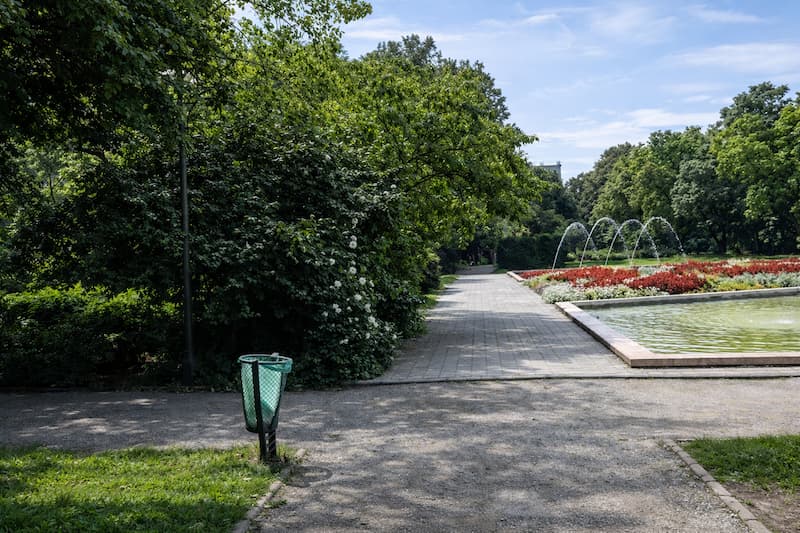
Walking south toward the Danube, the neighborhood reveals itself gradually. The buildings here date mostly from the 1930s Bauhaus movement – clean lines, functional balconies, that particular shade of cream-colored plaster that ages beautifully even when the city can’t afford to repaint it. Szent István Park opens up near the river, all landscaped lawns and elderly couples on benches, with the spires of Margaret Island visible across the water.
The smell hits you before you see the source: fresh bread and vanilla from Három Tarka Macska, producing what’s arguably the best cottage cheese pastry in Budapest. Someone is grilling on a balcony above (pork, definitely pork – this is Hungary). A tram clatters past on the riverside tracks. Children shriek from a playground somewhere. It’s not picturesque in the carefully-curated Budapest postcard sense – it’s picturesque in the way that actual nice places are when nobody’s trying to sell you an overpriced walking tour.
This is Újlipótváros, the southern chunk of District XIII, and it’s about to become your favorite neighborhood in Budapest. You just don’t know it yet.
Understanding District XIII: Two Very Different Neighborhoods Under One Name
Here’s something every other hotel guide gets catastrophically wrong: they treat District XIII as a single entity. It’s not. The district splits into two completely different personalities, and choosing the wrong one will seriously affect whether you leave Budapest loving it or wondering what all the fuss was about.
Újlipótváros (the southern area near the Danube) functions as what locals sometimes call “Budapest’s West Village” – though that comparison makes New Yorkers wince and Hungarians shrug because we’ve never been there. Young families push designer strollers past art galleries. Intellectuals debate at café tables about whether the government is ruining the country (spoiler: opinions vary loudly). The Bauhaus architecture creates a cohesive aesthetic that photographs beautifully without Instagram filters.
Rents here rival central Budapest, and for good reason – it’s genuinely one of the city’s most livable neighborhoods. The kind of place where you could actually imagine living, not just visiting.
Angyalföld (the northern industrial zone) tells a different story entirely. Originally working-class, dotted with Soviet-era housing blocks that make brutalism look optimistic, it’s undergone significant development since the 1990s. Luxury apartments have sprouted along the Danube like expensive mushrooms, and Duna Plaza brought shopping center culture to the area back in 1996 (Hungary’s first American-style mall – we were very excited, bless our hearts).
But let’s be direct: unless you’re specifically seeking maximum budget savings, have business near the northern commercial parks, or possess an unusually passionate interest in socialist architecture, Angyalföld makes considerably less sense for tourists. The infrastructure exists. The soul of Budapest doesn’t really live there.
The recommendation is crystal clear: focus your hotel search on Újlipótváros, ideally within walking distance of Pozsonyi út or Jászai Mari tér. This puts you in Budapest’s residential sweet spot while maintaining easy access to everything worth accessing.
The Best District XIII Hotels: Ranked by Someone Who Actually Lives Here
Luxury and Upscale Options (For When Your Budget Has Feelings)
Four Points by Sheraton Budapest Danube represents the newest addition to District XIII’s hotel scene, having opened in 2023 with a design philosophy rooted in 1960s-70s aesthetics. Think Mad Men meets the Danube, minus the rampant alcoholism and workplace harassment.
The property sits directly on the riverbank, and approximately 75% of its 105 rooms offer views of the water or Margaret Island. You’ll fall asleep watching the lights reflect on the Danube, which sounds romantic until the 6am Danube cruise boat horn becomes your alarm clock.
The Horizon Rooftop Bar on the ninth floor has quickly become a destination in itself – not just for hotel guests, but for locals seeking sunset drinks with panoramic views and cocktail prices that remind you this is still a Marriott property. Staff members (guests specifically mention Lilla and Balint by name in reviews) receive consistent praise for the kind of attentive service that makes you wonder if they’re secretly robots.
Rooms start around 60,000 HUF ($170 USD) per night. The breakfast buffet runs €19 per person with somewhat limited options – a minor drawback in a neighborhood where you could walk five minutes to a café serving better coffee for a third of the price.
Adina Apartment Hotel Budapest occupies what many consider the perfect District XIII location – on Hegedűs Gyula utca in the heart of Újlipótváros, surrounded by the neighborhood’s best cafés and restaurants while maintaining that “residential quiet after 10pm” vibe that central Budapest hotels can only dream about.
The 97 apartments come with full kitchens, which transforms the economics of a Budapest trip entirely. Instead of paying €15 for hotel breakfast (cold cuts, mysterious yogurt, bread that insults the concept of bread), you’re walking to the Saturday market at Lehel tér and filling your refrigerator with Hungarian cheese that costs less than French cheese and tastes better, artisan charcuterie, and produce that hasn’t been air-freighted from another continent.
The property includes a heated indoor pool (maintained at 28°C year-round – we’re not animals), jacuzzi, sauna, and underground parking (€20/night for those who made the questionable decision to rent a car in Budapest). Ratings hover around 9.1 on Booking.com, making this consistently one of the highest-rated properties in the district.
Pro tip: Skip the hotel breakfast – it’s overpriced for what you get. Instead, walk two minutes to the Lidl or Aldi right around the corner, stock your apartment kitchen, and enjoy breakfast on your own terms for a fraction of the cost. This is one of those rare hotels where “full kitchen” actually translates to real savings.
Prices range from 32,000-42,000 HUF ($89-116 USD) per night – exceptional value for apartment-style accommodation with hotel amenities. This is my default recommendation for anyone staying more than four nights.
Danubius Hotel Helia has anchored District XIII’s hospitality scene for decades, sitting directly opposite Margaret Island with extensive wellness facilities including four indoor pools, an outdoor pool, and a two-story fitness complex that makes you feel guilty for not using it.
The spa-focused positioning works brilliantly for those prioritizing relaxation over sightseeing convenience. However, location candor requires mentioning what reviews consistently flag: the hotel sits in a relatively isolated position, with a 20-minute walk to major public transport routes. You’ll need to factor in additional transit time for every excursion into central Budapest, which adds up faster than you’d expect.
The property is currently undergoing renovations expected to complete in March 2025, which may affect some facilities and will definitely affect your sleep if construction crews start early.
Rooms run 42,000-51,000 HUF ($119-143 USD) per night. Best for: spa enthusiasts who view “distance from tourist attractions” as a feature rather than a bug.
Ensana Thermal Margaret Island and Ensana Grand Margaret Island technically fall under District XIII jurisdiction despite sitting on the car-free island in the middle of the Danube. Both properties tap directly into the island’s proprietary thermal springs, offering legitimate medical spa treatments alongside standard wellness packages where attractive people in robes drink herbal tea and pretend to be relaxed.
The Thermal property features three indoor pools, a seasonal outdoor pool, and therapists who receive consistent name-check praise in reviews (Susana, Judith, and Monika appear repeatedly – these women have clearly mastered the art of making strangers feel human again). The Grand occupies a stunning 1873 restored building with aristocratic character, connected via corridor to the shared spa center.
The trade-off? You’re removed from the city. Bus 26 or taxi become necessary for any off-island excursion. But if your Budapest visit centers on thermal bathing and escaping the chaos of modern existence, this isolation becomes a feature rather than a bug.
Prices start around 48,000-57,000 HUF ($119-142 USD) for basic rooms, scaling significantly higher for comprehensive spa packages that include treatments with names you can’t pronounce.
For more on Margaret Island’s magic, check out my complete guide: Margaret Island, Budapest: An Insider’s Guide to Its Hidden Charms & Storied Past.
Mid-Range Options (The Sweet Spot)
NH Budapest City wins on location alone. Sitting on Vígszínház utca in prime Újlipótváros, you’re a 5-minute walk to Nyugati Station (M3 metro) and 10 minutes on foot to Parliament. The neighborhood’s entire café scene surrounds you like a warm, caffeinated hug.
The 160 rooms offer standard international chain quality – nothing that will make you weep with joy, nothing that will make you weep with despair. The on-site Manzanos Restaurant handles breakfast adequately. Five meeting rooms make this a reasonable business travel option for those unfortunate souls who travel to Budapest for work rather than pleasure.
Expect to pay around 45,000-50,000 HUF ($123+ USD) per night – mid-range pricing with a location premium that’s actually justified for once.
Park Inn by Radisson Budapest sits in Angyalföld, the northern section we discussed earlier. This means significant savings – rooms start as low as 17,000 HUF ($47 USD) on some booking platforms – but also a 15-20 minute metro ride to central attractions and the nagging feeling that you’re not quite in Budapest proper.
The 205 rooms received recent renovations. Reviews praise the varied breakfast and generally clean conditions. The property allows pets and sits near Duna Plaza shopping center (though note that Duna Plaza closes for major redevelopment in 2026 – it’s had a good run since ’96).
This makes sense for budget-conscious travelers comfortable with outer locations, or anyone with business near the northern commercial districts. Not my first recommendation, but not a mistake either.
The Unique Stay: For Travelers Who Collect Stories
Boat Hotel Fortuna is Budapest’s version of “sacrifice practical concerns for unforgettable character” – an actual boat converted into a 60-room hotel, moored at Szent István Park next to Margaret Bridge.
Waking up to the gentle movement of the Danube, with Margaret Island directly in your sightline, creates memories that standardized Marriott rooms simply cannot match. The Lord Nelson Restaurant on deck serves decent meals. A rooftop terrace catches sunset views that Instagram was invented for. Free parking and bike rental sweeten a deal that’s already pretty sweet.
The transparent assessment? Some rooms look “tired and shabby” according to reviews. Bathrooms run small enough to make changing your mind difficult. Winter heating can be inconsistent in the way that only boat heating can be inconsistent. The breakfast spread lacks variety. This is not a luxury experience dressed in nautical clothing.
But for 14,000-40,000 HUF ($39-113 USD) per night – with a location that puts you on the Danube with Margaret Island access in minutes – the trade-offs make obvious sense for experience-collecting travelers who prioritize stories over thread counts.
Budget Options: Apartments and Hostels
District XIII’s residential character means apartment rentals often outperform hostels for budget travelers. Platforms like szallas.hu list options starting from 4,000 HUF per person per night ($11 USD) – genuinely difficult to beat anywhere in Budapest unless you’re sleeping on someone’s couch.
The Victor Hugo utca area particularly offers solid value apartments in the 6,000-8,000 HUF range, placing you in Újlipótváros atmosphere without hotel prices or hotel restrictions on cooking schnitzel at 2am.
Traditional hostels are scarce in District XIII (the neighborhood lacks the party infrastructure that drives hostel culture – no ruin bars means no backpackers stumbling home at dawn). 2night Hostel near Nyugati Station offers dorm beds around 4,000-6,000 HUF ($10-15 USD), though technically this borders District XIII rather than sitting within it.
What to Eat in District XIII: The Local Dining Scene Nobody Writes About
The standard Budapest dining recommendation sends tourists to District VII ruin bars (overpriced drinks, mediocre food) or District V tourist restaurants (even more overpriced drinks, somehow worse food). Meanwhile, District XIII quietly operates one of the city’s best local food scenes along Pozsonyi út – and almost nobody outside Budapest knows about it.
This is our little secret. Was. Past tense. You’re welcome.
Pozsonyi Kisvendéglő exemplifies everything wonderful and challenging about traditional Hungarian dining. The daily lunch menu costs 700 HUF (approximately $2 USD). Read that again. Two American dollars. For soup and a main course at a restaurant where the same families have eaten for decades and the walls have absorbed enough paprika to be classified as a spice.
The goulash arrives in portions that assume you’re about to harvest wheat all afternoon. The pörkölt (Hungarian meat stew) sits in paprika-rich sauce that defines the cuisine for anyone who’s never experienced the real thing. The túrós csusza (cottage cheese pasta – better than it sounds, I promise) and velős pacal (tripe with bone marrow – admittedly worse than it sounds) represent dishes that tourist restaurants don’t serve because tourists won’t order them.
Cash only. Checkered tablecloths. Massive portions. This is Hungarian grandmother cooking, priced for Hungarian grandfather budgets. Just don’t expect the staff to hold your hand through the menu – they’ve got other customers to intimidate lovingly.
For more on eating well without emptying your wallet, see my guide: Don’t Leave Budapest Broke! 15 Dirt-Cheap Eats That Locals Actually Love.
Oriental Soup House (OSHO) on Balzac utca swings the opposite direction – Vietnamese and French-Vietnamese fusion in a chic open-kitchen setting with communal tables where strangers accidentally become friends over pho. Soups run €5-8, mains €8-12. Book ahead; it’s perpetually busy with the kind of people who read design magazines.
Babka Budapest brings Middle Eastern and Israeli flavors to Pozsonyi út, with shakshuka that draws dedicated followers who’d probably form a small religion around it if given the chance. Reservations are essentially mandatory unless you enjoy standing outside looking hungry.
For breakfast and coffee, Dunapark Kávéház operates in an elegant 1930s Art Deco space inside the Dunapark Apartments building – one of Újlipótváros’s architectural crown jewels. The goose liver appetizer and dessert selection justify slightly higher prices. Három Tarka Macska produces what many consider Budapest’s finest túrós batyu (cottage cheese pastry, starting around 500-800 HUF) – the kind of place where locals grab morning treats before locals grab all the morning treats.
Sarki Fűszeres at Pozsonyi út 53-55 functions as a gourmet delicatessen – perfect for assembling picnic supplies with artisanal cheeses, cured meats, and Hungarian wines before heading to Margaret Island for an afternoon of eating horizontally on grass.
Getting Around from District XIII: Transport That Actually Works
The biggest fear tourists have about staying outside central Budapest? Getting stranded in a neighborhood without good connections, forced to take €30 taxis every time you want to see something.
District XIII eliminates this concern entirely thanks to Trams 4 and 6 – which run 24 hours daily along the Grand Boulevard (Nagykörút). These are Budapest’s longest trams (54-meter Combino units that look like friendly trains), and they connect District XIII’s Jászai Mari tér stop directly to everywhere that matters.
Nyugati pályaudvar (Western Railway Station, M3 metro): 2 minutes. Oktogon (District VI, near Andrássy Avenue): 8 minutes. Margit Sziget (Margaret Island access): 3 minutes. Blaha Lujza tér (District VIII): 15 minutes.
The M3 metro (blue line) runs through District XIII with stations at Lehel tér, Dózsa György út, Göncz Árpád városközpont, and Gyöngyösi utca. Note that M3 recently completed extensive renovations – the stations are essentially new, clean, and no longer smell like Soviet regret.
Tram 2 runs along the Pest riverbank past Parliament – often called the cheapest river cruise in Budapest. For the cost of a single ticket (around 450 HUF / $1.25), you ride along the Danube past everything that tour boats charge €20+ to show you from further away.
Tram 1 connects to Heroes’ Square, City Park, and Széchenyi Baths in about 15 minutes.
From Újlipótváros specifically, you can walk to Parliament in 10 minutes on pleasant riverside paths. Margaret Island sits one tram stop away. The Jewish Quarter is 15-20 minutes by Tram 4/6.
The local wisdom: “Stay in walking distance of Jászai Mari tér and Trams 4 and 6 become your lifeline to the entire city.” I didn’t make this rule, but I’ve lived by it.
Safety in District XIII: What You Actually Need to Know
Budapest overall ranks among Europe’s safer capital cities, with a crime index significantly below Paris, London, or Rome. District XIII specifically lands among the safest districts in the city, alongside Districts I, II, III, and XII – the neighborhoods where Budapestians actually want to raise their children.
The residential character of Újlipótváros means you’re surrounded by families, elderly locals walking small dogs (so many small dogs), and young professionals who’ve made enough money to escape the party districts. These demographics don’t typically attract street crime. Pickpockets hunt where tourists cluster; tourists don’t cluster here.
Walking home at 2am through Újlipótváros feels genuinely comfortable in a way that tourist districts sometimes don’t. You’re passing apartment buildings with lit windows, occasional dog-walkers, maybe a late-night kebab shop closing up. Not crowds of intoxicated tourists being systematically relieved of their wallets.
Angyalföld in the northern reaches requires slightly more standard urban awareness, particularly in outer industrial areas. But the commercial zones and hotel locations remain perfectly safe for anyone who’s survived public transit in any major city.
The Best and Worst Times to Stay in District XIII
Summer (June-August) transforms District XIII into outdoor living paradise. The Danube promenade fills with joggers, cyclists, and families who’ve claimed strategic bench positions for the season. Café terraces spill onto sidewalks until they nearly block pedestrians (nobody complains). Palatinus Strand water park on Margaret Island becomes essential for survival.
The neighborhood’s tree-lined streets provide shade that central Budapest’s concrete canyons lack. You’ll actually want to walk places. Revolutionary concept.
Spring (April-May) and Autumn (September-October) offer ideal conditions. Comfortable walking weather. Reasonable hotel prices. The parks show their colors without trying to kill you with heat or cold. Outdoor dining remains pleasant without summer crowds fighting you for tables.
Winter (November-March) shifts the value proposition. District XIII’s spa hotels (Danubius Helia, Ensana properties) become more attractive as thermal bathing appeals increase. The Christmas markets draw attention elsewhere, leaving Újlipótváros peacefully local – just you and the grandmothers with tiny dogs.
Expect hotel prices to drop except around holidays, when everyone suddenly remembers Budapest exists.
Who District XIII Is (and Isn’t) For
District XIII makes excellent sense for:
Travelers staying 7+ nights who want apartment-style accommodation with kitchen facilities that actually work. Families with children – the parks, playgrounds, and residential safety create kid-friendly conditions that party districts can’t match. Budget-conscious visitors seeking 20-40% savings without sacrificing neighborhood quality. Food lovers wanting to eat where locals eat, not where tourists eat photos of food. Repeat visitors who’ve covered major attractions and want neighborhood immersion. Spa and wellness travelers prioritizing Margaret Island access. Architecture enthusiasts drawn to Budapest’s Bauhaus heritage. Remote workers and digital nomads needing reliable wifi and coffee shops where nobody judges your laptop.
District XIII makes less sense for:
First-time visitors with only 2-3 days – you’ll spend too much time in transit when walkability to major sights matters most. Harsh but true. Nightlife seekers – the ruin bars are in District VII, and District XIII goes quiet after midnight like a responsible adult neighborhood. Travelers who dislike public transport – you’ll rely on trams and metro for most excursions, and that’s non-negotiable.
Insider Tips That Make the Difference
The Saturday morning market at Lehel tér operates in a covered market hall attached to the metro station. Arriving before 10am lets you beat crowds and grab the freshest produce, cheese, and langos in the city. This single tip can transform your breakfast routine for an entire trip. Bring cash.
Tram 2 is the poor person’s river cruise. For the cost of a single ticket (around 450 HUF / $1.25), you ride along the Danube past Parliament, Chain Bridge, and the entire Pest embankment. Tour boats charge €20+ for the same views from slightly further away. We call this “smart tourism.”
Pozsonyi út runs a Saturday farmers’ market (Pozsonyi Piknik) during warmer months. Local producers sell Hungarian specialties directly. The atmosphere outperforms any tourist market by the simple virtue of not being designed for tourists.
The Raoul Wallenberg Memorial in Szent István Park commemorates the Swedish diplomat who saved thousands of Hungarian Jews during WWII. Few tourists visit because few tourists know it exists. It’s one of the most moving monuments in Budapest, and it sits in what’s essentially a neighborhood park.
Flippermúzeum (Budapest Pinball Museum) hides in District XIII with over 100 playable vintage machines. Admission includes unlimited play. Perfect for rainy days or anyone who suspects they peaked emotionally during the arcade era.
The Realistic Negative: What Might Frustrate You
Every neighborhood has drawbacks, and pretending otherwise insults your intelligence.
District XIII’s core weakness is density of major attractions. You’re not walking to Buda Castle, the Basilica, or the Great Synagogue. Everything requires transit – comfortable, efficient transit with 24-hour tram service, but transit nonetheless. Every single time.
For travelers who want to stumble out of their hotel directly onto cobblestoned historic streets with postcard views in every direction, District XIII can feel anticlimactic. The beauty here is quieter: tree-lined residential blocks, local café culture, Danube sunsets from the promenade. If you need “wow” moments delivered to your doorstep, look elsewhere.
The northern Angyalföld area specifically struggles with distance. Hotels there offer significant savings, but reviews consistently mention the inconvenience of being 20+ minutes from anything interesting. Budget calculations should factor in extra transit time and potentially taxi costs when you’re too exhausted to wait for the M3.
This isn’t a deal-breaker. It’s just reality. And reality deserves mention.
Summary: Why District XIII Deserves Your Consideration
Somewhere in the last decade, “authentic travel” became a marketing phrase stripped of all meaning. Every neighborhood claims local character. Every tour sells insider access. The word has become noise used to sell things to people who’ve heard it enough times to stop questioning what it actually means.
District XIII is the uncommon case where the phrase still applies without quotation marks. The neighborhood genuinely operates on local rhythms. The restaurants genuinely serve local customers at local prices. The buildings genuinely house families who’ve lived there for generations and plan to stay.
That you can access this atmosphere while paying 20-40% less than central Budapest hotels, while riding 24-hour trams that connect you to everything, while staying in properties rated above 9.0 on booking platforms – that’s the District XIII proposition in a single sentence.
It’s not for everyone. Nothing good ever is. But for the right traveler, it’s exactly what Budapest accommodation guides should have been recommending all along.
Welcome to the neighborhood. Try the cottage cheese pastry.
Frequently Asked Questions About District XIII Hotels
Is District XIII safe for tourists?
District XIII ranks among Budapest’s safest districts, with crime rates below most European capitals and far below Budapest’s tourist-heavy areas. The residential Újlipótváros area feels particularly secure – you’re surrounded by families and elderly dog-walkers rather than pickpocket-attracting tourist crowds. Walking alone at night poses no unusual concerns unless you’re unusually concerned about encountering tiny dogs.
How far is District XIII from Budapest’s main attractions?
From Újlipótváros, Parliament sits 10 minutes away on foot. The Jewish Quarter (District VII) takes 15-20 minutes by Trams 4/6. Heroes’ Square reaches in 15 minutes via Tram 1. Buda Castle requires crossing the river – about 25-30 minutes total with metro and bus. Everything is accessible; nothing is adjacent.
Should I stay in Újlipótváros or Angyalföld?
Újlipótváros, without question. The southern section offers better restaurants, prettier streets, easier transport connections, and genuine neighborhood atmosphere. Angyalföld hotels cost less but add significant commute time to everything interesting. The savings rarely justify the inconvenience unless your budget is genuinely non-negotiable.
Are District XIII hotels good for families?
Excellent choice, actually. The neighborhood’s parks, playgrounds, residential safety, and proximity to Margaret Island create ideal family conditions. Apartment hotels like Adina offer kitchens for preparing children’s meals (and avoiding restaurant meltdowns). The area lacks the late-night noise problems that make tourist districts family-unfriendly.
What’s the best hotel in District XIII for spa access?
Ensana properties on Margaret Island offer direct thermal spring access and medical-grade spa treatments. For mainland options with solid wellness facilities, Danubius Hotel Helia has extensive pools and spa – though its isolated location requires extra planning for non-spa activities.
Can I get around Budapest easily from District XIII?
Absolutely. Trams 4 and 6 run 24 hours and connect to most areas worth visiting. The M3 metro passes through the district with newly-renovated stations. You’re 10 minutes walking from Parliament and one tram stop from Margaret Island. Public transport infrastructure here is genuinely excellent – better than many central locations, arguably.