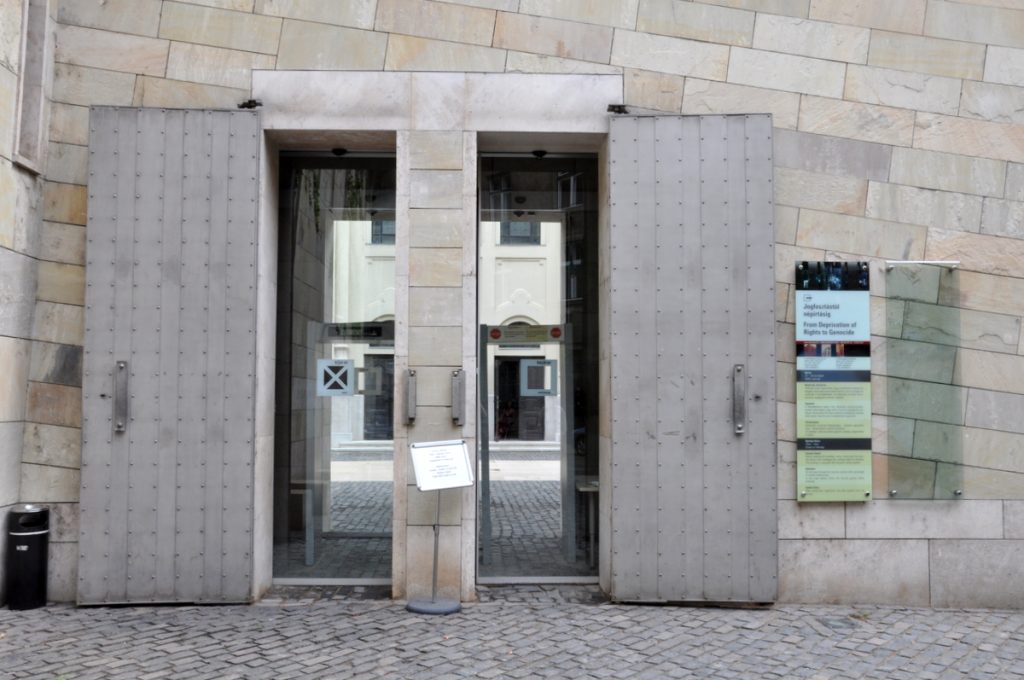
🎯 TL;DR
The Holocaust Memorial Center in Budapest is Central Europe’s first state-founded Holocaust museum, housed in the restored 1920s Páva Street Synagogue. It commemorates the approximately 565,000 Hungarian Jews murdered during the Holocaust. A TripAdvisor Travelers’ Choice winner ranked in the top 10% worldwide, entry costs 3,600 HUF (~$9/€8) for adults, with free admission for under-6s, over-70s, and on Hungarian national holidays. Open Sunday–Friday 10:00–18:00 (closed Saturdays).
📋 Holocaust Memorial Center at a Glance
| Best For | History enthusiasts, educational visits, Jewish heritage travelers |
| Adult Ticket | 3,600 HUF (~$9/€8) |
| Discounted Ticket | 1,600 HUF (~$4/€3.50) |
| Hours | Sun–Fri: 10:00–18:00 (ticket office closes 17:00) |
| Closed | Saturdays |
| Duration | 1.5–2 hours recommended |
| Age Recommendation | 12+ years (due to sensitive content) |
| Accessibility | Wheelchair accessible, free entry for disabled visitors + 1 escort |
What Is the Holocaust Memorial Center in Budapest?
The Holocaust Memorial Center (Holokauszt Emlékközpont) is Hungary’s national institution dedicated to preserving the memory and history of the Holocaust. Founded by the Hungarian government in 1999 and opened in 2004, it was the first state-founded Holocaust memorial center in Central and Eastern Europe, according to the European Holocaust Research Infrastructure.
Located in the historic Páva Street Synagogue in Budapest’s 9th district, the center serves as both a museum and memorial. A wall in the courtyard is inscribed with 60,000 names—representing just a fraction of Hungary’s approximately 600,000 Holocaust victims, as reported by the Los Angeles Times.
🗣️ What Visitors Say
The Holocaust Memorial Center has earned TripAdvisor’s Travelers’ Choice award, ranking in the top 10% of attractions worldwide with 1,600+ reviews. Visitors describe it as “extremely moving” and “one of the most powerful accounts of the horrors of the Nazi and Hungarian Arrow Cross regimes.”
On Reddit’s r/budapest, when asked about WWII museums, one user explains: “There was way more space, the exhibitions were very informative and it was a much better ‘museum’ experience… nearly 600,000 Hungarian Jews were murdered in 1944, with the active collaboration of the Hungarian state.” Visitors consistently recommend allocating 1.5-2 hours and note that while the content is heavy, it’s essential for understanding Hungary’s complex wartime history.
Why Is the Holocaust Memorial Center Architecturally Significant?
The building’s deliberately asymmetrical design symbolizes the chaos and distortion of the Holocaust era. Architects István Mányi and Attila Gáti intentionally created a disorienting staircase that mirrors the upheaval experienced by millions of victims—a physical metaphor for lives thrown into chaos.
The center integrates the restored 1920s Páva Street Synagogue—one of Budapest’s historic Jewish houses of worship—with a modern museum extension. This architectural dialogue between old and new creates a powerful statement about memory, destruction, and preservation.
What Can You See at the Holocaust Memorial Center?
The museum offers both permanent and temporary exhibitions that document the Holocaust in Hungary through multiple perspectives:
- Permanent Exhibition: Traces the history of Hungarian Jewish communities, anti-Jewish legislation from 1938, deportations, and the destruction of over 565,000 lives. According to Yad Vashem, some 424,000 Jews were deported to Auschwitz in just eight weeks during May–July 1944—a staggering pace of destruction.
- Personal Testimonies: Survivor accounts and video testimonies that humanize the statistics, giving voice to individual stories
- Artifacts of Daily Life: Personal belongings—glasses, letters, photographs—that stand as silent witnesses to disrupted lives
- Memorial Wall: The courtyard features 60,000 names of victims inscribed on the walls
- Tower of Lost Communities: A memorial to the destroyed Jewish communities of Hungary
- Temporary Exhibitions: Rotating displays (free of charge) exploring various aspects of Holocaust history
The museum also addresses the persecution of Roma (Romani people), homosexuals, and disabled individuals during the Nazi era—groups often overlooked in Holocaust education.
What Are the Ticket Prices and Opening Hours?
According to the official Holocaust Memorial Center website, current pricing as of 2026:
Individual Tickets
- Adult: 3,600 HUF (~$9/€8)
- Discounted: 1,600 HUF (~$4/€3.50) — for EU/EEA citizens under 26 or over 62
- Temporary exhibitions: Free of charge
Group Tickets (10+ people, advance registration required)
- Adult group: 2,550 HUF per person
- Discounted group: 800 HUF per person
Guided Tours
- Hungarian: 6,900 HUF per group
- English/German/French/Italian/Russian: 9,400 HUF per group
Opening Hours
- Sunday–Friday: 10:00–18:00
- Saturday: Closed
- Ticket office: Closes at 17:00
Who Gets Free Entry to the Holocaust Memorial Center?
EU/EEA citizens in the following categories receive free admission:
- Children under 6 years old
- Senior citizens over 70 years old
- People with disabilities plus one escort
- Teachers in public education
- Under-26s on the last Sunday of each month
- Under-18s with up to 2 adults on the last Sunday of each month
- Everyone on Hungarian national holidays: March 15, August 20, October 23
How Do You Get to the Holocaust Memorial Center?
The center is conveniently located at 1094 Budapest, Páva utca 39, easily accessible by public transport:
- Metro M3 (Blue line): Corvin-negyed station (5-minute walk)
- Tram 4-6: Corvin-negyed stop
- Tram 51/51A: Bokréta utca stop
- By car: Street parking available on Liliom Street; paid parking at nearby Corvin shopping mall
The Corvin-negyed area is a vibrant neighborhood with shopping and dining options if you need refreshments after your visit.
What Educational Programs Does the Center Offer?
The Holocaust Memorial Center provides extensive educational programming:
- City Walk Tour: A 120-minute guided walk through Budapest’s former Jewish quarter, visiting key sites including remains of the Great Ghetto. Available April–October (weather permitting), minimum 5 participants. Contact: oktatas@hdke.hu
- School Programs: Tailored educational visits for student groups
- Commemoration Events: Annual ceremonies marking the liberation of the Budapest Ghetto and International Holocaust Remembrance Day (January 27)
- Survivor Testimonies: Regular events featuring first-hand accounts
- Research Center: Visitors can search for family members and contribute to the museum’s database of names
What Should You Know Before Visiting?
Important visitor information:
- Age recommendation: The permanent exhibition contains sensitive content not recommended for children under 12
- Photography: Not permitted inside to maintain the solemn atmosphere
- Visit duration: Allow 1.5–2 hours for a meaningful experience
- Accessibility: The museum is wheelchair accessible with ramps and elevators
- Book of Commemoration: Visitors can leave personal messages honoring the victims
- Emotional preparation: The content is powerful and may be distressing—take your time and feel free to step outside if needed
What Are the Key Statistics About the Hungarian Holocaust?
Understanding the scale of the tragedy through documented numbers:
- 565,000: Approximate number of Hungarian Jews murdered during the Holocaust (Yad Vashem)
- 424,000: Jews deported to Auschwitz in just 8 weeks (May–July 1944)
- 800,000: Jewish population in Hungary’s 1941–1944 borders
- 255,500: Estimated survivors from the Hungarian Jewish community
- 60,000: Names inscribed on the memorial wall at the center
- 25,000–42,000: Jewish men who died in forced labor battalions between 1941–1944
What Else Can You Visit Nearby?
Combine your visit with other significant Budapest attractions:
- House of Terror Museum – Another thought-provoking museum about Hungary’s 20th-century history
- Great Market Hall – Budapest’s iconic food hall, just a short tram ride away
- Dohány Street Synagogue – Europe’s largest synagogue, about 15 minutes by tram
- Shoes on the Danube Bank – Memorial to Jews shot into the river during WWII
FAQ
Is the Holocaust Memorial Center worth visiting in Budapest?
Yes, it’s essential for understanding Hungary’s WWII history. As Central Europe’s first state-founded Holocaust museum and a TripAdvisor Travelers’ Choice winner, it offers a comprehensive and deeply moving educational experience that contextualizes the murder of 565,000 Hungarian Jews.
How long should I spend at the Holocaust Memorial Center?
Plan for 1.5–2 hours to fully engage with the permanent exhibition, testimonies, and memorial spaces. If joining a guided tour, add an additional 30–45 minutes.
Can I take photographs inside the Holocaust Memorial Center?
No, photography is not permitted inside the museum to preserve the solemn atmosphere and respect for victims. The outdoor Memorial Wall and Tower of Lost Communities can be photographed.
Is the Holocaust Memorial Center suitable for children?
The permanent exhibition is recommended for visitors aged 12 and above due to sensitive content including images and testimonies of persecution, deportation, and murder.
Is the Holocaust Memorial Center accessible for wheelchair users?
Yes, the museum is fully wheelchair accessible with ramps, elevators, and accessible facilities. Visitors with disabilities receive free entry along with one escort.
Can I visit the Holocaust Memorial Center for free?
Yes, free entry is available for EU/EEA citizens under 6 or over 70, people with disabilities, teachers, and everyone on Hungarian national holidays (March 15, August 20, October 23). On the last Sunday of each month, under-26s also receive free entry.
What languages are guided tours available in?
Guided tours are available in Hungarian (6,900 HUF/group) and English, French, German, Italian, and Russian (9,400 HUF/group). Advance booking required.
Conclusion
The Budapest Holocaust Memorial Center stands as both a memorial and an educational institution, ensuring that the approximately 565,000 Hungarian Jews murdered during the Holocaust are never forgotten. Through its thoughtful architecture, comprehensive exhibitions, and ongoing educational programs, the center transforms historical tragedy into a powerful call for tolerance and remembrance.
Whether you’re tracing family history, studying European WWII history, or simply seeking to understand one of humanity’s darkest chapters, this museum provides an essential and deeply moving experience. The combination of personal testimonies, historical artifacts, and the sacred space of the restored Páva Street Synagogue creates a unique memorial that honors individual lives while documenting collective tragedy.
Last updated: February 2026
Contact Information:
Address: 1094 Budapest, Páva utca 39
Phone: +36 1 455-3333
Email: info@hdke.hu
Website: hdke.hu