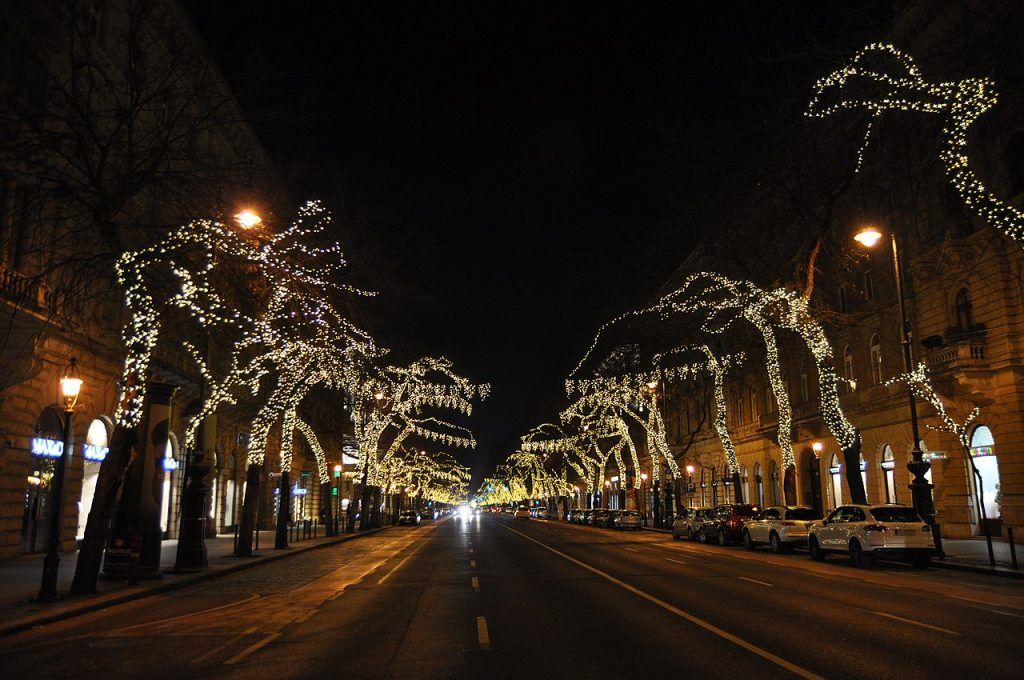
Andrássy Avenue: Budapest’s Most Elegant Boulevard (And Your Feet Will Know It)

TL;DR Box
The Quick Version: Andrássy Avenue is a 2.3km UNESCO World Heritage boulevard connecting the city center to Heroes’ Square. You’ll walk it, your feet will hate you, but your camera roll will thank you. Budget half a day minimum. The Opera is magnificent, Terror House is emotionally devastating, and by the end you’ll understand why Budapestians consider this street their Champs-Élysées—except with better coffee and significantly less attitude.
At a Glance
| Detail | Info |
|---|---|
| Length | 2.3 kilometers (feels like 10 by the end) |
| UNESCO Status | World Heritage Site since 2002 |
| Metro Line | M1 (the oldest on the continent, flex) |
| Start Point | Bajcsy-Zsilinszky út |
| End Point | Heroes’ Square (Hősök tere) |
| Time Needed | 3-6 hours depending on museum stops |
| Best Time to Visit | Spring/Fall mornings, avoid summer afternoons |
| Walking Difficulty | Easy (flat), but long |
The Boulevard That Defines Budapest
Andrássy Avenue is Budapest’s grandest street—a 2.3km stretch of Neo-Renaissance architecture, world-class cultural institutions, and the kind of elegant urban planning that makes other European capitals quietly jealous. Built in the 1870s to rival Paris, it’s now a UNESCO World Heritage Site that connects the bustling city center to the monumental Heroes’ Square.
Let’s get something straight right away: Andrássy Avenue isn’t just a street. It’s a statement. It’s Budapest saying, “Oh, you think Paris is fancy? Hold my pálinka.”
Back in the 1870s, the Austro-Hungarian Empire was doing extremely well for itself, and Budapest decided it needed a grand boulevard to prove it. The result was Sugár út (Radial Avenue), later renamed after Count Gyula Andrássy, the Prime Minister who championed its construction. The goal was simple: create something that would make the Champs-Élysées look like a country lane.
Did they succeed? Well, UNESCO thought so. In 2002, the entire avenue—along with Heroes’ Square and the Millennium Underground—was inscribed as a World Heritage Site. That’s the architectural equivalent of getting a Michelin star, except you can’t eat it.
The avenue stretches 2.3 kilometers from Bajcsy-Zsilinszky út (near Deák Ferenc tér, the transport hub where all metro lines meet) all the way to Hősök tere (Heroes’ Square) at the edge of City Park. Along the way, you’ll encounter the Hungarian State Opera House, the House of Terror Museum, the Franz Liszt Academy of Music, countless embassies in palatial buildings, and enough Neo-Renaissance facades to make you feel like you’ve time-traveled to the Belle Époque.
Walking down Andrássy Avenue genuinely feels like stepping into a living museum. The buildings haven’t changed much since they were built 150 years ago—same ornate balconies, same imposing facades, same sense that very important people once lived here (spoiler: they did). The difference now is that those palatial apartments have been converted into luxury boutiques, high-end restaurants, and the occasional embassy.
Here’s what nobody tells you before you visit: you will walk a lot. Like, a lot a lot. One TripAdvisor reviewer put it perfectly: “You will walk 20km / day at least.” They weren’t exaggerating. Between the avenue itself, the museums, Heroes’ Square, and City Park beyond, your step counter will think you’ve taken up marathon training.
The avenue is divided into three distinct sections, each with its own character:
-
The First Section (Bajcsy-Zsilinszky út to Oktogon): This is where the action is. The Opera House lives here, along with upscale shops, restaurants, and the densest concentration of architectural eye candy. The buildings are tall, imposing, and designed to impress.
-
The Middle Section (Oktogon to Kodály körönd): Things get a bit more residential here, though “residential” on Andrássy means “buildings that would be palaces anywhere else.” This is where you’ll find the House of Terror and the Franz Liszt Academy.
-
The Final Section (Kodály körönd to Heroes’ Square): The grand finale. The avenue widens, the buildings become even more monumental, and you can see Heroes’ Square beckoning at the end. This section is lined with mansions, many now serving as embassies, and mature trees that create a proper boulevard atmosphere.
The best way to experience Andrássy is on foot—there’s no alternative, really—but pace yourself. This isn’t a sprint; it’s a saunter. Stop for coffee. Duck into a museum. Rest your feet at a park bench. And for the love of all that is holy, wear comfortable shoes. Those cute sandals or brand-new leather loafers will betray you by the time you reach Oktogon.
The M1 Metro: Your Feet’s Best Friend (Also, a UNESCO Site Itself)
The M1 metro line runs directly beneath Andrássy Avenue and is the oldest electric underground railway on the European continent, dating from 1896. It’s a UNESCO World Heritage Site in its own right and costs just 500 HUF per trip. Use it strategically to save your feet.
Beneath the elegant cobblestones of Andrássy Avenue runs something remarkable: the Millennium Underground Railway, also known as the M1 metro line or, affectionately, “the little yellow metro.”
Here’s a fun fact to drop at dinner parties: the M1 is the oldest electric underground railway on the European continent, and the second oldest in the world after London’s Metropolitan line. It opened in 1896, exactly in time for Hungary’s Millennium celebrations marking 1,000 years since the Magyar conquest of the Carpathian Basin. The Hungarians do not do things by halves.
The metro was built in just under two years using the cut-and-cover method, which is exactly what it sounds like: they dug a trench, built the tunnel, and covered it back up. This is why the stations are so shallow—you’ll descend maybe 20 steps and you’re already on the platform. Compare this to the cavernous depths of the M4 line (opened in 2014), and you’ll appreciate how technology has changed.
The stations themselves are tiny, charming time capsules. Many have been restored to their original late-19th century appearance, complete with period tiles, ornate metalwork, and that distinctive yellow color scheme. It’s like riding a metro through a museum—which, technically, you are.
Stations along Andrássy Avenue:
| Station | Key Attractions |
|---|---|
| Bajcsy-Zsilinszky út | Connection to M3 |
| Opera | Hungarian State Opera House |
| Oktogon | Major intersection, restaurants |
| Vörösmarty utca | Residential area |
| Kodály körönd | Franz Liszt Academy nearby |
| Bajza utca | Embassies, mansions |
| Hősök tere | Heroes’ Square, City Park |
| Széchenyi fürdő | Széchenyi Thermal Bath |
A single ticket costs 500 HUF (around €1.20), or you can buy a day pass for 2,500 HUF if you’re planning extensive metro usage. The M1 operates from approximately 4:30 AM to 11:30 PM, with trains running every 2-5 minutes during peak hours.
Pro tip: The M1 is perfect for strategic hopping. Walk the first section from Bajcsy-Zsilinszky to the Opera (don’t miss this—it’s the most architecturally dense part), then metro ahead to Hősök tere, and walk back at a leisurely pace. Your feet will thank you, and you’ll see the avenue from both directions.
The trains themselves are adorable little things—just three cars long, painted a cheerful yellow. They look like something from a children’s book about trains, which is oddly endearing. Just be prepared: the cars can get extremely crowded during rush hour, and there’s no air conditioning. In August, it’s basically a sauna on rails.
Another quirk: the platforms are curved, which means the train doesn’t align perfectly with the platform edge. Mind the gap, as they say. The gap is real, and it’s not your friend.
The Millennium Underground is so historically significant that it’s part of the same UNESCO World Heritage inscription as Andrássy Avenue itself. You’re not just taking public transport; you’re riding through history. That 500 HUF ticket is basically museum admission that also gets you from A to B.
The Hungarian State Opera House: Where Magnificence Comes Standard

The Hungarian State Opera House is one of the most beautiful opera houses in the world, designed by Miklós Ybl and opened in 1884. Tours cost 10,500 HUF and are absolutely worth it—even if you’re not into opera. Just don’t go in summer unless you enjoy sweating through Puccini.
At the corner of Andrássy Avenue and Hajós utca stands what is, without exaggeration, one of the most beautiful opera houses in the world. The Hungarian State Opera House (Magyar Állami Operaház) is the kind of building that makes you believe in the power of architecture to inspire, intimidate, and generally make you feel underdressed.
Designed by Miklós Ybl, the greatest Hungarian architect of his era, the Opera House opened its doors on September 27, 1884. Emperor Franz Joseph I attended the opening (because of course he did), and the first performance was Act I of Hungary’s national opera, Bánk bán by Ferenc Erkel. The building cost approximately 6 million forints to construct—a fortune at the time—but one look at the interior and you’ll understand where the money went.
Here’s what you need to know: the building underwent a massive four-year renovation from 2018-2022, and the result is absolutely stunning. Everything has been restored to its original 19th-century glory, from the gilded ceilings to the frescoed hallways to the 3,000-kilogram bronze chandelier that hangs above the auditorium like a very expensive threat.
The facade is Neo-Renaissance perfection. Sixteen statues of famous composers and musicians line the exterior—Beethoven and Mozart on either side of the entrance, along with Hungarian greats like Liszt and Erkel. The interior is even more impressive: Italian marble, gold leaf everywhere your eye can land, murals by the finest Hungarian painters of the era, and acoustics that are considered among the best in Europe.
The auditorium seats 1,261 people across stalls, three tiers of boxes, and the gallery. It’s intimate compared to Vienna’s State Opera, and that intimacy is part of its charm. You’re never far from the stage, and the horseshoe shape ensures excellent sightlines from almost every seat.
How to visit:
Option 1: Take a guided tour – Tours run multiple times daily and cost 10,500 HUF for the English-language version (about €25). The tour lasts approximately 45-50 minutes and takes you through the main foyer, the grand staircase, the royal box, and into the auditorium itself. Tours include a short musical performance by opera singers, which is genuinely lovely.
One reviewer put it perfectly: “Was not expecting much but was really amazed.” That’s the Opera House experience in a nutshell. Even if you have zero interest in opera, the building alone is worth the visit. It’s simply magnificent—there’s no other word for it.
Option 2: Attend a performance – This is the ultimate experience. The cheapest tickets can be as low as 2,500-3,000 HUF for restricted-view gallery seats. Yes, your view might be partially blocked, but the acoustics are actually best in the upper levels, so you’ll hear everything perfectly even if you can’t see every detail of the staging. Premium seats range from 8,000-30,000 HUF depending on the production.
Important warnings:
-
There is no air conditioning in the auditorium. In summer, it gets HOT. We’re talking fans-and-pray-for-a-cool-evening hot. If you’re visiting in July or August, consider evening performances when temperatures have dropped, or be prepared to sweat through Verdi.
-
Dress code exists but isn’t strictly enforced. That said, this isn’t the place for flip-flops and shorts. Smart casual is the minimum; many locals dress up properly.
-
Book ahead. Both tours and popular performances can sell out, especially during peak tourist season.
Practical Information:
| Detail | Info |
|---|---|
| Address | 1061 Budapest, Andrássy út 22. |
| Ticket Office | Mon-Sun 10:00-19:00 (until first interval on performance days) |
| Tour Booking | +36 30 781 2630 / tour@opera.hu |
| Tickets | +36 30 731 1728 / ticket@opera.hu |
| Website | opera.hu/en |
The Opera House also has an underground connection to the Erkel Theatre, a larger venue used for ballet and operetta. But for the full experience, the main building on Andrássy is non-negotiable.
Fun fact: the gilded ceiling of the auditorium features a fresco depicting the Olympian gods. During one renovation, restorers discovered that previous cleanings had actually been damaging the painting. The recent restoration used gentle, modern techniques to bring back the original colors. Look up when you’re in the auditorium—you’re seeing the fresco as 19th-century audiences would have seen it.
The House of Terror: The Museum That Will Haunt Your Dreams (In a Good Way)

The House of Terror Museum documents the atrocities committed by Hungary’s fascist and communist regimes in the 20th century. It’s housed in the actual building where the secret police tortured prisoners. It’s heavy, intense, and absolutely essential. Budget 2-3 hours and start from the second floor. Admission is 4,000 HUF.
At Andrássy Avenue 60 stands a building with a dark, heavy presence that sets it apart from its elegant neighbors. The gray facade, the word “TERROR” cut into an aluminum blade that casts shadows on the walls—this is the House of Terror (Terror Háza), one of Budapest’s most important and emotionally challenging museums.
This isn’t your typical museum. This is the actual building where Hungary’s secret police—first the fascist Arrow Cross Party, then the communist ÁVH—interrogated, tortured, and killed political prisoners throughout the 20th century. When you walk through the basement cells, you’re walking through rooms where people suffered and died. The building itself is the primary exhibit.
Let’s back up and provide some context. Hungary’s 20th century was a catastrophe. After World War I, the country lost two-thirds of its territory and population. Then came World War II, during which the fascist Arrow Cross Party allied with Nazi Germany and participated in the deportation and murder of hundreds of thousands of Hungarian Jews. The Arrow Cross used this very building as their headquarters.
After 1945, Hungary fell under Soviet influence, and the communist regime established the ÁVH (State Protection Authority) as their secret police. The ÁVH took over the same building at Andrássy 60—by then renumbered to 60, it had previously been number 60 on Sugár út—and continued the tradition of political terror. The basement prison cells remained in use; only the ideology of the torturers changed.
The museum, which opened in 2002, documents both periods of totalitarian rule. This is important and somewhat controversial. Some critics argue that the museum draws too direct a parallel between fascism and communism, while others appreciate the comprehensive approach. Either way, the message is clear: extremist ideologies of any stripe lead to human suffering.
What to expect inside:
The museum is spread over three floors plus the notorious basement, and it’s designed as an immersive experience rather than a traditional museum. Each room has a different theme, different lighting, different sounds. The effect is deliberately unsettling—you’re not supposed to feel comfortable here.
One reviewer captured it perfectly: “It shocks you every room you enter.” That’s not hyperbole. The museum doesn’t pull punches. You’ll see original torture instruments. You’ll watch video testimonies from survivors. You’ll walk through reconstructed prison cells with the actual iron doors that once trapped political prisoners. It’s heavy, it’s emotional, and it stays with you.
Practical tips for visiting:
-
Budget 2-3 hours minimum. The museum is dense, and rushing through defeats the purpose. Many visitors spend even longer. Take your time, read the materials, and process what you’re seeing.
-
Start on the second floor and work down to the basement. This tip comes straight from experienced visitors, and it’s solid advice. The chronological order makes more sense this way, and you’ll end in the basement—the most intense part—when you’re emotionally prepared for it.
-
Audio guides are essential if you don’t read Hungarian. English, German, and other languages are available. The written exhibits are primarily in Hungarian with English summaries, so the audio guide fills in crucial context.
-
Prepare yourself emotionally. This is not a light day out. It’s more than spooky—it’s a genuine confrontation with human cruelty. If you’re traveling with children, consider their age and sensitivity carefully. The museum recommends it for visitors 12 and older.
-
The elevator scene is unforgettable. I won’t spoil it, but the slow descent to the basement is one of the most effective pieces of museum design you’ll ever experience.
Practical Information:
| Detail | Info |
|---|---|
| Address | 1062 Budapest, Andrássy út 60. |
| Admission | 4,000 HUF (about €9.50), discounts for students/seniors |
| Hours | Tuesday-Sunday: 10:00-18:00 (cash desk closes 17:30) |
| Closed | Mondays and certain holidays |
| Website | terrorhaza.hu/en |
As one TripAdvisor reviewer wrote: “Definitely worth a visit as a poignant reminder of the past.” That’s exactly right. The House of Terror isn’t entertaining—it’s important. It reminds us what happens when societies abandon democratic norms and embrace extremism. In an era of rising authoritarianism worldwide, that message is more relevant than ever.
After your visit, you might want to decompress. There’s a good coffee shop across the street, and City Park is just a 20-minute walk away. Give yourself time to process before moving on to lighter activities.
The Franz Liszt Academy of Music: Where Angels Trained (And Still Do)
The Liszt Academy is Hungary’s most prestigious music conservatory, housed in a stunning Art Nouveau building from 1907. The interior is spectacular—all frescoes, gilded details, and that famous Zsolnay tile work. Tours cost 6,700 HUF, or catch a concert for a fraction of the price with sublime acoustics.
A short detour off Andrássy Avenue (about 200 meters down Király utca) brings you to one of Budapest’s most beautiful buildings: the Franz Liszt Academy of Music (Zeneakadémia). If the Opera House represents Neo-Renaissance grandeur, the Liszt Academy is pure Art Nouveau fantasy.
The building was designed by architects Flóris Korb and Kálmán Giergl and opened in 1907. It was built specifically as a concert hall and conservatory, and it shows. Everything about the space is designed for music—the acoustics of the main hall are legendary, considered among the finest in Europe for classical performances.
But let’s be honest: most tourists come for the building itself. The exterior features a bronze statue of Franz Liszt himself, but the interior is where things get truly spectacular. The main staircase is a riot of Art Nouveau details—gilded railings, frescoed ceilings, ornate chandeliers. The walls feature Zsolnay ceramic tiles from the famous Hungarian porcelain manufacturer, their iridescent glazes shimmering in the light.
The Grand Hall seats 886 people and features a massive Voit organ with 5,000 pipes. The ceiling fresco is by Hungarian painter Aladár Körösfői-Kriesch and depicts the source of all art. The smaller Sir Georg Solti Chamber Hall (named after the legendary Hungarian-British conductor) seats 300 and is used for more intimate performances.
How to experience the Liszt Academy:
Option 1: Take a guided tour. Tours run at various times and cost 6,700 HUF (about €16). The tour takes you through the grand staircase, the main hall, the chamber hall, and explains the building’s history and architectural details. Tours book up, so reserve ahead.
Practical Information:
| Detail | Info |
|---|---|
| Address | 1061 Budapest, Liszt Ferenc tér 8. |
| Phone | +36 1 462 4600 |
| Tickets | +36 1 321 0690 / jegy@lisztacademy.hu |
| Website | zeneakademia.hu/en |
Option 2: Attend a concert. This is the best option if possible. The Academy hosts regular concerts by students and faculty, as well as visiting performers. Tickets can be remarkably affordable—student concerts are often just 2,000-3,000 HUF—and the acoustics are extraordinary. Even if you’re not deeply into classical music, hearing a live performance in this space is special.
Option 3: Free events. The Academy occasionally hosts free lunchtime concerts and open rehearsals. Check the website for the current schedule.
The Liszt Academy isn’t as famous among tourists as the Opera House, which works in your favor—it’s less crowded and easier to experience intimately. But architecturally and acoustically, it’s equally magnificent. If you have to choose between the Opera tour and the Liszt Academy tour… honestly, do both. They’re completely different experiences.
Quick note on Franz Liszt: He was Hungary’s greatest composer, a 19th-century superstar who was basically the Beyoncé of classical piano. He invented the solo piano recital, pioneered showmanship in performance, and wrote music that’s still impressively difficult today. The Academy was founded in 1875 with Liszt himself as the first president—he taught master classes here until his death in 1886. When you walk these halls, you’re walking where Liszt walked.
Heroes’ Square: The Grand Finale (And Your Instagram Jackpot)

Heroes’ Square is the monumental plaza at the end of Andrássy Avenue, dominated by the 36-meter Millennium Monument with the Archangel Gabriel on top. It’s surrounded by the Museum of Fine Arts and the Hall of Art. Entry is free; the museums charge separately. Come at dawn for the best photos.
After 2.3 kilometers of elegant facades, coffee stops, and museum detours, Andrássy Avenue delivers you to its spectacular conclusion: Hősök tere, or Heroes’ Square.
This is one of the largest and most important public squares in Hungary, and it was purpose-built to impress. The square was designed for the 1896 Millennium celebrations (yes, the same ones that gave us the M1 metro), and everything about it screams “IMPORTANT NATION DOING IMPORTANT THINGS.”
The centerpiece is the Millennium Monument (Millenniumi emlékmű), a 36-meter column topped by a bronze statue of the Archangel Gabriel holding the Hungarian Holy Crown and an apostolic cross. According to legend, Gabriel appeared to King Stephen I in a dream, giving him the crown and instructing him to convert Hungary to Christianity. Whether or not you buy the legend, the statue is undeniably striking.
Around the base of the column are equestrian statues of the seven chieftains who led the Magyar tribes during the 9th-century conquest of the Carpathian Basin. These are the OG Hungarians, the ones who made everything else possible.
Flanking the central column are two semicircular colonnades featuring statues of 14 historical figures—kings, princes, and political leaders who shaped Hungarian history. Originally, several Habsburg emperors were included, but after 1918 (when Hungary broke from Austria), they were replaced with anti-Habsburg heroes. Politics, even in bronze.
At the base of the monument is the Tomb of the Unknown Soldier, a simple slab that honors Hungarian soldiers who died in war. It’s guarded by soldiers, and changing of the guard ceremonies occur regularly.
The square’s flanking buildings:
On the south side (your left as you approach from Andrássy) is the Hall of Art (Műcsarnok), a contemporary art space that hosts rotating exhibitions. The building itself, with its Greek Revival facade, is impressive regardless of what’s showing inside.
Hall of Art (Műcsarnok):
| Detail | Info |
|---|---|
| Address | 1146 Budapest, Dózsa György út 37. |
| Website | mucsarnok.hu |
On the north side is the Museum of Fine Arts (Szépművészeti Múzeum), one of the great art museums of Central Europe. The collection focuses on international art—European old masters, Egyptian antiquities, Greek and Roman sculpture. If you only have time for one art museum in Budapest, the Hungarian National Gallery (in the Castle) focuses on Hungarian art; the Museum of Fine Arts handles everything else.
Museum of Fine Arts:
| Detail | Info |
|---|---|
| Address | 1146 Budapest, Dózsa György út 41. (Heroes’ Square) |
| Phone | +36 30 150 8596 |
| info@mfab.hu | |
| Website | mfab.hu |
Tips for visiting Heroes’ Square:
-
Come at dawn for photography. The square faces east-ish, and the morning light hits the monument beautifully. Plus, you’ll have the place almost to yourself. By mid-morning, it’s tour bus central.
-
Entry to the square is free—it’s a public plaza. The museums charge separately (around 4,000-6,000 HUF depending on exhibitions).
-
City Park is right behind you. Once you’ve admired the square, continue into Városliget (City Park) for Széchenyi Thermal Bath, Vajdahunyad Castle, the Budapest Zoo, and more. This could easily fill another half-day.
-
The square is massive. Like, really big. It’s used for major public events, concerts, and national celebrations. The space can feel a bit empty on a random Tuesday, but that emptiness is part of its grandeur.
The square was briefly infamous during the 1989 transition from communism when it hosted massive demonstrations. In 1991, Pope John Paul II celebrated Mass here for over 100,000 people. And every year on August 20 (St. Stephen’s Day, Hungary’s national holiday), the square becomes the focal point of celebrations.
One thing you’ll notice immediately: “It’s quite fancy,” as one reviewer noted. That’s an understatement. Heroes’ Square is designed to evoke grandeur, to remind you of Hungary’s (real and imagined) glorious past, and to make you feel very small in comparison. Mission accomplished, 19th-century architects.
Walking the Avenue: Section by Section
The smart approach is to divide Andrássy into three sections, each with distinct character and attractions. Start at Bajcsy-Zsilinszky (the Opera section), stop at Oktogon (the Terror House section), and finish at Heroes’ Square. Take the M1 metro to skip sections when your feet rebel.
Let’s break down the avenue into manageable chunks, because 2.3 kilometers doesn’t sound like much until you’re stopping every fifty meters to photograph yet another gorgeous building.
Section One: Bajcsy-Zsilinszky to Oktogon (The Glamorous Part)
Distance: About 1 km Key Stops: Opera House, luxury boutiques, Jókai tér, Liszt Ferenc tér Character: This is peak Andrássy—the densest concentration of architectural spectacle and the most commercial stretch.
Start at Bajcsy-Zsilinszky út, near Deák Ferenc tér. The avenue begins modestly (by Andrássy standards), but within a block you’re surrounded by imposing 19th-century buildings that were among the most prestigious addresses in Budapest.
At number 22 is the Opera House (covered in detail above), which demands at least a pause to admire the facade even if you’re not going inside. Across the street, the Dreschler Palace (former State Ballet Institute) has been converted into a luxury hotel—because that’s what happens to palatial buildings on Andrássy.
Continue past boutiques, cafes, and the occasional bank branch housed in spaces that would be cathedrals elsewhere. At Jókai tér, you’ll find a small square with a statue of Mór Jókai, the beloved 19th-century novelist. It’s a nice pause point.
Turn right on Liszt Ferenc utca (or walk a bit further to Király utca) to reach Liszt Ferenc tér, one of Budapest’s most pleasant squares. Lined with cafes and restaurants—many with outdoor seating—it’s ideal for a coffee break. The Franz Liszt Academy is nearby.
The first section ends at Oktogon, an octagonal intersection where Andrássy crosses the Grand Boulevard. This is one of Budapest’s major traffic nodes, always bustling, surrounded by shops and fast-food joints. It’s not beautiful, but it’s a good landmark.
Metro stops: Opera, Oktogon
Section Two: Oktogon to Kodály körönd (The Residential Part)
Distance: About 600 meters Key Stops: House of Terror, various embassies Character: The buildings become more residential here—still grand, but less commercial. It’s quieter, more reflective.
From Oktogon, continue past upscale apartment buildings that were once homes to Budapest’s elite. Many now house embassies, cultural institutes, and private offices.
At number 60 is the House of Terror (covered in detail above), the unavoidable emotional centerpiece of any Andrássy walk. The building’s exterior alone—gray and imposing, with that distinctive blade overhead—signals that something serious happened here.
After the House of Terror, the avenue becomes leafier. Trees line both sides, providing shade in summer. The buildings are still impressive, but they’re spaced further apart, with more greenery between them.
The section ends at Kodály körönd (Kodály Circus), a beautiful circular junction named after composer Zoltán Kodály, who lived nearby. Four identical Neo-Renaissance buildings frame the circle, each topped with statues. It’s one of the most elegant intersections in Budapest.
Metro stops: Vörösmarty utca, Kodály körönd
Section Three: Kodály körönd to Heroes’ Square (The Finale)
Distance: About 700 meters Key Stops: Palatial villas, embassies, Heroes’ Square Character: The avenue at its widest and most tree-lined. This feels like a proper boulevard, with the monumental square beckoning ahead.
From Kodály körönd, the avenue becomes something else entirely. The buildings aren’t attached row-houses anymore—they’re freestanding villas and mansions, set back from the street behind gardens and iron gates. This was the most exclusive address in 19th-century Budapest, and it still exudes quiet wealth.
Many of these mansions are now embassies. You’ll spot flags from various countries, discrete security details, and that general air of diplomatic importance. The Hungarian Academy of Sciences’ linguistics institute is here, as are several museums and cultural foundations.
The trees form a proper canopy over the avenue, especially beautiful in autumn when the leaves turn. In summer, the shade is welcome relief. The pace slows here; there’s less commercial bustle and more quiet grandeur.
Finally, the trees open up and you see Heroes’ Square ahead—the Millennium Monument rising against the sky. You’ve made it.
Metro stops: Bajza utca, Hősök tere
Eating and Drinking on Andrássy
Andrássy has plenty of dining options, from quick coffee stops to fine dining. Expect a “location tax” on prices—you’re paying for the address. For better value, duck onto side streets. Liszt Ferenc tér is a reliable option for a relaxed meal.
Let’s address the elephant in the room: eating on Andrássy Avenue is expensive. Not absurdly so by Western European standards, but definitely pricier than off-the-beaten-path districts. You’re paying what I call the “location tax”—a premium for sitting in a fancy building on a famous street.
That said, sometimes the location tax is worth it. Here are some options:
Quick Bites and Coffee:
Coffee culture is strong in Budapest, and Andrássy has plenty of options. Look for Espresso Embassy for excellent specialty coffee in a stylish setting. The cafes on Liszt Ferenc tér are reliable for a coffee and pastry break—try Menza for a Hungarian-meets-retro vibe.
For something more traditional, seek out a classic kávéház (coffee house). These Viennese-style cafes serve cakes, coffee, and nostalgia for the Habsburg era. The portions are often large enough to share.
Sit-Down Meals:
Liszt Ferenc tér remains the best bet for a solid meal without breaking the bank. Multiple restaurants ring the square, with outdoor seating in warm weather. Cuisines range from Hungarian to Italian to modern European. Check Google reviews and pick one that appeals—the standard is generally high.
For a splurge, Onyx (near the Opera) has two Michelin stars and a tasting menu that will set you back 80,000+ HUF. If that’s your budget, go for it—it’s world-class. Otherwise, you can eat well on Andrássy for 4,000-8,000 HUF per person at mid-range restaurants.
Pro tip: The side streets often offer better value than Andrássy itself. Duck down Jókai utca or Nagymező utca (the so-called “Budapest Broadway”) for options that are just as good but 20-30% cheaper.
What to Eat:
When in Hungary, eat Hungarian—at least once. Look for:
- Gulyás (goulash soup, not the stew)—hearty, paprika-spiced beef soup with potatoes
- Pörkölt—the actual stew that foreigners call goulash
- Halászlé—fish soup, spicy and intense
- Lángos—deep-fried dough with sour cream and cheese (street food, not fancy)
- Dobos torta—layered cake with chocolate buttercream and caramel top
- Túrós rétes—cheese strudel, better than it sounds
Hungarian cuisine is hearty, meat-heavy, and heavy on paprika. Vegetarians will find options, but it requires more effort. Vegan Budapest is a thing, but not so much on Andrássy.
Shopping on Andrássy: Luxury and Everything Else
Andrássy is Budapest’s luxury shopping street, with international designer boutiques in the first section. For more accessible shopping, try the side streets or the malls. Antiques and unique finds cluster around Falk Miksa utca, a short walk from the avenue.
If your idea of travel involves retail therapy, Andrássy can accommodate you—provided your credit limit agrees.
The first section (Bajcsy-Zsilinszky to Oktogon) is where luxury brands cluster. You’ll find the usual suspects: Louis Vuitton, Gucci, Burberry, and various high-end Hungarian brands. The prices are international (meaning: expensive), but the settings—19th-century storefronts with original details—are uniquely Budapest.
Beyond Oktogon, the shopping thins out. The second and third sections are more residential, with fewer retail options.
For more accessible shopping:
- Liszt Ferenc tér has some interesting boutiques mixed in with the restaurants
- Nagymező utca (between Andrássy and the Grand Boulevard) has theaters, clubs, and quirky shops
- WestEnd City Center (at Nyugati train station, accessible via the Grand Boulevard) is a massive mall with international chains
For antiques and vintage:
- Falk Miksa utca (a 10-minute walk from Andrássy, near Parliament) is the center of Budapest’s antique trade. Dozens of shops sell everything from Habsburg-era furniture to communist-era kitsch.
- The Ecseri Flea Market (out in the suburbs) is the serious antique hunter’s destination, but that’s a whole different adventure.
Pro tip: Hungarian Herend porcelain and Zsolnay ceramics are world-famous, and buying at the source saves significantly compared to international retailers. There’s a Herend shop on Andrássy itself.
Practical Information: Getting There, Getting Around, and Not Getting Lost
Andrássy is easy to reach—it starts right next to Deák Ferenc tér, where all three major metro lines meet. Wear comfortable shoes, bring a charged phone, and remember that Google Maps works perfectly in Budapest.
Getting to Andrássy:
The easiest starting point is Deák Ferenc tér, the central transfer hub where the M1, M2, and M3 metro lines meet. From anywhere in Budapest, you can reach Deák within 15-20 minutes by metro. The start of Andrássy Avenue is about 200 meters away—just follow the signs or the crowds.
If you’re coming from Pest, tram 4 or 6 runs along the Grand Boulevard and stops at Oktogon, which is mid-Andrássy.
From Buda, cross on the Chain Bridge (Széchenyi lánchíd) and continue straight—you’ll hit Deák ferenc tér directly.
Navigation:
The avenue runs in a straight line from northwest to southeast. It’s basically impossible to get lost if you stick to the avenue itself. Just remember: city center behind you, Heroes’ Square ahead. The M1 metro runs directly beneath, with stations every 400-600 meters.
Google Maps works perfectly in Budapest, and mobile data is cheap—consider buying a Hungarian SIM if you don’t have EU roaming. Alternatively, download the offline map before you leave your hotel.
Public transport essentials:
| Option | Price (2026) | Notes |
|---|---|---|
| Single ticket | 500 HUF | Valid for one journey, buy before boarding |
| 24-hour pass | 2,500 HUF | Unlimited metro/tram/bus |
| 72-hour pass | 5,500 HUF | Best value for most tourists |
| Budapest Card | 12,500 HUF (48h) | Includes transport + some attractions |
Tickets are sold at metro stations (machines accept cards), newsstands, and via the BudapestGO app. Always validate your ticket when boarding, or risk an on-the-spot fine.
What to wear:
Comfortable walking shoes. This cannot be overstated. You’ll walk a minimum of 5km if you’re doing the avenue properly, and potentially 10-15km if you add City Park, museums, and exploring. Fashionable but painful footwear is a rookie mistake.
Dress in layers—Budapest weather changes quickly. Summers are hot (30°C+), winters are cold (often below freezing), and spring/autumn can be unpredictable. Always bring a light jacket, even if the morning seems perfect.
Safety:
Andrássy is extremely safe. It’s a major tourist route with constant foot traffic and police presence near the museums. Normal urban precautions apply (watch your bag, don’t flash expensive jewelry), but violent crime is essentially nonexistent here.
Pickpockets exist, mainly around Deák Ferenc tér and on crowded trams/metros. Keep valuables in front pockets or a crossbody bag. But honestly, Budapest is one of the safest major cities in Europe.
The Perfect Andrássy Day: A Suggested Itinerary
Start at 9am at the Opera, walk to the House of Terror for opening at 10am, spend 2-3 hours there, have lunch, continue to Heroes’ Square, then end with City Park. You’ll cover about 6km and need 6-8 hours total.
Here’s how to do Andrássy properly in one day:
9:00 AM – Start at the Opera
Arrive at the Hungarian State Opera House as it opens for tours (or earlier if you want coffee first). Take the 10,500 HUF English tour—it’s worth it. You’ll be done by 10:00.
10:00 AM – Walk to Oktogon
From the Opera, walk slowly toward Oktogon, stopping to photograph buildings and peek into shop windows. This stretch is the most architecturally dense part of the avenue. Stop at Liszt Ferenc tér for a quick coffee if you need fuel.
10:30 AM – House of Terror
Arrive at the House of Terror right when it opens at 10:00 (or 10:30 if you took your time walking). Budget 2-3 hours here—rushing through is a waste of the admission price. Start on the second floor as advised, and work your way down to the basement. This is emotionally intense; give yourself time to process.
1:00 PM – Lunch
You’ll emerge from the House of Terror needing food and possibly a drink. Head back toward Liszt Ferenc tér (10-minute walk) or find something on the side streets near Oktogon. Budget 45-60 minutes for a proper sit-down lunch.
2:00 PM – Continue to Heroes’ Square
Walk the second and third sections of Andrássy at a leisurely pace. Stop at Kodály körönd to admire the circular intersection. Notice how the avenue changes character as you approach the end. Arrive at Heroes’ Square around 2:30-3:00 PM.
3:00 PM – Heroes’ Square and Museums
Explore the square, take your photos, and decide if you want to visit the Museum of Fine Arts or Hall of Art (budget 1-2 hours for either). Otherwise, just absorb the monumental atmosphere.
4:00 PM – City Park
Continue into City Park (Városliget) behind Heroes’ Square. Options:
- Széchenyi Thermal Bath – Budapest’s largest and most famous thermal bath. Perfect for tired feet. Budget 2+ hours.
- Vajdahunyad Castle – A whimsical castle built for the 1896 exhibition, now housing the Agricultural Museum.
- Budapest Zoo – One of the oldest zoos in Europe, with beautiful Art Nouveau pavilions.
- Just wander – The park is lovely for a stroll, especially near the boating lake.
7:00 PM – Dinner
Head back toward the city center (M1 from Széchenyi fürdő to Opera or Oktogon) for dinner. Or stay in City Park area—there are restaurants near the park entrances.
Total walking distance: Approximately 6-8 km Total time: 8-10 hours including meals and museums Total feet complaints: Significant
Beyond the Basics: What Most Tourists Miss
The courtyards, the side streets, the details above eye level. Andrássy rewards the curious—look up at the facades, peek into open doorways, and don’t just walk the main strip.
Want to experience Andrássy like a local rather than a tourist? Here’s what to look for:
The Courtyards
Many Andrássy buildings have inner courtyards accessible through the main entrances. If a door is open and there’s no security, it’s generally acceptable to peek inside. You’ll discover hidden worlds—Renaissance-style galleries, ornate staircases, sometimes even small gardens. The buildings that seem solid from outside often hollow around green spaces.
Look Up
The really good architectural details are above the ground floor. Carved faces, ornate balconies, decorative friezes, ceramic tiles—they’re all up there, above the shop signage, often overlooked. Train yourself to look up every block or so.
The Parallel Streets
Nagymező utca runs parallel to Andrássy and is known as “Budapest Broadway” for its concentration of theaters. It’s funkier, livelier, and less polished than Andrássy itself. Jókai utca and Király utca offer similar alternatives—still central, still interesting, but with different energy.
The Side Squares
Beyond Liszt Ferenc tér, there’s Jókai tér (a small square with a statue and cafes) and various pocket parks along the avenue. These are where locals actually hang out, rather than the main avenue itself.
The Timing
Andrássy at 8 AM on a weekday morning is completely different from Andrássy at 2 PM on a Saturday. Early mornings are quiet, contemplative—you can actually appreciate the architecture without dodging tour groups. Late evenings have a romantic quality, with the buildings lit and the restaurants buzzing.
Seasonal Considerations: When to Visit
Spring (April-May) and Fall (September-October) are ideal—pleasant weather, manageable crowds. Summer is hot and crowded; winter is cold but atmospheric. Each season has its charm.
Spring (April-May): Perfect walking weather—mild temperatures (15-22°C), blooming trees, and longer days. This is peak season, so expect crowds, but the conditions are ideal. The chestnut trees along the avenue bloom spectacularly in late April.
Summer (June-August): Hot (28-35°C), sometimes humid, and crowded with tourists. The Opera has no AC, the M1 metro is sweltering, and you’ll want frequent cafe stops just to escape the heat. On the plus side, the days are very long (sunset past 9 PM), and outdoor cafe culture is in full swing. Széchenyi Bath is particularly appealing.
Fall (September-October): Arguably the best time. The summer crowds thin, the weather cools (12-20°C), and the trees along the avenue turn golden. October can be rainy, so bring a jacket, but the atmosphere is beautiful—all that Neo-Renaissance architecture looks even better under moody autumn skies.
Winter (November-February): Cold (often below freezing), occasionally snowy, and gray. But Andrássy has a certain romantic melancholy in winter. The Christmas markets add cheer (there’s one near Vörösmarty tér), and the absence of crowds means you can actually get into popular restaurants and museums without waiting. Layer up, obviously.
Common Mistakes (And How to Avoid Them)
Don’t underestimate the distance, don’t skip the museums for just photos, don’t eat only on the main avenue, and don’t forget to look up. The biggest mistake is rushing.
Mistake 1: Underestimating the distance 2.3 km sounds manageable until you’re actually walking it, stopping every few meters, and adding museum visits. Your phone will show 6-10 km by day’s end. Wear proper shoes and pace yourself.
Mistake 2: Treating it as a photo walk only Yes, the buildings are gorgeous. Yes, your Instagram will benefit. But Andrássy’s real treasures are inside—the Opera, the House of Terror, the Liszt Academy. If you just walk the surface, you’re missing the depth.
Mistake 3: Eating every meal on the avenue The restaurants directly on Andrássy charge a premium. Walk one block onto the side streets and you’ll find equal quality at lower prices. Liszt Ferenc tér is the sweet spot—still central, but more reasonably priced.
Mistake 4: Doing it in the wrong direction Always start at the city center (Opera end) and walk toward Heroes’ Square. The avenue builds toward the climax at the square—doing it backward means starting with the finale.
Mistake 5: Rushing the House of Terror “I’ll just spend an hour” is not realistic. The museum is designed for 2-3 hours minimum. If you rush, you miss the emotional weight of the experience. Either budget proper time or skip it entirely—there’s no point in a half-experience.
Mistake 6: Ignoring the metro The M1 is there to help you. If your feet are dying at Oktogon, there’s no shame in taking the metro to Heroes’ Square and walking back when you’ve recovered.
Mistake 7: Forgetting to look up I’ve said it before, but it bears repeating. The best architecture is above street level. Train your eyes.
Accessibility Notes
Andrássy is flat and paved, but the cobblestones can be challenging for wheelchairs. The M1 metro has no elevators. Most museums have accessibility features, but call ahead to confirm.
Mobility: The avenue itself is flat and fully paved—no stairs or steep sections. However, the cobblestones in some areas can be rough on wheelchairs or mobility aids. Stick to the sidewalks rather than the decorative central sections.
The M1 metro is NOT accessible. The stations have stairs only, with no elevators or escalators. If you use a wheelchair, you’ll need to rely on taxis or the accessible bus routes that parallel the avenue.
Museums: – The Opera House has an elevator and accessible seating; contact them ahead for arrangements – The House of Terror has an elevator serving all floors including the basement – The Liszt Academy is partially accessible; call ahead – The Museum of Fine Arts at Heroes’ Square is fully accessible
Bathrooms: Public toilets are scattered along the avenue, mostly in metro stations and museums. Quality varies. The museum bathrooms are generally the best option.
Final Thoughts: Why Andrássy Matters
Andrássy Avenue is Budapest’s grand statement—a 19th-century vision of what a great city should be. Walking it connects you to that ambition and to the complex 20th-century history that followed. It’s not just pretty; it’s meaningful.
Here’s the thing about Andrássy Avenue: it’s beautiful, yes, but it’s also significant. This isn’t just a collection of pretty buildings—it’s a physical manifestation of Hungarian ambition, trauma, and resilience.
In the 1870s, Budapest was a city on the rise, part of a great empire, determined to prove itself the equal of Paris or Vienna. Andrássy Avenue was that ambition made concrete (and marble, and bronze). Every building was designed to impress, to declare that this was a city that mattered.
Then came the 20th century: two world wars, fascism, the Holocaust, Soviet occupation, communist dictatorship, and finally, the slow rebuilding of democracy. Andrássy witnessed all of it. The House of Terror is the avenue’s dark heart—a reminder that those beautiful facades housed terrible secrets.
Today, the avenue is a kind of palimpsest—layers of history visible if you know how to look. The Habsburg-era grandeur, the communist-era neglect, the post-1989 restoration, the 21st-century gentrification. It’s all there, written in the stones.
Walking Andrássy is not just tourism. It’s an encounter with the best and worst of European history, all compressed into 2.3 kilometers. The fact that you can do it on a pleasant afternoon, stopping for coffee and admiring architecture, is perhaps the most hopeful thing of all—proof that cities can survive their traumas and become beautiful again.
So wear comfortable shoes, bring your camera, budget more time than you think you need, and walk the avenue. Your feet will hurt, your mind will be full, and you’ll understand Budapest a little better by the end.
That’s worth the 20 km.
Quick Reference: Prices, Hours & Contact (2026)
| Attraction | Address | Price | Hours | Contact |
|---|---|---|---|---|
| Hungarian State Opera | Andrássy út 22. | Tour: 10,500 HUF | Ticket office: 10:00-19:00 | +36 30 781 2630 (tours) |
| House of Terror | Andrássy út 60. | 4,000 HUF | Tue-Sun 10:00-18:00 | terrorhaza.hu/en |
| Liszt Academy | Liszt Ferenc tér 8. | Tour: 6,700 HUF | By schedule | +36 1 321 0690 |
| Museum of Fine Arts | Dózsa György út 41. | ~4,800 HUF | Tue-Sun 10:00-18:00 | +36 30 150 8596 |
| Hall of Art (Műcsarnok) | Dózsa György út 37. | Varies | Check website | mucsarnok.hu |
| M1 metro (single) | — | 500 HUF | ~4:30-23:30 | — |
| 24-hour transport pass | — | 2,500 HUF | — | — |
Useful Links: – Hungarian State Opera — opera.hu/en – House of Terror Museum — terrorhaza.hu/en – Franz Liszt Academy of Music — zeneakademia.hu/en – Museum of Fine Arts — mfab.hu – Hall of Art / Műcsarnok — mucsarnok.hu
Andrássy Avenue: come for the architecture, stay for the history, limp home for the foot massage. Worth every blister.

