Let’s be honest. Sometimes, as a Budapest local, the city’s famous thermal baths feel less like a relaxing soak and more like an international aquatic convention. You’re dodging selfie sticks at Széchenyi, getting lost in the labyrinthine corridors of Gellért, and paying upwards of 12,000 HUF (~$33) for the privilege of sharing your healing waters with a thousand glowstick-waving strangers at a Sparty.
I found myself craving something different. Something… authentic. A real gyógyfürdő (medicinal bath) where the focus is on healing, not hashtags.
Enter my friend Gábor, whose back complains more than a Hungarian grandmother at a wedding buffet. His doctor didn’t hand him painkillers. He handed him a beutaló — a medical referral that, in the sacred halls of Hungarian bureaucracy, is basically a Willy Wonka golden ticket.
His destination? Balfi Gyógyfürdő, near Sopron — a name I’d barely heard before.
Naturally, my first stop was the internet. My AI travel assistant, with its soulless, algorithmic enthusiasm, assured me Balf was a “healing haven” and “family-friendly relaxation spot.” Cute. Also, a total lie.
The truth was far juicier: this wasn’t a tourist spa at all. It was a state-run hospital. And Gábor’s beutaló was my invitation to peek behind the curtain.
My mission? Visit my friend, collect the intel, and share what a real Hungarian healing experience looks like when the spa towel is swapped for a hospital gown. Luckily, Gábor—ever the brave soul and HungaryUnlocked’s newest field correspondent—agreed to “lend” me his experience for the sake of science… and, of course, a good story.
A Deeper Dive into Balf’s Storied Past
Before we get to the concrete monolith and the mandatory swim caps, you have to understand something: Balf isn’t just a place—it’s a historical layer cake. And like any good Hungarian cake, some layers are sweet, others are heavy, and a few will sit in your stomach long after you’ve left.
The Romans were the first to get the memo. Archaeological finds prove there was a bustling bath culture here as early as the 2nd century, under the reign of Marcus Aurelius. They weren’t messing around: the waters were used for both bathing and drinking cures.
The springs faded into obscurity until the Middle Ages, when the citizens of Sopron rediscovered them. The city officially purchased the village in 1342, and by 1567 they’d set up a proper bathhouse—and started charging for entry. Congratulations, Balf: you officially became Hungary’s first paid spa. (Somewhere, a medieval accountant probably popped open a bottle of local Kékfrankos, the pride of Sopron’s vineyards, to celebrate the new revenue stream.)
Fast-forward to the late 19th century, when the railway brought crowds and prosperity. An army doctor, Dr. Wosinski István, bought the spa in 1898 and turned it into one of the Austro-Hungarian Monarchy’s most famous health resorts, mentioned in the same breath as Karlsbad. He even pioneered treatments using medicinal mud from nearby Lake Fertő. This was Balf’s golden age—think champagne, parasols, and postcards.
But not all layers are golden. During the desperate final months of World War II, Balf’s role shifted from healing to horror. The Nazis established one of the region’s largest forced labor camps here. Thousands perished—including prominent intellectuals such as writer Antal Szerb and poet György Sárközi. Today, a national memorial in the village stands as a somber reminder of this dark chapter.
The upheaval didn’t end there. In the post-war years, much of the village’s German-speaking population was forcibly deported, another scar on Balf’s layered past.
💡HungaryUnlocked Insider Note
When you sink into the mineral waters of Balf, you’re not just soaking in calcium and magnesium—you’re marinating in
two millennia of history. Romans sought longevity here, Austro-Hungarian aristocrats sought leisure,
and WWII left a scar that still echoes.
So yes, the swim cap itches and the hospital vibe won’t win Instagram awards.
But knowing the weight of history beneath the steam? That’s the real therapy.
And if that medieval Sopron accountant was still around, he’d probably upsell you a glass of
Kékfrankos with your entry ticket—because healing waters go down even better with good wine.
Welcome to Balf. Please Have Your Paperwork Ready.
The drive from Budapest to Balf is a journey from urban chaos to profound tranquility. As you approach the Austrian border, the landscape softens into the subalpine hills of the Fertő region, a UNESCO World Heritage site that looks more like a postcard than real life. Balf itself is a tiny, charming village that has been administratively part of Sopron since 1985 — proof that even villages here come with a side of red tape.
Arriving at the spa complex feels like stepping through a time warp. You roll past a leafy park with ancient trees and a babbling brook, framing a picture-perfect Baroque chapel. Then the mood changes: looming ahead is the main building, a six-story socialist concrete block from 1975. It’s as if a Roman senator and a Soviet apparatchik had a baby, and that baby grew up to be a hospital. The clash is so stark it almost deserves its own Instagram filter. But in a way, the architecture is the perfect metaphor for Balf itself — centuries of history layered on top of each other, sometimes gracefully, sometimes not.
And here’s the crucial reality check — the part my ever-cheerful AI assistant “forgot” to mention: Balfi Gyógyfürdő is not a public spa. Officially, it’s the Soproni Gyógyközpont Rehabilitation Institute. Translation: a hospital, not a weekend wellness getaway.
Let me repeat that for the people in the back: you can’t just buy a ticket and waltz in with your floaties. My visit was only possible as the guest of a patient with an official referral. This is not a tourist trap, not a “secret local tip,” but a place for genuine, prescribed healing. And that, as Gábor’s story revealed, is precisely what makes it so unique.
⚠️Reality Check
Balfi Gyógyfürdő is not a public spa. It’s officially the
Soproni Gyógyközpont Rehabilitation Institute — in other words, a hospital.
👉 You can’t just show up and buy a ticket. Entry is only possible with a doctor’s referral
(beutaló) or as the guest of a patient.
The Cure: Sulphur, Science, and Socialist-Era Quirks
Before my trip, a quick search for “BALF” led me down a terrifying rabbit hole of medical journals. Page after page about Bronchoalveolar lavage fluid — a diagnostic procedure involving flushing a lung segment. For a moment, I was genuinely worried about what kind of “cure” Gábor was getting himself into. Turns out, Google sometimes has an identity crisis.
The real magic of Balf is its gyógyvíz (medicinal water), and thankfully, it has nothing to do with lungs. The first thing you notice is the smell: that familiar sulphurous punch in the nose that screams “healing minerals” rather than “Instagram infinity pool.” The spa is fed by three different cold springs, each with its own elemental cocktail:
- Fekete-forrás (Black Spring): Alkaline-hydrocarbonate water with chloride.
- Silvanus-forrás (Silvanus Spring): Calcium-magnesium-hydrocarbonate-sulphate water.
- Farkasd-forrás (Farkasd Spring): Calcium-magnesium-hydrocarbonate-sulphate-chloride water.
Certified as medicinal in 1975 (a good socialist year for paperwork), these waters are particularly recommended for musculoskeletal, rheumatic, and neurological conditions. The science is called balneotherapy — basically, let your skin soak up minerals, reduce inflammation, ease pain, and pretend you’re not just sitting in a giant eggy-smelling soup.
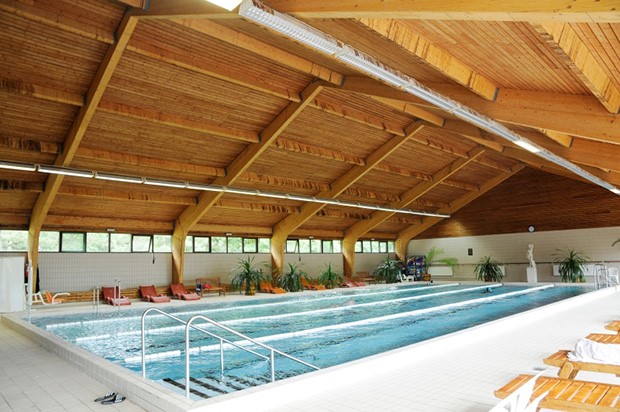
Inside, the atmosphere is unmistakably clinical. Forget zen fountains and spa playlists. Here it’s hospital-issued white bathrobes, patients shuffling quietly between treatments, and staff keeping things running with state-run efficiency.
Gábor described a complete Kneipp hydrotherapy section — a German import where you march through a taposómedence (cold treading pool with pebbled floor) in a “stork walk” to boost circulation. Then come alternating hot-and-cold baths for arms and legs. It feels less like a spa day and more like science fair meets military drill, but for varicose veins and poor circulation, it’s weirdly effective.
And then there’s my favorite bit of Hungarian absurdity. The main medicinal pool? It’s tiny, maybe jacuzzi-sized. Nobody swims — it’s for soaking only. Yet a giant sign declares: “SWIMMING CAPS MANDATORY.” Gábor swore he watched a dozen bald men solemnly stretch latex caps over their gleaming domes before stepping into the water. This wasn’t a joke. It was regulation.

And that’s the beauty of Balf: sulphur, science, and socialist-era quirks, all floating in one pool. The waters heal, the rules amuse, and together they remind you: this isn’t a five-star wellness retreat. It’s a state-run time capsule, and honestly? I loved it.
💧💧Balf’s Medicinal Springs — At a Glance
Three cold springs, three mineral “personalities.” Same goal: reduce inflammation and ease pain.
Fekete-forrás (Black Spring)
Alkaline • Chloride
Type: Alkaline–hydrocarbonate with chloride
Good for: Musculoskeletal, rheumatic, neurological therapies (balneotherapy)
- Calming, mineral-rich soak
- Supports joint mobility & recovery
Silvanus-forrás
Ca–Mg • Hydrocarbonate–Sulphate
Type: Calcium–magnesium–hydrocarbonate–sulphate
Good for: Rheumatic pain, muscle tension, circulation support
- Mineral combo aimed at easing inflammation
- Gentle tonic effect for overworked limbs
Farkasd-forrás
Ca–Mg • HCO3–SO4–Cl
Type: Calcium–magnesium–hydrocarbonate–sulphate–chloride
Good for: Chronic joint issues, post-injury rehab, neuralgic complaints
- Balanced mineral profile for steady recovery
- Pairs well with Kneipp hydrotherapy routines
🧪Legend (Mineral Abbreviations)
Ca = Calcium • Mg = Magnesium • HCO3 = Hydrocarbonate • SO4 = Sulphate • Cl = Chloride
🛁How to Use the Springs
Typical sessions last 15–20 minutes of soaking, often combined with Kneipp hydrotherapy (hot–cold alternations, pebble-foot walk). Let minerals absorb through the skin, reduce inflammation, and stimulate circulation. Warning: sulphur aroma included, free of charge.
An Insider’s Guide to Refueling: Fish, Wine, and Miraculous Water
After a day of Gábor marinating in water that smells faintly of hard-boiled eggs, we agreed the only responsible next step was calories. The good news: Balf sits a stone’s throw from the Austrian border and Lake Fertő, so the food scene quietly punches above its weight. Here’s where to point your fork.
Panoráma Étterem
Your post-soak reset button. Steps from the spa, with a terrace that stares straight into the park and Baroque chapel. The kitchen does Hungarian comfort with polish—crispy zander, seasonal soups, a very respectable schnitzel—and enough international staples to keep the table happy.
- Order this: fried fogas (zander) or a classic rántott sajt if you’re in kid-at-heart mode.
- Pair it with: a glass of Soproni Kékfrankos (Blaufränkisch) if you go meaty; Zöld veltelini (Grüner Veltliner) or Olaszrizling if you stay on the fish lane.
Balfi Halászcsárda
For the region in a bowl, head to the Fishermen’s Inn. Being this close to Fertő, the menu is a love letter to freshwater fish. It’s rustic, paprika-laced, and deeply satisfying—the kind of food that makes you forgive the swim cap.
- Order this: halászlé (fish soup) the local way; follow with harcsa (catfish) or süllő (pike-perch).
- Pair it with: light-chilled Kékfrankos or a crisp rizlingszilváni; if you’re fröccs-curious, this is the moment.
The Other Balfi Water (The One in a Bottle)
Not to be confused with the sulphur spa stuff. Balfi ásványvíz—the carbonated mineral water—has been bottled since 1900 and locals treat it like a minor miracle. It’s clean, brisk, and makes a mean fröccs. Perfect palate-reset between bites of paprika and fried goodness.
🍽️ An Insider’s Guide to Refueling
Fish, wine, and the other famous Balfi water.
Panoráma Étterem
Park-view Terrace
Steps from the spa with a terrace over the chapel park. Hungarian comfort with polish + reliable international staples.
- Order: fried fogas (zander), seasonal soups, schnitzel
- Pair: Soproni Kékfrankos for meat, Zöld veltelini or Olaszrizling for fish
Balfi Halászcsárda
Lake Fertő Classics
Rustic, paprika-laced freshwater dishes — the region in a bowl.
- Order: halászlé, catfish (harcsa), pike-perch (süllő)
- Pair: light-chilled Kékfrankos or a crisp rizlingszilváni
Balfi Mineral Water
Bottled since 1900
The famous Balfi ásványvíz — clean, brisk, and perfect for a palate reset (or a righteous fröccs).
- Not the same as the sulphur spa water
- Try: as a spritzer with local white wine
💸 What It’ll Cost You — Balf Food & Drink
| Restaurant | Dish (Hungarian / English) | Price (HUF) | Price (USD Approx.) | Blogger’s Tip |
|---|---|---|---|---|
| Panoráma Étterem | Hideg gyümölcsleves / Cold Fruit Soup | 2,190 HUF | ~$6 | Perfect for a summer day. Dessert before the main course—and you won’t regret it. |
| Panoráma Étterem | Fogasfilé rántva / Fried Pike-perch Fillet | 5,790 HUF | ~$16 | A regional classic. Fogas is the king of Hungarian fish. Always get it fried. |
| Balfi Halászcsárda | Harcsapaprikás túróscsuszával / Catfish Paprikash with Cottage Cheese Pasta | ~6,000 HUF (Est.) | ~$16.50 | The ultimate Hungarian comfort food. Creamy, rich, and utterly satisfying. Don’t miss it. |
| Any Local Shop | Balfi Ásványvíz / Balfi Mineral Water | ~250 HUF | <$1 | Iconic bottled water since 1900. Take some home for bragging rights. |
Beyond the Bath: Sopron, a Roman Quarry, and a Disappearing Lake
Balf’s quiet charm makes it the perfect base for exploring the wider Fertő / Neusiedlersee Cultural Landscape, a UNESCO World Heritage site where empires have collided and cultures overlapped for centuries.
Sopron, the City of Loyalty
Just a 15-minute drive away, Sopron is one of Hungary’s most beautiful and historically significant cities. Its perfectly preserved Old Town is a joy to explore. Don’t miss climbing the iconic Firewatch Tower (Tűztorony) for a panoramic view of the rooftops and the Austrian hills beyond (entrance €3–€5). Wander through the main square (Fő Tér) and visit the legendary Goat Church (Kecske-templom), a Gothic masterpiece with a name and backstory as quirky as they come.
Fertőrákos Quarry & Cave Theatre
This place is pure spectacle. A massive former limestone quarry, dating back to Roman times, has been transformed into a stunning open-air stage and an underground “cathedral” for concerts. The acoustics are so good, operas are staged here. The Fertőrákos Quarry & Cave Theatre reopens for the 2025 season on April 11. Tickets: 2,500 HUF (~$7) for adults.
Lake Fertő (Fertő-tó)
Central Europe’s largest steppe lake is a paradise for bird watchers and cyclists, but it’s also wrapped in controversy. A stalled mega-development on the Hungarian shore means no official swimming beaches here right now. Locals and visitors head across the border to Austria—try the lakeside towns of Rust or Mörbisch, where a beach day costs around €7.
Still, the Hungarian side has its gems: unique reed-fringed wetlands you can only see by water. Try a guided solar boat cruise (approx. 5,500 HUF / ~$15 per person) for a quiet, eco-friendly way to experience the lake’s “disappearing” magic.
The Verdict and Your Questions Answered (Probably)
So, what’s the final word on Balf? It’s not a luxury spa. It’s not a wellness retreat. It’s something far rarer and more valuable: a time capsule.
It’s an authentic, no-frills, deeply therapeutic place where the echoes of Roman legions, Austro-Hungarian aristocrats, and socialist-era patients still mingle in the sulphurous steam.
Balf isn’t for the casual tourist snapping selfies; it’s for the traveler—the one curious enough to dig beneath the glossy brochures and see where real Hungarians come to heal. And yes, you might technically need a doctor’s note to get in, but the story itself is worth carrying home.
And now, because I know you’re wondering: Can I sneak in? Do I need to pack a swim cap? Will the mineral water cure my hangover? Fear not—your burning questions (and some you didn’t know you had) are answered right below.
❓ Frequently Asked Questions (FAQ)
Q1: So, can I actually visit the Balfi Gyógyfürdő as a tourist?
A: The short answer is no. It operates as a rehabilitation hospital and does not accept walk-in guests for bathing.
The only way in is typically through a doctor’s referral (beutaló). Always check the
official Sopron Health Center site for the latest info, as policies can change.
Q2: What is the medicinal water in Balf good for?
A: The sulphurous water is used in bathing cures for musculoskeletal, rheumatic, orthopedic, and neurological conditions.
The separate bottled mineral water is used in drinking cures for digestive ailments.
Q3: What should I bring if I manage to get in?
A: A swimsuit, a towel, flip-flops, and—most importantly—a swimming cap!
They’re mandatory in the thermal pool, even if you’re just soaking. (Yes, bald guys too.)
Q4: Is Balf a good destination for a family holiday?
A: The spa itself feels more clinical, but the surroundings are family gold.
Sopron’s Old Town is charming, the Fertőrákos Quarry is basically a giant cave cathedral, and Lake Fertő offers cycling, birdwatching, and boat trips.
Q5: What’s the best time of year to visit the Sopron/Balf region?
A: Spring and autumn bring pleasant weather for exploring.
Bonus: autumn is grape harvest season in the Sopron wine region—Kékfrankos never tastes better.
Q6: How much does it cost to enter?
A: Since it’s not open to the public, there isn’t a standard ticket price.
For historical reference, the thermal pool was once around 1,500 HUF, but don’t count on that now.


