It always happens. Someone visits Budapest for the first time, scrolls through all the glossy travel blogs, and inevitably asks: “So… Széchenyi or Gellért? Which bath should I do?”
In 2026, that question has a very different answer than it used to—because Gellért Bath closed on October 1, 2025 for a massive renovation that won’t wrap up until 2028. And Király Bath? Also closed for restoration. So if you were dreaming of Art Nouveau steam rooms and Ottoman domes, you’re going to need a Plan B.
Lucky for you, the best Plan B isn’t really a Plan B at all. It’s the bath locals have preferred all along: Lukács.
While Széchenyi’s yellow grandeur is undeniably Instagram-ready, it can feel more like a photo op than a peaceful retreat. If you want to experience the real heart of Budapest’s bath culture—the waters locals have trusted for centuries to heal, to chat, and to unwind—you go to Lukács. And that’s where the perfect Buda-side day begins: soaking in legendary thermal pools and following it up with a foodie dive into the neighborhood’s best spots.

Echoes of History in the Courtyard: More Than Just a Spa
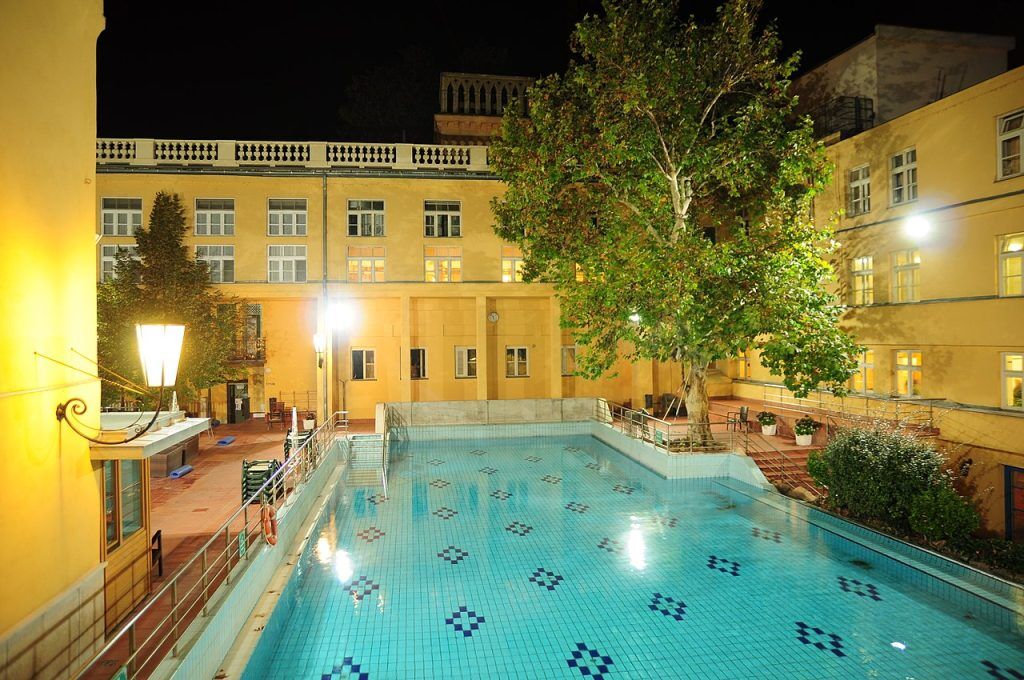
The moment you step through the main gate of Lukács Bath, you realize this place is different. Instead of opulent lobbies, you find yourself in a serene, sun-dappled courtyard shaded by enormous plane trees. The walls aren’t covered in gold leaf, but in something far more precious: hundreds of marble “thank you” plaques, or hálatáblák. Left by people from all over the world who found healing in these waters, they date back to the 1890s. Each one tells a story of gratitude—a powerful, silent testament to the bath’s medicinal legacy that you simply don’t feel in the more tourist-focused spas.
This sense of deep history permeates the entire complex. The story of Lukács begins long before the grand building you see today. Knights of the Order of Saint John were using these springs to cure the sick as far back as the 12th century. During the Ottoman occupation, the potent springs were harnessed not for bathing, but for powering a gunpowder and grain mill—a fascinating historical quirk.
The modern bath began to take shape in the 1880s when Fülöp Palotay transformed it into a spa hotel, establishing its reputation across Europe. But its real soul lies in its status as a cultural institution. For much of the 20th century, this was the unofficial clubhouse for Hungary’s artistic and intellectual elite. Imagine soaking in the same waters as the great composer Zoltán Kodály, who, according to legend, would sometimes stand on a bench to conduct an impromptu choir of fellow bathers. Writers like Géza Ottlik and István Örkény were regulars, making the bath a part of Hungary’s literary fabric.
This layered history is reflected in the architecture. It’s not a single, grand vision like Gellért. Instead, it’s an eclectic mix of styles, the result of centuries of additions and reconstructions, with a handsome Classicist-Biedermeier facade from the 1920s tying it all together. It feels less like a museum and more like a living, breathing piece of Budapest history.
Why Lukács Is Having Its Moment in 2026
Let’s talk about the elephant in the (steam) room. With Gellért Bath shut down until 2028 and Király Bath also closed for restoration, Budapest’s thermal bath scene has shifted dramatically. Széchenyi is more crowded than ever (if you thought it was busy before—good luck now), and Rudas, while gorgeous, is smaller and pricier.
Lukács has quietly stepped into the spotlight. And honestly? It suits the place perfectly. Because Lukács was never trying to be famous—it was too busy being good. The thermal waters here are considered among the most medically effective in Budapest, rich in calcium, magnesium, and sulphate with a notable fluoride ion content. They’re recommended for everything from degenerative joint diseases to post-accident rehabilitation. Those marble gratitude plaques on the wall aren’t just for show.
Important note for families: Since August 1, 2025, Lukács Bath has a strict 14+ age restriction. This applies to several Budapest baths including Rudas, Széchenyi, and Dandár too. If you’re traveling with younger children, you’ll need to look at family-friendly options like Palatinus on Margaret Island.
Your First Visit: Navigating Lukács Like a Pro
Getting to Lukács is straightforward. Located on the Buda side at Frankel Leó út 25-29, it’s easily reachable by public transport. Take the 4/6 tram to the Margit híd, budai hídfő (Margaret Bridge, Buda side) stop and walk a few minutes north, or take trams 17 or 19 right to the Szent Lukács Gyógyfürdő stop directly in front.

Lukács Bath Prices & Practical Info (2026)
Ticket Prices
| Ticket Type | Weekday (Mon–Thu) | Weekend (Fri–Sun) |
|---|---|---|
| Adult | 7,000 Ft (~$18) | 8,000 Ft (~$21) |
| Senior / Student | 3,800 Ft (~$10) | 4,900 Ft (~$13) |
| Afternoon Pass | 3,800 Ft (~$10) | — |
| Complex Ticket (online only) | — | 8,900 Ft (~$23) |
What’s that Complex Ticket? It’s a new weekend-only option available exclusively when you buy online—it bundles your bath entry with Sauna World access plus a cabin. If you were going to add those anyway, this saves you a nice chunk of change.
Add-Ons & Extras
| Add-On | Price (HUF) |
|---|---|
| Cabin Upgrade | 1,000 Ft (~$2.60) |
| Sauna World | 1,300 Ft (~$3.40) |
| Private Bath (2 persons / 3 hours) | 18,000 Ft (~$47) |
| Safe | 1,100 Ft (~$2.90) |
If You Forgot Something
| Item | Price (HUF) |
|---|---|
| Towel (purchase) | 6,900 Ft (~$18) |
| Bathrobe | 12,600 Ft (~$33) |
| Swimsuit | 6,300 Ft (~$16) |
| Swim Cap | 2,100 Ft (~$5.50) |
| Slippers | 4,200 Ft (~$11) |
Yes, those prices are steep for things you probably have at home. Pack your bag before you leave the hotel. Your wallet will thank you.
Opening Hours
- Monday, Wednesday–Sunday: 7:00 am – 7:00 pm
- Tuesday: 7:00 am – 10:00 pm (extended hours!)
- Cash desks close 1 hour before closing
- Pool areas must be vacated 20 minutes before closing
- Sauna World: Mon–Fri from 2:00 pm to closing | Sat–Sun & holidays: full hours
- Drinking fountain: Wed & Fri, 11:00 am – 6:00 pm
Pro tip: Tuesday is the sleeper hit. Most tourists don’t know about the extended hours, so you can have a relaxed evening soak when the crowds thin out after 5 pm. It’s the closest thing to a locals-only secret this place has left.
Address & Transport
- Address: 1023 Budapest, Frankel Leó út 25–29
- Transport: Trams 4, 6 (Margit híd stop) or Trams 17, 19 (Szent Lukács Gyógyfürdő stop)
- Website: lukacsfurdo.hu
A fantastic tip for tourists: entry to Lukács Bath is completely free with the official Budapest Card. If you plan on seeing a lot of the city, this card can offer incredible value.
For the dedicated soaker: Lukács also offers a season ticket for 15 occasions at 80,000 Ft (~$210). If you’re spending a few weeks in Budapest and plan to visit regularly, this brings your per-visit cost down to about 5,300 Ft—a solid deal.
The Cabin vs. Locker Dilemma
When you buy your ticket, you’ll be asked if you want a locker or a cabin. A locker is just what it sounds like: a small metal box for your things located in a large, gender-separated communal changing room. A cabin is a small, private changing booth where you can change and leave your belongings. The upgrade to a cabin costs an extra 1,000 Ft (~$2.60).
Insider Tip: For a couple or two friends, the most economical option is to buy one ticket with a cabin and one with a locker. You can both use the private cabin to change (taking turns, as they’re cozy!) and then store your bags inside, saving a bit of money while still getting the privacy.
First Impressions & The “Lukács Labyrinth”
Once you’re through the turnstiles with your electronic wristband (which operates your locker or cabin), you might feel a bit disoriented. I’ve seen online reviews, some from fellow Hungarians, affectionately calling the layout an “elfuserált labirintus” (a screwed-up labyrinth), and they aren’t entirely wrong. Corridors twist, staircases appear unexpectedly, and finding the outdoor pools can feel like a quest.
Don’t let it frustrate you; it’s part of the charm of a historic building that has evolved over centuries. Here’s a simple cheat sheet: from the main locker rooms on the upper floor, head down the main staircase. A right turn will take you towards the outdoor pools; a left turn will lead you into the maze-like indoor thermal section.
The Waters: A Deep Dive into the Pools and Wellness World
The heart of the Lukács experience is, of course, its water. Believed to be among the most medically effective in Budapest, the water is rich in minerals like calcium, magnesium, and sulphate, with a notable fluoride ion content (Ca−Mg−HCO₃, SO₄²⁻, F⁻). It’s recommended for everything from degenerative joint diseases to post-accident rehabilitation.
The Outdoor Oasis
This is where Sarah and I spent most of our time. It’s the social hub of the bath, but with a relaxed, local vibe.
- Leisure Pool: The star of the show is the large outdoor “fancy pool,” kept at a blissful 33-35°C (91-95°F). It’s equipped with all the modern fun: a swirling “lazy river” corridor that playfully pushes you along, powerful neck showers that pound the tension from your shoulders, and underwater jets built into benches for a perfect back massage. We could have stayed there for hours.
- Lap Pools: Flanking the leisure pool are two cooler swimming pools (22°C and 26°C) for those who want to get some proper exercise. Crucial local knowledge: a swim cap is mandatory in these two pools. They are very strict about this rule, and it catches out nearly every tourist. You can buy one on-site for 2,100 Ft, but it’s way cheaper to bring your own.
The Historic Thermal Heart
Venturing inside feels like stepping back in time. The atmosphere is quieter, more contemplative, and you’ll notice the distinct, slightly sulfurous smell of potent medicinal water. This section houses three thermal pools at varying temperatures—32°C, 36°C, and a toasty 40°C—along with a 24°C cooling pool to refresh your senses. This is where you’ll see older Hungarians quietly soaking, reading waterproof newspapers, and letting the water work its magic.
About the drinking fountain: Yes, you can actually drink the thermal water here. The drinking fountain operates on Wednesdays and Fridays between 11 am and 6 pm. The taste? Let’s just say it’s an acquired one. But locals swear by its digestive benefits, and honestly, you didn’t come all this way to play it safe.
The Verdict on ‘Sauna World’: Is It Worth the Extra Forint?
For an additional 1,300 Ft (~$3.40), you can get access to the Szaunavilág, or Sauna World. Sarah is a huge sauna fan, so we had to check it out. Inside, you’ll find an impressive array of options: a Salt Crystal Sauna, an Aroma Steam Cabin, an Infra Sauna, a large Finnish Sauna where they hold sessions, and even a Naturist Sauna, plus relaxation areas like an Igloo and a Tepidarium.
Note (2026): The herbal sauna is currently not operating. Just so you don’t go hunting for it and think you’ve lost your mind in the labyrinth.
Heads up on hours: On weekdays, Sauna World only opens at 2 pm. On weekends and holidays, it runs the full day. Plan accordingly if saunas are your main event.
Insider Insight (The Sauna Etiquette): This is vital to know. The Sauna World is a traditional, European-style swimsuit-free zone. You are given a sauna sheet upon entry, and it is mandatory to use this to sit or lie on, ensuring your body doesn’t touch the wooden benches. In the naturist section, covering your body is optional, but using the sheet for hygiene on the bench is still required. Understanding this etiquette beforehand saves a lot of potential awkwardness and shows respect for the local culture.
Our verdict? For sauna lovers, the sheer variety makes it an absolute steal. If you just want a quick steam, the standard steam room included with the main ticket will suffice.
Massages & Private Baths
If you want to take the pampering up a notch, Lukács offers several massage options. In 2026, an Aroma or Refreshing massage runs 9,000 Ft (~$24) for 20 minutes or 13,000 Ft (~$34) for 45 minutes. Not the cheapest rubdown you’ll ever get, but after an hour in the thermal pools, your muscles will be so relaxed that a good massage feels almost transcendent.
There’s also a private bath option: 18,000 Ft (~$47) for 2 persons for 3 hours. If you’re celebrating something special—or just deeply antisocial—it’s a lovely way to have the thermal experience all to yourselves.

Beer Spa: Yes, You Read That Right
Here’s something most visitors don’t know: Lukács is also home to Budapest’s Beer Spa. You literally soak in a wooden tub filled with warm beer ingredients while sipping unlimited craft beer from a tap mounted right on the tub. It’s exactly as ridiculous and wonderful as it sounds. We’ve written a full review of the Beer Spa experience if you want the details—but trust me, it makes for one hell of a story back home.
A Moment of Honesty
I believe in giving an honest picture, and no place is perfect. While the pools and historic courtyards are wonderful, my one criticism of Lukács, echoed in many online reviews, is the condition of some of the auxiliary facilities. My friend and I both noticed that the locker rooms and some of the shower blocks feel very dated. You’ll see cracked tiles and fixtures that have clearly been in service for decades.
This wasn’t a deal-breaker for us. It’s a sign that Lukács is a functional, well-loved local institution, not a luxury spa polished for tourist brochures. It adds to its unpretentious charm, but it’s something to be aware of if you’re expecting five-star flawlessness. (If that’s what you’re after, Rudas might be more your speed—though you’ll pay more and lose some of the character.)
A Foodie’s Guide to the Neighborhood (Because You Can Do Better Than Spa Food)
After a few hours of soaking, we were ravenous. While there is a basic buffet (the “Lukács Büfé”) on-site offering simple Hungarian fare like schnitzel, it’s nothing to write home about. All payments inside the bath complex are cashless, so you’ll need a bank card or their top-up card. But my advice? Save your appetite. The real treats are just outside.
- For a Trip Back in Time: Just a short walk from the bath, Bambi is a living museum. This café-bar has remained virtually unchanged since the 1960s, from its red faux-leather chairs to its delightfully grumpy service. It’s a beloved local haunt where old-timers play chess and the coffee comes in classic dotted glasses. Go for a simple toasted sandwich and soak in the authentic retro atmosphere.
- For an Italian Street Food Fix: Literally next door to the bath, this tiny shop serves incredible Sicilian rice balls called arancini. They are crispy, cheesy, and utterly delicious—the perfect, high-quality post-bath snack. They have several fillings, including great vegetarian options.
- For a Legendary Sweet Treat: This is a pilgrimage site for any dessert lover in Budapest. Daubner is an institution, and the perpetual queue snaking out the door is a testament to its quality. It’s a short bus ride or a 15-minute walk away, but it is non-negotiable for a true foodie. My recommendations, backed by local consensus: the classic Eszterházy torta (walnut cake), the heavenly krémes (a massive vanilla cream slice), and if you want the ultimate local experience, grab a savory sajtos pogácsa (cheese scone).
- For a Proper Sit-Down Meal: If you’re looking for a more substantial meal, Híd Bisztró, located near the Margaret Bridge, is a solid choice. It offers a reliable menu of Hungarian and international dishes and has a lovely terrace in the summer.
Beyond the Bath: A Stroll to the Tomb of Gül Baba
Feeling completely blissed out, I had one last surprise for Sarah. A short, five-minute walk up the hill from Lukács lies the Tomb of Gül Baba. This beautifully restored 16th-century Ottoman shrine is the northernmost holy site of Islam in Europe. It’s surrounded by a fragrant rose garden and offers breathtaking panoramic views over the Danube and Pest. It’s a wonderfully peaceful and free-to-enter spot that perfectly complements the historical atmosphere of the bath.
How Lukács Compares to Other Budapest Baths in 2026
With Budapest’s bath landscape reshuffled, here’s a quick reality check on your options:
- Gellért Bath: Closed for renovation until 2028. Not an option.
- Király Bath: Closed for restoration until approximately 2026. Check before you plan around it.
- Széchenyi: Open and stunning, but significantly more crowded than usual (absorbing Gellért’s displaced visitors). Higher prices too.
- Rudas: Open, beautifully renovated, with a rooftop pool. More expensive, smaller, and also 14+.
- Lukács: Open, affordable, authentic. The waters locals actually trust. Now you’re getting it.
Frequently Asked Questions
What should I bring to Lukács Bath?
A swimsuit, a towel, and flip-flops (mandatory). A swim cap is only required if you plan to use the outdoor lap pools—but they’re strict about it, so bring one just in case. Buying on-site means paying 6,900 Ft for a towel, 6,300 Ft for a swimsuit, or 2,100 Ft for a swim cap. Ouch.
How much time should I plan for my visit?
Plan for at least 2–3 hours to enjoy the pools and Sauna World without rushing. Many locals happily spend half a day here. If you add the Beer Spa, Gül Baba, and a food stop, you’ve got yourself a full Buda-side day.
What’s the best time to visit to avoid crowds?
For a more authentic and peaceful experience, visit on a weekday morning. You’ll find mostly locals and a wonderfully serene atmosphere. Tuesday evenings (open until 10 pm) are also surprisingly calm.
Can I pay with cash or card?
At the entrance, you can pay with cash (HUF/EUR), bank card, or SZÉP card. Inside the bath, it’s cashless only—you must use a card or load a top-up card at the entrance.
Are children allowed?
No. Since August 1, 2025, Lukács Bath is only open to visitors aged 14 and over. This rule applies across multiple Budapest baths including Széchenyi, Rudas, and Dandár.
Is Gellért Bath open in 2026?
No. Gellért Bath closed on October 1, 2025 for a major renovation project. It’s not expected to reopen until 2028. Lukács is the best alternative on the Buda side, offering a similarly historic atmosphere with genuinely medicinal waters—and at a lower price.
Is Lukács Bath wheelchair accessible?
Partially. The ground floor can be navigated, but there are no pool lifts and accessibility features are limited. Call ahead if you have specific needs.
Can I take photos inside?
Yes, for personal use. Be respectful of privacy: panoramic shots of the architecture are fine, but avoid photographing other bathers.
The Real Deal
As my friend and I finally left, wrapped in towels and feeling utterly rejuvenated, she turned to me. “Okay, you were right,” she conceded. “This feels… real.”
And that’s the magic of Lukács. It offers a unique combination of genuinely potent healing waters, a deep and tangible history, and an authentic local atmosphere that you simply cannot replicate. It’s not trying to compete with Széchenyi’s grand columns or Rudas’s rooftop glamour. It doesn’t need to.
So next time you’re in Budapest and craving a soak, by all means, admire the grand palaces. But for a truly restorative experience, come to Lukács. Find a spot in the swirling leisure pool, listen to the murmur of Hungarian chatter around you, and feel the real, unlocked soul of the City of Baths.
Contact Information
Lukács Thermal Bath
📍 Frankel Leó út 25-29, 1023 Budapest
📞 +36 1 326 1695
🌐 lukacsfurdo.hu

