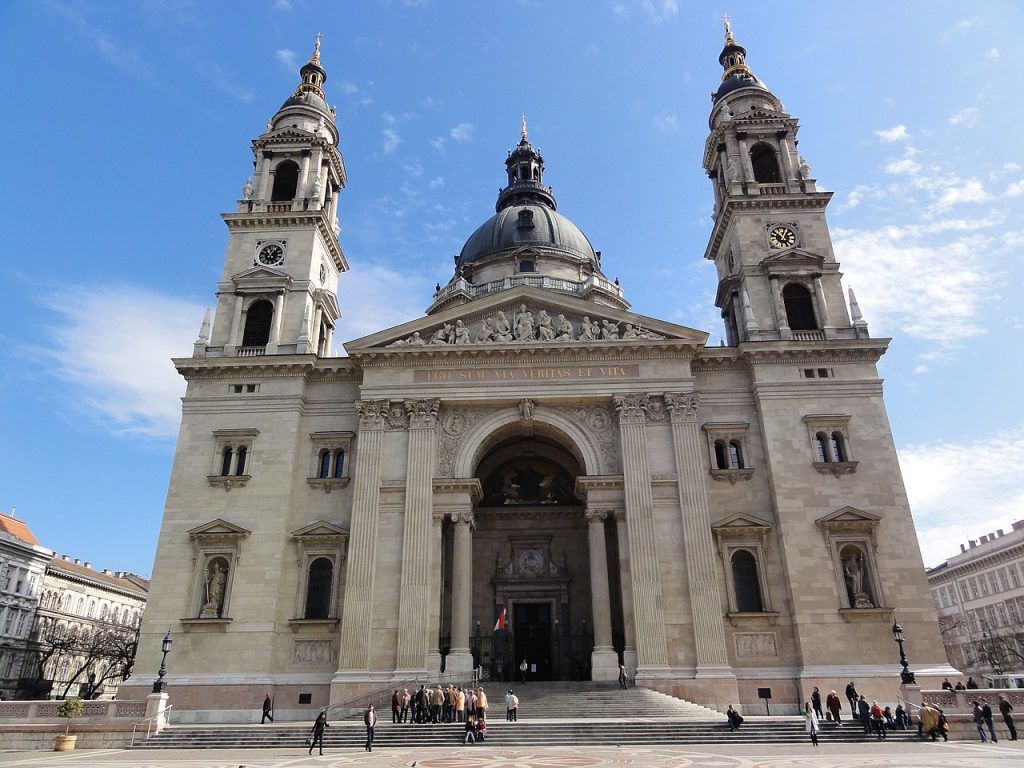
As a Budapest local, I’ve learned that the best evenings in this city often start with an impossible choice. On a balmy late afternoon, meeting friends at Szent István tér, the choice was this: do we dive straight into one of the buzzing terrace cafés, or do we pay our respects to the magnificent giant watching over us? The dome of St. Stephen’s Basilica, catching the golden light, seemed to make the decision for us. For us, a group of food-obsessed locals, the Basilica wasn’t just a landmark to tick off a list; it was the perfect overture to an evening of skyline views and rooftop cocktails.
This isn’t just another guide. This is my take, from the ground up to the panoramic terrace and beyond, on how to truly experience Budapest’s grandest church. We’ll cover the awe-inspiring interior, the one relic you have to see to believe, and I’ll let you in on my favorite spot to get an up-close view of that famous dome with a cocktail in hand. Plus, I’ll share a critical tip for any night owl who wants to see this city sparkle after dark.

- Available
- Ticket
- Ticket Included
Key Takeaways
- St. Stephen’s Basilica is a symbol of national pride and freedom, representing the resilience of Hungary.
- The basilica’s historical significance is highlighted by its survival during World War II and its housing of important artifacts.
- Located near the Right Bank of the Danube, the basilica offers convenient accessibility to other World Heritage sights and attractions such as the Chain Bridge.
- Visitors can indulge in culinary delights in the area, including the legendary Gerbeaud Cafe and a vibrant culinary scene in district V.
Historical Significance
St. Stephen’s Basilica, named in honor of Hungary’s first monarch, stands as a profound testament to the nation’s history, having played a pivotal role in both religious and cultural realms since its inception. Nestled in the heart of Budapest, this architectural masterpiece, designed by József Kauser, exudes a neo-Renaissance style reflective of the grandeur and spirit of the era.
Conceived by the esteemed Miklós Ybl, its iconic form survived the substantial damage during World War II, a symbol of resilience and perseverance. The Basilica houses the revered Holy Right of St. Stephen, encapsulating the legacy of the first King of Hungary.
This hallowed edifice not only represents a place of worship but also stands as a beacon of national pride and freedom.
Inside the Basilica: A Local’s Look at Budapest’s Crown Jewel
Stepping from the lively square into St. Stephen’s Basilica is a sensory shift. The city’s chatter fades, replaced by a cool, cavernous silence that echoes with history. Your eyes need a moment to adjust to the dim light, which makes the gilded details and rich marble shimmer. It’s a place that commands reverence, not just for its religious significance, but for its sheer architectural audacity.
It’s hard to believe this masterpiece took 54 years to complete (1851-1905), a saga of ambition that even included the dramatic collapse of the original dome in 1868. That disaster brought in legendary architect Miklós Ybl, who redesigned it with the grand Neo-Renaissance feel we see today. Its height, 96 meters, is no accident. It was built to be the exact same height as the Hungarian Parliament Building, a powerful symbol of the balance between spiritual and worldly power in Hungary, and a nod to the year 896 when the Magyars settled the region.
What many visitors don’t realize until they arrive is that the Basilica has evolved from a traditional place of worship with an optional donation box to a fully-fledged, ticketed attraction. While it remains a deeply sacred and active church, the experience for a visitor is managed more like a museum. You’ll find a formal ticket office, different pricing tiers, and organized queues. This is a fundamental shift from how many historic European churches operate, and knowing this in advance helps set the right expectation. You are not just dropping into a church; you are paying for access to a national monument, and it’s best to plan and budget accordingly.
The Holy Right Hand Chapel
The Basilica’s most famous, and arguably most curious, artifact is the Holy Right Hand. Housed in a small, ornate chapel, this is the naturally mummified right hand of St. Stephen, Hungary’s first king and the man credited with bringing Christianity to the nation. The hand is preserved in an elaborate golden reliquary. For a small donation (you’ll need a coin for the machine), a light illuminates the relic for about 30 seconds. Some find this transactional nature a bit tacky, but it’s a uniquely Hungarian experience and a tangible link to over a thousand years of history.
Exploring the Interior
Beyond the famous hand, take time to appreciate the other details. The main altar, unusually, features a statue of St. Stephen himself, a special permission granted by the Pope, rather than a more traditional figure. Look up into the dome to see a stunning mosaic of God the Father, a masterpiece by Károly Lotz. The Basilica is also home to one of Europe’s great pipe organs, and for music lovers, attending one of the regular organ concerts is a must. As a local tip, they often hold fantastic concerts on Monday evenings, which you can sometimes enter with a standard church ticket.
The Ascent: Is the View from St. Stephen’s Dome Worth It?
Absolutely. The 360-degree panoramic view from the terrace wrapping around the dome is, without question, one of the best in Budapest. You have two ways to get up to the 65-meter-high lookout: take a series of two elevators or climb over 300 steps.
Many assume the elevator is the obvious choice, but a savvy visitor plays it by ear. The convenience of the lift can be quickly erased by long queues, especially for the second, smaller elevator that takes you the final stretch. When you get to the ticket level, take a quick look at the line. If it’s long and you’re able-bodied, taking the stairs will almost certainly be faster and gives you a fascinating look at the inner structure of the dome. If you have mobility concerns or are visiting with small children, just be prepared to factor in a bit of a wait during peak hours.

- Available
- Ticket
- Ticket Included
- Activity
Once you step out onto the terrace, the entire city unfolds beneath you.
- Looking North: The iconic, neo-Gothic dome of the Hungarian Parliament Building dominates the skyline.
- Looking West: Your eyes are drawn across the Danube to the Buda side, where you can clearly pick out the sprawling Buda Castle complex, the colorful tiled roof and spires of Matthias Church, and the fairytale towers of Fisherman’s Bastion.
- Looking South: You’ll see the green expanse of Gellért Hill, topped by the Citadella and the Liberty Statue.
- Looking Down: The view is a mesmerizing pattern of Pest’s red-tiled rooftops, the grand boulevard of Andrássy Avenue stretching into the distance, and the whimsical sight of the Budapest Eye Ferris wheel in Erzsébet Square.
For the best photos, aim to be up there in the late afternoon as the “golden hour” light bathes the city in a warm glow.
The Golden Hour: A Foodie’s Review of High Note SkyBar
After descending from the dome, my friends and I took the short walk across the square to the Aria Hotel, home to the High Note SkyBar. This is where you get the “money shot.” The bar’s chic, bi-level terrace offers an unbelievably close and personal view of the Basilica’s dome. It feels like you could almost reach out and touch it.
We settled in as the sky began to turn pink and ordered from their inventive, music-themed menu.
- The Cocktails: I went for the James Brown (6,200 HUF / approx. $17 USD), a sophisticated mix of Tanqueray Gin, vanilla, thyme, and a subtle note of blue grape. It was complex and refreshing, a perfect match for the elegant setting. My friend chose the Ella Fitzgerald (6,200 HUF / approx. $17 USD), a daring combination of tequila, mango, a whisper of jalapeno, and cooling yogurt. It was vibrant, spicy, and beautifully balanced.
- The Food: To share, we ordered the Spinach and goat cheese croquettes (4,900 HUF / approx. $13 USD). They arrived perfectly crisp, with a warm, tangy filling that was brilliantly complemented by a drizzle of elderflower and chili honey. We also split the Aria burger (7,900 HUF / approx. $21 USD), which was elevated far beyond a typical bar burger by the addition of spicy chorizo and rich provolone cheese, served with addictive spicy potatoes.
A crucial tip: This place is popular for a reason. Book your table well in advance, especially for a weekend, and be sure to request a table with a Basilica view when you do. For a truly special occasion, you can reserve one of the small panoramic towers, but be aware that this comes with a minimum consumption fee.
An Insider’s Guide to the Basilica Quarter
The area immediately surrounding the Basilica is packed with other treats.
- Must-Try Gelato: Don’t leave the square without visiting Gelarto Rosa. This world-famous shop serves delicious gelato sculpted into the shape of a rose. It’s an iconic Budapest treat and the perfect reward after your visit.
- Picture-Perfect Stroll: Walk down the pedestrianized Zrínyi utca, which leads directly away from the Basilica’s main entrance. Turn around, and you’ll have the most stunning, perfectly symmetrical photograph of the church’s facade.
- Explore Further: You’re just a stone’s throw from some of Pest’s other major attractions. The grand Andrássy Avenue, the magnificent Hungarian State Opera House, and the buzzing ruin bars and restaurants of the Gozsdu Courtyard are all within a short walk.
The Budapest Glow-Down: A Crucial Tip for Night Owls
Here is perhaps the most important piece of insider advice I can give you for planning your evenings in Budapest. The city has an energy-saving policy that means the beautiful decorative lighting on most major monuments is switched off after 11 PM.
This isn’t some arbitrary rule; it’s a visible result of the city’s response to the European energy crisis and a broader focus on sustainability. While the policy is sometimes debated, it remains in effect. This “curfew” applies to the most photographed landmarks in the city, including
Buda Castle, Fisherman’s Bastion, the Chain Bridge, and the Basilica itself. So, my advice is simple: plan your nighttime photography, romantic strolls, and sightseeing cruises for earlier in the evening. Don’t save the best views for last, or you’ll be met with a beautiful, but surprisingly dark, skyline.
The Unvarnished Truth: One Small Thing to Keep in Mind
To give you a completely rounded picture, there is one small drawback to the dome experience. While the view is undeniably epic, the panoramic walkway itself is quite narrow. During peak tourist season, it can feel a bit congested as people jostle for the perfect photo spot at the railing. It’s not a deal-breaker, but it’s good to be aware that you might need a little patience to get that unobstructed shot. Visiting on a weekday or earlier in the day can help you avoid the worst of the crowds.
The Practical Details: Your Visit, Deconstructed
Here is all the essential information you need in one place. I strongly recommend booking your tickets online in advance to save time.
| Ticket Option | Adult Price (HUF) | Adult Price (USD Approx.) | Opening Hours |
| Church Hall Only | 2,400 HUF | ~$6.50 | Mon-Sat: 9:00-17:45, Sun: 13:00-17:45 |
| Panoramic Terrace & Treasury | 4,500 HUF | ~$12.00 | Mon-Sun: 9:00-19:00 |
| Combined Ticket (All Access) | 6,200 HUF | ~$16.50 | Follow hours for individual sections |
- *Prices are based on the latest information from the official ticket portal and are subject to change.
- Location: Szent István tér 1, 1051 Budapest.
- Getting There: Take the M3 (blue line) metro to Arany János utca station; it’s a short walk from there.
- Official Tickets: It is highly recommended to book your tickets directly from the official online portal to avoid queues. Click here for the official ticket website.
- Dress Code: Remember this is an active church. Please dress modestly, ensuring your shoulders and knees are covered.

- Available
- Ticket
- Ticket Included
St. Stephen’s Basilica: Frequently Asked Questions (FAQ)
Q1: How much time should I allocate for a visit to St. Stephen’s Basilica? A: Plan for about 45-60 minutes to see the church interior properly. If you want to include the treasury and the panoramic dome view, I’d recommend allocating a total of 1.5 to 2 hours to be safe, especially accounting for potential elevator queues.
Q2: Is there a dress code for St. Stephen’s Basilica? A: Yes. As an active Catholic church, respectful attire is required. This means covering your shoulders and knees. While they sometimes offer wraps at the entrance, it’s always best to arrive prepared.
Q3: Is St. Stephen’s Basilica accessible for visitors with mobility issues? A: The main church hall is generally accessible. The panoramic dome is also accessible via elevators, making it reachable for those with mobility challenges. However, be aware that there can be queues for the elevators during peak times.
Q4: Can you take photos inside the Basilica? A: Yes, photography for personal use is permitted inside, but using a flash is strictly forbidden to protect the delicate mosaics and artwork. Always be respectful and refrain from taking photos during services.


