
Let me save you from the mistake I watched a couple from Ohio make last summer. They booked a “charming apartment in the heart of Budapest’s party district” because it was cheap and the photos looked Instagram-worthy. What the listing failed to mention was that their bedroom window faced directly onto Kazinczy utca—ground zero for Budapest’s legendary ruin bar scene. By night two, they’d abandoned ship for a hotel near Parliament, €200 poorer and severely sleep-deprived. The husband looked like he’d aged five years.
Here’s the thing about Budapest: this city is actually two cities (Buda and Pest, unified in 1873), spread across 23 districts, each with its own personality, price point, and potential to either make or ruin your trip. The wrong neighborhood choice can mean the difference between magical evening strolls along the Danube and being woken at 3 AM by a British stag party attempting to harmonize on “Sweet Caroline.”
I’ve lived in Budapest for over two decades now. I’ve watched neighborhoods transform from sketchy to chic, seen ruin bars sprout from abandoned buildings, and witnessed the Great Airbnb Invasion reshape entire districts. I’ve hosted friends and family from every corner of the globe, and the question I get asked more than any other is: “Where should I stay?”
The answer, frustratingly, is always: it depends. But after this guide, you’ll know exactly which Budapest neighborhood matches your travel style, budget, and tolerance for late-night accordion music drifting through your window.
Where Should You Stay in Budapest?
Answer 7 quick questions and I’ll tell you exactly which neighborhood fits your vibe. No generic advice, just honest local recommendations.
My First Budapest Neighborhood Experience: A Cautionary Tale
When I first moved up to Budapest in the early 2000s, I rented a tiny hole in the infamous “Chicago.” You know the place—that outer rim of the 7th District which, back then, was… well, let’s just say it was rough around the edges. As a kid from the countryside, my knowledge of the city was basically zero. We didn’t even dream of smartphones or Google Maps back then; my entire navigation system consisted of a dog-eared, photocopied BKV map and a thick street directory. I honestly thought I had struck gold with that ridiculously low rent.
I still vividly remember that first evening. I stepped off the tram at Blaha Lujza tér and dragged my suitcase with its broken wheel across the torn-up cobblestones. The air was thick with the sharp smell of cigarette smoke—back then, everyone smoked everywhere, from bus stops to elevators—mixed with city smog and the less pleasant odor wafting from nearby bins. In the doorways, local “characters” were debating the meaning of life through a haze of smoke, while from the 24-hour “Non-stop” on the corner, loud lakodalmas (wedding pop) music blasted as teenagers loitered outside. This wasn’t the elegant, postcard Budapest I had imagined back home. This was the gritty, dirty, pulsing reality.
That apartment taught me everything I needed to know about Budapest’s neighborhood dynamics. I learned the hard way that if you walked ten minutes in one direction, you’d find yourself among the elegant mansions and terraced cafés of the Grand Boulevard. But if you walked ten minutes in the other direction, you ended up on streets where, after dark, you instinctively walked faster and clutched your bag a little tighter. I realized this city could feel like Vienna or a dark ghetto within the span of a few blocks—it all depended on where you stopped to check your paper map.
Two decades later, that “tough” neighborhood has completely transformed. The old pensioners sitting in doorways have been replaced by hipsters sipping flat whites in third-wave coffee shops. But the fundamental truth I learned back then, map in hand, still stands: in Budapest, your address isn’t just about convenience—it defines your entire state of mind.
Understanding Budapest’s District System Before You Book
Before we dive into specific neighborhoods, let me decode Budapest’s slightly confusing numbering system. The city is divided into 23 districts (kerület), identified by Roman numerals. District I through District XXIII. But here’s the catch: the numbers don’t follow any logical geographic pattern that an outsider would recognize.
District I is the Castle District on the Buda side—the medieval hilltop where kings once ruled. District V is the downtown core on the Pest side. District VII is the Jewish Quarter and ruin bar paradise. The numbers spiral outward in a pattern that made perfect sense to 19th-century Hungarian bureaucrats and absolutely no sense to anyone planning a trip today.
For tourists, only about eight districts matter, and I’ll cover each one in detail. The rest are residential suburbs where you’d have no reason to stay unless you’re visiting a specific local friend or have developed a passionate interest in Hungarian housing blocks from the 1970s.
The Danube River splits the city into hilly Buda (west bank) and flat Pest (east bank). Most first-time visitors stay in Pest because that’s where the action is—the ruin bars, the restaurants, the Jewish Quarter, the shopping streets. Buda offers romance, history, and panoramic views, but you’ll need to cross the river (or take public transport) to reach most attractions.
My advice? Pest for first-timers, Buda for romantics and repeat visitors. But let’s get specific.
District V (Belváros-Lipótváros): The Grand Dame of Budapest Neighborhoods
What It Feels Like to Stay in Budapest’s Inner City
Walking through District V feels like stepping into an Austro-Hungarian time capsule that someone forgot to tell the 21st century about. The buildings are wedding-cake confections of cream and gold, their ornate facades dripping with carved cherubs and wrought-iron balconies. The Hungarian Parliament—that impossibly photogenic Gothic Revival masterpiece—anchors the riverfront like a fever dream of architectural ambition.

I remember bringing my parents here for their first Budapest visit. We emerged from the metro at Vörösmarty tér on a December evening, Christmas market in full swing, and my mother actually gasped. The square glowed with thousands of fairy lights, the smell of roasted almonds and kürtőskalács (chimney cake) hung in the frozen air, and somewhere a string quartet was playing Strauss. “This,” she said, squeezing my arm, “this is what I imagined Europe would look like.”
That’s District V in a nutshell: Budapest’s greatest hits, concentrated into a walkable square kilometer.
The Best Parts of Staying in District V
Everything is close. St. Stephen’s Basilica, the Chain Bridge, the Danube Promenade, the Opera House—all within a 15-minute stroll. You’ll never waste precious vacation time on public transport if your main goal is hitting the famous landmarks.

Safety is excellent. I’ve walked these streets at every hour without a second thought. The area around Parliament gets quiet after dark (the politicians go home), but quiet here means peaceful, not sketchy. For anyone traveling with family or feeling cautious about European city safety, District V delivers peace of mind.
The dining scene punches above its weight. Yes, you’ll find tourist traps along Váci utca (avoid them—more on that later), but venture onto the side streets and you’ll discover Borkonyha, a Michelin-starred restaurant where a tasting menu costs what appetizers cost in London. If you’re curious about Budapest’s fine dining scene without the pretension, check out my thoughts on Budapest’s Michelin restaurants and whether they’re worth the hype.
The grand café culture is alive and well. Café Gerbeaud, operating since 1858, serves layered cakes and coffee in rooms that look like Habsburg ballrooms. A slice of Dobos torta and an espresso will run you about 3,500 HUF (~$10.50 USD), which is steep by Budapest standards but includes the experience of sitting where Hungarian aristocrats once gossiped.
The Downsides of District V Nobody Mentions
Here’s the part where I lose some of you: District V is expensive and somewhat sanitized. Hotel prices regularly hit $150-400+ per night for anything decent. The neighborhood caters to tourists (and wealthy locals), so you won’t stumble upon many hidden gems or authentic local haunts. Everything feels polished, maintained, picture-perfect—and if you’re seeking gritty, real Budapest, this isn’t it.
Váci utca is a tourist trap of legendary proportions. This pedestrianized shopping street looks charming in photos but functions primarily as a gauntlet of overpriced restaurants, souvenir shops selling paprika in decorative bags, and aggressive touts trying to lure you into establishments where a beer costs triple the normal price. Walk through it once to see it, then never return. Seriously.
And while District V has some nightlife, it’s mostly hotel bars and upscale cocktail lounges. If you want ruin bars and 3 AM adventures, you’ll be taking the metro to District VII.
Who Should Stay in District V
This neighborhood is perfect for first-time visitors who want the classic Budapest experience, families who prioritize safety and walkability, business travelers needing central locations, and couples on romantic getaways who plan to spend more time at fancy dinners than at underground clubs. If your ideal evening involves sunset drinks overlooking the Danube followed by a Michelin-starred meal, book here.
Skip District V if you’re on a tight budget, seeking nightlife, or want to feel like you’re experiencing “real” Budapest rather than the postcard version.
District V Accommodation Prices
Budget options are scarce here, but you’ll find a few: mid-range hotels start around $100-150/night (33,000-49,500 HUF), while luxury properties like the legendary Four Seasons Gresham Palace command $300-800/night. The newly opened Kimpton BEM Budapest offers a slightly more accessible luxury option at $180-300/night.
District VI (Terézváros): The Sweet Spot Most Tourists Miss
Why District VI Might Be Budapest’s Best-Kept Accommodation Secret
If District V is Budapest’s elegant grandmother dressed for the opera, District VI is her slightly younger sister who works in the arts—still refined, but with better taste in coffee shops and none of the stuffiness.
Andrássy Avenue, the neighborhood’s spine, earned UNESCO World Heritage status and the nickname “Budapest’s Champs-Élysées.” It’s a tree-lined boulevard of Neo-Renaissance mansions, foreign embassies, and designer boutiques leading from downtown all the way to Heroes’ Square and City Park. Below it runs the M1 metro—continental Europe’s oldest underground railway, still operating with adorable yellow vintage cars.

But the real District VI magic happens on the side streets. Liszt Ferenc tér (Franz Liszt Square) transforms into an outdoor café paradise every evening, locals spilling onto terraces that feel distinctly Mediterranean despite the Central European latitude. The Opera House—one of Europe’s most beautiful—anchors the cultural scene, offering performances at prices that would make London or Vienna weep with jealousy.

My Favorite District VI Moments
I bring visitors to Menza on Liszt Ferenc tér for their first proper Hungarian meal. The restaurant occupies a gorgeously restored retro-socialist interior—think 1970s Hungary reimagined as aspirational design—and serves elevated versions of classic dishes. Their töltött káposzta (stuffed cabbage) is legitimately excellent, and a full dinner with drinks rarely exceeds 6,000-8,000 HUF (~$18-24 USD) per person.
Afterward, we walk off dinner by strolling up Andrássy toward Heroes’ Square. The Opera House glows golden at night. The mansions look like movie sets. And if anyone wants to continue the evening, the ruin bars of District VII are just a 15-minute walk east.
This is District VI’s superpower: you get elegance and culture with nightlife within stumbling distance.
The Critical District VI Warning for 2026
I need to mention something important: District VI has banned short-term rentals (Airbnb) effective January 1, 2026. If you’re reading this in 2025 and planning a future trip, be aware that apartment rental options in this area will disappear. The district is cracking down hard—fines of 200,000 HUF for individuals and 2 million HUF for companies operating illegal rentals.
This makes District VI hotels more valuable than ever, so book early if this neighborhood appeals to you.
District VI Accommodation Prices
Slightly more accessible than District V: mid-range hotels run $90-150/night, while boutique options like Hotel Moments Budapest hit $120-180/night. The area around Oktogon and upper Andrássy tends to be cheaper than the lower (more central) section.
Who Should Stay in District VI
Culture lovers who want opera, museums, and café terraces. Value-seekers who want central location without District V prices. Couples who want romance without complete isolation from nightlife. Return visitors who’ve done the tourist circuit and want a more local-feeling base.
District VII (Erzsébetváros): The Legendary Ruin Bar District
The Neighborhood That Never Sleeps (Literally, It Doesn’t)
Let me tell you about the first time I took an unsuspecting friend to Szimpla Kert. It was a Tuesday—a quiet night by District VII standards—and she’d asked to see “one of those famous ruin bars.” We pushed through the graffiti-covered entrance into what had once been an abandoned factory, and she stopped dead.
“What… is this place?”
That’s the universal first reaction to Budapest’s ruin bars. Mismatched furniture scavenged from grandmother’s attics. Bathtubs repurposed as seating. Trabant cars converted into DJ booths. Walls plastered with communist-era propaganda posters and contemporary street art. Multiple bars serving cheap drinks across multiple floors and courtyards. It looks like a fever dream designed by someone who raided every flea market in Eastern Europe.
The ruin bar phenomenon started in the early 2000s when entrepreneurs began converting District VII’s crumbling pre-war buildings into makeshift bars. What started as underground, temporary venues became permanent institutions and eventually Budapest’s most famous export after paprika. Today, the neighborhood—officially called Erzsébetváros but known to everyone as the Jewish Quarter—serves as both the historic heart of Budapest’s Jewish community and the throbbing epicenter of its nightlife.
If you want to experience the ruin bars properly, I’ve written a detailed guide to Budapest’s 5 best ruin bars that goes beyond the obvious choices.
The Two Faces of District VII
Here’s what most travel guides don’t tell you: District VII is actually two completely different neighborhoods depending on the time of day.
Daytime District VII is charming, bohemian, and deeply historic. You’ll wander past the Dohány Street Synagogue—Europe’s largest—with its haunting memorial garden. Hipster coffee shops occupy ground-floor spaces in art nouveau buildings. Vintage shops and independent boutiques line streets like Kazinczy and Dob utca. The vibe is Brooklyn-meets-Budapest, creative and slightly alternative, with excellent street food options and third-wave coffee at every turn.
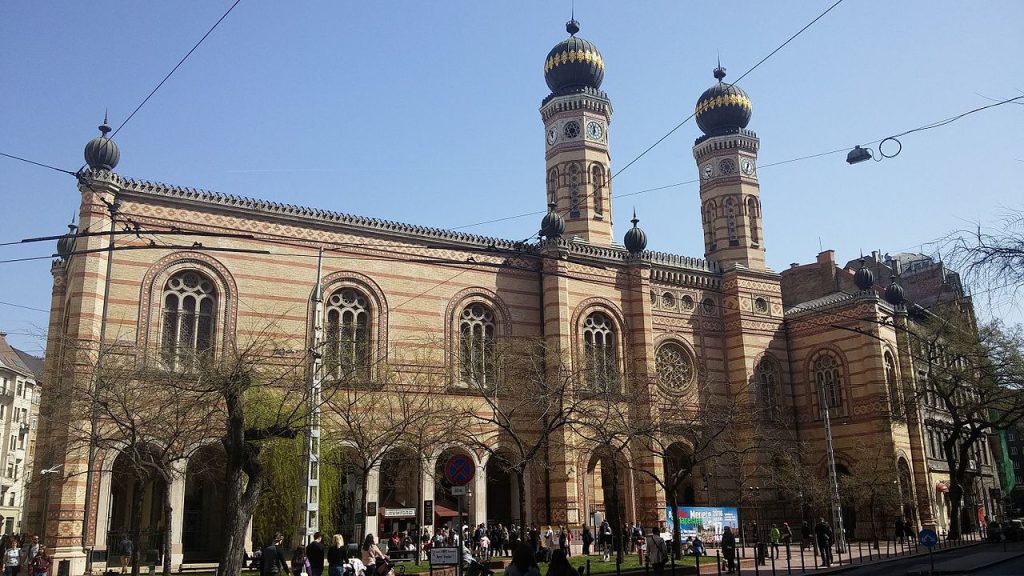
Nighttime District VII transforms into something else entirely. Starting around 10 PM on weekends (earlier in summer), the streets flood with party-seekers from across Europe. The ruin bars pulse with music. Gozsdu Udvar—a stunning covered courtyard passage—becomes an open-air drinking venue. British stag parties roam in matching t-shirts. The air smells of spilled beer and street food. It’s chaotic, energetic, occasionally annoying, and undeniably alive.

The Noise Problem Nobody Warns You About
I need to be brutally honest: if you value sleep, think very carefully before booking accommodation in the party zone of District VII.
The noise issue isn’t an occasional inconvenience—it’s a structural feature of staying here. On weekend nights (and increasingly on weekdays during summer), the streets don’t quiet down until 4-6 AM. I’ve seen Reddit threads where travelers describe nights of zero sleep because their apartment faced a ruin bar entrance. One memorable quote: “Every night, intoxicated crowds flood the streets… residents must endure loud crowds late into every night, and every morning they have to maneuver around vomit, pee, and litter.”
If you book in District VII, request a courtyard-facing room (ask for “belső udvari” in Hungarian). Avoid addresses on Kazinczy utca (the main ruin bar strip), lower Dob utca (below #35), and anything near Gozsdu Udvar. Higher floors help. Earplugs are essential.
Alternatively, book in the northern part of District VII closer to Városliget (City Park), which is residential and quiet.
District VII Food and Drink Prices
The good news: District VII is significantly cheaper than Districts V or VI. A beer at a ruin bar costs 800-1,200 HUF (~$2.40-3.60 USD). Street food like lángos (fried dough with toppings) runs 1,200-1,800 HUF. Sit-down restaurants range from budget gems to mid-range hipster spots.
My recommendations: Bors Gasztrobár for incredible soups in bread bowls (1,500-2,500 HUF), Mazel Tov for Middle Eastern food in a gorgeous greenhouse setting (3,000-5,000 HUF per main), and Kőleves Kert for Hungarian classics with a modern twist.
For a more comprehensive guide to eating affordably but well, check out my piece on Budapest’s best budget-friendly restaurants.
Who Should Stay in District VII
Party-seekers who want to stumble home from the ruin bars. Budget travelers who prioritize cheap accommodation and nightlife access over sleep quality. Solo travelers who want to meet people (the hostel scene here is excellent). Young travelers in their 20s who consider 2 AM an early night.
Avoid District VII if you’re traveling with children, you’re a light sleeper, you want peaceful evenings, or you’re visiting during a time when you need to function well the next morning (business trip, wedding, etc.).
District VII Accommodation Prices
This is where budget travelers win. Hostel dorms start at $10-15/night (3,300-4,950 HUF) at places like Carpe Noctem and Wombat’s. Private rooms run $30-50/night. Mid-range hotels like Continental Hotel Budapest hit $80-120/night, while the area’s luxury option—Anantara New York Palace—commands $200-400/night for its jaw-dropping interiors.
District VIII (Józsefváros): The Insider’s Pick
The Neighborhood Budapest Locals Actually Recommend
Here’s a confession: when Hungarian friends ask where out-of-town visitors should stay, many of us quietly suggest District VIII—specifically, the inner part known as the Palace Quarter (Palotanegyed). It’s our little secret, a neighborhood that offers the best of Budapest without the tourist markup or the party noise.
The Palace Quarter gets its name from the stunning neoclassical buildings that survived both World War II and the communist era. The Hungarian National Museum anchors the neighborhood. Six universities cluster nearby, filling the streets with students and young professionals. Mikszáth Kálmán tér—a small square surrounded by outdoor terraces—has become one of Budapest’s most pleasant spots for afternoon coffee or evening wine.
I spent years living near the border of Districts VII and VIII, and the contrast was stark. Walking five minutes east from the ruin bar chaos, the vibe shifted completely. Suddenly I was in tree-lined streets where elderly couples walked dogs and neighbors actually knew each other. The buildings were just as beautiful—better preserved, honestly—but the tourists hadn’t discovered them yet.
The Honest Truth About District VIII’s Other Side
I can’t write about District VIII without acknowledging its complexity. The district essentially splits into two zones with dramatically different characters.
Inner District VIII (Palace Quarter): Safe, increasingly hip, excellent value, recommended without reservation.
Outer District VIII: More challenging. This area has historically been Budapest’s most diverse and economically struggling zone. Parts of it—particularly around Mátyás tér, Kálvária tér, and the Magdolna neighborhood—require more caution, especially at night.
Let me be clear about proportionality: even the rougher parts of District VIII are safer than troubled neighborhoods in many Western European or American cities. A Hungarian friend put it well: “You might feel uncomfortable, but you’re unlikely to be in actual danger.” Still, for tourists unfamiliar with the city, I’d recommend staying within the inner Palace Quarter boundaries.
For more context on staying safe throughout Budapest, including district-specific advice, read my comprehensive guide to Budapest safety tips.
District VIII Food and Experiences
The Palace Quarter punches far above its weight gastronomically. Rosenstein Vendéglő serves traditional Hungarian-Jewish cuisine that locals consider among the city’s best—my recommendation for an authentic, reasonably priced Hungarian dinner. The creative community has established excellent spots like Auróra (a progressive community center with events and a bar) and Gólya (a collectively-run bar in a former university building).
Prices here are noticeably lower than in the central tourist districts. A full meal at a good restaurant rarely exceeds 4,000-6,000 HUF (~$12-18 USD).
District VIII Accommodation Prices
This is where budget-conscious travelers win. Airbnb apartments in the Palace Quarter run $40-70/night for quality one-bedrooms. Hotels are scarce but affordable. The area’s luxury outlier, Kozmo Hotel, offers five-star opulence at $150-250/night—far below equivalent properties in District V.
Who Should Stay in District VIII
Repeat visitors who’ve done the tourist circuit and want authentic Budapest. Budget travelers who prioritize value without sacrificing safety (in the Palace Quarter). Architecture enthusiasts who appreciate well-preserved 19th-century buildings. Creative/alternative travelers interested in Budapest’s emerging cultural scene.
District IX (Ferencváros): The Craft Beer Lover’s Paradise
Budapest’s Answer to Brooklyn (Before Brooklyn Got Too Expensive)
Every city has that one neighborhood—the one locals describe as “up-and-coming” for about fifteen years until it finally arrives. In Budapest, that neighborhood is Ferencváros, District IX, which has evolved from post-industrial grit into one of the city’s most interesting areas while somehow remaining affordable.
The transformation centers on Ráday utca, a semi-pedestrianized street that’s become restaurant and bar central. Unlike the chaos of District VII, Ráday offers a more relaxed version of Budapest nightlife—places where you can actually hear your companion speak, where the crowd skews local rather than tourist, and where the emphasis falls on quality rather than volume.

But Ferencváros’s real claim to fame is craft beer. The district has earned the nickname “Budapest’s craft beer district” thanks to over 20 dedicated venues. Élesztőház (Beer House) anchors the scene with 20+ taps of Hungarian and international craft brews in a converted industrial space. If you have any interest in beer beyond mass-market lagers, this neighborhood is your Budapest home base.
The Great Market Hall Advantage
District IX’s northern border sits at the Great Market Hall (Nagy Vásárcsarnok), Budapest’s largest and most spectacular covered market. The building alone—a cathedral-like iron structure from 1897—would be worth visiting even if it were empty. Instead, the ground floor overflows with produce, meat, paprika, and traditional food products, while the upper gallery houses food stalls serving everything from lángos to töltött káposzta.
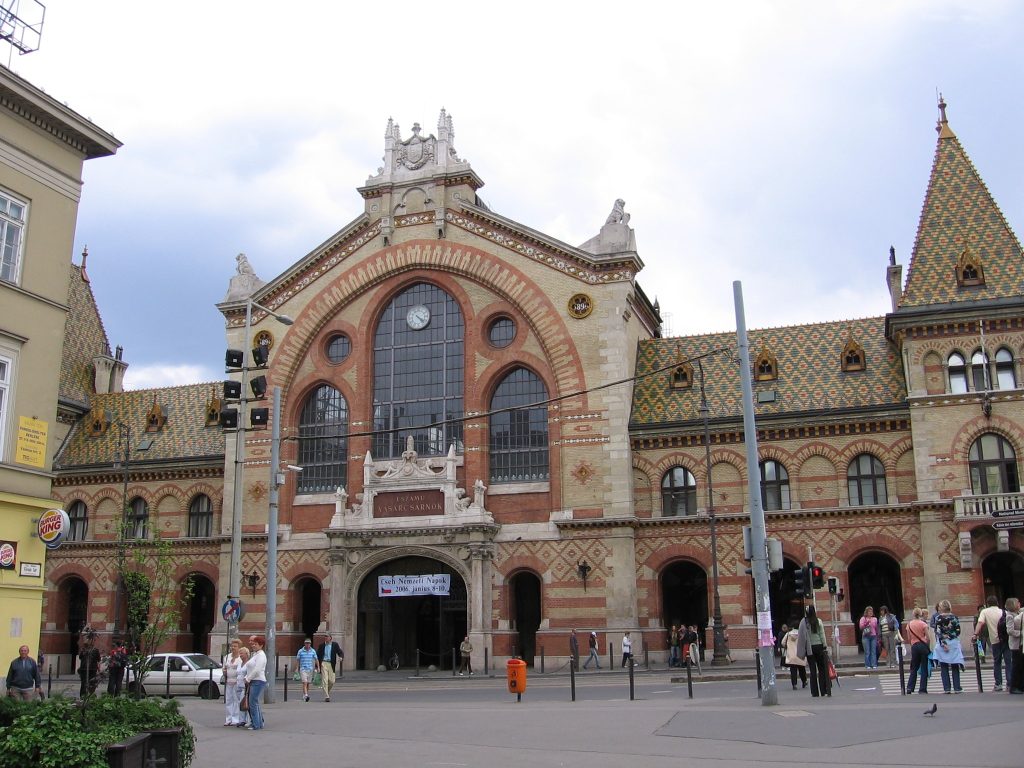
Staying in District IX puts this market within walking distance, which means fresh breakfast ingredients and authentic lunch options without fighting through tourist crowds (though the market gets busy by midday).
District IX Accommodation Prices
The value proposition is excellent. Budget hotels start around $35-50/night. Quality mid-range options run $60-90/night. The area lacks true luxury hotels, but that’s part of the appeal—you’re staying in a neighborhood that hasn’t been completely gentrified yet.
Who Should Stay in District IX
Craft beer enthusiasts (obviously). Foodies who want market access and local restaurants. Budget travelers seeking central-adjacent locations at outer-district prices. Young couples who want nightlife without ruin bar intensity.
District XIII (Újlipótváros): The Family-Friendly Local’s Favorite
Where Budapest’s Young Families Actually Live
Whenever someone asks me where to stay for a longer visit—a week or more—or when traveling with children, I point them toward Újlipótváros (District XIII). This is the neighborhood where my Hungarian friends with kids actually live. That’s not a coincidence.
The district feels like a village that happens to be attached to a major European capital. Pozsonyi út, the main artery, is lined with independent bookshops, artisan bakeries, specialty coffee shops, and restaurants that cater to locals rather than tourists. The pace is slower. The prices are lower. The playgrounds are full of actual Hungarian children rather than passing tourists.

But the real selling point is Margaret Island, accessible via Margaret Bridge at the district’s southern edge.
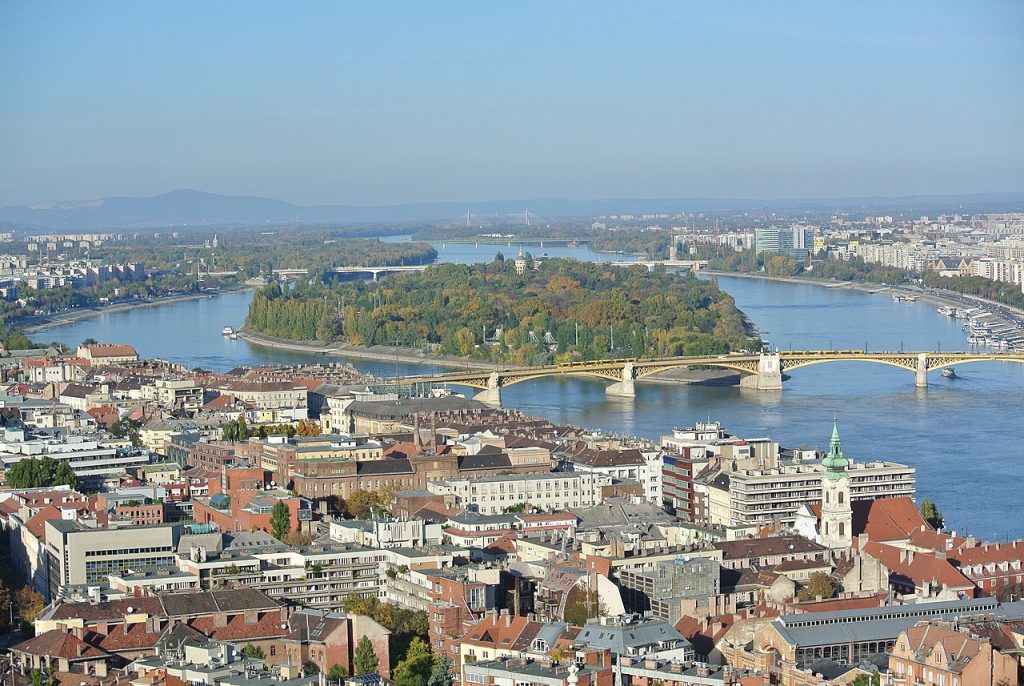
This 2.5-kilometer island in the middle of the Danube is car-free, covered in parks and gardens, and home to the Palatinus outdoor bath complex—a sprawling water park that locals consider one of Budapest’s best summer destinations. There’s a 5-kilometer running track, medieval ruins, a musical fountain, and enough green space to let children run until they collapse.
If you’re traveling with kids and want to experience Budapest’s thermal bath culture in a family-friendly environment, District XIII’s Margaret Island access is unbeatable. For more family-focused recommendations, check out my guide to Budapest with kids: the 10 best things to do.
District XIII Architecture
Architecture enthusiasts take note: Újlipótváros contains Budapest’s highest concentration of Bauhaus and modernist architecture, built primarily between 1927 and 1944. The geometric apartment buildings with their clean lines and functional elegance represent a different Budapest than the ornate Habsburg-era structures tourists typically photograph.
District XIII Accommodation Prices
Prices sit comfortably in the mid-range: Airbnb apartments run $50-80/night for quality options, while the limited hotel offerings tend toward $80-120/night. The value improves significantly for longer stays.
Who Should Stay in District XIII
Families with children who need parks, space, and family-friendly infrastructure. Runners and fitness enthusiasts who want Margaret Island’s tracks. Long-term visitors (week+) who prefer a residential feel. Return visitors seeking authentic local neighborhoods.
District I (Várnegyed): The Romantic Castle District
Budapest’s Medieval Heart
If you’ve seen any photograph of Budapest, you’ve seen the Castle District. The Gothic spires of Matthias Church, the wedding-cake turrets of Fisherman’s Bastion, the sprawling bulk of Buda Castle itself—this is the postcard, the screensaver, the image that sells ten million tourist visits annually.

Staying here feels like sleeping inside a history book. The cobblestone streets date to medieval times. Buildings bear plaques marking where Hungarian kings lived, died, or made consequential decisions. In the early morning, before the tour groups arrive, you can walk through empty squares that have looked essentially the same for five hundred years.
The views across the Danube to Parliament—particularly at sunset, particularly from Fisherman’s Bastion—rank among Europe’s most spectacular urban panoramas. Couples have proposed here. Travel writers have run out of superlatives here. Instagram has been absolutely conquered here.

For a deeper dive into the Buda side’s charms, including the historic thermal baths, read my detailed guide to Rudas Baths and their 500-year Turkish heritage.
The Castle District’s Hidden Challenges
Here’s the reality check: the Castle District is beautiful but inconvenient.
The neighborhood sits atop a hill, accessible by funicular, bus, or a steep 20-minute walk from the Chain Bridge. There’s no metro. The historic cobblestones that look charming in photos are murder on luggage wheels and challenging for anyone with mobility issues. By evening, when the tour buses depart, restaurants start closing because there simply aren’t enough people around to sustain dinner service.
If you want nightlife, you’ll need to descend to Pest—a minimum 30-minute journey including the hill descent. If you want late-night food options, same story. The Castle District after dark is peaceful to the point of feeling slightly empty.
One traveler on a forum described it perfectly: “In the evening, everyone moves to Pest.”
Castle District Accommodation Prices
Accommodation options are limited but tend toward the higher end: boutique hotels run $150-250/night, while the few luxury options command $200-350/night. Budget options essentially don’t exist within the historic district itself.
Who Should Stay in the Castle District
Romantics who prioritize atmosphere over convenience. History buffs who want to immerse themselves in medieval Budapest. Photographers who want golden-hour access to the best viewpoints. Couples on honeymoons or anniversary trips who don’t mind paying premium prices for memorable settings.
Skip the Castle District if nightlife matters to you, you’re on a budget, you have mobility issues, or you’re traveling with young children who need convenient access to playgrounds and family services.
District II (Rózsadomb): The Nature Lover’s Retreat
Budapest’s Secret Garden
Most tourists never set foot in District II, and that’s part of its appeal. This is Rózsadomb (Rose Hill)—Budapest’s most prestigious residential area, where grand villas climb forested slopes and the city noise fades to birdsong.
The neighborhood is nicknamed “Gazdagistan” (Richland) by locals, a reference to the wealth concentrated in its hillside homes. You won’t find backpacker hostels or ruin bars here. Instead, you’ll find hiking trails leading into the Buda Hills, cave systems you can explore (Pálvölgy and Szemlő-hegy caves), and some of the best panoramic views in the city.
For active travelers, District II offers access to the Buda Hills network—including János Hill (528 meters), reachable by chairlift, and the charming Children’s Railway, actually operated by kids aged 10-14 in a holdover from communist-era youth programs.

District II Thermal Baths
The neighborhood’s thermal options include Lukács Bath (popular with locals, less touristy than Széchenyi). If you’re interested in Budapest’s incredible thermal bath culture during winter months, when steam rises from outdoor pools into the cold air, don’t miss my guide to winter thermal bathing in Budapest.
District II Practical Considerations
Let me be direct: District II is not ideal for first-time visitors. The neighborhood is primarily residential with limited tourist infrastructure. Public transport connections exist (M2 metro at Batthyány tér and Széll Kálmán tér) but getting to Pest’s attractions requires planning. Hotels are scarce—most accommodation is apartments or boutique guesthouses.
Who Should Stay in District II
Nature lovers and hikers who prioritize green space over urban attractions. Repeat visitors who’ve done central Budapest and want a different experience. Long-term visitors who value peace and quiet. Wellness travelers focused on thermal baths and relaxation.
Seasonal Considerations: When Your Neighborhood Choice Really Matters
Summer in Budapest (June-August)
The summer heat changes everything about neighborhood selection. Temperatures regularly exceed 30°C (86°F), sometimes pushing past 35°C, and not all Budapest accommodations have air conditioning—particularly older buildings and budget options.
Before booking summer accommodation, explicitly confirm AC availability. This isn’t negotiable. I’ve heard horror stories of travelers attempting to sleep in 32°C apartments with only a fan for relief.
Summer is also peak tourist season, meaning prices jump 20-40% across all districts and popular properties book out months in advance. District VII’s noise problems intensify as outdoor drinking continues until dawn and ruin bar terraces stay packed.
The silver lining: summer means outdoor bath culture at its finest. The Palatinus on Margaret Island, Széchenyi’s outdoor pools, even the rooftop pool at Rudas—all are glorious when the weather cooperates.
Christmas Market Season (Late November-December)
Budapest’s Christmas markets transform District V into a winter wonderland, and accommodation prices respond accordingly. Expect 20-35% premiums over shoulder season rates, with the most central properties booking out by October.
If you’re visiting specifically for Christmas markets, District V or VI placement is worth the premium—you’ll be walking distance from Vörösmarty Square’s main market and St. Stephen’s Basilica’s equally impressive alternative. For a complete guide to the market experience, read my detailed piece on Budapest’s Christmas markets.
Best Value Periods
January through March (excluding the brief February high around Valentine’s Day) offers the best combination of low prices and reasonable weather. November before the Christmas markets begin is another sweet spot. You’ll find hotel rates 15-25% below annual averages and won’t need to book months in advance.
Event-Driven Price Spikes
Mark these in your calendar if you’re budget-conscious:
Hungarian Grand Prix (late July): Prices near Hungaroring spike, but Budapest center also sees 30-50% increases. Book months ahead or pay dearly.
Sziget Festival (August): Europe’s largest music festival occurs on an island north of the city. Central Budapest prices rise 30-60%, and budget accommodation books out entirely. Unless you’re attending Sziget, avoid this week.
National holidays (March 15, August 20, October 23): Domestic tourism peaks. Modest price increases and reduced availability.
Getting Around: Why Transport Access Should Influence Your Neighborhood Choice
The Budapest Public Transport Network
Budapest’s public transport is excellent, cheap, and—for the most part—accessible. The network includes four metro lines, an extensive tram system, buses, trolleybuses, and suburban rail. A 24-hour transport pass costs 2,500 HUF (~$7.50 USD), and a 72-hour pass runs 5,500 HUF (~$16.50 USD)—exceptional value.
But here’s the thing: not all neighborhoods connect equally.
Best connected: District V (Deák Ferenc tér is the central hub where M1, M2, and M3 converge), District VI (M1 runs the full length of Andrássy), District VII border (M2 at Astoria, Blaha Lujza tér).
Adequately connected: District VIII (M4), District IX (M3 and trams), District XIII (M3).
Challenging connections: Castle District (bus only—no metro), District II outer areas (bus connections, limited frequency).
The 24-Hour Tram Advantage
Trams 4 and 6 run 24 hours along the Grand Boulevard (Nagykörút), making a giant semicircle through Pest. If your accommodation sits near this route—touching Districts VI, VII, VIII, and IX—you’ll never be stranded regardless of the hour.
This matters for nightlife. Staying near the 4/6 line means you can close down a ruin bar at 4 AM and tram home rather than paying for an overpriced taxi.
Airport Connections
Budapest Airport (BUD) sits about 20 kilometers southeast of the city center. Your connection options include:
100E Airport Express Bus: Direct service to Deák Ferenc tér (District V) and Kálvin tér (District IX border). Takes 35-50 minutes depending on traffic. Costs 2,200 HUF (~$6.60 USD)—requires a special ticket, regular BKK passes don’t work.
Taxi/Bolt: Fixed rate of approximately 9,500 HUF (~$29 USD) to central Pest. Use the Bolt app rather than airport taxi touts, who occasionally try to overcharge.
Public transport combination: Cheaper but slower. Bus 200E to Kőbánya-Kispest, then M3 metro into city center.
For full details on navigating Budapest efficiently, including transport app recommendations, check out my guide to the best travel apps for Hungary.
Insider Hacks: What 20 Years in Budapest Taught Me About Accommodation
The Courtyard Room Secret
In Hungarian, “belső udvari” means courtyard-facing. “Utcai” means street-facing. When booking apartments or hotels in central Pest—especially District VII—specifically request a belső udvari room. You’ll sacrifice natural light and possibly views, but you’ll gain the ability to sleep.
The 72-Hour Budapest Card Calculation
The Budapest Card includes unlimited public transport plus free or discounted entry to museums, baths, and attractions. For a typical tourist itinerary covering 72 hours, the card often pays for itself—especially if you’re planning multiple museum visits and thermal bath trips. I’ve done the math in detail in my Budapest Card guide.
The Booking.com Price vs. Direct Booking Reality
Many Budapest boutique hotels offer better rates for direct bookings than through third-party platforms. It’s worth checking the hotel’s own website before committing to Booking.com or Expedia. Some offer 10-15% discounts for direct reservations.
The Tram 2 Sightseeing Hack
Skip the expensive hop-on-hop-off buses. Tram 2 runs along the Pest-side Danube embankment, passing Parliament, the Chain Bridge, and offering spectacular Buda Castle views—essentially a sightseeing cruise for the price of a regular tram ticket (500 HUF).
The Szimpla Market Sunday Morning Trick
Szimpla Kert, Budapest’s most famous ruin bar, hosts a farmer’s market every Sunday morning (9 AM-2 PM). This is your chance to experience the venue in daylight, without crowds, while browsing organic produce and handmade goods. It’s a completely different atmosphere from the late-night party version.
The Honest Negative: What I Wish Someone Had Told Me
Every comprehensive guide needs to acknowledge its subject’s flaws, so here’s mine: Budapest’s accommodation market has become somewhat exploitative in recent years.
The Airbnb boom of the 2010s transformed entire neighborhoods—particularly Districts VI and VII—into de facto hotel zones. Longtime residents were displaced. Apartment buildings designed for families became short-term rental factories. The city has started pushing back (hence the District VI ban and new regulations elsewhere), but the damage to neighborhood character is real.
Meanwhile, hotel prices in prime areas have crept upward faster than inflation justifies, capitalizing on Budapest’s increasing popularity. The €50/night boutique hotel that made the city such incredible value in 2015 now costs €90-120 for equivalent quality.
Budapest remains affordable compared to Western European capitals—dramatically so. But the “cheap Central Europe” reputation that drew budget travelers a decade ago is increasingly outdated. Plan your budget accordingly, and don’t assume prices from pre-2020 blog posts still apply.
Summary: The HungaryUnlocked Decision Matrix
After several thousand words, let me make this simple.
Choose District V if: You’re visiting Budapest for the first time, prioritize safety and walkability above all else, have a comfortable budget, and want the classic experience without complications.
Choose District VI if: You want the sweet spot between culture and nightlife, appreciate elegance without District V prices, and are comfortable with a 15-minute walk to ruin bars. (Note: Check Airbnb regulations if booking after January 2026.)
Choose District VII if: Nightlife is your primary goal, you’re young and budget-conscious, you can sleep through anything, and you consider “too quiet” a genuine criticism of a neighborhood.
Choose District VIII if: You’re a repeat visitor seeking authentic Budapest, you value budget accommodation in interesting surroundings, and you’re comfortable navigating a neighborhood that rewards exploration.
Choose District IX if: Craft beer matters to you, you want market access and local restaurants, and you’re seeking a more relaxed alternative to District VII’s chaos.
Choose District XIII if: You’re traveling with family, staying longer than a few days, prioritizing access to Margaret Island, or seeking a residential neighborhood feel.
Choose the Castle District if: Romance trumps convenience, you’re celebrating something special, and the historic atmosphere matters more than nightlife access.
Choose District II if: Nature and thermal baths are your priorities, you’re comfortable with inconvenient transport, and you’re returning to Budapest after exploring the central areas.
Whatever you choose, you’re choosing a fascinating city. Budapest rewards exploration, forgives mistakes, and occasionally surprises even those of us who’ve called it home for decades.
Egészségedre! (That’s “cheers” in Hungarian—you’ll need it for the ruin bars.)
FAQ: Your Budapest Neighborhood Questions Answered
Q: I’m a light sleeper. Where should I absolutely NOT stay in Budapest?
Avoid the party zone of District VII—specifically anything near Kazinczy utca, Gozsdu Udvar, or lower Dob utca. Even with earplugs, you’ll hear bass until 4 AM on weekends. Districts V, VI, and XIII are your friends. The Castle District is silent at night, almost eerily so.
Q: Is Budapest safe for solo female travelers?
Yes, genuinely safe. I’ve walked this city alone at all hours for two decades without significant incident. Standard urban precautions apply (don’t flash expensive items, stay aware of surroundings, use licensed taxis via the Bolt app), but Budapest ranks among Europe’s safer capitals. The tourist districts are well-lit and well-populated.
Q: How much should I budget for accommodation per night?
Budget travelers can find hostel dorms for $12-18/night and basic private rooms or apartments for $35-50/night. Mid-range comfort (nice hotel, central location) runs $80-140/night. Luxury starts around $180/night and climbs from there. These prices assume booking in advance during shoulder season—peak summer and Christmas markets cost more.
Q: Buda or Pest: which side should I choose?
Pest for first-timers, Buda for romance and repeat visits. Pest has the nightlife, restaurants, Jewish Quarter, and walkable attractions. Buda has the views, the castle, the thermal baths, and the romantic atmosphere. Most tourists split their time between both sides regardless of where they sleep.
Q: I only have 2-3 days. Which neighborhood makes the most sense?
District V or VI. You want maximum walkability and minimum transport time when days are limited. Both put you within striking distance of Parliament, St. Stephen’s Basilica, the Jewish Quarter, and the Danube promenade. District VI offers slightly better value; District V offers slightly better positioning.
Q: What about neighborhoods outside those you mentioned?
Districts XI (Újbuda, near Gellért Hill), XII (outer Buda hills), and XIV (City Park area) occasionally appear in accommodation searches. They’re fine—safe, residential, generally affordable—but don’t offer compelling reasons to choose them over the neighborhoods in this guide unless you have specific local connections or requirements.
Where Should You Stay in Budapest?
Answer 7 quick questions and I’ll tell you exactly which neighborhood fits your vibe. No generic advice, just honest local recommendations.
Budapest Neighborhoods at a Glance
Choosing where to stay in Budapest can make or break your trip. The city spans 23 districts across two sides – hilly Buda on the west bank and flat Pest on the east. Most tourists focus on 8 key neighborhoods, each with distinct character, price points, and vibes.
⚡ Don’t Have Time for the Quiz? Here’s the Cheat Sheet:
First-timers: District V (Inner City) or District VI (Andrássy)
Party seekers: District VII (Jewish Quarter / Ruin Bars)
Budget travelers: District VII, VIII, or IX
Families with kids: District XIII (near Margaret Island)
Romantic getaways: Castle District (District I)
Repeat visitors: District VIII (Palace Quarter) or District II (Buda Hills)
Best Budapest Districts for Tourists in 2025
👑 District V – Inner City (Belváros)
Budapest’s elegant downtown core. Parliament, Chain Bridge, St. Stephen’s Basilica – all within walking distance. Grand cafés, Michelin restaurants, classic Habsburg architecture. Very safe, very central, very tourist-friendly.
🎭 District VI – Andrássy/Opera Area
The sweet spot between elegance and accessibility. UNESCO-listed Andrássy Avenue, the stunning Opera House, café terraces on Liszt Ferenc Square. Walking distance to nightlife but quiet enough to sleep.
🎉 District VII – Jewish Quarter
Budapest’s legendary ruin bar district. Szimpla Kert, Instant, and dozens more nightlife spots. Hipster cafés by day, European party capital by night. Budget-friendly but LOUD – not for light sleepers.
🎨 District VIII – Palace Quarter
The insider’s pick. Stunning neoclassical architecture, local atmosphere, creative community hubs. Significantly cheaper than central districts. Real Budapest without the tourist markup.
🍺 District IX – Ferencváros
Budapest’s craft beer district. 20+ craft beer venues, the famous Great Market Hall, and Ráday utca’s restaurant scene. Up-and-coming neighborhood with local vibe and reasonable prices.
👨👩👧👦 District XIII – Újlipótváros
Where Budapest’s young families actually live. Direct access to Margaret Island’s parks and pools. Tree-lined streets, local bakeries, residential charm. Perfect for longer stays or traveling with kids.
🏰 District I – Castle District
Medieval romance on the Buda hilltop. Buda Castle, Matthias Church, Fisherman’s Bastion with jaw-dropping Danube views. Quiet evenings, cobblestone streets, UNESCO heritage. Inconvenient but unforgettable.
🌲 District II – Buda Hills
Nature lover’s retreat. Hiking trails, panoramic viewpoints, thermal baths, residential tranquility. Far from tourist crowds, close to nature. Not for first-timers, but perfect for return visits.
Budapest Neighborhood Comparison Table
| District | Price Level | Nightlife | Safety | Noise Level | Transit |
|---|---|---|---|---|---|
| V (Inner City) | $$$$ | ★★☆☆☆ | ★★★★★ | Medium | Excellent |
| VI (Andrássy) | $$$ | ★★★☆☆ | ★★★★★ | Low | Excellent |
| VII (Jewish Quarter) | $$ | ★★★★★ | ★★★★☆ | LOUD | Good |
| VIII (Palace Quarter) | $$ | ★★☆☆☆ | ★★★★☆ | Low | Good |
| IX (Ferencváros) | $$ | ★★★☆☆ | ★★★★☆ | Low | Good |
| XIII (Újlipótváros) | $$ | ★☆☆☆☆ | ★★★★★ | Very Low | Good |
| I (Castle) | $$$$ | ★☆☆☆☆ | ★★★★★ | Very Low | Limited |
| II (Buda Hills) | $$$ | ★☆☆☆☆ | ★★★★★ | Very Low | Limited |
⚠️ Important 2025 Update: Budapest Airbnb Regulations
District VI (Terézváros) has banned ALL short-term rentals (Airbnb) effective January 1, 2026.
District VII (Erzsébetváros) has stopped issuing new permits for short-term rentals in residential buildings.
If you’re planning future trips, verify current regulations before booking apartments in these areas.