⏱️ TL;DR – District VIII (Palace Quarter)
Budapest’s Most Underrated, Walkable, Culture-Heavy Neighborhood
Bottom Line: District VIII’s Palace Quarter is Budapest’s best-kept secret — a cultural powerhouse with local pricing, historic charm, and none of the chaos of District VII.
The Neighborhood That Went From “Don’t Go There” to “Don’t Tell Anyone”
Here’s a fun experiment: mention District VIII to anyone who visited Budapest before 2015 and watch their face contort. The older generation of guidebooks treated Józsefváros like some sort of urban wilderness, a place you crossed quickly while clutching your wallet and making meaningful eye contact with absolutely no one.
Then something interesting happened.
While everyone was busy Instagramming the same four ruin bars in District VII, a quiet revolution was brewing a few blocks south. Abandoned aristocratic palaces got converted into boutique hotels. A confectionery dynasty set up shop in a museum garden. Young Hungarians started moving into renovated apartments on streets where their parents would never have considered renting. And in 2024, Time Out casually ranked the Palace Quarter as the 31st coolest neighborhood on the planet — right up there with places people actually plan vacations around.
I walked through Bródy Sándor utca last Tuesday morning, past the Italian Cultural Institute (which, by the way, used to be the Lower House of Hungarian Parliament), and counted exactly zero tourists. The cobblestones were wet from overnight rain. Somewhere, a café was grinding fresh beans. A woman walked her dachshund past a Miklós Ybl-designed palace like it was the most normal thing in the world.
Because here, it is.
First Impressions: Arriving in Budapest’s Sleeping Beauty District
The best way to enter the Palace Quarter is through Kálvin tér, where the M3 and M4 metro lines intersect beneath a square that feels perpetually under construction but somehow never actually changes. Emerge from the escalators, orient yourself toward the imposing neoclassical columns of the Hungarian National Museum, and you’ve already arrived.
The first thing you notice is the quiet. This isn’t the manufactured silence of a museum district — it’s the natural hush of a neighborhood that hasn’t yet figured out it’s supposed to be trendy. The buildings here are massive, built during that brief window when Hungarian aristocrats had money, ambition, and apparently no concept of restraint. Four and five-story apartment blocks line streets named after writers you’ve never heard of (unless you’re Hungarian, in which case, sorry, I know you’ve read your Mikszáth).
The second thing you notice is the color. Or rather, the lack of it. Unlike the pastel-painted facades of the inner city, the Palace Quarter comes in shades of gray and ochre, weathered and peeling in places, majestically restored in others. It’s the aesthetic equivalent of a beautiful elderly woman who refuses to dye her hair — dignified, confident, and entirely uninterested in your approval.
Walking deeper into the neighborhood along Múzeum körút, the sound changes too. This is Budapest’s unofficial “antiquarian row,” where secondhand bookshops have been operating since the Austro-Hungarian Empire was still a going concern. The Központi Antikvárium at number 13-15 has been here since 1891, its famous blue neon owl sign glowing above a cave of treasures dating back to the 1500s. Push open the heavy wooden door and you’re hit with that unmistakable old-book smell — paper decomposition, leather bindings, and accumulated dust that somehow feels romantic rather than allergenic.
What Makes the Palace Quarter Different From Every Other Budapest Neighborhood
Most “hidden gem” travel articles are lying to you. The places they recommend stopped being hidden approximately fifteen minutes after publication. But the Palace Quarter has something working in its favor: it’s not obviously photogenic.
There’s no single Instagram-perfect corner, no candy-colored building that screams “photograph me,” no convenient concentration of ruin bars with mismatched furniture and fairy lights. What it has instead is substance — world-class museums, genuinely beautiful architecture, and restaurants where locals actually eat. The absence of obvious attractions is, paradoxically, its greatest attraction.
The neighborhood divides roughly into three zones. There’s the museum district clustered around the National Museum and Múzeum körút, where you’ll find the bookshops and quiet cafés. There’s the palace core around Pollack Mihály tér and Bródy Sándor utca, where three actual aristocratic palaces face each other across a small square. And there’s the livelier zone around Mikszáth tér, which functions as a kind of low-key District VII — bars, terraces, university students, but without the British bachelor parties.
Beyond József körút, the character shifts again into what I’d call “authentic but not always charming.” This is where the Palace Quarter ends and regular Józsefváros begins, and where the old reputation still occasionally applies. More on that later.
The Museums Nobody Tells You About (With Actual 2025 Prices)
Hungarian National Museum: Where Modern Hungary Was Born
Every nation has a founding myth, and Hungary’s involves a lot of angry poets. On March 15, 1848, a young revolutionary named Sándor Petőfi stood on the steps of what is now the Hungarian National Museum and recited his “National Song” to a crowd of students and intellectuals. By evening, the Habsburg censorship had been abolished. By the following year, Hungary was at war for independence.
The building itself is worth the visit even if you don’t care about Hungarian history — a grand neoclassical palace designed by Mihály Pollack, with 8,000 square meters of exhibition space covering everything from prehistoric Hungary to the fall of communism. The star attraction is the Coronation Mantle of the Hungarian Kings, embroidered in 1031 and somehow surviving nearly a millennium of wars, invasions, and political upheavals.

2025 Ticket Prices:
Adult tickets cost 3,500 HUF (~$9.20), while reduced tickets for ages 6-26 and 62-70 run 1,750 HUF (~$4.60). Families can get a deal at 6,200 HUF (~$16.30) for two adults and up to three children. If you’re under 6, over 70, or visiting on a national holiday like March 15th, August 20th, or October 23rd, entry is free. Budapest Card holders also get complimentary access.
The museum is open Tuesday through Sunday from 10:00 to 18:00 and closed Mondays. For current exhibitions and events, click here. https://mnm.hu/en
Pro tip: The museum garden is free to enter and genuinely lovely — renovated in 2019 with a playground, benches, and a terrace café run by the legendary Auguszt confectionery family. Look for the 1838 flood marker on the fence, showing how high the Danube rose during the catastrophic flood that killed thousands.
Hungarian Natural History Museum: The One With the Glass Floor
Hidden in the southern reaches of District VIII, the Natural History Museum occupies the historic Ludovika Military Academy building and houses an almost absurd 11.5 million registered items. The highlight is a 122-square-meter glass floor that lets you walk above a coral reef display, which sounds gimmicky until you’re actually doing it and realize you’re holding your breath.
2025 Ticket Prices:
Adults pay 3,000 HUF (~$7.90), with reduced tickets at 1,500 HUF (~$3.95) and family tickets (two adults plus one child) at 6,000 HUF (~$15.80). English guided tours for groups up to 15 people cost 17,000 HUF (~$44.75).
The museum is open Wednesday through Monday from 10:00 to 18:00 and closed Tuesdays. For their current programs and exhibitions, click here. https://www.nhmus.hu/en
Don’t miss the outdoor Dino Garden if you’re traveling with kids — it’s included in the ticket price and features life-size dinosaur models that children seem to find either thrilling or terrifying, with no middle ground.
Aristocratic Architecture: A Self-Guided Walking Tour Through Hungary’s Gilded Age
The “Palace” in Palace Quarter isn’t marketing speak. These are actual palaces, built by actual aristocrats during the 19th century when Hungary’s noble families were competing to outdo each other in architectural excess.
Pollack Mihály tér is ground zero for this phenomenon. Three magnificent palaces face each other across the small square, each designed by or connected to Miklós Ybl, Hungary’s most celebrated architect (he also designed the Opera House, in case you need credentials).
The Festetics Palace at number 3 is my personal favorite — an 1862 Italian Renaissance-style building that now houses Andrássy University. If you can get inside (public events sometimes allow access), the Mirror Room is worth whatever social engineering is required. The Esterházy Palace at number 8 once hosted balls for the Hungarian aristocracy and later became the headquarters of Magyar Rádió. The Károlyi Palace at number 10 is currently under renovation for Pázmány Péter Catholic University, which tells you something about how these buildings have adapted over time.
Walking down Bródy Sándor utca, the neighborhood’s oldest cobblestone street, you’ll pass the former Lower House of Parliament at numbers 5-7 — another Ybl creation, now the Italian Cultural Institute. The Ádám Palace at number 4 contains stunning frescoes by Lotz Károly, the ceiling painter responsible for half of Budapest’s most beautiful interiors.
None of this costs anything to see from the outside, and the streets themselves are the attraction. Bring comfortable shoes and prepare to walk slowly.
Where to Eat in District VIII: From 150-Year-Old Confectioneries to Hungarian Gastropubs
Rosenstein Restaurant — The Hungarian Food Temple
If you’re going to have one proper Hungarian meal in Budapest, make it at Rosenstein. This isn’t a recommendation I make lightly. Located on Mosonyi utca near Keleti Station, Rosenstein has been serving traditional Hungarian and Hungarian-Jewish cuisine since 1996, and it’s earned its TripAdvisor Travellers’ Choice Award several times over.
The menu reads like a greatest-hits compilation of dishes your Hungarian grandmother would have made if your Hungarian grandmother had existed and also happened to be an award-winning chef. Catfish paprikash is the signature dish, but the goulash soup (Alföld-style) at 2,600 HUF (~$7) is the version all other Budapest goulashes should be judged against. For something truly special, try the Friday cholent at 5,700 HUF (~$15) — a slow-cooked Jewish stew that requires advance planning on their part and hunger on yours.
Sample 2025 Prices:
Main courses range from the cold foie gras in goose fat at 8,100 HUF (~$21) to more modest options like Wiener schnitzel at 5,500 HUF (~$14). The matzo ball soup comes in at 2,200 HUF (~$6), and if you’ve never had a proper flódni (traditional Jewish layered cake), theirs costs 2,500 HUF (~$7) and tastes like someone’s loving grandmother spent three days in the kitchen.
They add a 10% service charge, and half portions are available at 70% of the full price — genuinely useful given the portion sizes. The restaurant is open Monday through Saturday from 12:00 to 23:00 and closed Sundays.
Reservations are highly recommended. For their full menu and booking, click here. https://rosenstein.hu
If you want to understand what separates goulash from pörkölt from paprikás, I’ve written a deep dive into Hungarian culinary traditions that should clear up the confusion most tourists have.
Geraldine — Auguszt in the Museum Garden
The Auguszt confectionery dynasty has been making Budapest’s cakes since 1870, and their newest outpost occupies prime real estate in the National Museum garden. Named after Apponyi Geraldine — a museum employee who somehow ended up becoming Queen of Albania (look it up, it’s a wild story) — this café serves pastries that make you realize how low your standards have been.
The E80-szelet at 880 HUF (~$2.30) is their signature creation, layering coffee, chocolate, and marzipan in ways that shouldn’t work but absolutely do. Classic Hungarian cakes like Dobos torta and Esterházy torta cost around 1,200 HUF (~$3.15) per slice. Ice cream runs 350 HUF (~$0.90) per scoop, and coffee falls in the 600-1,000 HUF (~$1.60-$2.60) range.
The terrace seating overlooking the museum garden is exactly as pleasant as it sounds. Open Tuesday through Sunday from 10:00 to 18:00, closed Mondays.
For more on Budapest’s confectionery scene and the emotional journey it will take you on, see my guide to Budapest’s dessert culture.
Café Csiga — Bohemian Brunch Near the Market
Tucked next to Rákóczi tér market hall, Café Csiga occupies that perfect niche between hipster coffee shop and proper restaurant. The interior is a riot of mismatched furniture and questionable art, the crowd is mostly local, and the food is better than it has any right to be.
Breakfast runs 2,000-4,000 HUF (~$5-10), while main courses land in the 4,000-8,000 HUF (~$10-21) range. The pancakes with bacon have achieved minor legendary status, and the goulash soup is a solid backup if you’re not making it to Rosenstein. They’re particularly good for a lazy Sunday when you need something to soak up the previous night’s activities.
Mikszáth tér — The Quiet Alternative to District VII
If District VII’s ruin bar scene feels overwhelming (and let’s be clear, it often is), Mikszáth tér offers a mellower alternative. This small square has developed an almost Italian piazza feel, with café terraces spilling onto the pavement and young Hungarians doing that Continental European thing where they sit for three hours nursing a single espresso.
Lumen is the anchor — specialty coffee by day, live music venue by night. An Aperol Spritz will set you back around 1,600 HUF (~$4.20), and beer starts at 700 HUF (~$1.85). The atmosphere is what District VII used to be before it became a destination.
Rákóczi tér Market Hall: Where Locals Actually Shop
Most tourists make a beeline for the Great Market Hall on Fővám tér, and I understand why — it’s beautiful, it’s historic, and it appears in every guidebook. But if you want to see how Hungarians actually shop for food, Rákóczi tér market is the real deal.
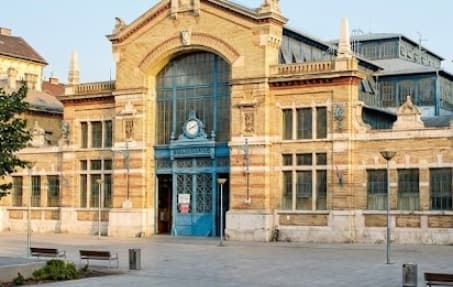
Built in 1894, destroyed by fire, and reopened in 1991, this market hall serves the local community rather than Instagram visitors. You’ll find the same products — fresh produce, meats, fish, dairy, pickles — at prices that don’t assume you just stepped off a cruise ship. The wine stall offers fill-your-own-bottle for under $2 per liter, which is either a bargain or a challenge depending on your afternoon plans.
For food, the lángos situation here is significantly less predatory than at the Great Market Hall. A plain lángos costs 500-800 HUF (~$1.30-$2.10), while the full treatment with sour cream and cheese runs 1,000-1,500 HUF (~$2.65-$3.95). Hungarian sausage falls in the 800-1,500 HUF (~$2.10-$3.95) range.
Market hours: Monday 6:00-16:00, Tuesday through Friday 6:00-18:00, Saturday 6:00-13:00, closed Sunday.
Getting there: M4 metro to Rákóczi tér, or Trams 4/6.
I’ve written a comprehensive guide to the Great Market Hall for those who want to visit both, including tips on avoiding the tourist-pricing games that happen upstairs.
The Hidden Gem Nobody Mentions: Metropolitan Szabó Ervin Library
Here’s a test of whether you’re reading generic travel content or actual insider information: does the article mention the Wenckheim Palace library?
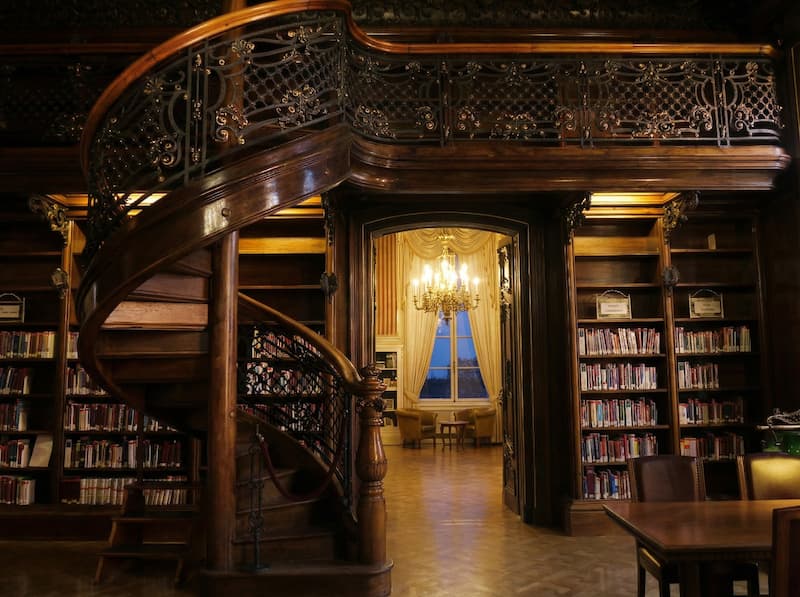
The main branch of Budapest’s public library system occupies a converted aristocratic palace, and for a 500 HUF (~$1.30) tourist pass, you can access the fourth floor and experience something that genuinely qualifies as a hidden gem. I’m talking about a reading room with a 22-karat gold wallpaper (yes, real gold), a giant chandelier that would look at home in Versailles, and a mahogany cigar room that now functions as a quiet study space.
This is a working library, not a museum, which means actual Budapestis are in here studying and working. The contrast between students in hoodies typing on laptops and the imperial surroundings is peak Budapest — a city that has somehow normalized extraordinary things.
For the full experience of Budapest’s bar and café culture in the surrounding area, check out my guide to themed bars in Budapest.
Kerepesi Cemetery: An Unexpected Highlight
Bear with me on this one.
Kerepesi Cemetery (officially Fiumei úti nemzeti sírkert) covers 56 hectares and functions as Hungary’s national pantheon — the equivalent of Paris’s Père Lachaise or London’s Highgate. The tombs here read like a Hungarian history syllabus: Lajos Kossuth (revolutionary leader, impressive mausoleum), József Antall (first democratically elected post-communist PM), Ignaz Semmelweis (the doctor who discovered handwashing saves lives and was ignored for years).
The most unexpected grave belongs to Zsa Zsa Gabor, the Hungarian-American actress who died in 2016 and requested burial in Budapest. Her tomb includes a replica of her Hollywood Walk of Fame star, which is exactly the kind of detail you couldn’t make up.
There’s also a section dedicated to the 1956 Revolution, including the grave of 15-year-old Erika Szeles, who became an icon of the uprising. It’s somber, moving, and entirely empty of tourists.
The cemetery is free to enter and open daily from roughly 7:00 to 20:00 (hours vary seasonally). Allow at least two hours if you want to explore properly — there’s a free English navigation app that helps locate specific graves. Getting there is easy: the cemetery is near Keleti Railway Station on the M2 metro line.
Where to Stay in District VIII: Hotels That Cost 30-40% Less Than the Tourist Center
Here’s the thing about District VIII accommodation: you’re essentially getting a discount for being slightly smarter than the average tourist. The same hotel quality that costs €100+ in District V runs €60-80 here, with better neighborhood character thrown in for free. The key is knowing exactly where to book — the inner Palace Quarter delivers charm and safety, while the outer areas… don’t.
Budget Hotels: Exceptional Value Near the National Museum (Under €60/night)
Lavender Circus Hostel commands the best location-to-price ratio in the district. Positioned directly opposite the Hungarian National Museum on Múzeum körút 37, this €35-52/night property earned a remarkable 9.8/10 rating on Hostelworld across over 1,800 reviews. Unlike typical hostels, Lavender Circus specializes in private double rooms rather than dormitories, making it ideal for couples wanting hostel prices with hotel privacy.
What sets it apart: free daily walking tours, complimentary coffee and tea throughout the day, and Hungarian dinner parties featuring pálinka tastings. The location sits 120 meters from Kálvin tér metro (where M3 and M4 intersect), connecting you to the entire city within minutes. The main drawbacks are upper-floor rooms without elevator access and a 4% city tax added at checkout. For booking, click here.
Ibis Budapest Centrum on Ráday utca offers chain-hotel reliability at €40-60/night with an 8.4/10 Booking.com rating. The 126-room property sits 50 meters from Kálvin tér metro and 500 meters from the Great Market Hall. Recently refurbished rooms include air conditioning and satellite TV, though guests note the AC struggles during summer heatwaves. The pedestrianized street location ensures quiet nights despite central positioning.
Hotel Museum Budapest on Trefort utca 2 is the budget category’s hidden gem, where €55-65/night secures a 4-star property with complimentary wellness center access including sauna, jacuzzi, and Turkish bath — amenities typically reserved for hotels charging twice this rate. The 1890 Art Nouveau building sits steps from the National Museum, and the wellness facilities operate evenings from 5-10pm. For booking and current rates, click here. https://www.museumhotel.hu/
Mid-Range Hotels: Sleep in an Actual Palace (€60-120/night)
Eurostars Palazzo Zichy represents the category’s standout property and, frankly, one of the best hotel deals in Budapest. This 9.0/10 Booking.com-rated hotel occupies Count Nándor Zichy’s 1899 neo-baroque palace at Lőrinc pap tér 2. The count himself was imprisoned for political writing in 1863 and stripped of his noble rank, yet rebuilt his reputation — a fitting backstory for a building now hosting travelers seeking value.
The stunning glass dome covering the former courtyard creates a dramatic breakfast setting, while original marble staircases and ornate balustrades preserve aristocratic atmosphere. Current 2025 pricing ranges from €45-55/night in low season to €95-110 during peak summer. Guests receive complimentary sauna access, fitness center use, and free coffee, tea, and mineral water in the lobby until 5pm daily.
Rooms draw occasional criticism for being “on the smaller side,” but soundproofing and contemporary amenities compensate. The hotel sits 500 meters from Kálvin tér metro and 650 meters from the National Museum. For booking and current availability, click here.
Atrium Fashion Hotel offers aggressive pricing at €40-55 in low season, stretching to €80-95 during peak periods. The 57-room property near Blaha Lujza Square earned an 8.2/10 rating and TripAdvisor’s Travelers’ Choice Award. Free breakfast in the glass-roofed atrium consistently draws praise, though reviews note rooms run small with limited luggage space.
Boutique Hotels: Where Artists Sleep in Aristocratic Townhouses (€100-180/night)
Brody House at Bródy Sándor utca 10 operates unlike any conventional hotel I’ve ever encountered. This 9.7/10 Booking.com-rated property functions as equal parts boutique hotel, private members’ club, and living art gallery. With just 8-11 rooms — each decorated by a different artist-in-residence from Brazil, New York, or Japan — the 1892 neoclassical townhouse creates genuinely unrepeatable stays.
Some artworks have sold to the Saatchi Collection; others remain, ensuring guests sleep surrounded by gallery-quality originals. The building previously served as the Hungarian Prime Minister’s residence before Parliament relocated. Room rates average €120-150/night, with low-season availability occasionally dropping to €80-100 and premium two-bedroom suites reaching €180-220.
Hotel guests receive automatic membership to Brody Studios on Andrássy út, accessing live jazz nights, comedy performances, literary dinners, and “alchemist nights.” Rooms feature romantic in-room bathtubs — including copper, claw-foot, and freestanding golden varieties — lofty ceilings, and polished parquet floors. Most rooms intentionally omit televisions, focusing guests on the experience rather than screens.
Practical considerations: payment by bank transfer before arrival, check-in only from 3-6pm, steep stairs without elevator access, and no accommodation for children. Reviews consistently describe Brody House as “the coolest place to stay in Budapest” and “the most beautiful hotel I have ever stayed in.” For booking and room details, click here.
Where to Stay vs. Where to Avoid: A Street-Level Guide
The distinction matters enormously. Book hotels in the inner Palace Quarter — the area behind the National Museum encompassing Pollack Mihály tér, Bródy Sándor utca, Mikszáth tér, and streets within the Kiskörút (Small Ring Road). This zone provides complete safety, architectural splendor, and easy walking access to everything.
Avoid accommodation in outer District VIII beyond the Nagykörút ring: Magdolna Quarter (particularly Dankó utca and Lujza utca), Népszínház utca and surrounding streets, Teleki László tér, and areas between Blaha Lujza tér and Corvin Plaza’s eastern side. These neighborhoods have improved dramatically over the past decade — locals confirm significant positive change — but problems persist after dark, and the atmosphere won’t match what you’re hoping for.
Booking Strategy: How to Save Up to 40%
Low season (January-March and November) delivers the deepest discounts — up to 27% below annual averages. January claims the cheapest rates overall, with 4-star properties like Palazzo Zichy dropping to €45-50/night.
Shoulder seasons (April-May and September-October) balance weather quality with reasonable pricing, running 10-20% below peak rates.
High season (June-August) can double room rates. Book well in advance and expect to pay premium pricing.
Booking.com earns my strongest platform recommendation for Budapest hotels — exact locations verifiable via Street View, only verified guest reviews, Genius loyalty discounts, and widespread free cancellation. Always cross-reference direct hotel websites, as many Budapest properties now offer price parity or better rates for direct bookings.
Budapest charges a 4% tourist tax on net room prices, payable upon checkout and not always included in displayed rates.
The Safety Question: Let’s Actually Talk About This
Most travel content either ignores District VIII’s reputation entirely or leans into outdated stereotypes. Neither approach is helpful. So here’s the reality.
The inner Palace Quarter — roughly the area between Múzeum körút and József körút — is completely safe, day and night. This is where the museums, palaces, boutique hotels, and trendy cafés are located. You could wander around at midnight without any issues, the same as you would in Districts V, VI, or VII. The demographic is students, young professionals, and elderly residents who have lived there for decades.
Beyond József körút, the character changes. Areas like Népszínház utca, Teleki László tér, Orczy tér, and parts of Magdolna utca still carry some of the old reputation. They’re not dangerous in any American or Western European sense of the word — violent crime against tourists is essentially nonexistent in Budapest — but they can feel “seedier,” especially after dark. You might encounter people who look like they’ve had difficult lives, because they have.
The practical advice: stick to the Palace Quarter proper for sightseeing and accommodation, be aware of your surroundings if you venture further east, and don’t wander the outer edges alone at 2 AM. This is common-sense guidance that applies to transitional neighborhoods in any city.
For more detailed safety information about Budapest in general, see my comprehensive safety guide.
Getting There and Getting Around
Metro access is excellent. The M3 blue line runs through Kálvin tér, Corvin-negyed, and Semmelweis Klinikák. The M4 green line connects Kálvin tér, Rákóczi tér, and II. János Pál pápa tér. Trams 4 and 6 run along the Grand Boulevard (Nagykörút), which forms the western edge of the district.
2025 BKK Transport Prices:
Single tickets purchased in advance cost 450 HUF (~$1.20). A 24-hour travelcard runs 2,500 HUF (~$6.60), the 72-hour version costs 5,500 HUF (~$14.50), and the 7-day pass is 6,300 HUF (~$16.60).
Download the BudapestGO app for ticket purchases and route planning — it’s genuinely useful and works in English.
Suggested Walking Route (2.5-3 hours):
Start at Kálvin tér Metro and walk to the Hungarian National Museum (spend an hour inside or just explore the gardens). Continue along Múzeum körút to browse the antiquarian bookshops (15 minutes). Turn onto Bródy Sándor utca to admire the palaces and embassies (15 minutes). Visit the Szabó Ervin Library’s Wenckheim Palace reading room (30 minutes). Coffee at Lumen on Mikszáth tér (20 minutes). Cross József körút to Rákóczi tér Market Hall for lángos and people-watching (30 minutes). End at Rákóczi tér Metro.
Insider Hacks and Local Knowledge
The Corvin Quarter thing: The area around Corvin-negyed metro station is basically the opposite of the Palace Quarter — modern, glass-and-steel, shopping mall energy. Some guides group them together, but they’re entirely different experiences. Corvin is fine if you need a Lidl or want to see the Bud Spencer statue (yes, really), but it’s not why you’d visit District VIII.
The Time Out Market connection: The new Time Out Market at Blaha Lujza tér is technically right on the border of District VIII and worth combining with a Palace Quarter visit. I’ve written a detailed review of whether it’s worth your time.
The free museum hack: The Hungarian National Museum is free on the third Saturday of each month for visitors under 26. The Natural History Museum has similar deals. Check websites before visiting.
The Erkel Theatre secret: If you want to see opera or ballet without the Opera House prices or crowds, the Erkel Theatre on Köztársaság tér is the Hungarian State Opera’s second venue. Budget seats start at 2,000 HUF (~$5), and students get 50% off. It’s not as ornate as the main Opera House, but the productions are identical.
The hotel booking hack: Monday nights at Palazzo Zichy average just €48 — that’s 4-star accommodation in a genuine aristocratic palace for hostel prices. Low-season January bookings across District VIII run 25-30% below annual averages.
The One Realistic Downside
The Palace Quarter is not a complete neighborhood in the tourist sense. There’s no single street where you can wander for hours discovering shops and restaurants — it’s more dispersed, requiring deliberate navigation between points of interest. The area around the National Museum can feel deserted in the evening, and some visitors find the aesthetic severity of the architecture less immediately charming than the colorful facades elsewhere.
If you’re looking for a neighborhood where you can spend an entire day without a plan, District VII remains better suited to that kind of wandering. The Palace Quarter rewards those who come with specific destinations in mind.
Summary: Why District VIII Deserves Your Attention
Time Out didn’t rank the Palace Quarter #31 globally because it has great Instagram potential. They ranked it there because it represents something increasingly rare in European capitals: a historic neighborhood that hasn’t been optimized for tourism, where authentic local life continues largely undisturbed, and where your money goes further simply because you’re not paying a premium for being exactly where everyone else is.
The museums are world-class. The architecture tells 150 years of Hungarian history without a single explanatory plaque. The restaurants serve food that locals choose to eat. The hotels occupy genuine aristocratic palaces at mid-range prices. And the prices haven’t yet adjusted to what tourists are willing to pay.
This won’t last forever. Neighborhoods like this never stay hidden once Time Out gets involved. But for now, in 2025, the Palace Quarter remains that rare thing: a Budapest experience that feels genuinely discovered rather than consumed.
Just don’t tell everyone.
FAQ: Your Palace Quarter Questions, Answered
Is District VIII safe for tourists in 2025?
The inner Palace Quarter (between Múzeum körút and József körút) is completely safe, day and night. The outer areas beyond József körút require more awareness after dark but aren’t “dangerous” by any reasonable standard. Violent crime against tourists is extremely rare throughout Budapest — the city’s crime index is significantly lower than Paris, London, or Rome.
How do I get to the Palace Quarter from the city center?
Take the M3 or M4 metro to Kálvin tér — you’re already there. Trams 47 and 49 also stop at Kálvin tér, and trams 4 and 6 run along József körút at the neighborhood’s eastern edge. The whole area is very walkable from Districts V and VII.
Is District VIII worth visiting if I only have a few days in Budapest?
If you’re interested in museums, history, or architecture, absolutely. The Hungarian National Museum alone justifies the trip. If you’re primarily here for ruin bars and thermal baths, you might prioritize other districts first — but the Palace Quarter makes an excellent half-day addition to any itinerary.
What’s the difference between “Palace Quarter” and “District VIII”?
District VIII (Józsefváros) is a large administrative district covering everything from the elegant Palace Quarter near the center to working-class neighborhoods extending toward the city edge. The “Palace Quarter” or “Palotanegyed” specifically refers to the historic inner portion around the National Museum and aristocratic palaces — that’s the part most visitors want to see.
Where should I eat in District VIII?
Rosenstein for traditional Hungarian cuisine (book ahead), Geraldine in the museum garden for classic pastries, Café Csiga near Rákóczi market for brunch, and Mikszáth tér for casual drinks. Prices are 30-40% lower than equivalent restaurants in the tourist center.
Are District VIII hotels safe?
Hotels in the inner Palace Quarter (Palazzo Zichy, Brody House, Hotel Museum, Lavender Circus) are completely safe and well-located. Avoid booking accommodation in the outer district beyond József körút — stick to properties near Kálvin tér, the National Museum, or Mikszáth tér.
How much cheaper are District VIII hotels compared to the city center?
Expect to save 30-40% compared to equivalent properties in District V. A 4-star hotel like Palazzo Zichy runs €50-100/night versus €100-150+ for similar quality near Váci utca. Budget options like Lavender Circus offer private doubles from €35-52 with ratings above 9/10.
What’s the best hotel in District VIII?
For boutique luxury, Brody House (9.7/10 rating) offers an unrepeatable art-hotel experience in an 1892 townhouse. For best value, Palazzo Zichy delivers genuine aristocratic palace accommodation at mid-range prices. For budget travelers, Lavender Circus provides hostel rates with hotel-quality private rooms.
Can I combine District VIII with other nearby attractions?
Easily. The Great Market Hall is a 10-minute walk from the National Museum. The Jewish Quarter (District VII) begins just north of József körút. The new Time Out Market at Blaha Lujza tér is at the district’s western corner. You can walk between all of these in under 30 minutes.