Prologue: The Whispering Waters of Buda – An Ancient Summons
The story of Budapest is, in many ways, a story written in water. Long before the Magyar tribes swept into the Carpathian Basin, even before Roman legions marched along the Danube, the earth here whispered of its hidden treasures: thermal springs bubbling forth with healing warmth. The very land seemed to beckon, promising solace and rejuvenation. Celtic tribes, the Eravisci, were among the first to heed this call, establishing settlements like Ak-Ink, meaning “Abundant Water,” a testament to the riches beneath their feet. Later, the Romans, masters of engineering and connoisseurs of comfort, transformed this region into their provincial capital, Aquincum. They, too, recognized the potent allure of the thermal springs, constructing sophisticated bathhouses, some boasting luxuries like piped hot and cold water and underfloor heating. Indeed, Roman Aquincum featured at least 14 bath complexes, a scale that rivaled even Rome itself in its dedication to bathing culture. These ancient foundations laid the groundwork, a deep-seated tradition of thermal bathing that would later be embraced and dramatically reshaped.
The arrival of the Ottoman armies in 1541 marked a new epoch for Buda and its waters. For nearly 150 years, the crescent moon flew over the city, and with it came a distinct and profound bathing culture that would leave an indelible mark on Budapest’s identity. The Turks, renowned for their love of hammams (public bathhouses) and ilidzas (thermal spring baths), didn’t just build baths; they wove them into the very fabric of daily life. Along the banks of the Danube, particularly on the Buda side where the springs were most plentiful, a series of iconic bathhouses began to rise, their domes and arches becoming new landmarks. These were not merely places to cleanse the body but were intricate social and spiritual centers, echoing traditions honed across a vast empire. The Ottoman contribution was not the discovery of the thermal waters, for those had been known and used for millennia. Rather, they brought a unique architectural language and a deeply ingrained social framework, layering their distinctive culture onto the ancient thermal heritage of the land. This fusion of ancient resource and Ottoman tradition created the unique character of Budapest’s historic baths, a legacy that continues to fascinate and draw visitors to this day.
Chapter 1: The Soul of the Hammam – Life Under the Turkish Domes of Buda
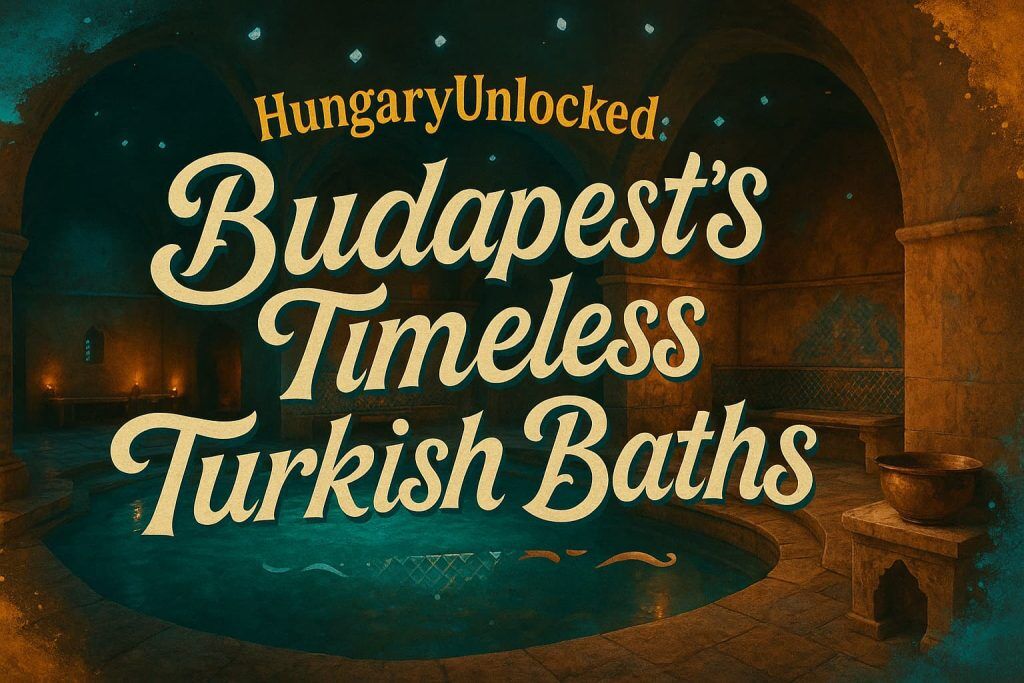
Step into the imagination, back to 16th or 17th century Buda, and picture the heart of the Ottoman bathing experience. The architecture itself was a poem in stone and steam, designed to soothe the senses and elevate the spirit. Central to many of these baths, like the enduring Király or Rudas, was the magnificent octagonal pool, cradled beneath a grand dome, or cupola. This dome, often pierced with myriad small, star-like openings, allowed slivers of sunlight to penetrate the steamy air, dancing on the water’s surface and creating an ethereal, almost otherworldly atmosphere. The play of light and shadow, the gentle echo of dripping water, the pervasive warmth emanating from the heated marble floors and the mineral-rich waters – all contributed to a deeply sensory experience.
A traditional Ottoman hammam was typically structured in three main sections, a ritual progression from one environment to the next. One would enter the soğukluk, the cool room, for changing and initial relaxation, perhaps enjoying a refreshing sherbet. Then came the ılıklık or warm room, a transitional space for acclimatization, before finally reaching the hararet or sıcaklık, the hot room. This was the steamy heart of the bath, often featuring a central heated marble slab called the göbek taşı, where bathers would lie to sweat, their pores opening and muscles relaxing in preparation for a vigorous scrub by an attendant. While Budapest’s baths, being largely ilidzas built directly over thermal springs, might have adapted this classical layout, the essence of progressing through varying temperatures and the focus on the central hot pool remained.
These baths, however, were far more than just sophisticated places for hygiene. They were the vibrant social and ritual heartbeats of the Ottoman community in Buda. Here, pashas and merchants, soldiers and artisans would mingle, the steam and water acting as great equalizers. News was exchanged, business deals were struck, and friendships were forged in the relaxed, convivial atmosphere. For women, the hammam held a particularly special significance. In a society where their public movements might be restricted, the bathhouse offered a rare and culturally sanctioned space to gather outside the home, to socialize freely, share confidences, and even enjoy meals together, strengthening communal bonds.
Beyond the social, the ritualistic importance of the baths was profound. Cleanliness is a cornerstone of Islamic faith, and ritual ablutions before prayer were often performed here. Furthermore, visits to the hammam were integral to marking significant life events. The gelin hamamı, or bridal bath, was a joyous, festive occasion where the bride-to-be, accompanied by female relatives and friends, would cleanse and prepare for marriage, the air filled with songs and laughter. Similarly, baths were sought after childbirth and before important religious holidays, symbolizing purification and renewal.
Observing these historic structures today, one can still feel the echoes of this vibrant past. The architectural shells – the domes, the octagonal pools, the ancient stonework – have, in many cases, been remarkably preserved. Yet, the profound daily social and ritualistic functions that were once the lifeblood of these establishments have largely transformed. What was once an indispensable part of daily community life, a place for everything from business negotiations to pre-wedding celebrations, has evolved primarily into a modern wellness and tourist experience. Visitors today seek relaxation, healing soaks, unique historical ambiance, and perhaps a massage or a session in a modern sauna. While a sense of communal bathing persists, the deep-seated social integration and the ritualistic obligations that defined the Ottoman hammam experience are not the primary drivers for most contemporary users. This shift doesn’t diminish the value of these baths; rather, it adds another layer to their long and fascinating story, highlighting a continuous adaptation to changing times while preserving a precious physical link to a bygone era.
Chapter 2: The Four Living Legends – Tales of Buda’s Enduring Turkish Baths
Which historic Turkish baths can you still experience in Budapest, and what are their stories? During their 150-year rule in Buda (1541-1686), the Ottomans established several thermal baths, capitalizing on the region’s abundant natural hot springs. Four of these baths have survived, in varying states, to the present day: the Rudas, Király, Veli Bej (formerly Császár), and Rácz baths. Each possesses a unique history and architectural character, reflecting both their Ottoman origins and subsequent transformations. These baths typically followed a similar structural pattern, featuring a central warm pool under a dome, surrounded by hot and cold plunge pools, steam rooms, and saunas, although primarily the central domed halls have preserved their original Turkish structure.
Table 1: Key Characteristics of Budapest’s Ottoman-Era Baths
| Name | Year Founded | Commissioning Pasha | Original Turkish Name | Defining Ottoman Architectural Elements | Current Status |
|---|---|---|---|---|---|
| Rudas Medicinal Bath | 1566-1578 / 1572 | Sokollu Mustafa Pasha | Yeşil Direkli Hamam (Green Column Bath) | Octagonal pool, dome on 8 pillars | Operational, with modern wellness section and rooftop pool |
| Király Medicinal Bath | 1565-1570 | Arslan Pasha, then Sokoli Mustafa | Unknown | Octagonal central edifice, dome with light openings | Currently under renovation, closed |
| Veli Bej Bath | 1574 / 1574-75 | Sokollu Mustafa Pasha (Veli Bej) | Veli Bej İlidjasi (Veli Bej’s Spa) | Central cupola with 4 smaller domes, octagonal pools | Operational, meticulously restored between 2001-2012 |
| Rácz Medicinal Bath | 1572 | Unknown | Kücsük Ilıca (Small Bath) | Turkish cupola | Closed for years due to legal disputes despite renovation completed in 2010 |
Rudas Fürdő: The Pasha’s Resilient Jewel & A Modern Rooftop Gaze
What makes Rudas Bath a must-visit, blending ancient tradition with modern luxury? The Rudas Medicinal Bath, majestically situated on the Buda bank of the Danube at the foot of Gellért Hill, stands as one of Budapest’s most famous and atmospheric medieval Turkish baths. Its construction was commissioned by Sokollu Mustafa Pasha, the governor (beylerbey) of Buda, between 1566 and 1578 , although some sources cite its founding specifically in 1571/1572 or 1572. The bath was known in Turkish as “Yeşil Direkli Hamam” (Green Column Bath), and remnants of these green columns are reportedly still visible within its walls. It was designed as an “ilidza” type bath, meaning it was built directly over the thermal springs it utilized, including those currently known as Attila, Hungaria, and Juventus.
The architectural core of Rudas retains many key elements of a traditional Ottoman hammam, most notably its impressive central octagonal pool situated beneath a grand dome supported by eight massive pillars. The design and dimensions are said to echo those of monumental Ottoman constructions in Istanbul, reflecting the status of its commissioner, Sokollu Mustafa Pasha, who was the nephew of the Grand Vizier Sokollu Mehmed Pasha. This authentic Ottoman heart has allowed Rudas to become a living palimpsest of Budapest’s history. It is not merely an Ottoman relic but a structure that physically embodies successive historical layers.
Following the Ottoman period and the liberation of Buda, Emperor Lipót I granted the bath to the city. The 18th century saw initial developments, with separate baths and guest rooms being constructed adjacent to the original Turkish structure, and the four corner pools still present today within the Turkish dome section were also added during this time. The late 19th century, coinciding with the Hungarian Millennium celebrations, brought further expansion, including the addition of a public bath accessible to both men and women and the opening of a swimming hall. This continuous evolution, where each era left its mark while the Ottoman core remained a defining feature, has allowed Rudas to be aptly described as an “amazing combination of old and new”.
The 20th century brought challenges, with the bath suffering significant damage during World War II. Fortunately, the original Turkish bath section, the historical jewel of the complex, remained largely intact. This survival was crucial for its later successful and “authentic” restoration, lending credibility and unique appeal to subsequent modern additions. In recent decades, Rudas has undergone extensive renovations and modernizations, transforming it into a multifaceted spa complex. A significant contemporary addition is the panoramic rooftop hot tub, offering stunning views across the Danube to the Pest skyline, a feature that has made it immensely popular. A modern wellness section has also been integrated, offering a range of contemporary spa services.
Today, Rudas offers a rich array of facilities. Its thermal waters, rich in minerals such as calcium, hydrogen carbonate, magnesium, sodium, sulfate chlorides, and metaboric acid, are recommended for various ailments, including joint problems and rheumatic conditions. The complex features six therapy pools with water temperatures ranging from $10 \text{ }^{\circC}$ to $42 \text{ }^{\circC}$, and one swimming pool. A historic drinking hall allows visitors to consume the medicinal waters, a practice believed to boost health from within.
A unique aspect of Rudas is its adherence to traditional single-sex bathing days in the historic Turkish bath section: Mondays, Wednesdays, Thursdays (until 12:45 PM), and Fridays (until 10:45 AM) are typically reserved for men, while Tuesdays are for women. The wellness section and swimming pool are generally co-ed, and the Turkish bath also opens for mixed bathing on weekends (Thursday afternoons, Friday afternoons, Saturdays, and Sundays). This ability to maintain single-sex days, a tradition rooted in Ottoman practice, further enhances its authenticity. Furthermore, Rudas offers a distinctive night bathing experience on Fridays and Saturdays, typically from 10 PM to 3 AM, allowing visitors to soak under the stars.
Practical Information for Rudas Medicinal Bath:
- Official Website: en.rudasfurdo.hu
- Opening Hours: Vary significantly by section (Turkish bath, wellness, swimming pool, night bathing). It is crucial to check the official website for the most current schedule. Cash desks generally close one hour before the bath’s closing time, and pool areas must be vacated 20 minutes prior.
- Tickets: A variety of ticket types are available, including daily tickets for all zones, specific tickets for the Turkish bath or wellness-spa sections on weekdays, supplement tickets, and night tickets (often online purchase only). Prices vary for weekdays, weekends, and holidays. The Budapest Card is accepted for daily tickets during certain hours.
- Dress Code: Swimwear is required in co-ed areas. On single-sex days in the Turkish bath, men traditionally receive a loincloth (pestemal or apron), and some women may wear apron-like garments, though most visitors opt for swimsuits even on these days. Nudity is not allowed in public areas.
- Getting There: Located at Döbrentei tér 9 on the Buda side, near Erzsébet Bridge. Accessible by trams 17, 19, 41, 56, 56A (Rudas Gyógyfürdő stop) and buses 7, 8E, 108E, 110, 112 (Döbrentei tér stop).
- Best Time to Visit: To avoid crowds, early morning or late evening hours on weekdays are generally recommended. Weekends are typically busier.
Király Fürdő: The King’s Bath – A Fortress Relic Awaiting Its Royal Return
What is the story behind Király Bath’s unique construction and its current state? The Király Medicinal Bath holds the distinction of being one of Budapest’s oldest thermal baths, its construction initiated in 1565 by Arslan, the Pasha of Buda. The work was completed in 1570 under his successor, Sokoli Mustafa. A particularly noteworthy aspect of Király’s origin is its strategic placement inside the walls of the Víziváros (Water Town) district. This location was chosen deliberately so that the Ottoman troops could continue to enjoy the benefits of the bath even during times of siege, a testament to the pragmatic and strategic considerations in Ottoman urban planning beyond general public or religious utility. This military-strategic origin also contributes to its somewhat unique character.

Architecturally, Király Fürdő is a quintessential example of a medieval Turkish bath. Its central feature is an octagonal edifice crowned by a classic Turkish dome. This dome is pierced with numerous small openings, a characteristic feature designed to allow shafts of sunlight to penetrate the dimly lit interior, creating an atmospheric play of light, sometimes described as “beams of differently coloured light shooting through”. Remarkably, its original facade is still visible, offering a direct glimpse into 16th-century Ottoman architecture. The overall design adheres to the Baroque Ottoman architectural style prevalent during its construction, evident in its courtyard, smaller pools, and hallways. The bath complex houses four pools, with the main pool situated directly beneath the iconic dome. Its thermal water is not sourced on-site but is supplied from the nearby Lukács Bath.
After the Ottoman era, Király underwent several transformations. Classical wings were added to the structure at the beginning of the 19th century. It was during this period that the bath acquired its present name, derived from the König family (Király in Hungarian, meaning “King”), who owned the bath at that time. The last significant renovation occurred in the 1800s. For a long period, one of Király’s defining characteristics was its “old-world charm,” stemming from what was described as “little to no maintenance in five centuries” prior to its current closure. This state of preservation through relative neglect appealed greatly to history enthusiasts, offering an almost unaltered glimpse into the past.
This very lack of sustained, modern intervention, however, ultimately proved to be a double-edged sword. While the “unspoiled” historical fabric was prized, the cumulative effects of centuries of minimal upkeep inevitably led to structural and infrastructural deterioration. The “ahistorical approach of the Communist Budapest era,” as mentioned in one source, may have also contributed to inadequate or patchwork repairs rather than comprehensive conservation. Consequently, the Király Bath is currently closed for extensive and long-term reconstruction works. These renovations were initially scheduled for 2021-2024 but are expected to extend further, with a potential reopening in 2026 or even later, though no definitive date has been set. As of early 2025, its status remains unchanged, with the bath awaiting a significant facelift that will determine how this “time capsule” is integrated into the 21st century. The prolonged closure underscores the complexities of preserving historic buildings where authenticity, if maintained through benign neglect, can eventually necessitate massive and disruptive interventions.
Veli Bej Bath (Császár Bath): The Rebirth of Central Europe’s Oldest Turkish Bath
How has Veli Bej Bath maintained its ancient charm while offering modern comforts? The Veli Bej Bath, also known historically as Császár Fürdő (Emperor’s Bath), is celebrated as one of Budapest’s oldest, largest, and arguably most beautiful Turkish spas, with origins tracing back to the heart of the Ottoman era. It was built by Sokollu Mustafa Pasha in 1574 or 1574-75 and was named after Veli Bej, a high-ranking Turkish pasha and its founder. Its historical significance is underscored by claims that it is the oldest and largest Turkish spa in Central Europe.
Architecturally, Veli Bej embodies the traditional Ottoman style. Its layout features a grand central cupola, characteristically surrounded by four smaller domed buildings, sheltering octagonal thermal pools within. During its meticulous restoration, even remnants of the original clay plumbing installed by the Turks were discovered and preserved, offering a tangible connection to its 16th-century builders.
The bath’s history after the Ottoman period is marked by continuity and transformation, significantly influenced by the stewardship of the Ordo Hospitalarius (Order of Mercy, or Knights Hospitallers). The structure survived the recapture of Buda in 1686. In 1806, it became the property of the Ordo Hospitalarius, who subsequently expanded upon the original Turkish edifices. A major reconstruction and enlargement project was led by the renowned architect József Hild between 1841 and 1848, during which the bath was renamed Kaiser Bad, or Császár Fürdő in Hungarian. The continuous involvement of this religious and charitable order, whose mission often includes care and preservation, likely played a crucial role in its survival and eventual high-quality restoration, even through periods of neglect. An inscription from 1806, “Dedicated to the neglected patients,” underscores their historical focus.
By the 20th century, Veli Bej had fallen into disrepair and was closed to the public for several decades, overshadowed by larger and more modern bathing complexes in the city. However, a turning point came with a comprehensive and meticulous restoration undertaken between 2001 and 2012 (with some sources stating completion in 2011). This restoration was carried out with significant input from archaeologists and art historians, ensuring the preservation of its historical Ottoman features and original interior design while seamlessly integrating modern amenities. This commitment to authentic restoration has been key to its revitalization, allowing it to offer “old world charm and 21st century spa facilities”.
Today, Veli Bej Bath is managed by the Budai Irgalmas Rendi Kórház (Buda Hospital of the Order of Mercy) and is often described as a “tranquil oasis” and one of Budapest’s “secret spots,” less frequented by large tourist crowds. Its facilities include the historic large octagonal hot-water pool, four smaller thermal pools with varying temperatures, a modern swimming pool, a jacuzzi, and a hydrotherapy bathtub. A well-equipped wellness area offers steam chambers, Finnish and infra saunas, massage showers, a Kneipp walk pool, and various massage treatments. The bath is coed, and proper swimwear is mandatory. A notable operational detail is that tickets are typically valid for a 3-hour stay, with surcharges for additional time, and are purchased on-site as online booking is generally not available. Due to its intimate scale and focus on a serene experience, children under the age of 14 are not permitted.
Practical Information for Veli Bej Bath:
- Official Information Sources: bathsbudapest.com/veli-bej-bath and csaszarhotel.hu/veli-bej-spa-budapest/ (associated with the adjacent Hotel Csaszar). The Facebook page “Irgalmasok Veli Bej Fürdője” may also provide updates.
- Opening Hours (as of early 2025): Typically Monday-Tuesday from 3:00 PM to 9:00 PM, and Wednesday-Sunday from 6:00 AM to 12:00 PM and again from 3:00 PM to 9:00 PM. The bath is closed between 12:00 PM and 3:00 PM daily and on national/religious holidays. Guests are usually asked to leave pool areas 20 minutes before closing.
- Tickets: Purchased on-site at the cashier. Prices are approximately 2,800 HUF to 5,000 HUF for a 3-hour ticket, depending on the day and time. Payment can be made by cash or card.
- Dress Code: Coed; proper and decent swimwear is mandatory. Rubber-soled footwear is recommended for slippery surfaces.
- Getting There: Located at Árpád fejedelem útja 7, district II, Buda. Accessible by trams 4 or 6 to the Margit híd (Margaret Bridge), budai hídfő (Buda side bridgehead) stop, followed by a short walk north; or by trams 17, 19, or 41 to the Komjádi Béla utca stop.
- Note: The bath has a limited capacity of approximately 80 people, so visiting during off-peak hours (weekdays, early mornings, or right at the 3:00 PM reopening) is advisable.
Rácz Fürdő: The Phoenix – From Ottoman Roots to a Spring Awakening in 2025
What is the current situation of the beautifully renovated yet inaccessible Rácz Bath? The Rácz Medicinal Bath, situated between Gellért Hill and the Tabán area, is another of Budapest’s historic Ottoman-era thermal spas, though its story in recent times has been one of unfortunate stagnation. The original bath was constructed by the Turks in the 16th century, with sources specifically dating its oldest part, the Turkish cupola, to 1572. At the time, this section was known as Kücsük Ilıca, meaning “Small Thermal” or “small bath”.

Following the Ottoman period, the Rácz Bath survived the siege of Buda by the Christian army in 1686. It subsequently came under the ownership of the Habsburg Imperial chamber, and later, in 1860, was purchased by the Heinrich family. A significant phase in its development occurred in the latter half of the 19th century when it was rebuilt in 1864-65 and further expanded in 1869-70 according to the plans of Miklós Ybl, one of Hungary’s most renowned architects (famous for the Hungarian State Opera House and St. Stephen’s Basilica, among other works). Ybl’s contributions included the addition of romantic-style pools and a neo-Renaissance cupola, creating a layered architectural complex that blended Ottoman and 19th-century aesthetics. The bath was officially declared a medicinal bath in 1934 by a decree of the Ministry of Home Affairs, and in 1935, the city of Budapest acquired ownership.
The 20th century was less kind to the Rácz Bath. It suffered considerable damage during World War II, which was followed by delayed and inadequate reconstruction efforts in the 1960s. The building then endured a period of continuing neglect throughout the 1980s. Hopes for its revival emerged at the turn of the 21st century. Reconstruction plans for the historic bath, along with the construction of an adjacent thermal hotel, were prepared in 1998 and formally accepted by the city in 2002. The ambitious refurbishment of the historic Rácz Bath and the construction of a new 5-star luxury spa hotel, boasting nearly 70 elegantly designed contemporary rooms, were completed in 2010. The vision was to create a unique destination combining the historic Ottoman bathhouse with its dome and octagonal pool, the 19th-century romantic-style Ybl pools and shower hall, and a modern spa hotel offering a range of wellness and beauty treatments.
Despite this substantial investment and the completion of the physical renovation over a decade ago, the Rácz Bath and its adjoining hotel have tragically remained closed to the public. The anticipated grand reopening never materialized due to protracted legal disputes and what has been described as a “chaotic situation of ownership” involving the city municipality and the private owner of the hotel and bath complex. As of 2016, its fate was still unknown, and contemporary sources from 2024 and early 2025 provide no indication of a resolution or impending reopening. One poignant description labels it “a lost and desperate place”.
The Rácz Bath thus stands as a cautionary tale in heritage revitalization. The failure here is not rooted in the quality of its historical fabric or the architectural merit of its restoration, but in complex modern administrative, legal, and economic entanglements. The project’s design, which intrinsically linked the fate of the historic bath to the success of a new luxury hotel development, created an interdependence where problems with one component could paralyze the entire venture. This situation underscores that the “present day” status of such historical sites is determined not only by their past and their physical restoration but profoundly by contemporary governance and financial frameworks.
Chapter 3: Beyond the Steam – Gül Baba’s Tomb & Other Ottoman Echoes
While the thermal baths are perhaps the most famous living remnants of Ottoman Buda, the city holds other sites that whisper tales of this era, offering different perspectives on the nearly 150 years of Turkish presence. Among these, the Tomb of Gül Baba stands out as a serene sanctuary and a symbol of enduring cultural connections.
The Father of Roses: The Enduring Legacy of Gül Baba
Perched on Rózsadomb (Rose Hill), overlooking the Danube, the Tomb of Gül Baba is a place of quiet contemplation and historical significance. Gül Baba himself was a fascinating figure – an Ottoman Bektashi dervish, a poet, and a soldier-monk who was a companion to Sultan Suleiman the Magnificent. He arrived in Buda with the Ottoman forces in 1541 and, according to legend, died on the very day the city’s main church (now Matthias Church) was converted into a mosque for the first Friday prayer of the occupation. His name, meaning “Father of Roses,” is thought to refer either to a spiritual rank he held within the Bektashi order, symbolized by a rose, or to the roses he allegedly introduced to Buda or wore on his turban. Sultan Suleiman himself is said to have attended his funeral, a mark of the high esteem in which Gül Baba was held.

The türbe, or tomb, an elegant octagonal structure crowned with a shallow lead-plated dome, was built over his grave between 1543 and 1548 by Mehmed Pasha, the Beylerbey (governor) of Buda. It quickly became an important Muslim pilgrimage site, revered as the northernmost such shrine in the world. Remarkably, when the Habsburg armies recaptured Buda in 1686, the tomb was left largely untouched, though it was later converted into a Jesuit chapel named St. Joseph’s Chapel for nearly two centuries.
The tomb has undergone several restorations throughout its history. Hungarian architect János Wagner was commissioned by the Ottoman government to restore it in 1885; he also built a supporting wall and incorporated his own residence into the site. Further work was done in 1914, when it was declared a Hungarian national monument, and again in the 1960s. By the early 21st century, however, the complex had fallen into disrepair. A significant joint Hungarian-Turkish government agreement in 2015 led to a comprehensive renovation, which was completed in 2018.
Today, the Tomb of Gül Baba is more than just a historical monument; it’s a vibrant cultural center. Visitors can explore the beautifully restored Ottoman tomb itself, wander through the meticulously landscaped rose gardens that give the hill its name, and enjoy panoramic views of Budapest and the Danube. The complex includes a permanent exhibition detailing the life of Gül Baba, the Bektashi order, and the Ottoman era in Hungary, housed in the basement of the former Wagner villa. There’s also a charming tea house and café, event and workshop spaces, a souvenir shop, and a hall for temporary exhibitions. The entire site is operated by the Gül Baba Tomb Heritage Foundation, established in 2017, which aims to preserve this unique heritage and foster cultural understanding and friendship between Hungary and Turkey.
For those planning a visit in early 2025, the Tomb of Gül Baba is located at Mecset utca 14 (entrance from Türbe tér 1) on Rózsadomb. It is generally open to the public from Tuesday to Sunday, between 10:00 AM and 6:00 PM, and is closed on Mondays and public holidays. A significant draw for visitors is that admission to the exhibition and the garden is free. The official website for more information is gulbabaalapitvany.hu.
The successful and relatively recent restoration of Gül Baba’s Tomb, achieved through a collaborative Hungarian-Turkish effort and resulting in a freely accessible, vibrant cultural center, presents an interesting model. It stands in some contrast to the often lengthy and complex sagas of renovation and reopening faced by some of the city-owned or commercially entangled baths like Rácz (until its recent positive turn) and Király. This suggests that different approaches to heritage preservation—particularly those involving international cooperation, dedicated foundational management, and perhaps the non-commercial nature of a spiritual and cultural site—can yield remarkably positive and publicly beneficial outcomes. The Gül Baba project highlights how focused, collaborative efforts can effectively safeguard and revitalize these precious links to the Ottoman past, making them accessible and engaging for future generations.
Other Whispers of the Crescent Moon
Beyond the baths and Gül Baba’s Tomb, tangible traces of the Ottoman era in Budapest are more elusive, largely due to the destruction during the 1686 reconquest and subsequent rebuilding of the city. While the Buda Castle district was a significant Ottoman administrative center, most of its buildings from that period were devastated and later reconstructed in different styles. However, the influence persists in less direct ways. The Yunus Emre Institute, Turkey’s official cultural center in Budapest, actively promotes Turkish culture and language, serving as a modern bridge between the two nations, though it is not an Ottoman-era structure itself. The very layout of some older streets in Buda might still follow patterns established during the occupation. Furthermore, the enduring popularity of Turkish coffee and certain culinary influences can also be seen as subtle echoes of this historical period. While grand mosques and minarets that once dotted the Buda skyline are largely gone (with some exceptions outside Budapest, like in Eger or Pécs ), the baths and the tomb remain the most potent physical reminders of this significant chapter in the city’s history.
Chapter 4: The Grand Transformation – From Ottoman Ilidza to Imperial Spa and Modern Wellness
The retreat of the Ottoman forces from Buda in 1686 did not signal the end of bathing culture in the city; rather, it marked the beginning of a new phase of transformation and adaptation. The existing Turkish baths, with their remarkable architecture and life-giving thermal waters, were too valuable to abandon. Under the ensuing Habsburg administration, these Ottoman legacies began to be integrated into the evolving local spa culture. Some baths were renamed, like Veli Bej, which became part of the larger Császár Fürdő (Emperor’s Bath) complex in the 18th century. Others were expanded or modified over time, reflecting new architectural tastes and societal needs. The nobility, increasingly adopting more urban and cosmopolitan lifestyles centered around Vienna, began to patronize these spas, not just for health, but also for social leisure.
This period of transition eventually paved the way for a golden age of spa development in Budapest, particularly during the Austro-Hungarian Empire in the late 19th and early 20th centuries. This era saw the construction of new, palatial bathing complexes that contrasted sharply in style and scale with their more intimate Ottoman predecessors. The Gellért Bath, an icon of Art Nouveau design, opened in 1918, its opulent halls adorned with colorful Zsolnay tiles, stained glass, and sculptural details, creating an almost museum-like ambiance. The Széchenyi Bath, Europe’s largest medicinal bath complex, emerged in City Park in 1913, a sprawling Neo-Baroque masterpiece with vast outdoor pools where the image of men playing chess in the steaming water became a quintessential Budapest scene. These “palaces of water” offered a different kind of social experience – grander, more public, and often integrated with hotels and extensive therapeutic facilities, reflecting the era’s burgeoning tourism and focus on balneology. While the Ottoman baths emphasized a more enclosed, contemplative experience rooted in specific religious and social rituals, these newer spas celebrated openness, leisurely recreation, and the fashionable pursuit of health and wellness in magnificent settings.
The 20th century brought its own trials. World War II inflicted damage on several bath buildings, including Rudas and Rácz, and the subsequent decades under communism saw periods of neglect for some of these historic treasures. However, the late 20th and early 21st centuries have witnessed a significant wave of rejuvenation. Following Hungary’s transition to democracy in the 1990s, efforts to restore and modernize these invaluable assets gained momentum. The meticulous restoration of Veli Bej (2001-2012), the extensive (though initially ill-fated) renovation of Rácz (completed 2010), and the continuous upgrades and modern additions to Rudas are prime examples. This revival is undoubtedly fueled by Budapest’s enduring status as the “City of Spas” and, more recently, by a global wellness boom and a renewed appreciation for thermal bathing traditions. The Global Wellness Institute, for instance, has noted a significant projected increase in the thermal and mineral springs market, underscoring this contemporary interest. Ambitious, multi-year renovation projects for major baths like Széchenyi, managed by Budapest Spas cPlc, began in 2024, indicating a continued commitment to their upkeep and enhancement.
The long history of Budapest’s bathing culture, from its ancient Roman roots, through the distinct Ottoman era, the grandeur of the Habsburg period, the challenges of the 20th century, and into the 21st-century revival, reveals a fascinating cyclical pattern. There have been periods of flourishing, followed by neglect or destruction, and then rediscovery and reinvestment. The current era, characterized by significant restoration efforts and buoyed by international tourism and the global wellness movement, appears to be another “flourishing” phase. This cyclical nature suggests that the intrinsic value of Budapest’s thermal resources and their associated cultural heritage is periodically re-recognized. Each era reinterprets and reinvests in these assets based on its own social, economic, and cultural priorities – be it for religious ritual, social gathering, imperial display, therapeutic healing, or modern tourism and wellness. The enduring presence of these baths, particularly those with Ottoman cores, is a testament to their adaptability and timeless appeal.
Chapter 5: Soaking in History – An Insider’s Guide to Budapest’s Turkish Baths Today (Early 2025)
The enduring allure of Budapest’s Turkish baths lies in their unique alchemy: a potent blend of tangible history, captivating architecture, profound relaxation, and, for many, the sought-after medicinal benefits of their thermal waters. To step into Rudas or Veli Bej is to do more than just enter a spa; it’s to immerse oneself in centuries of stories, to feel the echoes of pashas and citizens who sought the same waters generations ago. It’s an experience of touching history while enjoying a distinctly modern comfort, a rare and precious opportunity.
Navigating the Experience: A Local’s Tips for First-Timers
To make the most of your visit to these historic havens, a little insider knowledge goes a long way.
What to Bring: Think practical and comfortable. Essential items include:
- Swimwear: This is mandatory in all co-ed baths. Ensure it’s made of proper swimwear material; cotton items like t-shirts or gym shorts are generally not permitted in the pools. For men, swim trunks or speedos are standard; for women, a bikini or one-piece swimsuit is perfect. Modesty swimwear like burkinis is usually acceptable if made from appropriate fabric.
- Towels (at least two): One to use during your visit (e.g., for saunas, lounging) and a fresh one for drying off after your final shower. While towels can often be rented, bringing your own is usually more economical and comfortable.
- Flip-Flops or Rubber-Soled Slippers: These are an absolute must for hygiene and safety, as floors can be wet and slippery. They are generally mandatory in the entire bath area, except when you are actually in the water.
- Swim Cap: Only required if you plan to swim laps in the dedicated swimming pools (often the cooler, lane-marked ones). Not needed for the thermal soaking pools.
- Robe (Optional): Highly recommended, especially during cooler months or if you plan to move between indoor and outdoor sections or lounge for extended periods.
- Toiletries: Travel-sized soap, shampoo, and conditioner for showering.
- Reusable Water Bottle: Staying hydrated is crucial, especially in the warm thermal waters. Most baths have drinking fountains. Lukács Bath is even famous for its drinkable healing water from a dedicated fountain.
Etiquette – The Unspoken Rules of the Fürdő (Bath): Observing local customs will ensure a pleasant experience for everyone.
- Shower First, Always! This is the cardinal rule. Take a thorough shower with soap before entering any of the pools. This is vital for hygiene.
- Keep the Peace: People visit the baths to relax, unwind, and enjoy the therapeutic waters. Avoid loud conversations, shouting, or boisterous behavior. Keep noise levels to a minimum, especially in the quieter thermal sections.
- Sauna Smarts: Always take your towel into the sauna and sit or lie on your towel, never directly on the wooden benches with bare skin. This is a strict hygiene rule. Keep conversations in saunas and steam rooms brief and very quiet, or simply enjoy the heat in silence.
- No Eating or Drinking in the Pools: Use designated café areas or benches away from the water’s edge for refreshments. This helps keep the pools clean.
- No Glass Containers: This is a critical safety rule to prevent breakages and injuries.
- Locker/Cabin Use: Utilize the provided lockers or private changing cabins to store your clothes and belongings securely. Your wristband usually serves as the key.
- Nudity: Generally, nudity is not permitted in the public, co-ed areas of Budapest baths. The main exception is at Rudas Bath on its single-sex days, where men are traditionally given loincloth-like aprons (pestemal), and some women may wear similar garments, though most still opt for swimsuits.
Avoiding Crowds & “Tourist Traps”: Budapest’s baths are popular, and for good reason, but a little planning can enhance your serenity.
- Timing is Everything: To avoid the biggest crowds, try to visit on weekdays rather than weekends. Early mornings (some baths open as early as 6 am, often frequented by locals) or around 10 am/noon can be good. Late afternoons, after the main tourist rush, can also be calmer. Evenings, especially with night bathing options like at Rudas, offer a different, often magical, atmosphere.
- Book Ahead: For the most popular baths (like Széchenyi, Gellért, or Rudas for specific experiences), booking tickets online in advance is highly recommended, especially if you want to include massages or other treatments, or visit during peak season or weekends. This can save you considerable time waiting in queues. Where possible, book directly through the bath’s official website.
- Understand “VIP” and Package Deals: Be sure to check exactly what is included in any “VIP” or luxury packages. Sometimes, perceived essentials like robes and towels might not be part of the deal, leading to extra rental costs (as has been noted for some Rudas VIP packages ). Some premium offerings, like the Szechenyi Palm House, have received mixed reviews regarding their value for money compared to the exclusivity offered.
- Manage Expectations: Even with a premium ticket or in a “luxury” section, remember that you are still within a large, public bath complex that can be very busy. The grandeur of the architecture in some of the larger, older baths might sometimes mask areas that are due for maintenance, or service levels might not always match the opulent setting.
The immense popularity of Budapest’s thermal baths, particularly among international visitors, places considerable pressure on these historic sites. The advice on strategic visit times, online booking, and careful consideration of premium services all point to a system managing high demand. This popularity is a double-edged sword: it brings vital revenue necessary for the upkeep and restoration of these centuries-old structures, as evidenced by the ongoing and planned large-scale renovations across several major baths. However, it also means that overcrowding can sometimes diminish the serene, authentic experience, and the infrastructure itself is subject to significant wear and tear. The city and the spa management companies are therefore engaged in a continuous balancing act – striving to maximize accessibility and economic benefit while simultaneously working to preserve the unique character, historical integrity, and physical fabric of these irreplaceable thermal treasures. This involves not only significant capital investment in maintenance but also evolving strategies to manage visitor flow and expectations, ensuring that the magic of Budapest’s baths can be sustained for generations to come.
Table 2: Visiting the Waters: Practical Guide to Budapest’s Operational Ottoman-Core Baths (Early 2025)
| Bath Name | Key Opening Hours (Early 2025) | Ticket Purchase (Early 2025) | Essential Dress Code | A Local’s Recommendation |
|---|---|---|---|---|
| Rudas Fürdő | Daily 6am-8pm (wellness/swimming). Turkish Bath: Men-only Mon, Wed, Thu/Fri am; Women-only Tue; Co-ed Thu pm, Fri pm, Sat, Sun. Night bathing Fri/Sat 10pm-3am. | Online recommended (esp. night/packages) & on-site. All-zones ~9800-12800 HUF. Turkish/Wellness specific tickets also. | Swimwear. Aprons traditional on single-sex Turkish bath days. | For stunning Danube views from a rooftop hot tub and a taste of traditional single-sex bathing. Night soaks are magical.” |
| Veli Bej Fürdő | Mon-Tue 3pm-9pm; Wed-Sun 6am-12pm & 3pm-9pm (closed midday 12pm-3pm). | On-site only (cash/card). 3-hour ticket ~2800-5000 HUF. Surcharge for extra time. Age 14+. | Proper swimwear mandatory. Co-ed daily. | “Your go-to for a truly serene, authentic Ottoman soak. Limited numbers mean peaceful bliss. Arrive early for your slot.” |
| Rácz Fürdő | Scheduled to reopen Spring 2025. Details on hours, tickets, and specific offerings are anticipated closer to the opening date. | To be confirmed upon reopening. | To be confirmed upon reopening (likely swimwear). | “The most anticipated revival! Expect a breathtaking fusion of Ottoman history and Miklós Ybl’s 19th-century elegance.” |
The Future of the Past: Ongoing Care and the Timeless Call of the Waters
The story of Budapest’s Turkish baths is one of continuous evolution. As we’ve seen, many are not static relics but are living heritage sites that require ongoing care and investment. The ambitious renovation programs underway or planned for baths like Széchenyi, Gellért, and Lukács in the 2024-2025 period, alongside the significant efforts to bring Rácz back to life and the ongoing discussions for Király’s future, demonstrate a citywide commitment to these aquatic treasures. This cycle of use, wear, and renewal is part of their enduring narrative.
From the ancient whispers of Ak-Ink to the laughter echoing under Ottoman domes, from the grand designs of the Austro-Hungarian Empire to the quiet hum of modern wellness, the thermal waters of Budapest have called to humanity for millennia. They have cleansed, healed, offered sanctuary, and fostered community. Today, as steam still rises from these historic pools, that ancient summons continues, inviting us to step in, to soak not just in the mineral-rich waters, but in the very stream of history itself. The enduring magic of these places lies in their ability to connect us to a long and vibrant past, while offering a timeless promise of renewal for the future.
Conclusion: The Enduring Flow of History and Healing
The Turkish baths of Budapest are far more than just historic buildings or places to bathe; they are living chronicles of the city’s multifaceted past, embodying centuries of cultural exchange, architectural innovation, and the timeless human quest for healing and community. From their establishment during the Ottoman occupation, which imprinted a unique architectural and social character onto Budapest’s ancient thermal landscape, these baths have navigated the currents of history – surviving sieges, adapting to new empires, enduring periods of neglect, and experiencing waves of rediscovery and restoration.
The journey from the 16th-century ilidzas and hammams, which served as vital social and ritualistic hubs, to the modern-day spa complexes reveals a remarkable resilience and adaptability. While the profound daily social integration of the Ottoman era has evolved, the core appeal of these thermal waters, housed within evocative historic structures, remains potent. The stories of Rudas, with its seamless blend of ancient core and modern allure; Veli Bej, a testament to meticulous restoration and serene authenticity; Király, patiently awaiting its revival; and Rácz, on the cusp of a much-anticipated reopening in Spring 2025, illustrate the diverse paths of preservation and the ongoing commitment required to maintain these treasures.
The successful restoration of sites like Gül Baba’s Tomb through collaborative efforts further underscores the value placed on this shared heritage. As Budapest continues to embrace its identity as the “City of Spas,” it faces the ongoing challenge of balancing the immense pressures of tourism with the imperative of preserving the authenticity and integrity of these historic sites. The current global interest in wellness and thermal bathing provides a supportive context for the continued investment in their upkeep and enhancement.
Ultimately, the Turkish baths of Budapest offer a unique portal to the past, a place where visitors can literally immerse themselves in history. They stand as enduring symbols of the city’s rich cultural tapestry and the enduring power of its natural thermal springs, continuing to offer solace, rejuvenation, and a profound connection to the ages.


