Europe’s largest synagogue—and a Holocaust memorial you won’t forget
🎯 TL;DR
The Dohány Street Synagogue (also called the Great Synagogue) is the largest in Europe and second-largest in the world. Built in 1859 in stunning Moorish Revival style, it seats 3,000 and houses the Hungarian Jewish Museum, a Holocaust memorial cemetery, and the famous Weeping Willow sculpture. Tickets cost 8,500 HUF (~€23) including guided tour. Closed Saturdays. Men need head coverings (free kippah provided). Budget 1.5-2 hours.
📋 Dohány Street Synagogue at a Glance
| What It Is | Europe’s largest synagogue, active house of worship + museum complex |
| Built | 1854-1859 (Moorish Revival architecture) |
| Cost | 8,500 HUF (~€23) adults | 6,500 HUF (~€17) students/seniors |
| Hours | Sun-Thu 10-6, Fri 10-4 (summer) | Shorter in winter | Closed Saturdays |
| Time Needed | 1.5-2 hours |
| Getting There | M2 metro to Astoria (2 min walk) |
| Dress Code | Shoulders and knees covered; men need head covering |

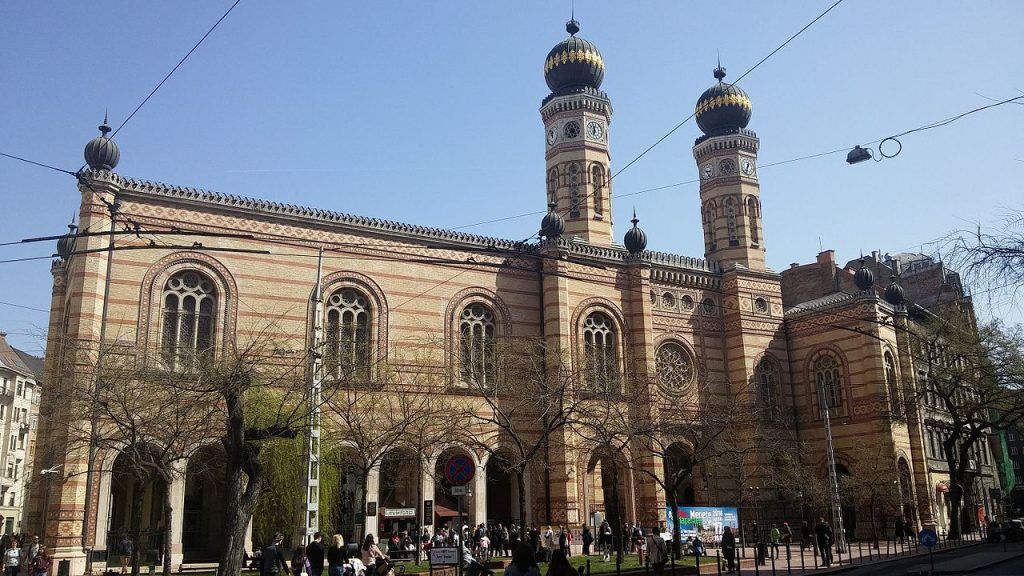
There’s something slightly surreal about standing in a synagogue that seats 3,000 people. The Dohány Street Synagogue isn’t just large—it’s cathedral-scale, with twin Moorish towers, a rose window that would look at home in Notre-Dame, and an interior so ornate that first-time visitors often stand in the doorway and just stare.
But the Great Synagogue (as it’s also known) is more than architecture. It’s the center of Hungary’s Neolog Jewish community, an active place of worship that hosts services and concerts. It’s a museum complex documenting centuries of Hungarian Jewish life. And it’s a Holocaust memorial, with a cemetery in the courtyard where victims of the 1944-45 Budapest ghetto were buried in mass graves.
If you visit one Jewish heritage site in Budapest, this should probably be it. If you visit two, add the Shoes on the Danube Bank.
A Brief History of the Great Synagogue
The Dohány Street Synagogue was built between 1854 and 1859, designed by Viennese architect Ludwig Förster in a style that deliberately combined Moorish, Byzantine, and Romantic elements. The choice was intentional—at a time when synagogue architecture had no established European tradition, Förster looked to the Islamic architecture of Spain and North Africa for inspiration, creating something that would be instantly recognizable as Jewish while also fitting into the grand boulevard architecture of 19th-century Budapest.
The synagogue was consecrated on September 6, 1859, serving the city’s growing Neolog Jewish community. Neolog Judaism was a Hungarian reform movement that sought to modernize Jewish practice while maintaining tradition—think of it as somewhere between Reform and Orthodox Judaism. The movement was particularly strong in Budapest, and the Great Synagogue became its spiritual center.
The Theodor Herzl Connection
The building next to the synagogue—now part of the museum complex—was the birthplace of Theodor Herzl in 1860. Herzl would go on to found modern political Zionism and is considered the father of the State of Israel. A plaque marks the spot, and the Jewish Museum incorporates the site into its exhibitions.
World War II and the Budapest Ghetto
The synagogue’s most tragic chapter came during World War II. When the Nazis occupied Hungary in March 1944 and the Arrow Cross Party seized power in October, the area around Dohány Street became the Budapest Ghetto—a walled-off section of the city where roughly 70,000 Jews were confined in horrific conditions.
The synagogue complex itself became a focal point of both suffering and survival. The courtyard was used as a mass grave for those who died of starvation, disease, and violence during the ghetto period. When Soviet forces liberated Budapest in February 1945, they found approximately 3,000 bodies in and around the synagogue.
Today, those graves remain. The cemetery in the courtyard—unusual for a synagogue, since Jewish tradition typically prohibits burial near a place of worship—stands as a permanent memorial to those who died.
What You’ll See Inside
The Dohány Street Synagogue complex includes several distinct areas, all covered by your admission ticket.
The Main Synagogue
The sanctuary is genuinely breathtaking. The space seats 3,000 (1,497 men on the main floor, 1,472 women in the two-tiered galleries), making it larger than many European cathedrals. The ceiling soars overhead, decorated with geometric patterns in blue, gold, and red. Massive chandeliers—originally gas-lit, now electric—hang from the ceiling. The Ark (containing the Torah scrolls) dominates the eastern wall, flanked by ornate towers.
The famous pipe organ, built by Sándor Angster, sits above the Ark—controversial in Orthodox circles, since instrumental music during services is forbidden in traditional Judaism. The organ remains in use for concerts and special events.
The Hungarian Jewish Museum
Adjacent to the synagogue, the museum houses a collection of Judaica (religious objects), historical documents, and exhibits on Hungarian Jewish life from the Middle Ages to the present. Highlights include ornate Torah scrolls, ceremonial objects, and documentation of the Holocaust in Hungary.
The museum building incorporates the birthplace of Theodor Herzl, marked with a memorial.
The Heroes’ Temple
Built in 1931, this smaller synagogue within the complex honors Hungarian Jewish soldiers who died in World War I. Its more intimate scale makes it a good contrast to the grand main sanctuary.
The Raoul Wallenberg Memorial Park
The courtyard behind the synagogue contains the cemetery where victims of the Budapest Ghetto were buried. At its center stands the Weeping Willow (or Tree of Life) sculpture by Imre Varga—a metal tree whose leaves bear the names of Holocaust victims. Each leaf represents a family that perished.
The park is named for Raoul Wallenberg, the Swedish diplomat who saved tens of thousands of Budapest Jews during the Holocaust by issuing protective passports and establishing safe houses. Wallenberg disappeared into Soviet custody after the liberation and never returned.
Ticket Prices and What’s Included
Your ticket includes guided tour access to the main synagogue, the Hungarian Jewish Museum, the Heroes’ Temple, the Raoul Wallenberg Memorial Park, and the cemetery garden.
💰 Dohány Street Synagogue Tickets (2026)
- Adults: 8,500 HUF (~€23/$24)
- Students/Seniors: 6,500 HUF (~€17/$18)
- Children under 6: Free
- Family tickets: Available (check at ticket office)
Tickets include guided tour + museum + memorial park. Buy at the ticket office or online at jewishtourhungary.com
The ticket price is higher than many Budapest attractions, but you’re getting a lot: a guided tour (essential for understanding the complex’s history), museum admission, and access to the memorial grounds. Budget visitors might wince, but the experience justifies the cost.
Note: The Dohány Street Synagogue is NOT included in the Budapest Card. You’ll need to buy a separate ticket.
Opening Hours
The synagogue keeps different hours depending on the season, and closes early on Fridays and completely on Saturdays (Shabbat).
🕐 Opening Hours
Summer (April – October):
- Sunday – Thursday: 10:00 AM – 6:00 PM
- Friday: 10:00 AM – 4:00 PM
- Saturday: CLOSED (Shabbat)
Winter (November – March):
- Sunday – Thursday: 10:00 AM – 4:00 PM
- Friday: 10:00 AM – 2:00 PM
- Saturday: CLOSED (Shabbat)
Also closed: Jewish holidays (Rosh Hashanah, Yom Kippur, etc.)
Pro tip: Arrive early. The guided tours start at regular intervals, and arriving right at opening means shorter waits and smaller groups. The last tour typically starts 30-60 minutes before closing.
Dress Code: What to Wear
The Dohány Street Synagogue is an active house of worship. Dress modestly.
- Shoulders: Must be covered (no tank tops, spaghetti straps)
- Knees: Must be covered (no shorts or short skirts)
- Men: Must wear a head covering. Free paper kippahs are provided at the entrance—you don’t need to bring your own.
- Footwear: No flip-flops or beachwear
If you arrive dressed inappropriately, you may be asked to cover up or refused entry. Bring a light cardigan or shawl if you’re visiting on a hot day—Budapest summers can be brutal, and you’ll want to be comfortable while still meeting the dress code.
How to Get There
The synagogue is located at Dohány utca 2 in District VII (Erzsébetváros), Budapest’s historic Jewish Quarter.
🚇 Getting to Dohány Street Synagogue
- Metro: M2 (red line) to Astoria – 2 minute walk
- Tram: 47 or 49 to Astoria
- Bus: 74 to Károly körút
- Walking: 10 minutes from Deák Ferenc tér, 15 minutes from St. Stephen’s Basilica
The building is impossible to miss—the twin Moorish towers are visible from blocks away, and there’s usually a line of tourists outside.
Combining with Other Jewish Quarter Sites
The Dohány Street Synagogue sits in the heart of Budapest’s Jewish Quarter, which is also the city’s nightlife and ruin bar district. Here’s how to combine sites:
Jewish Heritage Walk
- Dohány Street Synagogue (1.5-2 hours)
- Walk through the Jewish Quarter – see the Kazinczy Street Synagogue (Orthodox), kosher restaurants
- Lunch: Try Mazel Tov or Kőleves for modern takes on Jewish cuisine
- Shoes on the Danube Bank (15 min walk) – the riverside Holocaust memorial
Full Holocaust History Day
- Morning: Dohány Street Synagogue + Jewish Museum
- Midday: Holocaust Memorial Center (detailed museum)
- Afternoon: Shoes on the Danube Bank
- Evening: Walk through the Jewish Quarter
Architecture and History Combo
- Morning: St. Stephen’s Basilica
- Midday: Dohány Street Synagogue
- Afternoon: Hungarian State Opera House (guided tour)
Concerts and Special Events
The synagogue hosts regular organ and klezmer concerts, taking advantage of its exceptional acoustics and historic atmosphere. Concerts typically happen in the main sanctuary, and tickets are sold separately from regular admission.
The annual Budapest Jewish Cultural Festival (usually in late summer) features special events at the synagogue and throughout the Jewish Quarter. If your visit coincides with the festival, expect additional programming but also larger crowds.
Photography Rules
Photography is allowed inside the synagogue and museum—no flash, no tripods, and be respectful of others (especially during services or tours). The interior is genuinely photogenic, so bring your camera.
Video recording may be restricted during guided tours; ask your guide if you’re unsure.
Accessibility
The main synagogue and most of the museum complex are wheelchair accessible. Accessible toilets are available on-site. If you need assistance, inform staff when you arrive—they’re generally helpful and can accommodate most needs.
The cemetery garden involves some uneven ground but is mostly navigable.
Is the Dohány Street Synagogue Worth Visiting?
Yes—if you have any interest in architecture, Jewish history, or understanding Budapest’s complex 20th-century past. The synagogue is genuinely stunning, the museum provides important context, and the memorial grounds are deeply moving.
Visit If:
- You’re interested in Jewish history or heritage
- You appreciate grand 19th-century architecture
- You want to understand the Holocaust in Hungary
- You’re exploring Budapest’s Jewish Quarter anyway
Skip If:
- You’re only in Budapest for one day and need to prioritize
- You’re uncomfortable with Holocaust memorials (the cemetery can be intense)
- You’re visiting on Saturday (it’s closed for Shabbat)
📍 Dohány Street Synagogue – Essential Info
- Address: Dohány utca 2, 1074 Budapest (District VII)
- Tickets: 8,500 HUF (~€23) adults | 6,500 HUF (~€17) students/seniors
- Hours: Sun-Thu 10-6 (summer), 10-4 (winter) | Fri closes early | Sat CLOSED
- Time needed: 1.5-2 hours
- Metro: M2 to Astoria (2 min walk)
- Dress code: Shoulders + knees covered; men need head covering (kippah provided)
- Website: jewishtourhungary.com
Pro tip: Arrive right at opening to avoid crowds. The guided tour is included and worthwhile—don’t try to rush through independently.
Related Guides
- Shoes on the Danube Bank Memorial
- Holocaust Memorial Center
- Budapest’s Jewish Quarter Guide
- House of Terror Museum
- St. Stephen’s Basilica
- Hungarian History Overview
Last updated: January 2026. Prices verified via jewishtourhungary.com.


