⏱️ TL;DR
Is Kehida Thermal Bath Worth the Trip from Budapest?
Absolutely. Kehida Termál in the Zala hills offers 13 pools, sauna world, and therapeutic waters for 5,600 HUF (~$14) full-day. Just 12 km from Hévíz but a fraction of the crowds. Go weekday mornings — locals know this one.
📋 At a Glance
| 📍 Address | Kehidakustány, Kossuth u. 62, 8784 (Google Maps) |
| 🕐 Hours | Daily 9:00 AM – 8:00 PM (pools close at 20:00) |
| 💰 Price | 5,600 HUF (~$14) full-day / 4,200 HUF (~$11) 3-hour |
| 🚗 Getting There | 2h 15min drive from Budapest, 12 km from Hévíz |
| 🌐 Website | kehidatermal.hu |
The first time I drove to Kehida, I got lost twice. Not because the GPS failed — the Zala hills are just that kind of place where you forget you’re looking for a thermal bath and start wondering if you’ve accidentally stumbled into Tuscany. Rolling green hills, vineyards, tiny villages with churches older than most countries.
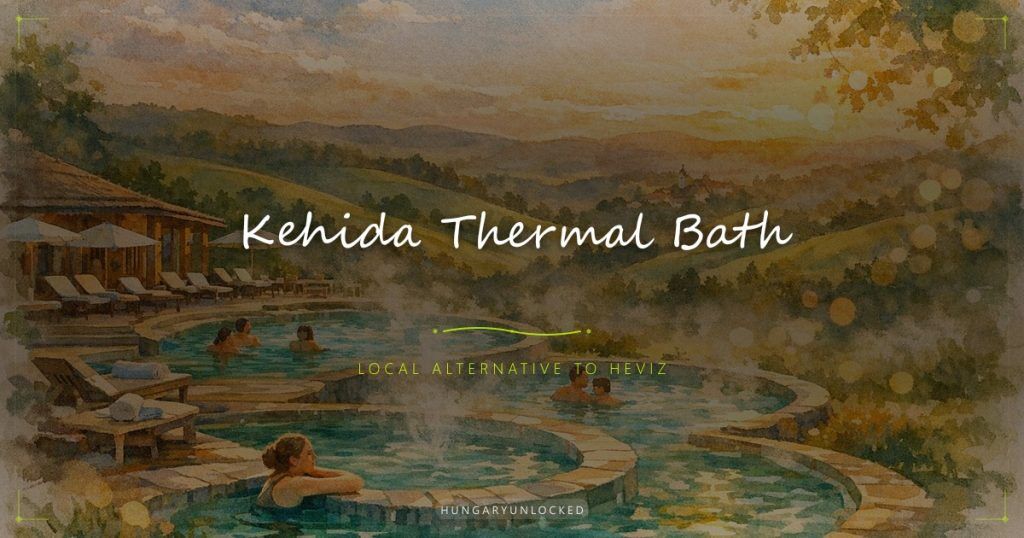
Then you round a corner and there it is: **Kehida Termál**, a sprawling modern wellness complex that looks genuinely out of place in the best possible way. Like someone dropped a Scandinavian spa resort into the Hungarian countryside and said “yeah, this works.”
Kehida Termál (officially Kehida Termál Gyógy- és Élményfürdő) is a thermal bath and wellness resort located in Kehidakustány, Zala County, western Hungary. The complex features 13 pools with over 2,600 square meters of water surface, fed by thermal water rich in calcium, magnesium, and hydrogen carbonate at temperatures between 32-38°C. The facility combines a medical spa with therapeutic treatments, an adventure bath with slides and wave pool, an outdoor beach area, and a comprehensive sauna world — making it one of the most complete thermal bath experiences in the Transdanubian region.
Why Do Locals Choose Kehida Over Hévíz?
Here’s the thing most visitors don’t understand: Hungarians who live in this region rarely go to Hévíz. Yes, Hévíz has the famous thermal lake. Yes, it’s world-renowned. And yes, it’s absolutely rammed with tourists and German retirees every single day.
Kehida sits just 12 kilometers from Hévíz, but it feels like a completely different world. The water comes from the same general thermal belt, the facilities are arguably better maintained, and you won’t need to fight for a locker at 10 AM.
When I visit family in Zalaegerszeg, we always end up at Kehida. Not because they’re locals being contrarian — the place is just objectively better for a day of actual relaxation rather than tourist-dodging.
What Are the Pools Like at Kehida Thermal Bath?
The complex is divided into three main zones, and your standard ticket gets you into all of them (except the sauna world, which requires a supplement).
The Medical Spa (Gyógyfürdő) is where the serious thermal action happens. Three indoor medicinal pools range from 33°C to 38°C, and the water here is the real deal — certified therapeutic water that’s been helping people with joint problems, rheumatic conditions, and post-injury rehabilitation since the thermal spring was discovered in 1978.
The Adventure Bath (Élményfürdő) is where families congregate. Wave pool, water slides, bubble beds, neck showers — the usual suspects, but done well. The slide complex isn’t massive, but kids seem to run themselves ragged on it while parents float peacefully nearby.
The Outdoor Beach (Strandfürdő) opens in summer and features large swimming pools surrounded by proper grass areas. Bring a blanket, pack a picnic (they’re reasonably tolerant about outside food), and you’ve got yourself a full day.
How Much Does Kehida Thermal Bath Cost in 2026?
Let me level with you — Kehida offers surprisingly good value compared to the big-name Budapest baths, and the pricing system is refreshingly simple.
Standard Tickets (Off-Peak):
– 3-hour adult: 4,200 HUF (~$11)
– Full-day adult: 5,600 HUF (~$14)
– Evening (3 hours before closing): 3,650 HUF (~$9)
Peak Period Prices (weekends, holidays, school breaks):
– 3-hour adult: 4,800 HUF (~$12)
– Full-day adult: 6,400 HUF (~$16)
– Evening: 4,150 HUF (~$11)
Sauna World Supplement:
– 3-hour: 2,400 HUF (~$6)
– Full-day: 3,200 HUF (~$8)
Family Tickets (2 adults + 2 children):
– Off-peak: 15,120 HUF (~$39)
– Peak: 17,280 HUF (~$44)
Children aged 6-13.99 pay half price. Kids under 6 enter for free — yes, actually free. Seniors (retirement age with Hungarian ID) also receive discounted rates.
Compare this to Széchenyi’s 9,500+ HUF full-day ticket in Budapest, and suddenly a 2-hour drive starts looking very attractive.
Is the Sauna World Worth the Extra Cost?
Short answer: yes, especially if you’re visiting on a weekday.
The Sauna Oázis at Kehida is legitimately impressive — we’re talking Finnish saunas, infrared cabins, steam rooms, a tepidarium, and proper cooling pools. The whole setup is designed for the traditional sauna circuit (heat, cool, rest, repeat), and they actually enforce quiet time in certain areas.
On weekends it gets busier, but visit on a Tuesday afternoon and you might have an entire sauna to yourself. That’s the kind of luxury you simply cannot buy at any Budapest thermal bath.
What About the Wellness and Medical Treatments?
Kehida takes the medical side seriously. They offer a full range of OEP-supported treatments (Hungarian national health insurance), meaning Hungarians with referrals can access subsidized physiotherapy, mud wraps, underwater massage, and other therapeutic sessions.
For international visitors, the treatments are still available — just at full price. A 20-minute massage runs around 4,500-6,000 HUF (~$12-15), and the quality is solid. The staff in the medical wing tend to be actual trained physiotherapists rather than spa attendants with a weekend certification.
The Aurum Wellness & Spa section offers premium treatments — think proper luxury spa vibes with aromatherapy, specialized facials, and couples packages. Worth considering if you’re staying at the attached hotel and want the full resort experience.
Where Should I Stay Near Kehida Thermal Bath?
The obvious choice is the Kehida Termál Hotel, which is literally attached to the bath complex. Guests get complimentary bath access and can essentially roll from their room to the pools in their bathrobe. Prices vary seasonally, but expect around 35,000-55,000 HUF (~$90-140) per night for a double room.
Kehida Holiday Village (Kehida Élményfalu) sits 50 meters from the bath and offers self-catering apartments — great for families who want kitchen facilities and more space. Rates start around 25,000 HUF (~$65) per night.
Budget travelers can find guesthouses (vendégház) in the surrounding villages for half the price. Kehidakustány and nearby Alsópáhok have several options, though you’ll need a car.
How Do I Get to Kehida from Budapest?
Let me be straight: there’s no practical public transport option. Kehida is a car destination.
By car from Budapest: Take the M7 motorway toward Lake Balaton, then continue on the 76 road toward Hévíz/Keszthely. Total distance is about 200 km, taking roughly 2 hours 15 minutes without traffic.
Combination with Hévíz or Zalakaros: If you’re already visiting the thermal lake at Hévíz or Zalakaros Thermal Bath, Kehida is just 12-15 km away. Makes for an easy comparison visit or a multi-day thermal bath road trip through western Hungary.
From Zalaegerszeg: Just 15 minutes by car. This is the nearest city with train connections to Budapest (about 3 hours via Székesfehérvár).
Parking at Kehida is free and plentiful — another advantage over urban thermal baths.
What Makes Kehida’s Thermal Water Special?
The thermal water at Kehida emerges from 1,200 meters below ground at temperatures between 60-68°C before being cooled to comfortable bathing temperatures.
The water is classified as calcium-magnesium-hydrogen carbonate thermal water with notable fluoride and metaboric acid content. In practical terms, this means it’s particularly beneficial for:
– Degenerative joint conditions (arthritis, osteoarthritis)
– Chronic inflammatory joint diseases
– Post-surgical rehabilitation
– Spinal problems and disc issues
– Muscle and tendon injuries
The Hungarian health system recognizes this water for therapeutic purposes, which is why the facility receives medical tourism visitors year-round. According to official data from the Hungarian Tourism Agency, western Hungary’s thermal region attracts over 2 million visitors annually.
When Is the Best Time to Visit Kehida?
Weekday mornings (Tuesday-Thursday) are absolute gold. You’ll share the pools with retirees doing their prescribed therapy sessions, and that’s about it.
Avoid Saturday afternoons and Hungarian school holidays (late June through August, Christmas week, spring break in April). These periods see the adventure bath section overwhelmed with families.
Winter visits are underrated. The outdoor thermal pools stay warm year-round, and there’s something magical about floating in 38°C water while snow falls on your shoulders. The drive through the Zala hills in winter scenery is an added bonus.
Summer brings access to the full outdoor beach complex, but also the largest crowds. If you’re visiting July-August, arrive when gates open at 9 AM.
What Are Visitors Saying About Kehida?
Checking through Google Reviews, TripAdvisor, and Hungarian forums (Termalonline, Utazzitthon), the consensus is remarkably positive.
What people love:
– Clean, well-maintained facilities (mentioned repeatedly)
– Good value for money compared to comparable baths
– Peaceful atmosphere on weekdays
– Quality of the thermal water for medical conditions
– Family-friendly without being overwhelming
Common complaints:
– Limited food options in the on-site restaurant (mediocre and overpriced)
– Can feel crowded during peak Hungarian holiday periods
– Some visitors expected more dramatic scenery
– Cash payment sometimes required for smaller items
One German reviewer on TripAdvisor summed it up well: “Not as famous as Hévíz, but after trying both, I prefer Kehida for daily visits. Less chaos, same quality water.”
What Should I Know Before My First Visit?
Insider tips that actually help:
Bring your own food. The on-site restaurant won’t poison you, but it’s unremarkable cafeteria fare at tourist prices. A packed lunch and snacks from any supermarket will improve your day significantly.
The locker system uses electronic wristbands. You’ll receive one at entry — guard it like your firstborn because replacement fees apply.
Flip-flops are essential for the sauna circuit. The tile floors get uncomfortably hot around the saunas.
Bathing caps are not required in most pools — a pleasant surprise for anyone traumatized by Budapest’s strict cap policies.
If you’re combining Kehida with Hévíz thermal lake, do Kehida first. You’ll appreciate the modern facilities before experiencing the completely different (and more rustic) thermal lake experience.
What’s the Realistic Downside?
I won’t sugarcoat this: Kehida is not a destination bath. It’s excellent, but there’s no historic architecture, no Turkish heritage, no Instagrammable interior design. The buildings are functional modern construction from various expansion periods, and the aesthetic is “well-maintained regional wellness center” rather than “thermal palace.”
If you’re looking for the grand European spa experience with marble columns and historic ambiance, this isn’t it. For that, you want Gellért or Széchenyi in Budapest.
But if you want to actually relax, float in genuinely therapeutic water, and escape the crowds — Kehida delivers that better than most.
Frequently Asked Questions
Can I visit Kehida Thermal Bath without a car?
Technically yes, but it’s painful. You’d need to take a train to Zalaegerszeg (3 hours from Budapest), then arrange a taxi for the final 15 km. There’s no regular bus service. Save yourself the hassle and rent a car or join an organized tour.
Is Kehida suitable for young children?
Very much so. The adventure bath section has shallow pools and age-appropriate slides. Children under 6 enter free, and the grassy outdoor areas in summer give kids space to run around between swims.
Do I need to book treatments in advance?
For medical treatments (physiotherapy, mud wraps), advance booking is recommended, especially in peak season. For basic massages, you can usually arrange same-day appointments at the reception.
Is there an English-speaking staff at Kehida?
The hotel reception and ticket office typically have English-speaking staff. Therapists in the medical section often have limited English but can communicate basic instructions. German is widely spoken given the Austrian and German visitor base.
Can I use Kehida’s pools if I’m staying elsewhere?
Absolutely. Day visitors are welcome, and you’ll pay the same entry fees as anyone else. Hotel guests simply get the convenience of bathrobe access and extended hours.
Sources & References
This guide incorporates information from official sources:
- Kehida Termál – Official website with prices and facilities
- Hungarian Tourism Agency (MTÜ) – Tourism statistics
- KSH – Visitor statistics
Final Thoughts
Kehida Termál won’t make your social media followers jealous. It’s not architecturally stunning, it’s not historic, and it’s definitely not convenient to reach. But here’s the thing — it might be exactly what you actually need from a thermal bath experience.
You came to Hungary for the waters, right? Kehida delivers proper therapeutic thermal water, well-maintained facilities, room to breathe, and prices that won’t make you wince. Sometimes the best travel discoveries are the places locals actually use.
So yes, by all means visit Széchenyi and Hévíz — they’re famous for good reasons. But if you’re planning more than a weekend in Hungary, consider renting a car and heading to the Zala hills. Kehida is waiting, blissfully uncrowded, with water that’s been healing joints for nearly 50 years.
📱 Share Your Experience:
Been to Kehida Thermal Bath? Tag us on social media with #HungaryUnlocked or leave a comment below. We update this guide regularly with reader tips!
Related Articles:


