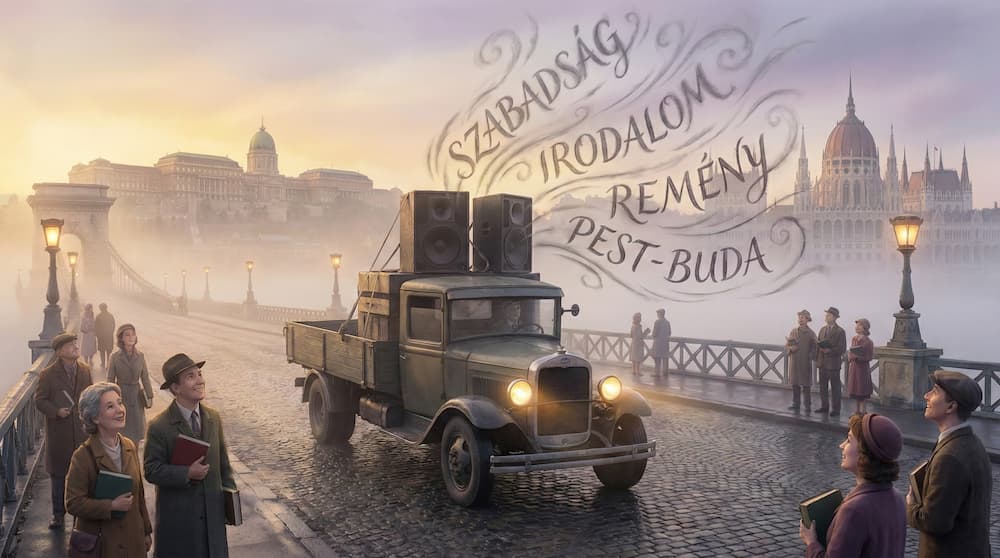
It isn’t every day that a Hungarian writer receives the Nobel Prize in Literature. When news broke that László Krasznahorkai would be honoured in Stockholm on 10 December 2025, Budapest’s cultural scene went into overdrive. Instead of staging an elitist gala, organisers dreamed up something wild: a 24‑hour roadshow that brings high literature to the streets As dawn breaks on the 10th, a humble flat‑bed truck – the NobelMobil – will begin a slow, meditative circuit around the city, broadcasting recordings of the author’s haunting prose and inviting passers‑by to read aloud. It’s weird, beautiful and oh‑so‑Budapest.
Who Is László Krasznahorkai – and Which of His Works Exist in English?
If you spend more than five minutes in Hungary’s literary circles, someone will inevitably whisper the name László Krasznahorkai with the same reverence usually reserved for fine Tokaji wine or the perfect chimney-cake. He’s our internationally celebrated master of long, hypnotic sentences—the kind that wrap around you like a foggy Budapest morning and refuse to let go.
And yes, for the relief of non-Hungarian speakers everywhere: many of his major works are available in English. In fact, Krasznahorkai has been translated by some of the best in the business (George Szirtes, Ottilie Mulzet), bringing his apocalyptic charm to global readers.
His English-language catalogue includes modern classics like Satantango, the bleak, mesmerising novel that inspired Béla Tarr’s legendary film; The Melancholy of Resistance, a dark little masterpiece about a town collapsing under its own absurdity; and War and War, a haunting, obsessive journey from Hungary to New York.
More recent works—such as Baron Wenckheim’s Homecoming (the book that won him the Man Booker International Prize), the art-driven Seiobo There Below, and the China-focused travel-meditation Destruction and Sorrow Beneath the Heavens—show just how far his imagination roams.
In short:
If you’re curious about the Hungarian psyche, enjoy philosophical doom served with deadpan humour, or simply want to experience sentences that occasionally feel longer than the Chain Bridge, Krasznahorkai’s English translations are your gateway drug.
The concept
The NobelMobil will start at 6 am and circle Budapest until 6 am the next day. Organisers chose a platós teherautó (flat‑bed truck) precisely because it stands out amid rush‑hour traffic. Instead of ads or music, the truck’s speakers will play passages from Krasznahorkai’s works – notably Mindig Homérosznak and Háborús architektúrák – read in his own voice. The slow pace and melancholic cadence are meant to create a moving meditation through the city, breaking commuters’ routines and turning the urban landscape into a soundscape.
How to participate
The truck will stop at 13 locations for an hour each. At every stop, you can climb onto the platform, pick up a book and read a passage from Krasznahorkai’s brand‑new novel A magyar nemzet biztonsága. After reading, you sign your name next to your chosen excerpt, turning the book into a communal keepsake that will later be delivered to the author. This participatory element transforms spectators into co‑creators, and I’m already practicing my husky narrator voice. Children, pensioners, literature geeks and curious tourists are all welcome – there’s no elitism here.
Keeping politics out of it
One of the project’s most refreshing aims is its insistence on staying non‑political. In a climate where almost everything becomes a campaign tool, the organisers openly ask public figures to stay away or join simply as citizens. The focus is on celebrating the Hungarian language and the recognition of a writer whose sentences spin like long, spiralling roads. As a nation, we haven’t seen such literary recognition since Imre Kertész won his Nobel in 2002. This moving monument reminds us that stories belong to everyone, not just to those wearing tuxedos.
Why you should search out the NobelMobil
The organisers list several reasons to join the journey: hearing the author’s voice echoing through city streets, adding your own inscription to a book destined for Stockholm and meeting fellow literature lovers in an open, unpretentious setting. Personally, I’m drawn by the sheer absurdity of reciting a paragraph on the back of a truck while commuters gawk. If you’re new to Krasznahorkai’s work, this is a wonderful primer; if you’re a long‑time fan, there’s something thrilling about sharing that love with strangers under winter skies.
Practical tips
- Check the route: The NobelMobil’s official site will release a timetable of stops. Plan to intercept the truck near landmarks like Deák Ferenc tér, Margaret Bridge or the Great Market Hall.
- Dress warmly: You’ll be outdoors in December; gloves and a hat are essential.
- Bring a thermos: Hot tea or mulled wine will keep you cosy while you wait.
- Arrive early: Each stop lasts an hour, and reading slots may fill up fast.
- Respect the silence: During readings, keep chatter to a whisper to maintain the meditative atmosphere.
One negative – traffic disruption
Let’s be honest: a slow‑moving truck in morning traffic will raise some eyebrows. Drivers may grumble about delays, and bus schedules could be thrown off. If you need to cross town quickly on December 10th, plan alternative routes. But I’d argue that pausing for literature is a small price to pay for a once‑in‑a‑century celebration.
Summary
The NobelMobil is an inspired way to bring a deeply literary achievement into the public sphere. It bypasses formal ceremonies and invites everyone – from commuters to tourists – to celebrate Krasznahorkai’s Nobel Prize together. For 24 hours, the city becomes a book club on wheels. Grab a scarf, pick a passage and join this rolling festival of words.
FAQ
Q: Where can I find the route?
Visit the project’s official website for an up‑to‑date map. Stops include major squares and cultural hubs around Budapest.
Q: Do I need to pre‑register to read?
No, participation is first‑come, first‑served at each stop. Arrive early to secure a slot.
Q: What languages will readings be in?
The project focuses on Hungarian, but organisers welcome readers in other languages as a gesture of solidarity. Just bring your own translation.
Q: Is the event accessible for people with disabilities?
The truck has a small ramp, but those with mobility challenges may find it difficult to climb onto the platform. Volunteers will be on hand to assist.
Q: Will Krasznahorkai be present?
No, he’ll be in Stockholm receiving his award. However, he will receive the communal book afterwards