Introduction: Why You’re Here (And Why You’re Probably Wrong About Unicum)
Let’s get one thing straight before we descend into the damp, alcoholic underbelly of Budapest: You probably think you know what herbal liqueur is. You’ve likely had a sticky shot of Jägermeister at a frat party, or maybe you’ve pretended to enjoy a fernet because you saw a bartender do it. But Unicum? Unicum is different. Unicum is the moody, complex, brooding grandfather of them all, a drink that doesn’t care if you like it. It’s a spherical bottle of liquid patriotism that has survived emperors, fascists, communists, and the worst enemy of all: global marketing trends.
If you are reading this, you are likely one of two people. Person A: You are a refined traveler looking for “authentic” experiences away from the stag parties vomiting on Kazinczy utca. Person B: You accidentally drank this black sludge at a ruin bar last night, thought you were going to die, and are now morbidly curious about what just happened to your internal organs.
Welcome. You are in the right place.
Most travel blogs will give you a sanitized, 500-word summary that says, “It’s a nice museum with a gift shop!” I’m not going to do that. This is the HungaryUnlocked deep dive—a manifesto, really—on why the Zwack Unicum Museum is arguably the most important historical site in Budapest that isn’t a church or a castle. We are going to talk about industrial espionage, fake recipes, the smell of centuries-old mold, and exactly how many Forints you need to shell out in 2025 to taste the “Riserva” that tastes like angels crying on a bed of Tokaji grapes.
We’re going to cover the neighborhood (Ferencváros), which is gritty and real and smells like hops and exhaust. We’re going to cover the food you need to eat afterwards to soak up the 40% ABV assault. And I’m going to tell you exactly why you need to book the Premium Tour, even if you’re on a budget.
Buckle up. It’s going to get bitter.
Part I: The History Saga (Or, How to Troll the Communists)
To understand the museum, you have to understand the Zwack family. This isn’t just a corporate brand story; it’s a Game of Thrones script written in ethanol. The museum doesn’t just display bottles; it displays the scars of Hungarian history.
The Imperial Origins: “Das ist ein Unikum!”
The year is 1790. We are in the court of Emperor Joseph II, a man with a lot of power and apparently a lot of stomach aches. His royal physician, Dr. József Zwack, whips up a concoction of over 40 herbs to help the monarch digest his venison. The Emperor knocks it back, eyes widen, and he exclaims, “Das ist ein Unikum!” (That is unique!). Boom. Branding history is made.
Now, is this story 100% historically verifiable? Who knows. But the museum leans into it hard, and frankly, standing in the “Imperial and Royal Purveyor to the Court” section of the museum, looking at the faded documents and crests, you buy it. The Zwack family became the heavyweights of the Austro-Hungarian spirit world. They weren’t just making booze; they were making medicine for the soul of the Empire.
The Drowning Man
One of the first things you’ll see—and you’ll see it everywhere in Budapest, plastered on billboards and retro postcards—is the “Drowning Man.” Created in 1909 by Viktor Pachl, this poster features a shipwrecked guy, looking wildly disheveled in the ocean, staring at a bobbing bottle of Unicum like it’s a life raft.
It’s a bizarre image for a liquor brand. Usually, you want happy people clinking glasses. Zwack went with: Life is a shipwreck, you are drowning, here is a bottle. It’s incredibly Hungarian. It speaks to the national psyche of pessimistic resilience. The museum has a fantastic section dedicated to this iconography, showing how the brand became synonymous with survival.

Készítette: Zwack Sándor – https://unicum.hu/history#y1909, CC BY-SA 4.0, Hivatkozás
The Bombing and The Betrayal
Fast forward to World War II. The Zwack factory on Soroksári út (where you are standing) gets absolutely leveled by Allied bombs in 1944. The family rebuilds. But then, the Soviets roll in. 1948 comes around, and the Communist regime decides that private enterprise is over. They nationalize the factory. They kick the Zwacks out.
Here is where the story gets absolutely legendary, and this is the core narrative thread of the museum tour. The Communists demanded the recipe. The Zwack family, realizing the game was up, did something brilliant. They gave the state a fake recipe.

For over forty years, while the Zwack family was in exile in Italy and the US (producing the real Unicum), the state-run factory in Budapest was churning out a knock-off version labeled “Unicum” that tasted like sweetened cough syrup mixed with regret. The museum displays these “socialist Unicum” bottles. They look the same, but the soul is missing. It’s a powerful lesson in why you can steal a factory, but you can’t steal the magic.
The Return
In 1989, the Iron Curtain falls. Peter Zwack returns home. He buys back his family’s factory from the state (imagine buying back your own stolen house) and reinstates the original recipe. The “fake” Unicum is poured down the drain—figuratively, maybe literally—and the authentic bitter returns to Hungary.
Walking through the museum exhibits that document this return is emotional. You see photos of Peter Zwack, who later became the Hungarian Ambassador to the US, standing in the factory ruins and then in the restored hall. It transforms the liquid in your glass from a mere drink into a symbol of anti-communist resistance. It tastes better when you know it beat the Soviets

Part II: Getting There (The Gritty Scenic Route)
The Zwack Unicum Museum isn’t in the shiny, tourist-filled District V. It’s in Ferencváros (District IX), the industrial heartland of Pest. This is a feature, not a bug.
The Tram 2 Experience
The best way to arrive is via Tram 2. National Geographic called this one of the most scenic tram routes in the world, and they’re right, but only for the first half. You board at Jászai Mari tér or near the Parliament. You glide past the Chain Bridge, the Castle, the fancy hotels. It’s beautiful.
Then, you pass the Great Market Hall, and things get real. The architecture shifts from Baroque palaces to Brutalist blocks and industrial warehouses. You are entering the working city. You get off at Haller utca / Soroksári út.
- Pro Tip: Don’t be alarmed by the sudden drop in English speakers and the increase in concrete. This is the Budapest that actually makes things. The factory looms large—a massive brick fortress that looks like it survived a war (because it did).
Arrival at Dandár Utca
The entrance is at Dandár utca 1. It’s a side street off the main drag. The building is distinctively industrial, with a reception that feels like a mix of a corporate HQ and a 19th-century apothecary.
As of 2025, the area is gentrifying. You’ll see modern “loft” apartments popping up next to crumbling facades. It’s a neighborhood in transition, much like the Zwack history itself.
Part III: The Experience – A Step-by-Step Walkthrough
I booked the Premium Tour. If you are reading this, you should too. I’ll explain why in the pricing section, but just trust me: the difference in cost is the price of a coffee, but the difference in experience is the difference between drinking well and drinking exceptionally.
1. The Film: Propaganda or Passion?
The tour starts with a 20-minute movie. Usually, museum intro films are the perfect time to check your phone or nap. This one is actually decent. It covers the family history I mentioned above, but seeing the archival footage of pre-war Budapest and the bombed-out factory brings it home.
- The Negative: A recurring complaint in 2024 and 2025 reviews is that the subtitles can be out of sync or hard to read if you’re sitting in the back. It’s a minor annoyance, but for a world-class brand, fix your.SRT files, Zwack!.
- The Vibe: It sets the emotional stakes. By the time the lights come up, you’re rooting for the family. You want to drink their herbal victory juice.
2. The Old Distillery: The “Heart of Unicum”
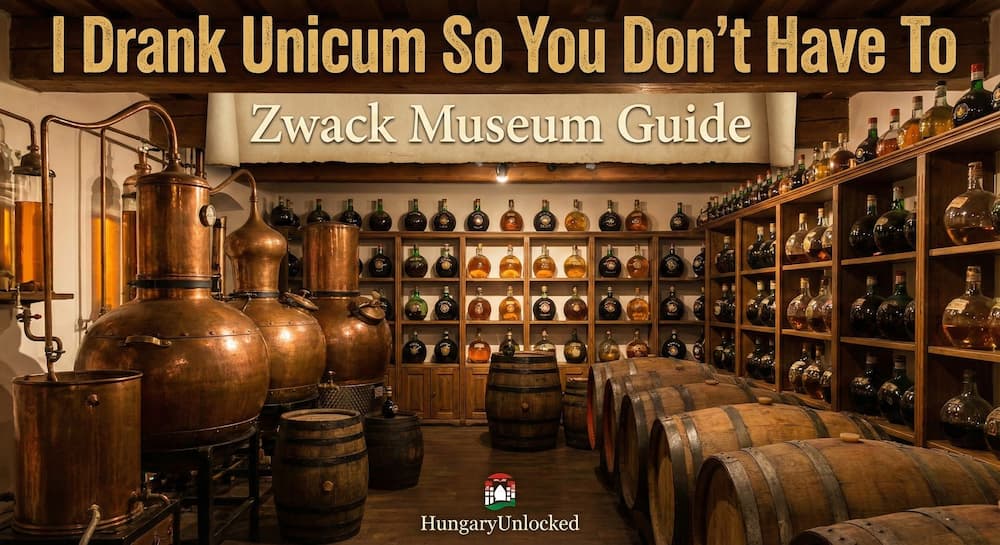
After the film, the guide leads you into the “Heart of Unicum”—the old distillery hall. This room is pure Steampunk aesthetic. It’s filled with polished copper stills, stained glass, and green Zsolnay tiles. It is undeniably beautiful.
- The Sensory Detail: This is where you get to meet the herbs. They have open sacks of the raw ingredients—or at least the ones they are willing to show you. You can plunge your hands into dried orange peels, ginger, and other unrecognizable roots. The air smells faint—dusty and spicy.
- The Secret: The guide will tell you that the actual mixing of the secret herbs is done by the family members personally. No factory worker knows the whole recipe. It’s the Coca-Cola formula of Central Europe, but with more alcohol and less high-fructose corn syrup.
3. The Cellar: Where the Magic (and Mold) Happens
This is the highlight. You leave the polished museum floors and descend into the labyrinthine cellar system beneath the factory.
- The Smell: As soon as the heavy doors open, it hits you. It’s a wall of scent. Reviews describe it as “earthy,” “herbal,” or “barn-like”. To me, it smells like history breathing. It’s the smell of 40% alcohol evaporating into damp air, mixing with centuries of oak and the specific “black mold” (Cladosporium cellare) that feeds on alcohol fumes. It coats the walls. It’s creepy and glorious.
- The Atmosphere: It’s dark, cool, and humid. You are walking past hundreds of massive barrels. Some are huge—like, size-of-a-minivan huge. There is one barrel that survived the WWII bombings because it was simply too heavy to move. The Russians drank everything else, but they couldn’t figure out how to tap that one, or maybe they just missed it. It stands there like a silent sentinel.
4. The Tasting: The Moment of Truth
This is not a tasting room with white tablecloths. You are standing in the cellar, surrounded by the barrels. The guide pulls the liquor straight from the cask with a glass thief (that long pipette thing).
Here is the breakdown of what you taste on the Premium Tour (and why the Standard Tour leaves you thirsty):
A. Unicum Original (Draft from Barrel)
This is the OG. The classic. The unfiltered version straight from the wood.
- Taste: It’s thick. Viscous. The first hit is medicinal bitterness—think wormwood and gentian. Then, the citrus kicks in. Then, a wave of heat. It’s aggressive. If you’ve only had Jägermeister, this will feel like being punched in the face by a monk.
- Review: It’s better from the barrel than the bottle. The wood notes are more pronounced, smoothing out the jagged edges of the herbs. It’s “undiluted” (historically around 40%, though barrel strength can vary).
B. Unicum Szilva (Plum)
This was introduced to appeal to people who found the original too “punchy” (read: young people and those with working taste buds). It’s the original Unicum aged on a bed of dried plums.
- Taste: The fruit sugar from the plums transforms the drink. It’s rounder, velvetier, and significantly sweeter. The bitterness is still there, but it’s hugging the fruit.
- Verdict: This is the gateway drug. If you hate the Original, you will likely tolerate this. If you like the Original, you might find this a bit too “dessert-like,” but it’s delicious.
C. Unicum Barista (Coffee)
This is a newer innovation, blending the herbal base with Arabica coffee extract.
- Taste: It makes so much sense. The bitter herbs and the bitter coffee handshake and agree to dominate your palate. It’s like a turbo-charged espresso martini without the cream.
- Verdict: Fantastic. It emphasizes the cocoa/coffee notes that are hidden in the original recipe.
D. Unicum Riserva (The Holy Grail)
This is why you paid the extra 1,500 HUF. The Riserva is double-aged. First, it spends time in the oldest, crustiest barrels in the cellar (80+ years old), acquiring deep, “black honey” notes. Then—and this is the kicker—it is finished in Tokaji Aszú barrels. Tokaji Aszú is Hungary’s world-famous sweet dessert wine, made from botrytized (noble rot) grapes.
- Taste: It is sublime. The aggressive bitterness is tamed by the honeyed, floral sweetness of the Tokaji wood. It is complex, layered, and lingers for minutes. It tastes expensive.
- Verdict: It’s the best herbal liqueur on the market, period. I will fight Fernet lovers on this.
5. The Museum Gallery
After you stumble out of the cellar, slightly buzzed and smelling of oak, you are set loose in the museum gallery. This houses the family artifacts.
- The Miniatures: They have a collection of 17,000 miniature liquor bottles from around the world. It’s impressive, if slightly hoard-y.
- The Passports: Look for the Zwack family’s passports from their exile. It grounds the whole “luxury brand” experience back into the reality of 20th-century refugees.
- The “Fake” Bottles: As mentioned, seeing the bottles produced by the state during communism is fascinating. They look so similar, yet represent such a fraud.
Part IV: The Logistics (2025 Prices & Boring Stuff)
Here is the data table you need to plan the trip. Prices have crept up (inflation is real in Hungary), but it’s still a steal compared to Western Europe.
💸 Ticket Prices (2025)
💸 Ticket Prices (2025)
| Ticket Type | Price (HUF) | Price (USD) | What You Get |
|---|
| Ticket Type | Price (HUF) | Price (USD) | What You Get |
|---|---|---|---|
| Standard Tour | 3,950 HUF | ~$10.50 | Film, Distillery, Cellar, 2 Tastings (Original + Plum) |
| Premium Tour | 5,500 HUF | ~$14.50 | Film, Distillery, Cellar, 4–5 Tastings (Original, Plum, Barista, Riserva) |
| Child (<18) | 2,000 HUF | ~$5.30 | Film, Distillery, Cellar (No booze — obviously) |
| Senior (62+) | 3,500 HUF | ~$9.25 | Same as Standard |
⏱️ Opening Hours
Shop: Mon–Fri 09:00 – 18:00, Sat 10:00 – 18:00
Closed on Sundays.
👉 Do not show up on a Sunday hungover hoping for a hair of the dog. You will be disappointed.
🎟️ Booking
Typical English tour times:
Weekdays: 11:30 & 15:00
Saturday: 10:45
Book here:
zwack.jegy.eu
or via the official site: zwack.hu
⚖️ Standard vs Premium – Which One Fits You?
- Perfect for first-time visitors
- Good balance of time vs. value
- Works well before/after a Danube walk or dinner
- 4–5 different Unicum variations to try
- Great for small groups of friends
- Turns the visit into a proper tasting experience
📊 Value Meter (Very Scientific, Obviously)
🧭 How to Get There
Part V: The “HungaryUnlocked” Insider Itinerary (What to do After)
You’ve learned about history, you’re slightly tipsy, and you’re in District IX. Do not just get back on the tram. Here is the perfect afternoon itinerary.
1. The Detox: Dandár Thermal Bath
Literally around the corner from the museum (Dandár u. 3) is one of Budapest’s best-kept secrets. The Dandár Bath.
- Why go? It is not Széchenyi. There are no influencers taking selfies. It is a small, Art Nouveau bathhouse used by locals. It has indoor and outdoor thermal pools (36–38°C).
- The Vibe: Authentic. Quiet. Cheap.
- The Hack: After tasting heavy, spicy liqueurs, soaking in hot thermal water is a physiological reset button. It’s the perfect “fire and water” combo. Entry is significantly cheaper than the big baths (expect around 3,000-4,000 HUF).

2. The Feed: Black Cab Burger or a Kifőzde
You need food. The alcohol content in Unicum is 40%, and you just drank four shots of it on an empty stomach.
- Option A: Black Cab Burger (Mester u. 46) This place is legendary. It’s an English-style burger joint that has been serving greasy perfection for years.
- The Pros: Incredible, juicy burgers. Great fries.
- The Cons: It gets busy. Also, CASH IS KING. For years this place was cash-only. In 2025, they might have card terminals (Hungarian law pushes for it), but recent reviews still warn about cash-only vibes or “machines being down.” Do not risk it. Bring HUF.
- What to order: The Double Decker with blue cheese. It cuts through the lingering bitterness of the Unicum perfectly.
- Option B: The “Kifőzde” Experience If you want to eat like a Hungarian worker, find a kifőzde (lunch canteen) on Soroksári út. Look for places like Pocakos Lakatos or small vendors along Mester utca.
- The Food: Pörkölt (stew), Schnitzel, Pickles.
- The Price: Dirt cheap. Authentic. No English menus. Point and grunt.
Part VI: Pros, Cons, and The Verdict
Realistic Pros
- Authenticity: This is a real factory. You see the grime, the wood, the history. It’s not a plastic showroom.
- The Riserva: Tasting this liquid gold is worth the admission alone.
- The Story: The narrative of “screwing over the communists” is incredibly satisfying.
- Value: $15 for a tour and premium tasting is a bargain compared to distillery tours in Scotland or Kentucky.
The Negatives (Because nothing is perfect)
- The Location: It’s a trek if you’re staying in the Party District. You have to commit to the commute.
- The Smell: If you are sensitive to mold/damp smells, the cellar might be overwhelming. It’s a clean mold, but it’s intense.
- The Product: Look, Unicum is bitter. If you have a sweet tooth and hate herbal flavors, you will not enjoy the tasting. You’ll enjoy the history, but the drink will taste like poison to you. Know your palate.
- Tech Issues: As mentioned, the subtitles in the intro film can be janky.
The Verdict
The Zwack Unicum Museum is a 9/10 experience for anyone who cares about history, gastronomy, or industrial culture. It is a 2/10 for people who only drink Strawberry Daiquiris.
FAQ: Insider Questions Answered
Q: Can I buy Unicum in the US/UK? A: Yes, but it’s often the standard version. The “Zwack” liqueur sold in the US for years was a sweeter, watered-down version because marketers thought Americans couldn’t handle the bitterness. The real stuff is now available, but the Riserva is very hard to find outside Hungary. Buy a bottle at the museum shop.
Q: Is Unicum really medicinal? A: Legally? No. Culturally? Absolutely. Hungarians swear by it for indigestion, colds, hangovers, and heartbreak. The herbs (gentian, etc.) are genuine digestives. Placebo or not, it works.
Q: How do I drink it? A: NEAT. Do not put ice in it (unless it’s the specific “Unicum on the rocks” trend they are pushing, but purists say neat). Room temperature or slightly chilled. Sip it. Do not shoot it like a frat boy.
Q: Is the area safe? A: Yes. District IX is a working-class/gentrifying area. Soroksári út is a busy main road. It’s safe during the day. At night, it’s just quiet and industrial. Standard city rules apply.
| ⭐ Category | Rating | Notes |
|---|---|---|
| Authenticity | ⭐⭐⭐⭐⭐ | Real factory, real mold, real history. |
| Taste | ⭐⭐⭐⭐ | Acquired taste, but Riserva is world-class. |
| Value | ⭐⭐⭐⭐⭐ | Premium tour is a steal at ~$14.50. |
| Location | ⭐⭐⭐ | A bit out of the way, but scenic tram ride. |
| Instagrammability | ⭐⭐⭐⭐ | The distillery hall and barrels are photo gold. |
Final thought: The Zwack family motto is “A holnap a miénk” (Tomorrow is ours). After surviving what they survived, and tasting what they produce, you believe them. Go to the museum. Drink the history. And bring cash for the burger afterwards.
Egészségedre! (To your health!)


