🎯 TL;DR
Vajdahunyad Castle is a fairytale castle that isn’t actually a castle—it’s a 1896 architectural sampler showing four Hungarian building styles in one photogenic package. Located in City Park, the castle grounds are FREE and open 24/7. The Hungarian Agricultural Museum inside costs 2,500 HUF. Don’t miss the Anonymous statue (touch the pen for luck), the ice rink in winter, and the reflection in the boating lake at sunset. Allow 30-60 minutes for grounds, add 1-2 hours for the museum.
Let’s get this out of the way: Vajdahunyad Castle is not a real castle. It never defended anything, no nobles lived here, and the oldest stone was laid in 1904. It’s a fantasy, a fever dream of Hungarian architectural history built from cardboard and wood for an 1896 exhibition—then rebuilt in stone when people loved it too much to tear down.
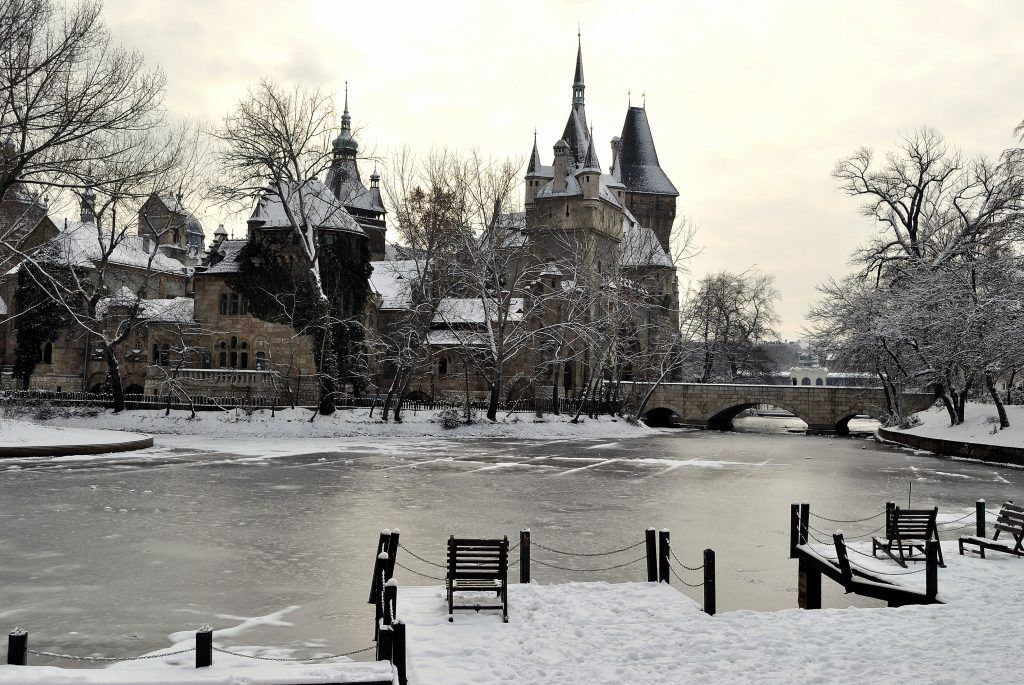
And yet. Standing on the bridge at sunset, watching the castle’s towers reflect in the lake while skaters glide past in winter or boats drift in summer, you won’t care about authenticity. Vajdahunyad Castle delivers the fairytale experience that “real” castles often can’t: accessible grounds, photogenic angles, and the strange pleasure of seeing Romanesque, Gothic, Renaissance, and Baroque architecture deliberately smashed together in one coherent fantasy.
This is Budapest’s other castle—the playful one, the free one, the one you can wander through at midnight if you want. This guide covers everything you need to know.
📋 Vajdahunyad Castle at a Glance
| Best For | Photography, architecture fans, romantic walks, free attractions |
| Time Needed | 30-60 min (grounds) | 2-3 hours (with museum) |
| Cost | Castle grounds: FREE | Museum: 2,500 HUF (~$7) |
| Hours | Grounds: 24/7 | Museum: Tue-Sun 10:00-16:00/17:00 |
| Getting There | M1 Metro to Hosok tere, then 5-min walk through City Park |
| Skip If | You only value “authentic” medieval sites (this isn’t one) |
What Is Vajdahunyad Castle?
Vajdahunyad Castle is an architectural showcase built for Hungary’s 1896 Millennium Exhibition, celebrating 1,000 years since the Magyar conquest. Architect Ignác Alpár designed a single complex incorporating examples of Romanesque, Gothic, Renaissance, and Baroque Hungarian architecture—a greatest-hits tour of national building styles.
The castle’s name comes from its most prominent inspiration: Hunyad Castle (Corvin Castle) in Hunedoara, Transylvania—at the time part of the Kingdom of Hungary, now in Romania. The Gothic section reproduces elements of that famous fortress, while other wings sample buildings from across the historical Hungarian lands.
The original 1896 structure was built from wood and cardboard as a temporary exhibition. It was supposed to be demolished after the celebrations. Instead, Budapestis fell in love with it. Between 1904 and 1908, the entire complex was rebuilt using permanent materials—stone and brick replacing the theatrical originals.
Today, the castle houses the Hungarian Agricultural Museum (one of Europe’s largest), hosts festivals and weddings, and provides one of Budapest’s most romantic backdrops. The grounds remain free and open around the clock.
The Four Architectural Styles
What makes Vajdahunyad unique is its deliberate eclecticism—Alpár intentionally combined four distinct periods to educate visitors about Hungarian architectural history.
The Romanesque Section
The Romanesque wing reproduces elements from the Benedictine monastery church at Ják (Jak), a 13th-century masterpiece in western Hungary. Look for the rounded arches, heavy stonework, and the portal decorated with geometric patterns. The small Ják Chapel is a near-replica of the original’s entrance and serves as a working Catholic church—Sunday services are held here from spring through autumn.
The chapel is one of Budapest’s most requested wedding venues. If you see photographers and formally dressed guests, a ceremony is likely in progress.
The Gothic Section
The castle’s most dramatic elements come from the Gothic period—specifically, reproductions of Transylvania’s Hunyad Castle. These include the pointed arches, tall towers, defensive battlements, and the romantic silhouette that defines the complex’s most photographed angles.
Walking through the Gothic courtyard, you’ll see the tracery windows, carved stonework, and vertical emphasis that characterize late medieval Hungarian architecture. The towers accessible via the museum provide elevated views over City Park.
The Renaissance Section
The Renaissance wing shows the influence of Italian culture on Hungarian building during the 15th and 16th centuries. Look for classical proportions, symmetrical facades, and decorative elements inspired by Roman antiquity. This section samples buildings from the era when Hungary’s royal court rivaled any in Europe.
The Baroque Section
The largest and most palatial wing represents the 17th-18th century Baroque period—Hungary’s age of aristocratic grandeur following liberation from Ottoman rule. The ornate facades, elaborate windows, and sense of theatrical display reflect buildings like the Esterházy and Festetics palaces that still dot the Hungarian countryside.
This wing houses most of the Agricultural Museum’s exhibition space. Its palatial scale makes sense for the museum’s displays while demonstrating how aristocratic families lived during Hungary’s prosperous 18th century. The Baroque section’s yellow and cream coloring provides warmth that photographs beautifully in afternoon light.
🏰 Architecture Tip
To appreciate the different styles, start at the main bridge and walk counterclockwise around the complex. Each section flows into the next, recreating a thousand years of Hungarian building in a 15-minute stroll. The transitions between styles are deliberately visible—this was designed as an educational exhibit.
The Famous Statues
Several sculptures around the castle grounds have become attractions in their own right.
The Anonymous Statue
The most famous figure at Vajdahunyad is Anonymus—a hooded, mysterious chronicler seated with pen in hand. Created by sculptor Miklós Ligeti in 1903, the statue represents the unknown author of the Gesta Hungarorum (Deeds of the Hungarians), the earliest surviving chronicle of Hungarian history.
Anonymus was a notary to King Béla III in the 12th century, but his true identity remains unknown—hence the hood concealing his face. He wrote the foundational text of Hungarian historical memory, yet we don’t know who he was.
Touch his pen for good luck with writing—a tradition particularly popular among students before exams and aspiring authors. You’ll notice the pen is polished gold from decades of rubbing. The statue has become so iconic that reproductions appear in souvenirs throughout Budapest, and the image represents Hungarian historical writing in many contexts.
The Béla Lugosi Bust
On the castle’s external wall, a small bronze bust honors Béla Lugosi (1882-1956)—the Hungarian-American actor who defined Count Dracula in the 1931 film. It’s a quirky tribute connecting Hungary to one of cinema’s most iconic characters, placed here perhaps because of the castle’s Gothic atmosphere.
Ignác Alpár Statue
A statue of the castle’s architect stands within the complex, honoring the man who created this architectural fantasy. It’s a fitting tribute—few architects get monuments to their living imagination.
Other Figures
Look for statues of notable Hungarians throughout the grounds, including agricultural pioneer Ignác Darányi and others connected to the museum’s focus on rural Hungarian life.
The Hungarian Agricultural Museum
Inside the castle, the Hungarian Agricultural Museum (Magyar Mezőgazdasági Múzeum) claims to be Europe’s largest museum dedicated to agriculture and rural life. Whether this superlative is strictly accurate, the museum provides genuinely interesting content for visitors willing to explore.
💰 Agricultural Museum Prices (2026)
- Adult ticket: 2,500 HUF (~$7)
- Student/Senior: 1,200 HUF (~$3)
- Gate Tower access: +400 HUF (optional)
- Wedding photo permit: 10,000 HUF
- Under 6: FREE
Note: Castle grounds remain FREE regardless of museum entry.
What’s Inside
The museum covers Hungarian agricultural history across multiple themed exhibitions:
- Wine and viticulture: Hungary’s wine regions, production methods, and cultural significance
- Animal husbandry: Traditional breeds, farming methods, and the puszta (Great Plain) ranching culture
- Forestry and hunting: Hungary’s relationship with forests and game management
- Fishing: River and lake fishing traditions
- Agricultural tools and machinery: Evolution of farming technology
The museum won’t thrill everyone, but it provides genuine insight into Hungarian rural life and traditions that shaped the country’s culture. For visitors interested in folk traditions, food culture, or simply escaping crowds, it’s worth exploring.
🕐 Museum Hours
- Monday: CLOSED
- Tuesday-Friday: 10:00-16:00 (Nov-Mar) | 10:00-17:00 (Apr-Oct)
- Saturday-Sunday: 10:00-17:00
- Last admission: 30 minutes before closing
The Gate Tower
For an additional 400 HUF, you can climb the Gate Tower for elevated views over City Park. On clear days, you’ll see Heroes’ Square, the Széchenyi Bath domes, and the park’s lake stretching below. It’s a modest climb with modest views—worth doing if you’re already in the museum, but not essential.
The Jak Chapel
The Romanesque chapel is a near-replica of the 13th-century Benedictine church at Ják. It functions as a real Catholic church—Sunday services are held at noon from approximately March through October (no winter services due to lack of heating).
The chapel is one of Budapest’s most atmospheric wedding venues. Its intimate scale, Romanesque architecture, and castle setting create a fairytale atmosphere that draws couples from across Europe. If you’re interested in booking, contact the church well in advance.
Visitors can typically peek inside when services or ceremonies aren’t in progress. The interior maintains the simple stone walls and rounded arches of Romanesque tradition.
The Lake: Boating and Ice Skating
Vajdahunyad Castle rises from an artificial lake that changes character with the seasons.
Summer: Boating
From spring through autumn, the lake operates as a boating pond. Rent rowboats or paddle boats and drift around the castle—the water-level perspective creates different photographic angles and a romantic atmosphere for couples.
Boat rental operates from approximately April through October, weather dependent. Prices are modest. The experience is simple but pleasant, especially on warm afternoons.
Winter: Europe’s Largest Outdoor Ice Rink
From November through February, the lake transforms into the City Park Ice Rink—one of Europe’s largest outdoor skating venues, operating since 1870.
Skating beneath Vajdahunyad’s towers is a quintessential Budapest winter experience. The castle provides a dramatic backdrop, the ice rink offers rental skates, and the atmosphere on busy weekend evenings is festive and romantic. See our dedicated ice rink guide for full details.
Festivals and Events
Vajdahunyad Castle hosts several annual events that transform the grounds.
Christmas Market: A smaller, more intimate alternative to the downtown Christmas markets, the Vajdahunyad Christmas Market offers traditional crafts, food, and mulled wine in a fairytale castle setting. Less crowded than Vörösmarty Square, more atmospheric than many alternatives.
Wine festivals: Given the museum’s viticultural focus, wine events occasionally take over the courtyards.
Medieval festivals: Occasional events bring period costumes, music, and activities to the castle grounds.
Concerts and performances: Summer evenings sometimes feature outdoor performances in the courtyards.
Check local event listings during your visit—these events add another dimension to the castle experience and may require adjusted planning for access. During major events, portions of the normally free grounds may be ticketed or restricted.
Photography Tips
Vajdahunyad Castle ranks among Budapest’s top photography destinations, rivaling the Parliament and Chain Bridge for scenic potential. The combination of dramatic architecture, water reflections, and 24/7 access makes it a photographer’s playground. Here’s how to capture it at its best:
Best angles: The main bridge approach provides the classic view. Walk around the lake for reflections. The Gothic courtyard offers intimate architectural shots.
Best times: Sunset light creates warm tones on the stone and dramatic reflections in the lake. Early morning offers empty grounds and soft light. Blue hour (just after sunset) is magical when the castle lights illuminate.
Reflections: The lake provides mirror images on calm days. Position yourself low to maximize the reflection in your frame.
Seasons: Winter ice skating provides action shots against the castle backdrop. Autumn foliage frames the towers. Summer greenery softens the architecture.
Night photography: The grounds are open 24/7 and illuminated after dark. Bring a tripod for long exposures of the lit castle reflecting in the water.
How to Get There
📍 Vajdahunyad Castle – Essential Info
- Address: Vajdahunyad setany, Budapest 1146 (City Park)
- Metro: M1 (Yellow line) to Hosok tere, then 5-minute walk through park
- Trolleybus: Lines 72, 75, 79 to Hosok tere
- Parking: Museum Underground Garage in City Park
- Castle grounds: FREE, open 24/7
- Museum: 2,500 HUF, Tue-Sun 10:00-16:00/17:00
- Time needed: 30-60 min (grounds) | 2-3 hours (with museum)
- Website: vajdahunyadcastle.com
The castle sits within City Park (Városliget), about a 5-minute walk from Heroes’ Square. The M1 Metro delivers you to Hősök tere station, from which you walk through the park past the museums to reach the lake and castle.
Combining Your Visit
Vajdahunyad Castle sits at the heart of City Park, making it easy to combine with other attractions.
The City Park Day
A natural combination:
- Heroes’ Square: Start here at the Millennium Monument
- Vajdahunyad Castle: Walk through the park to the castle grounds
- Széchenyi Bath: End with a thermal soak (afternoon/evening)
This route covers City Park’s highlights in half a day, leaving afternoon for the baths.
The Museum Day
For culture-focused visitors:
- Museum of Fine Arts: World-class international art collection
- Museum of Ethnography: Hungarian folk culture in stunning new building
- Vajdahunyad + Agricultural Museum: Architecture plus rural traditions
The Free Attractions Route
Budget-conscious visitors can enjoy City Park without spending:
- Heroes’ Square (free)
- Vajdahunyad Castle grounds (free)
- City Park playground and green spaces (free)
- Museum of Ethnography rooftop (free)
For complete itineraries, see our 3 Days in Budapest guide or First Time in Budapest overview.
Common Questions About the Agricultural Museum
The museum inside Vajdahunyad Castle often confuses visitors—is it worth the ticket price? Here’s honest assessment:
Who should visit: Those interested in Hungarian rural traditions, wine culture, traditional animal husbandry, or museum completionists. Families with children who enjoy hands-on agricultural exhibits. Rainy day visitors who want more than just the exterior.
Who can skip: Visitors with limited time who’d rather explore the free grounds thoroughly. Those with no interest in agricultural history. Anyone who’ll resent paying for something they find boring.
The honest verdict: The museum is genuinely informative for interested visitors but won’t convert skeptics. At 2,500 HUF (~$7), the price is low enough that trying it doesn’t hurt much if you’re curious. The Gate Tower add-on provides decent views but isn’t essential.
If you’re visiting the castle grounds anyway and have 1-2 hours to spare, the museum provides context for Hungarian rural life that enhances understanding of the country. If you’re short on time, the free exteriors provide the main experience most visitors seek.
What Visitors Say
Reviews consistently highlight the castle’s photogenic quality and the surprise value for a free attraction. Both first-time visitors and returning travelers find the castle rewarding.
What people love:
- “Very cool visit if you’re in the neighborhood”
- “Looks like something straight out of a fantasy novel”
- “Walk around the Vajdahunyad castle there, it’s lovely”
- The reflection shots at sunset
- The romantic atmosphere, especially with the ice rink in winter
What to know:
- “Doesn’t need 3 hours, an hour at most” for just the grounds
- The Agricultural Museum is “meh” for some visitors—skip if you’re not interested
- It’s not a “real” castle—manage expectations if authenticity matters to you
- Weekends and summer afternoons can be crowded for photos
Vajdahunyad vs. Buda Castle
Budapest has two “castles”—visitors sometimes confuse them or wonder which to prioritize.
Vajdahunyad Castle (City Park):
- Built 1896/1904-08 as architectural exhibition
- Grounds always FREE, open 24/7
- Photogenic, romantic, fairytale aesthetic
- Contains Agricultural Museum
- Combined with City Park attractions
Buda Castle (Castle Hill):
- Genuine historical royal residence (rebuilt after WWII)
- Contains Hungarian National Gallery and Budapest History Museum
- UNESCO World Heritage Site
- Views over Danube and Pest
- Combined with Castle District attractions
Verdict: Visit both if possible—they offer completely different experiences. Vajdahunyad is lighter, more photogenic, and free. Buda Castle is weightier, more historical, and central to understanding Budapest’s past.
Frequently Asked Questions
Is Vajdahunyad Castle free?
The castle grounds are completely free and open 24/7. Only the Agricultural Museum inside requires a ticket (2,500 HUF adult).
How long do I need?
30-60 minutes for the grounds and exterior. Add 1-2 hours if visiting the Agricultural Museum. Reddit consensus: “an hour at most” for the grounds.
Is it a real castle?
No. It’s an architectural sampler built in 1896 to showcase Hungarian building styles. Originally made of wood and cardboard, rebuilt in stone 1904-1908. No medieval history, no royal residents.
Can I go inside?
The courtyards and external areas are free. The interior castle houses the Agricultural Museum (ticketed). The Jak Chapel is occasionally open for viewing when services aren’t in progress.
What’s the Anonymous statue about?
It represents the anonymous chronicler who wrote the Gesta Hungarorum, Hungary’s earliest historical chronicle. Touch his pen for good luck with writing—a popular tradition.
When is the ice rink open?
Approximately November through February, weather dependent. See our ice rink guide for current details.
Is it wheelchair accessible?
The grounds are mostly accessible, though the castle’s various courtyards include some uneven surfaces and cobblestones that can be challenging. The museum has accessibility features including elevator access. The main bridge approach and lakeside paths are generally smooth.
Is there an audio guide?
The Agricultural Museum offers informational displays and guided tours can be arranged. There’s no dedicated audio guide app for the exterior grounds, but the architecture largely speaks for itself—signs identify the different building styles and their inspirations.
Can I fly a drone?
Drone regulations in Budapest parks are restrictive. Check current Hungarian drone laws before planning aerial photography. The castle and City Park are typically no-fly zones for recreational drones.
What’s the connection to Dracula?
The Béla Lugosi bust honors the Hungarian-American actor who played Count Dracula in the 1931 film. Lugosi was born in Hungary (in territory now part of Romania), and the Gothic castle aesthetic connects to Dracula imagery. The castle itself has no vampire history—that’s just Hollywood.
Can I have a wedding there?
Yes—the Jak Chapel is a popular wedding venue. Contact the church well in advance to book. Wedding photo permits for the grounds cost 10,000 HUF.
The History Behind the Fantasy
Understanding why Vajdahunyad Castle exists adds context to your visit.
In 1896, Hungary celebrated its Millennium—1,000 years since the Magyar tribes conquered the Carpathian Basin in 895. This wasn’t just a party; it was a statement of national identity at a time when Hungary was part of the Austro-Hungarian Empire, subordinate to Vienna but asserting its cultural distinctiveness.
The Millennium Exhibition showcased Hungarian achievement across industries, arts, and culture. For the architecture pavilion, Ignác Alpár proposed something ambitious: rather than a single building, he would create a complex demonstrating a millennium of Hungarian architectural evolution.
The result sampled 21 famous Hungarian buildings, compressed into a coherent castle fantasy. The main inspiration—Hunyad Castle in Transylvania—connected to the Hunyadi family and their most famous member: Matthias Corvinus, Hungary’s greatest Renaissance king.
The original structure was temporary, built from cheap materials meant to last only through the exhibition. But visitors loved it so much that demolition became politically impossible. The government commissioned Alpár to rebuild the fantasy in permanent materials—creating the stone castle you see today.
This history matters because Vajdahunyad isn’t pretending to be medieval. It’s honestly, openly a late-19th-century fantasy about Hungarian history—a monument to national identity constructed at a moment when Hungary was asserting itself within the Habsburg Empire. The “fake” castle is actually quite authentic to its own time and purpose.
Hidden Details
The Béla Lugosi connection: Why is Dracula’s most famous portrayer memorialized at a Hungarian castle? Lugosi was born Béla Ferenc Dezső Blaskó in Lugos (now Lugoj, Romania), then part of Hungary. The bust connects Hungarian heritage to global pop culture through one of cinema’s most iconic roles.
The architect’s signature: Look for Ignác Alpár’s statue within the complex—few architects receive monuments to their work while standing inside it.
The original Hunyad: The Gothic section reproduces Corvin Castle in Hunedoara, Romania. If you’re interested in the real thing, it’s about 6 hours from Budapest by car—a dramatic medieval fortress worth visiting on its own terms.
The heated debate: The “no winter church services” rule exists because the Jak Chapel replica lacks heating—an authentic recreation of medieval discomfort.
Best Times to Visit
The castle experience changes dramatically with seasons and times of day.
Morning (8-10 AM)
The grounds are open 24/7, so early morning visits find empty courtyards and soft light. Photographers get the best shots without crowds—especially important for wedding photographers scouting locations. The museum doesn’t open until 10 AM, but the exteriors are fully accessible.
Midday (10 AM-3 PM)
Peak visiting hours, especially on weekends and during summer. Families, tour groups, and casual visitors fill the courtyards. The museum is open for exploring. Light can be harsh for photography, but the interior museum doesn’t depend on natural light.
Golden Hour (1-2 hours before sunset)
The magic time. Warm light paints the stone towers golden, and the lake begins reflecting the castle dramatically. Crowds thin somewhat as tour groups depart. This is when Vajdahunyad looks most romantic.
Blue Hour and Night
After sunset, the castle illuminates against the darkening sky. The grounds remain open—you can walk the courtyards at midnight if you wish. Nighttime creates an atmospheric, almost spooky quality. Bring a tripod for night photography.
Seasonal Considerations
Spring (March-May): Comfortable temperatures, blooming trees around the lake. Easter sometimes brings special events. Sunday church services resume in the Jak Chapel.
Summer (June-August): Long days for photography, boat rentals on the lake, but also tourist crowds and potential heat. Outdoor events and festivals are most common.
Autumn (September-November): Fall foliage frames the castle beautifully. Crowds diminish. The transition from boating to skating happens during this period.
Winter (December-February): The ice rink transforms the lake into Budapest’s most romantic skating venue. Christmas markets add festive atmosphere. Cold temperatures but magical photo opportunities—steam rising from skaters, lit castle towers against snow.
For Different Types of Visitors
For Photographers
Vajdahunyad is a photographer’s playground. The variety of architectural styles provides diverse subjects. The lake offers reflections. The 24/7 access allows sunrise, sunset, and night shots without time pressure. Come multiple times if possible—the castle photographs completely differently in each season and light condition.
Key shots:
- Classic view from the main bridge with tower reflection
- Gothic courtyard looking up at towers
- Anonymous statue close-up (pen detail)
- Jak Chapel Romanesque portal
- Baroque wing facade with sunset light
- Ice rink action against castle backdrop (winter)
For Architecture Enthusiasts
Bring knowledge of Hungarian architectural history and the castle becomes an open textbook. Each section references specific buildings—studying the originals beforehand (even just via Wikipedia) enriches the visit. The transitions between styles are deliberate teaching moments.
For serious students, the castle illustrates late 19th-century historicism and the role of architecture in national identity construction—common themes across Central European capitals during this period.
For Families with Children
The castle appeals to kids who enjoy exploring—multiple courtyards, towers to look at, the lake with boats or skaters. The “real castle” question provides a teaching moment about history, architecture, and authenticity. The Agricultural Museum engages some children with animal displays and rural life exhibits.
Combine with the nearby City Park playground and Budapest Zoo for a full family day. The free grounds mean parents aren’t paying for attractions kids might lose interest in quickly.
For Couples
Vajdahunyad is one of Budapest’s most romantic spots. Sunset visits, boat rides on the lake, ice skating holding hands in winter, wandering moonlit courtyards—the castle delivers fairytale atmosphere without fairytale prices. Many couples propose here or scout it for wedding photography.
For Budget Travelers
The castle grounds are free, making this a perfect budget attraction. Combine with other free City Park elements (Heroes’ Square, park walking, Museum of Ethnography rooftop) for a full day without spending. Only pay if you specifically want the Agricultural Museum.
Nearby Food and Drink
City Park offers various dining options near the castle:
Gundel Restaurant: Hungary’s most famous fine dining establishment sits near the castle. Reservations required, dress code enforced, prices match the reputation. A splurge option for a memorable meal.
Robinson Restaurant: Located on an island in the park lake, offering upscale dining with water views. Romantic setting for dinner after a castle visit.
Park cafés and kiosks: Various casual options serve Hungarian snacks, ice cream, and drinks throughout City Park. Quality varies; expect tourist pricing near major attractions.
Széchenyi Bath: After exploring the castle, the thermal bath offers its own café options. Combining castle wandering with a bath visit creates a complete City Park experience.
Picnicking: The park lawns welcome picnickers. Pick up supplies from a supermarket before arriving and enjoy lunch with castle views.
Practical Tips
Footwear: The castle grounds include cobblestones and uneven surfaces. Comfortable walking shoes work better than fashion choices.
Weather preparation: The grounds are mostly outdoors. In summer, bring sun protection. In winter, dress warmly—especially if you’re adding ice skating.
Phone charging: If you’re photographing extensively, bring a power bank. There aren’t convenient charging spots on the grounds.
Toilet facilities: Public toilets exist in City Park but aren’t abundant. The museum has facilities for visitors.
Crowds: Arrive early or visit on weekday mornings to avoid the busiest periods. Sunset is beautiful but draws crowds during good weather.
Events check: Occasionally the castle hosts events that close portions of the grounds or charge admission. Check current schedules to avoid surprises.
The Architect: Ignác Alpár
Understanding who built Vajdahunyad Castle adds appreciation for the achievement. Ignác Alpár (1855-1928) was one of Hungary’s most prolific architects during the country’s golden age of building at the turn of the 20th century.
Born Ignác Schöckl in Pest, he later Magyarized his name—common among assimilating Jewish and German families in 19th-century Hungary. He studied at Berlin’s Bauakademie and Vienna’s Academy of Fine Arts before establishing his Budapest practice.
Beyond Vajdahunyad, Alpár designed the Stock Exchange Palace (now Hungarian Television headquarters), the National Bank building, and numerous other significant structures. His style blended historicism with practical innovation.
The Vajdahunyad commission showcased his ability to synthesize diverse architectural references into a coherent whole. Creating a “greatest hits” of Hungarian architecture that actually works as a unified complex—rather than a discordant pastiche—required serious skill. The fact that visitors still enjoy the result 130 years later testifies to his success.
The Original: Hunyad Castle
If Vajdahunyad Castle’s Gothic section intrigues you, consider a trip to its inspiration: Hunyad Castle (Corvin Castle) in Hunedoara, Romania.
The original is a genuine 15th-century Gothic fortress, one of the largest in Europe, associated with the Hunyadi family—particularly Matthias Corvinus, Hungary’s greatest Renaissance king. Unlike its Budapest replica, Hunyad Castle saw real battles, imprisoned real captives, and hosted real medieval politics.
The journey from Budapest takes approximately 6 hours by car, making it feasible as a long day trip or better as part of a Transylvania itinerary. For architecture enthusiasts who’ve seen the replica, the original provides powerful context.
Final Thoughts
Vajdahunyad Castle delivers something rare in tourism: a genuinely photogenic attraction that costs nothing to enjoy. The grounds are free, the architecture is dramatic, and the setting—reflected in the lake, surrounded by City Park greenery—creates the fairytale experience many visitors seek.
Yes, it’s a fantasy. Yes, it’s “fake” in the sense that medieval builders didn’t construct it. But it’s an honest fantasy, built with skill and maintained with care, designed to celebrate Hungarian architectural achievement across a millennium.
Touch the Anonymous statue’s pen. Photograph the Gothic towers reflected in the water. Watch skaters glide beneath the castle walls in winter or boats drift past in summer. Let the fantasy work its magic—that’s exactly what it was designed to do.
And if you want historical weight, Budapest has plenty of that elsewhere. Vajdahunyad Castle exists for lighter pleasures: beauty, romance, and the joy of wandering through someone else’s architectural dream.
There’s something liberating about a “fake” castle that’s completely honest about its nature. Vajdahunyad never pretended to be medieval. It was built to celebrate Hungarian architecture, to educate visitors about building traditions, and to create a beautiful space for public enjoyment. On all three counts, it succeeds magnificently.
The 1896 visitors who loved the cardboard original so much they demanded it be rebuilt in stone weren’t fooled—they were delighted. The Budapestis who skate beneath the towers each winter aren’t confused about history—they’re enjoying their city. The couples who choose the Jak Chapel for their weddings aren’t deceived—they’re drawn to genuine beauty, regardless of its age.
Vajdahunyad Castle proves that authenticity isn’t just about age. It’s about honesty of purpose and quality of execution. This castle is authentically what it claims to be: a late 19th-century architectural fantasy created with skill, maintained with care, and offered freely to anyone who wants to enjoy it.
That’s more than many “real” castles can say. And it’s exactly why you should visit.
Walk the grounds. Touch the Anonymous statue’s pen. Photograph the towers at sunset. Let yourself fall for the fantasy. Vajdahunyad Castle has been casting this spell for over a century, delighting generations of visitors from around the world. It’s very good at it by now. And the best part? It’s completely free to experience.
Prices verified: January 2026


