
🎯 TL;DR
Budapest offers world-class thermal baths (Széchenyi from 9,500 HUF/$25), stunning architecture, legendary ruin bars, and some of Europe’s most affordable fine dining. Plan 3-4 days minimum to see the highlights. Stay in District V, VI, or VII for walkability. The 72-hour transport pass at 5,500 HUF ($14.50) covers everything. ⚠️ Warning: Gellért Bath is closed until 2028.
Budapest at a Glance: Essential Information for First-Time Visitors
Budapest, Hungary’s capital, straddles the Danube River with 1.75 million residents in the city proper. The currency is Hungarian Forint (HUF), with approximately 380 HUF equaling $1 USD. Most major attractions accept cards, though smaller vendors prefer cash. The city operates 4 metro lines, 30+ tram routes, and extensive bus networks.
📋 Budapest at a Glance
| Currency | Hungarian Forint (HUF) – ~380 HUF = $1 USD |
| Language | Hungarian (English widely spoken in tourist areas) |
| Best Metro Line | M1 Yellow Line – Continental Europe’s oldest (UNESCO) |
| Airport Transfer | 100E bus – 40 minutes, 2,200 HUF ($5.80) |
| Tipping | 10-15% at restaurants, round up for taxis |
| Safety Rating | Very safe for tourists – standard city precautions apply |
| Water | Tap water is safe and excellent quality |
| Time Zone | CET (UTC+1) / CEST (UTC+2) in summer |
Information verified: January 2026
The moment your plane banks over the Danube and the Parliament Building comes into view like some gothic fever dream rising from the water, you’ll understand why Budapest ruins people for other European capitals. I mean that literally – after this city gets its hooks in you, Prague will feel overcrowded, Vienna will seem stuffy, and Paris will just cost too much.
Here’s what nobody tells you about Budapest: it’s essentially two cities stitched together by spectacular bridges. Buda, the hilly western bank, holds the castle, the citadel, and the kind of quiet, residential neighborhoods where locals actually live. Pest, the flat eastern side, pulses with ruin bars, grand boulevards, and the chaotic energy that makes a city feel genuinely alive. Understanding this geography is the first step to navigating Budapest like someone who belongs here rather than someone clutching a guidebook.
This guide covers everything you need for a first visit: where to go, what to skip, current 2026 prices, and the insider knowledge that separates memorable trips from tourist-trap disasters. Let’s get into it.
The Thermal Baths Define the Budapest Experience
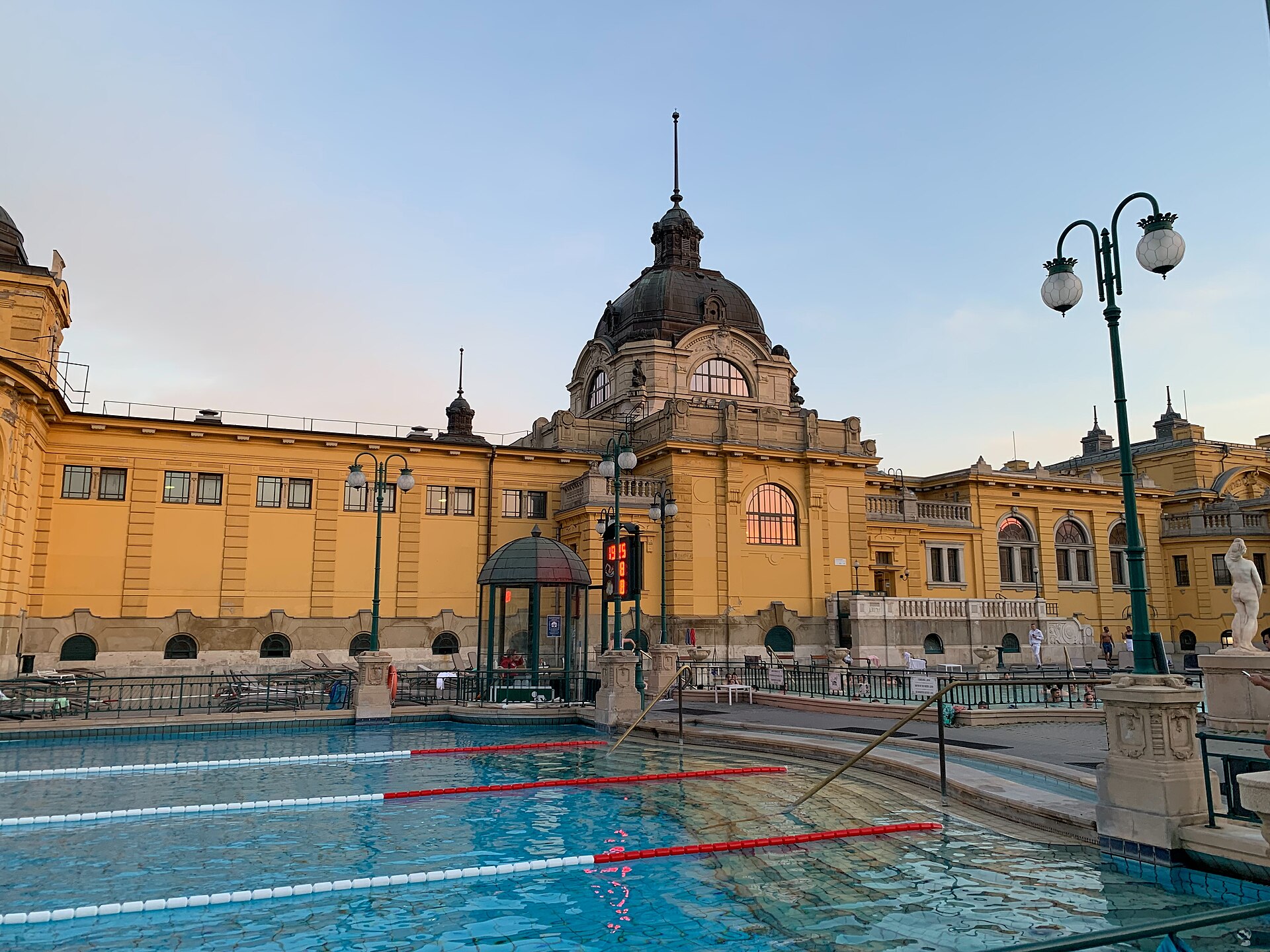
Budapest sits atop 120 natural thermal springs, making it the only capital city in the world with such abundant hot spring resources. Széchenyi Thermal Bath is the largest medicinal bath in Europe with 18 pools across 6,220 square meters. Entry costs 9,500 HUF ($25) for a locker, with the outdoor pools open year-round even in winter.
The thermal bath tradition here dates back 2,000 years to when Roman soldiers first soaked in Aquincum’s hot springs. The Ottomans elevated it to an art form during their 150-year occupation, building hammams that still operate today. Modern Budapest has embraced this heritage so thoroughly that the city operates dozens of public baths, from grand neo-baroque palaces to intimate neighborhood spots where regulars play chess while neck-deep in 38°C water.
Széchenyi Thermal Bath is where most first-timers start, and it’s the right call. The iconic yellow building in City Park looks like a Habsburg palace, and stepping into the outdoor pool on a winter morning – steam rising around you, the ornate architecture glowing in the early light – ranks among Europe’s most memorable experiences. For a deeper dive into choosing the right bath, check out our complete thermal baths guide.
💰 Széchenyi Thermal Bath – Prices (2026)
- Locker ticket: 9,500 HUF (~$25)
- Cabin ticket: 10,500 HUF (~$28)
- Morning ticket (before 10am): 7,500 HUF (~$20)
- Hours: Daily 6:00 AM – 10:00 PM
⚠️ Important 2026 Update
Gellért Thermal Bath is CLOSED for comprehensive renovation until 2028. Despite what outdated guides and AI chatbots might tell you, you cannot visit Gellért right now. Similarly, Király Bath is also closed for renovation. Plan accordingly and don’t waste time trekking to closed baths.
Rudas Bath offers a completely different vibe. Built by the Ottomans in 1550, the central octagonal pool beneath the original Turkish dome feels like time travel. Rudas has reinvented itself as Budapest’s most atmospheric bath, with rooftop pools overlooking the Danube and Friday-Saturday night sessions that draw a younger, more social crowd.
🏛️ Rudas Bath
- Address: Döbrentei tér 9, District I
- Hours: Daily 6:00 AM – 10:00 PM (night sessions Fri-Sat until 4:00 AM)
- Entry: 12,000-15,000 HUF ($32-40) depending on time
- Vibe: Ottoman heritage, rooftop pool, atmospheric
Lukács Bath remains the local favorite precisely because tourists overlook it. At 7,000 HUF ($18), it’s the most affordable of the major baths, and the crowd skews heavily toward Hungarians who’ve been coming here for decades. The thermal water here supposedly has particular healing properties – the plaques on the walls thanking the water for cured ailments date back over a century. For more on the Ottoman bath heritage, see our Turkish baths history guide.
🏛️ Lukács Bath – The Local Favorite
- Address: Frankel Leó út 25-29, District II
- Hours: Daily 6:00 AM – 10:00 PM
- Entry: 7,000 HUF (~$18)
- Vibe: Authentic local atmosphere, healing waters, less touristy
💡 Pro Tip
Visit Széchenyi early morning (before 9 AM) or late afternoon (after 5 PM) to avoid the crowds. Winter mornings offer the most magical experience – steam rising from the outdoor pools while snow falls around you.
The Castle District Rewards Early Mornings and Patience

Buda Castle District, a UNESCO World Heritage Site since 1987, sits atop Castle Hill and contains the Royal Palace, Matthias Church, and Fisherman’s Bastion. The district spans approximately 1.8 kilometers in length and receives over 3 million visitors annually. The upper terraces of Fisherman’s Bastion cost 2,000 HUF ($5.30), though the lower levels and main viewpoints remain free.
Getting up to the Castle District presents your first choice: the Sikló funicular (2,000 HUF/$5.30 one way), the free Bus 16 from Deák Ferenc tér, or your own two legs up the various staircases. The funicular is charming but perpetually crowded; the bus is practical but unromantic; walking up lets you discover the quieter sides of Castle Hill that tour groups never see.
📋 Castle District at a Glance
| Best For | History buffs, photographers, romantic walks |
| Time Needed | 3-4 hours (half day with museums) |
| Cost | Free to walk around; Fisherman’s Bastion upper level 2,000 HUF ($5.30) |
| Getting There | Bus 16 (free), Sikló funicular (2,000 HUF), or walk |
| Skip If | You can’t handle crowds or stairs |
Fisherman’s Bastion looks like it was designed by someone who watched too many Disney movies while reading Hungarian folklore – which is basically true. Built between 1895 and 1902, this neo-Gothic fantasy terrace was never actually defensive; it was pure architectural tourism from the start. The seven towers represent the seven Magyar tribes who founded Hungary, and the views across to Parliament are genuinely spectacular. Arrive before 9 AM to have the place relatively to yourself; by 11 AM, it’s a selfie-stick obstacle course.
Matthias Church, just behind Fisherman’s Bastion, deserves more than a passing glance. The Zsolnay ceramic roof tiles create one of Budapest’s most distinctive silhouettes, and the interior frescoes reward close inspection. The church has hosted coronations since the 13th century – this is where Franz Joseph was crowned in 1867, with Liszt’s Coronation Mass premiering for the occasion.
⛪ Matthias Church
- Address: Szentháromság tér 2, District I
- Hours: Mon-Fri 9:00 AM – 5:00 PM, Sat 9:00 AM – 1:00 PM, Sun 1:00 PM – 5:00 PM
- Entry: 2,500 HUF (~$6.60)
- Highlight: Zsolnay ceramic roof tiles, coronation history
The Royal Palace itself houses the Hungarian National Gallery and the Budapest History Museum. Unless you have a specific interest in Hungarian art history, the palace is better appreciated from outside – the views from the Danube-facing terraces are free and exceptional. The Tóth Árpád promenade along the western walls offers the best sunset views in Buda, and somehow almost no tourists find it.
💡 Pro Tip
The Tóth Árpád promenade along the western walls of the Castle District offers the best sunset views in Buda – and somehow almost no tourists find it. Walk past the military history museum and keep going.
The Parliament Building Justifies the Tour Price

The Hungarian Parliament Building is the third-largest parliament building in the world, covering 18,000 square meters with 691 rooms and 20 kilometers of interior staircases. Guided tours cost 6,000 HUF ($16) for non-EU citizens, with EU students under 24 entering free. Tours run every 15-30 minutes and must be booked in advance.
Built between 1885 and 1904, the Parliament took 1,000 people working around the clock nearly 20 years to complete. The architect, Imre Steindl, went blind before seeing his masterpiece finished – which adds a tragic poetry to the whole enterprise. The building is so absurdly ornate that 40 kilograms of gold leaf cover the interior decorations, and the main staircase alone could host a coronation.
💰 Parliament Tour Prices (2026)
- Non-EU citizens: 6,000 HUF (~$16)
- EU citizens: 3,000 HUF (~$8)
- EU students under 24: FREE
- Duration: 45 minutes
Book in advance: Official Parliament Website
The guided tour is worth every forint. You’ll see the Hungarian Crown Jewels, including the Holy Crown of Saint Stephen (slightly crooked from centuries of misadventure), and walk through the main hall where Parliament actually convenes. The English tours are professional and information-dense without being boring. Book at least a few days in advance during peak season; same-day tickets exist but often sell out by mid-morning.
If you can’t get a tour slot, don’t despair. The Parliament is arguably more impressive from outside anyway. The Danube promenade on the Pest side offers the classic postcard view; Batthyány tér on the Buda side provides the best photos, especially at night when the building glows. A sunset Danube river cruise puts you directly opposite the illuminated facade – it’s touristy, yes, but some tourist activities exist for good reason.
St. Stephen’s Basilica Anchors Downtown Pest

St. Stephen’s Basilica is Budapest’s largest church, reaching 96 meters tall – the same height as Parliament, as no building in Budapest may exceed this. Construction took 54 years (1851-1905) after the original dome collapsed in 1868. Entry to the basilica is free with optional 200 HUF donation; the tower panorama costs 2,000 HUF ($5.30) and provides 360-degree city views.
📋 St. Stephen’s Basilica at a Glance
| Best For | Architecture lovers, panoramic views, free attraction |
| Time Needed | 30-60 minutes |
| Cost | Free entry (200 HUF donation); Tower 2,000 HUF ($5.30) |
| Hours | Mon-Sat 9:00 AM – 5:00 PM, Sun 1:00 PM – 5:00 PM |
| Getting There | M1 to Bajcsy-Zsilinszky út or M3 to Arany János utca |
| Skip If | You’re claustrophobic (tower is small) |
The basilica dominates the inner city skyline and serves as an excellent orientation point when you’re inevitably lost in the tangle of Pest’s streets. Named after Hungary’s first king, Stephen I, the church actually contains his mummified right hand – the Holy Right, a venerated relic that gets paraded around the city every August 20th (St. Stephen’s Day). Whether you find this fascinating or macabre probably says something about your travel style.
The tower observation deck deserves your attention. Yes, 364 stairs sounds exhausting, but there’s a lift. The 360-degree panorama from 65 meters up provides the best comprehensive view of central Budapest – you can see from the Buda hills to the outer districts, with the city grid laid out below you. Go on a clear day; the smog can be real.
The square surrounding the basilica has transformed into one of Budapest’s most pleasant pedestrian areas. Outdoor cafes, excellent restaurants (expensive by Budapest standards, reasonable by Western European ones), and a generally relaxed vibe make it worth lingering. In December, the Christmas market here rivals the more famous one at Vörösmarty tér.
The Jewish Quarter Combines History with Nightlife
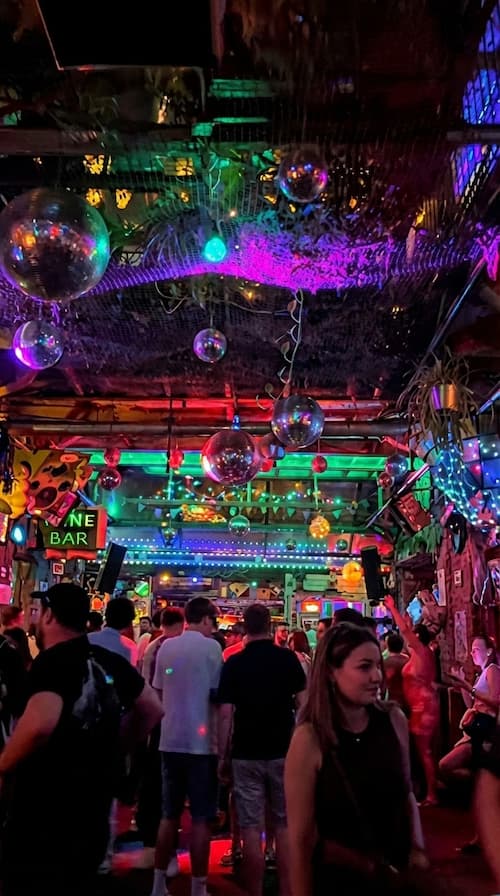
Budapest’s Jewish Quarter in District VII contains the Dohány Street Synagogue, the largest synagogue in Europe and second-largest in the world after New York’s Temple Emanu-El. The synagogue complex includes a museum and memorial garden; entry costs 7,000 HUF ($18.50). The surrounding streets house Budapest’s famous ruin bars, built in abandoned buildings since the early 2000s.
The Jewish Quarter carries weight. Before World War II, Budapest had the largest Jewish population of any city outside New York. The Holocaust and subsequent Communist era devastated the community, but the physical neighborhood survived largely intact – partly because the Soviets had other priorities than urban renewal, and partly because the ruined buildings simply sat empty for decades.
🕍 Dohány Street Synagogue (Great Synagogue)
- Address: Dohány u. 2, District VII
- Hours: Sun-Thu 10:00 AM – 6:00 PM, Fri 10:00 AM – 4:00 PM (closed Sat)
- Entry: 7,000 HUF (~$18.50) including museum and memorial garden
- Highlight: Largest synagogue in Europe, Holocaust memorial garden
The Dohány Street Synagogue (Great Synagogue) is massive and moving. The Moorish Revival architecture creates one of Budapest’s most distinctive interiors, and the memorial garden behind the synagogue – where metal willow trees bear the names of Hungarian Holocaust victims – resonates long after you leave. Theodor Herzl, founder of modern Zionism, was born in a house on the synagogue’s site. Take the guided tour; the history here deserves context.
The ruin bars emerged from this same history of abandonment. Starting with Szimpla Kert in 2002, entrepreneurs began taking over derelict buildings and filling them with salvaged furniture, random art installations, and cheap drinks. Two decades later, the concept has spread globally, but the originals here retain their anarchic charm. For a full breakdown, see our ruin bars guide.
🍺 Top Ruin Bars
- Szimpla Kert: The original, most famous (Kazinczy u. 14)
- Instant-Fogas: Multi-level party complex (Akácfa u. 51)
- Mazel Tov: Israeli-Hungarian food in a greenhouse (Akácfa u. 47)
- Élesztő: Craft beer focus (Tűzoltó u. 22)
Pro tip: Visit Szimpla during daylight on Sunday for the farmers market – completely different vibe.
Hungarian Food Delivers Serious Value
Budapest offers exceptional dining value, with quality restaurant meals averaging 4,000-8,000 HUF ($10-21) and Michelin-starred tasting menus starting around 35,000 HUF ($92). Traditional dishes include gulyás (beef soup), paprikás csirke (chicken paprikash), and lángos (fried dough). Street food runs 1,500-3,000 HUF ($4-8). Hungarian wine regions produce world-class bottles starting at 3,000 HUF ($8).
Hungarian cuisine has a reputation problem – heavy, meat-centric, stuck in the Communist era. That reputation is about 15 years out of date. Modern Budapest has developed one of Europe’s most exciting food scenes, blending traditional techniques with contemporary creativity. Yes, you can still get greasy cafeteria-style Hungarian food (and sometimes that’s exactly what you want), but you can also eat at Michelin-starred restaurants for what you’d pay at a good bistro in Paris.
💰 Budapest Food Prices (2026)
- Street food (lángos, chimney cake): 1,500-3,000 HUF ($4-8)
- Casual restaurant meal: 4,000-6,000 HUF ($10-16)
- Nice dinner with drinks: 8,000-15,000 HUF ($21-40)
- Michelin-starred tasting menu: from 35,000 HUF ($92)
- Local beer: 800-1,500 HUF ($2-4)
- Cocktail: 2,500-4,500 HUF ($6-12)
Start with the classics. Gulyás (goulash) is actually a soup here, not the stew foreigners expect – proper gulyás is relatively thin, packed with beef and vegetables, and deeply paprika-flavored. Pörkölt is the thick stew you’re probably imagining. Paprikás csirke (chicken paprikash) with nokedli (tiny egg dumplings) represents comfort food at its finest. Töltött káposzta (stuffed cabbage) will convert you to the cabbage cause. For more recommendations, our street food guide covers the local favorites.
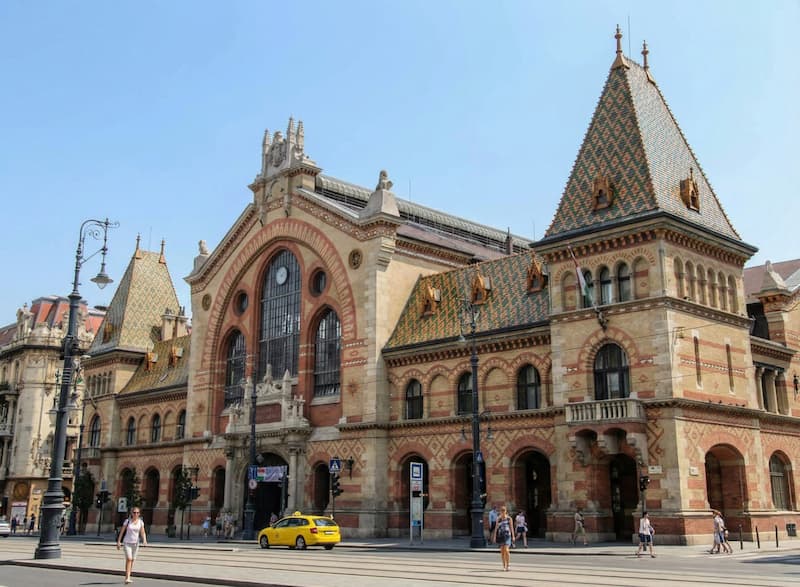
Lángos is the essential street food – deep-fried dough topped with sour cream and cheese (the traditional way), or increasingly creative modern toppings. Grab one at the Great Market Hall or any market; avoid the tourist-trap versions near major attractions that charge triple for half the quality. Kürtőskalács (chimney cake), rolled dough coated in cinnamon sugar and roasted over coals, makes for good walking snacks.
🏪 Great Market Hall (Nagyvásárcsarnok)
- Address: Vámház krt. 1-3, District IX
- Hours: Mon 6:00 AM – 5:00 PM, Tue-Fri 6:00 AM – 6:00 PM, Sat 6:00 AM – 3:00 PM (closed Sun)
- Entry: Free
- Best for: Paprika, salami, foie gras, local produce (ground floor); food stalls (upper floor)
Pro tip: Go in the morning when locals actually shop; by afternoon it’s pure tourism.
Getting Around Budapest Is Easy and Cheap
Budapest’s public transport system, operated by BKK, includes 4 metro lines, 30+ tram routes, buses, and suburban HÉV trains. Single tickets cost 450 HUF ($1.20) and must be validated before travel. The 72-hour pass at 5,500 HUF ($14.50) offers the best value for tourists. Tram 2 along the Danube is effectively a free sightseeing tour.
🚇 Transport Prices (2026)
- Single ticket: 450 HUF ($1.20)
- 24-hour pass: 2,500 HUF ($6.60)
- 72-hour pass: 5,500 HUF ($14.50) ⭐ Best value
- Airport 100E bus: 2,200 HUF ($5.80)
Download: BudapestGO app for digital tickets
The M1 Yellow Line deserves special mention: opened in 1896, it was the first underground railway in continental Europe and is now a UNESCO World Heritage Site. The tiny stations with their elegant tilework feel like museums. Take it between Vörösmarty tér and Heroes’ Square not just for transport but as a tourist experience in itself.
Ticket purchasing has been modernized through the BudapestGO app, where you can buy and activate tickets digitally. This solves the common tourist problem of needing exact change for machines or finding ticket offices closed. Download the app before arriving, register a payment method, and you’ll never stand confused in front of a ticket machine at 11 PM.
⚠️ Validate Your Tickets!
Inspectors work the metro and trams regularly, and the fine for an unvalidated ticket is substantial (currently around 16,000 HUF if you don’t pay on the spot). Playing dumb or tourist doesn’t work – they’ve heard it all. Just validate the ticket; it takes two seconds.
Tram 2 runs along the Pest side of the Danube from Közvágóhíd to Jászai Mari tér, passing Parliament, the Chain Bridge view, and the Great Market Hall. With a valid transport pass, this is essentially a free river cruise. Take it in both directions at different times of day to see the changing light on the Buda hills. For complete transport information, see our airport to city center guide, which covers all your arrival options.
The Danube Defines Budapest’s Identity

The Danube River divides Budapest into hilly Buda (west) and flat Pest (east), with eight bridges connecting the two sides within the city center. The Chain Bridge (Lánchíd), completed in 1849, was the first permanent bridge and remains the most iconic. Evening river cruises cost 3,500-15,000 HUF ($9-40) depending on duration and inclusions.
The river isn’t just scenery; it’s Budapest’s organizing principle. Buda rises steeply from the western bank – castle, hills, thermal springs bubbling from ancient rock. Pest stretches flat and urban to the east – boulevards, shopping streets, the chaos and energy of central European city life. Crossing a bridge isn’t just getting somewhere; it’s moving between fundamentally different urban experiences.
The Chain Bridge (currently open after years of renovation) is the essential walk, preferably at sunset when the light catches the stone lions at each end and the Parliament glows orange across the water. The Liberty Bridge (Szabadság híd) attracts a younger crowd who sit on its green ironwork watching the sun set over Gellért Hill. Both pedestrian experiences feel like properly European moments that photographs can’t quite capture.
🚢 Danube River Cruises
- Budget sightseeing cruise: 3,500 HUF (~$9)
- Evening cruise with drink: 6,000-8,000 HUF ($16-21)
- Dinner cruise with live music: 12,000-15,000 HUF ($32-40)
- Best time: Sunset/evening when buildings are illuminated
Read our complete cruise guide for operator recommendations.
River cruises get a bad reputation as tourist traps, but they’re genuinely the best way to see both river banks simultaneously. Budget options run simple sightseeing boats for around 3,500 HUF ($9); premium options add dinner and live music for 12,000-15,000 HUF ($32-40). The illuminated evening cruises, when Parliament, the Castle, and the bridges all light up, justify the tourist cliché. Just avoid the boats aggressively hawked by commission-hungry touts on Váci utca.
The Shoes on the Danube Bank memorial, between Parliament and the Chain Bridge, commemorates Jews shot into the river by Arrow Cross fascists during World War II. It’s one of the most affecting Holocaust memorials anywhere – sixty pairs of iron shoes, different sizes and styles, sitting empty at the water’s edge. Visit quietly, preferably not during peak tourist hours.
The House of Terror Provides Essential Historical Context

The House of Terror museum at Andrássy út 60 documents Hungary’s fascist and Communist regimes in the building that served as both Arrow Cross and secret police headquarters. Entry costs 4,000 HUF ($10.60) for adults, 2,000 HUF for students. The museum covers 1944-1991 and includes preserved basement prison cells where interrogations and executions occurred.
📋 House of Terror at a Glance
| Best For | History buffs, understanding 20th-century Hungary |
| Time Needed | 2-3 hours |
| Cost | 4,000 HUF ($10.60) adults | 2,000 HUF students |
| Hours | Tue-Sun 10:00 AM – 6:00 PM (closed Monday) |
| Getting There | M1 to Vörösmarty utca |
| Skip If | You’re not ready for heavy subject matter |
This museum isn’t enjoyable – it’s not supposed to be. Housed in the actual building where both Hungary’s fascists (Arrow Cross, 1944-45) and later its Communist secret police (ÁVH, 1945-1956) tortured and killed political prisoners, the experience is intentionally heavy. The exterior is sheathed in black with “TERROR” cut out of the roof frame, casting the word’s shadow onto the street.
The design is theatrical in the best sense: dark halls, ambient sound design, dramatically lit artifacts. Some historians quibble with the museum’s tendency to equate the two regimes – fair enough – but as an experiential introduction to 20th-century Hungarian suffering, it works. The basement, with its restored cells and execution rooms, will stay with you. Plan at least two hours; you’ll emerge needing a coffee and some quiet time.
On the same street, Andrássy út itself is a UNESCO World Heritage Site – Budapest’s Champs-Élysées, lined with neo-Renaissance mansions, ending at Heroes’ Square with its millennial monument and flanking museums. The contrast between the elegant boulevard and the horrors that occurred behind its facades makes the walk more interesting than mere architecture appreciation.
Heroes’ Square and City Park Create a Full Day
Heroes’ Square (Hősök tere) is Budapest’s largest public square, built for Hungary’s 1896 millennium celebration with a 36-meter column topped by Archangel Gabriel. The adjacent City Park (Városliget) spans 302 acres and contains Széchenyi Bath, Vajdahunyad Castle, the Budapest Zoo, and the new Museum of Ethnography. The area is easily reached via the M1 Yellow Line to Hősök tere station.
The square itself is all about Hungarian national mythology – the seven chieftains who led the Magyar conquest, kings and national heroes in the colonnades. It’s impressive in scale and historically interesting if you know the context; otherwise it’s a big plaza with statues. The Museum of Fine Arts (closed until 2026 for renovation) and the Kunsthalle contemporary art space flank the square; check what’s showing if modern art interests you.
City Park behind the square offers a full day if you let it. Beyond Széchenyi Bath, Vajdahunyad Castle is one of Budapest’s weirdest attractions – a deliberately eclectic mash-up of Romanesque, Gothic, Renaissance, and Baroque styles built as temporary millennium exhibition architecture that proved so popular they rebuilt it in stone. The castle grounds are free to enter and excellent for wandering; the Agricultural Museum inside is niche but charming.
The new Museum of Ethnography (Néprajzi Múzeum), opened in 2022, is architecturally stunning – a largely underground structure with a green roof you can walk on. The collection covers Hungarian folk culture comprehensively, and the building itself justifies a visit. The Budapest Zoo, one of Europe’s oldest (founded 1866), has beautiful Art Nouveau buildings even if your ethics around zoos are complicated.
Budapest at Night Offers Multiple Personalities
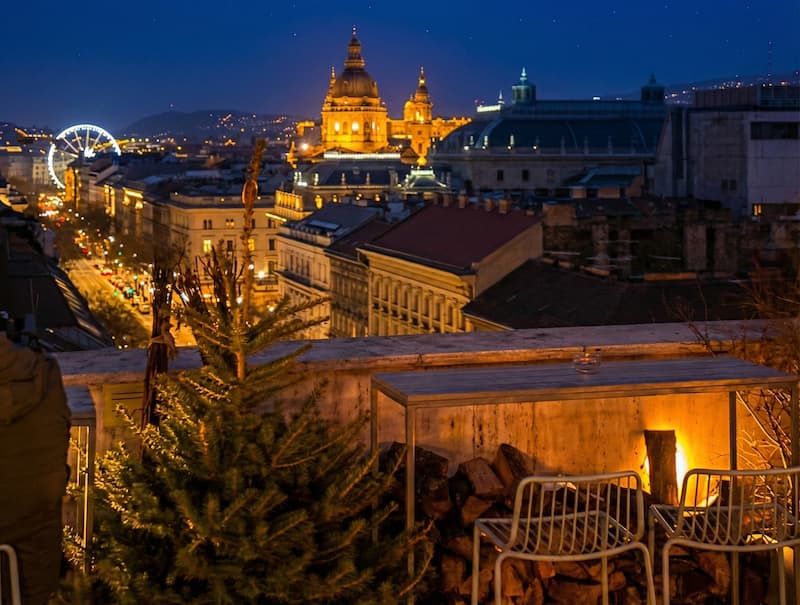
Budapest’s nightlife spans ruin bars (free entry, drinks from 900 HUF/$2.40), traditional pubs, craft cocktail bars, and clubs open until 6 AM. The Jewish Quarter (District VII) concentrates most ruin bars within walking distance. Rooftop bars offer Danube views with cocktails averaging 3,500-5,000 HUF ($9-13). Club covers typically run 2,000-4,000 HUF ($5-11).
The ruin bars covered earlier are just one facet. Craft beer has exploded in Budapest – look for Hungarian microbreweries like Horizont, MONYO, and Mad Scientist. Élesztő in the Jewish Quarter puts multiple local breweries under one roof in another abandoned-building-turned-cool-venue. For proper cocktails, Boutiq’Bar and Black Swan compete for Budapest’s best; both require reservations on weekends.
🍸 Best Rooftop Bars
- High Note Skybar (Aria Hotel) – Best Parliament views
- 360 Bar – 360° panorama over Jewish Quarter
- Leo Rooftop Bar (Clark Hotel) – Chain Bridge views
- White Raven Skybar (Hilton) – Castle District location
Expect to pay: 3,500-5,500 HUF ($9-14) per cocktail. Read our rooftop bars guide.
Clubs tend toward techno and electronic music, with Akvarium Klub (actually built into a drained swimming pool under Erzsébet tér) hosting both local and international DJs. The party scene starts late – arriving before midnight marks you as a tourist. Closing times are theoretically 6 AM but practically whenever people go home.
For a different evening, the Hungarian State Opera House (reopened after extensive renovation) offers world-class performances in one of Europe’s most beautiful opera interiors. Ticket prices start surprisingly low – under 3,000 HUF for restricted-view seats – making it accessible even if you’ve never been to an opera before.
Money Matters: Budapest Remains Excellent Value
Budapest offers exceptional value compared to Western European capitals, with daily budgets of $50-80 USD comfortably covering accommodation, food, attractions, and transport. The Hungarian Forint (HUF) trades at approximately 380 HUF per $1 USD. Credit cards are widely accepted, but small vendors, markets, and some bars prefer cash. ATMs are plentiful; avoid Euronet ATMs and exchange bureaus on Váci utca.
💰 Daily Budget Guide (2026)
- Budget traveler: $50-70/day (hostel, street food, free attractions)
- Mid-range: $80-120/day (3-star hotel, nice restaurants, paid attractions)
- Comfortable: $150-200/day (4-star hotel, fine dining, tours)
- Luxury: $300+/day (5-star hotel, Michelin restaurants, private tours)
Your biggest budget decision is accommodation. Decent mid-range hotels run 25,000-45,000 HUF ($66-118) per night; excellent Airbnbs (where still available) go for less. Food costs roughly half what you’d pay in Western Europe for equivalent quality. A proper restaurant meal with drinks runs 6,000-12,000 HUF ($16-32); street food satisfies for 2,000-3,000 HUF ($5-8). Our Hungary cost guide breaks down typical expenses.
⚠️ Avoid Currency Traps
The rates displayed on Váci utca and in train stations are borderline scams. Use reputable exchange offices or simply withdraw from ATMs using your bank’s network (avoiding Euronet, which charges predatory fees). Better yet, use a travel card like Wise or Revolut that offers interbank rates.
Tipping: Not as ingrained as American culture but appreciated. At restaurants, 10-15% is standard for good service; some places add a service charge automatically, so check your bill. Taxis: round up. Thermal bath attendants: 500-1,000 HUF if they’re helpful with lockers or directions. Bartenders: not expected but appreciated. For full details, see our tipping guide.
The Budapest Card offers free public transport, museum entries, and various discounts for 24/48/72/96 hours. Whether it’s worth buying depends entirely on your itinerary – if you’re hitting multiple paid museums and using transport constantly, it can save money; if you’re mostly wandering, eating, and drinking, skip it. Our Budapest Card analysis breaks down the actual math.
Frequently Asked Questions
How many days do I need in Budapest?
Three to four days is the sweet spot for first-timers. This gives you time for thermal baths, the Castle District, Parliament tour, Jewish Quarter exploration, and a Danube cruise without rushing. If you want to add day trips (like Szentendre or wine regions), plan for 5-6 days.
Is Budapest safe for tourists?
Very safe. Violent crime against tourists is rare. The main concerns are pickpockets in crowded tourist areas (metro, markets, ruin bars) and taxi/currency exchange scams. Use common sense, keep valuables secure, and you’ll be fine.
Do I need to speak Hungarian?
No. English is widely spoken in tourist areas, hotels, and restaurants. Younger Hungarians especially tend to speak good English. Learning “köszönöm” (thank you) and “szia” (hello/bye) is polite but not essential.
What’s the best area to stay in Budapest?
For first-timers: District V (Belváros/downtown) puts you walking distance from everything but costs more. District VI (near Andrássy) balances location with better value. District VII (Jewish Quarter) is best for nightlife. The Castle District in Buda is romantic but less convenient for exploring.
Is the Budapest Card worth it?
It depends on your plans. If you’re visiting 3+ paid museums and using public transport heavily, yes. If you’re mostly doing free activities (walking, parks, ruin bars), skip it. Our detailed analysis helps you calculate.
Can I use Euros in Budapest?
Technically some tourist shops accept Euros, but at terrible exchange rates. Hungary uses the Forint (HUF). Withdraw from ATMs, use Wise/Revolut, or exchange at reputable offices – never at train stations or Váci utca.
When is the best time to visit Budapest?
Spring (April-May) and fall (September-October) offer the best weather without peak crowds. Summer is hot and busy. Winter is cold but magical for thermal baths and Christmas markets. Each season has its charm.
📍 Budapest – Essential Visitor Info
- Country: Hungary (EU member, non-Eurozone)
- Currency: Hungarian Forint (HUF) – ~380 HUF = $1 USD
- Language: Hungarian (English widely spoken)
- Airport: Budapest Ferenc Liszt (BUD) – 16km from center
- Time Zone: CET (UTC+1) / CEST in summer
- Emergency: 112 (general), 104 (ambulance), 107 (police)
- Tourist Info: budapestinfo.hu
Pro tip: Download the BudapestGO app for public transport, Google Translate for Hungarian menus, and Wise/Revolut for best exchange rates.
Prices verified: January 2026. This guide is updated regularly – bookmark it and check back before your trip.