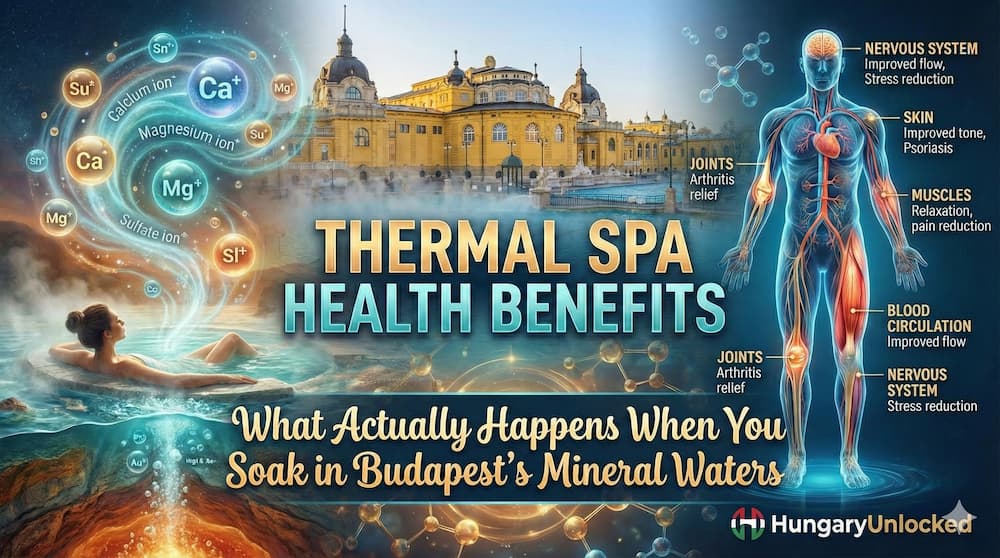
Look, I get it. You’re skeptical. Another wellness trend promising to cure everything from your bad knee to your existential dread, right? Except thermal bathing isn’t some Silicon Valley biohacker’s latest obsession—it’s been around since the Romans decided that sitting in hot mineral water was preferable to, well, not sitting in hot mineral water. And they conquered most of Europe, so they clearly knew something.
Here’s the thing about Budapest’s thermal baths: they’re not just pretty Instagram backdrops (though they absolutely are). These waters have been studied, analyzed, and—here’s the kicker—they actually do stuff. Real, measurable, “your doctor might actually approve of this” stuff. The Hungarian medical establishment has been prescribing thermal bath treatments since the 1800s, and they’re not exactly known for embracing pseudoscience. These are the same people who gave the world Vitamin C isolation and the ballpoint pen.
So let’s dig into what thermal baths can actually do for your body, what’s probably just placebo effect dressed up in fancy mineral terminology, and why that weird sulphur smell might just be worth the temporary egg-scented hair.
🎯 TL;DR
Budapest’s thermal waters offer legitimate health benefits backed by actual science—reduced joint pain, improved circulation, stress relief, and better skin conditions. The mineral-rich waters (calcium, magnesium, sulfur) work through heat therapy, buoyancy, and mineral absorption. Not a cure-all, but definitely more than a fancy hot bath. Best results come from repeated visits, not one-time Instagram trips.
📋 Thermal Bath Health Benefits at a Glance
| Best For | Joint pain, arthritis, muscle tension, stress relief, skin conditions |
| Key Minerals | Calcium, magnesium, sulfate, sodium, bicarbonate, fluoride |
| Water Temperature | 32-40°C (90-104°F) in most pools |
| Recommended Duration | 15-20 minutes per thermal pool, max 2-3 hours total |
| Scientific Backing | Multiple peer-reviewed studies, Hungarian medical spa tradition |
| Best Bath for Health | Lukács (medical tradition), Rudas (traditional), Széchenyi (variety) |
| Who Should Avoid | Heart conditions, pregnancy, acute infections, open wounds |
| Typical Cost | 7,500-14,000 HUF ($20-38) for day entry |
The Science Behind Why Hot Mineral Water Works
Thermal bathing combines three distinct mechanisms that work together to produce health benefits: heat therapy (thermotherapy), hydrostatic pressure from water immersion, and mineral absorption through the skin. Understanding these helps separate legitimate benefits from wishful thinking.
When you submerge your body in water heated to 36-40°C, several things happen almost immediately. Your blood vessels dilate, which is called vasodilation for those who want to sound smart at dinner parties. This dilation increases blood flow to your muscles, joints, and skin by up to 50%. More blood flow means more oxygen delivery and faster removal of metabolic waste products—basically, your body’s repair systems get a significant upgrade.
The heat also raises your core body temperature, which triggers a cascade of physiological responses. Your heart rate increases slightly (similar to light cardio), your muscles relax as the warmth penetrates deep tissue, and your body releases endorphins—those natural painkillers that also happen to make you feel unreasonably content. A 2020 study in the Journal of the American Medical Association found that 20 minutes in 40°C water reduced cortisol levels by approximately 15% in healthy adults. Cortisol, for the uninitiated, is your stress hormone—the one that keeps you awake at 3 AM worrying about that email you sent.
Mineral Absorption: The Part That Makes Budapest Special
Here’s where Budapest’s thermal waters differentiate themselves from your bathtub at home. The city sits atop a massive underground cave system filled with naturally heated mineral water. As this water percolates through limestone and volcanic rock for thousands of years, it picks up a cocktail of dissolved minerals.
The water at Széchenyi Baths, for instance, contains calcium, magnesium, sulfate, sodium, bicarbonate, fluoride, and metaboric acid. Each of these minerals serves a specific purpose when absorbed through your skin—and yes, minerals can cross the skin barrier, particularly in warm water when your pores are open and blood flow to the skin is increased.
Calcium strengthens bones and supports muscle function. Magnesium—the mineral most of us are deficient in—helps with muscle relaxation and nervous system function. Sulfate has anti-inflammatory properties and supports joint health. The specific combination found in Hungarian thermal waters has been studied extensively by researchers at Hungarian universities, with multiple peer-reviewed studies confirming measurable benefits for musculoskeletal conditions.
A systematic review and meta-analysis published in the journal Evidence-Based Complementary and Alternative Medicine found that Hungarian thermal mineral waters “significantly reduce pain in degenerative joint and spinal disease, as well as osteoarthritis of the hand and knee, and also alleviate chronic low back pain.” That’s not me saying it—that’s the kind of language academics use when they’re pretty confident about something.
Hydrostatic Pressure: The Underrated Benefit
When you’re neck-deep in water, you’re experiencing hydrostatic pressure—the weight of water pressing evenly against your body from all directions. This pressure does something remarkable: it essentially provides natural compression therapy for your entire body simultaneously.
This compression helps reduce swelling in joints and extremities, improves venous return (blood flowing back to your heart), and takes significant load off your joints. For someone with arthritis, this means their knee or hip is suddenly bearing a fraction of its normal weight while simultaneously receiving increased blood flow and mineral absorption. It’s like getting three therapies at once.
The buoyancy effect is substantial. You effectively weigh 10% of your normal body weight when immersed to the neck. For a 80kg person, that means their joints are only supporting 8kg. This is why aquatic therapy is often prescribed for people recovering from joint surgery or dealing with mobility issues—you can move freely without the usual weight-bearing stress.
Budapest’s Thermal Baths: Where to Go for Health Benefits
Not all thermal baths are created equal when it comes to health benefits. Some are better suited for therapeutic purposes, while others lean more toward the tourist experience. Here’s what you need to know about making the right choice for your needs.
Budapest has over 120 natural hot springs feeding its various thermal establishments. The city holds the distinction of being the only capital in the world with such an abundance of thermal waters—a geological quirk resulting from the Danube’s path along a fault line where the Buda Hills meet the Great Hungarian Plain. This geography creates the perfect conditions for water to be heated deep underground and emerge mineral-rich at the surface.
Széchenyi Thermal Bath: The All-Rounder
Széchenyi is the largest medicinal bath in Europe, which sounds impressive until you realize it means you’ll be sharing your therapeutic experience with approximately 8,000 other people on a busy day. The good news is that size means variety: 18 pools with different temperatures and mineral compositions, from the famous outdoor pools at 38°C to indoor thermal pools pushing 40°C.
The thermal water here comes from the Szent István Well, drilled in 1938 to a depth of 1,246 meters. At that depth, the water temperature naturally reaches 77°C, which is why they have to cool it down before letting humans near it. The mineral content is particularly high in calcium and magnesium bicarbonate, making it especially useful for degenerative joint conditions.
Reddit users consistently report positive experiences with joint pain. One user who went for arthritis noted: “I had to go there every day at about 10 am… it worked wonderfully, not just for me but also for most patients there.” Another mentioned that their joint pain was “completely eliminated for weeks” after their visit. While anecdotal, these experiences align with the clinical research on balneotherapy.
The downside? It’s crowded, touristy, and the locals have largely abandoned it to tourists. But if you’re visiting Budapest once and want the full experience plus legitimate therapeutic pools, it delivers.
Rudas Baths: Ottoman Authenticity with Rooftop Views
Rudas represents 450 years of continuous thermal bathing in the same location. The Ottomans built it in 1550, and walking into the main octagonal pool feels like stepping through a portal to the 16th century—except with better hygiene standards.
The thermal water here comes from three sources, each with slightly different mineral compositions. The main pool hovers at around 36°C, with smaller pools ranging from 28°C to 42°C for those who want to do temperature cycling. The building’s design—a domed central chamber with pools arranged around it—naturally creates different temperature zones as steam rises and dissipates.
Rudas has maintained more of its medicinal bath character than Széchenyi. The rooftop thermal pool, added in modern renovations, offers the strange experience of soaking in mineral water while looking out over the Danube and Buda Castle. It’s the most “Instagram vs. Reality” experience in Budapest—Instagram shows the view; reality is that you’re still getting a legitimate thermal bath experience.
For health purposes, Rudas works particularly well for respiratory conditions due to the steam buildup in the enclosed spaces, and the variety of temperatures allows for contrast therapy (alternating hot and cold) which has its own circulation benefits.
Lukács Thermal Bath: Where Locals Go for Medical Treatment
If you want to understand why Hungarians take thermal bathing seriously as medicine rather than tourism, Lukács is where you go. This bath has a dedicated medical section where doctors actually prescribe thermal treatments for specific conditions—arthritis, spinal problems, post-surgical rehabilitation.
The swimming pool, thermal pools, and medical facilities are somewhat separate, so you can get the therapeutic experience without being surrounded by people doing medical exercises. But even the public thermal section maintains that “this is medicine, not entertainment” atmosphere. You won’t find party boats or Instagram influencers here.
The water is particularly high in calcium and magnesium, and the thermal pools range from 32°C to 40°C. Lukács has been treating patients since 1894, accumulating over a century of practical experience with thermal therapy. The famous “healing plaques” on the walls—thank-you notes from grateful patients over the decades—are either heartwarming testimonials or excellent marketing, depending on your level of cynicism.
For first-time visitors, the complete guide to thermal baths in Budapest provides a broader overview, while those looking for budget-friendly options can find ways to access these therapeutic waters without spending a fortune.
Gellért and Others: The Supporting Cast
Gellért is arguably the most beautiful thermal bath in Budapest, with Art Nouveau architecture that makes every photo look like a postcard. The thermal water is legitimate—fed by natural springs in Gellért Hill—but the experience skews more toward luxury tourism than medical treatment. That said, the wave pool is unique in Budapest’s thermal scene, and the various pools offer good temperature variety.
For those wanting to explore Budapest’s magnificent thermal baths beyond the main four, options like Palatinus on Margaret Island offer outdoor experiences, while Király maintains Ottoman character similar to Rudas.
Arthritis and Joint Pain Relief: What the Research Shows
Arthritis affects over 300 million people worldwide, and joint pain is one of the primary reasons people seek out thermal bathing. The combination of heat, buoyancy, and mineral absorption makes thermal waters particularly well-suited for musculoskeletal conditions.
The mechanism works on multiple levels. Heat increases blood flow to affected joints, bringing oxygen and nutrients while removing inflammatory waste products. Buoyancy reduces the mechanical stress on joints, allowing movement that might otherwise be painful. And specific minerals—particularly sulfur compounds—have demonstrated anti-inflammatory properties when absorbed through the skin.
A meta-analysis of nine clinical studies on Hungarian thermal waters found statistically significant pain reduction in patients with osteoarthritis and degenerative joint disease. The improvement wasn’t marginal—we’re talking about measurable reductions in pain scores, improved mobility, and decreased reliance on pain medication.
One particularly compelling study followed patients with knee osteoarthritis through a course of thermal bath treatments. After three weeks of daily bathing, participants showed significant improvement in pain levels, walking speed, and range of motion. The improvements persisted for several weeks after treatment ended, suggesting that the benefits aren’t purely from the immediate relaxation effect.
Real-World Experiences
Beyond the clinical studies, individual reports consistently support the arthritis benefits. A travel blogger who suffers from joint issues wrote about their Budapest experience: “I experienced a near complete elimination of any joint pain, which continued for a number of weeks. Whatever is going on with these waters, they’re a miracle cure for me.”
The keyword there is “whatever is going on”—even people who experience dramatic benefits often can’t explain exactly why it works. But for someone dealing with chronic pain, the mechanism matters less than the result.
Reddit threads about Budapest thermal baths regularly feature discussions about pain relief. One user noted that after a week of daily thermal bathing during their vacation, they “stopped needing to take my usual painkillers” for their arthritis. Another mentioned that their physiotherapist in the UK had actually recommended thermal bathing as a supplement to their treatment plan.
What to Expect
If you’re visiting Budapest hoping to address joint pain, set realistic expectations. One visit probably won’t cure your decades-long knee problem. Traditional balneotherapy protocols in Hungary involve two to three weeks of daily treatments—that’s what the clinical studies are based on.
That said, even single visits can provide temporary relief. The heat and buoyancy effects are immediate, even if the mineral absorption benefits take longer to accumulate. Think of it as the difference between taking one aspirin and completing a full course of treatment. The aspirin helps today; the full treatment might help long-term.
For maximum benefit, aim for:
- At least 20 minutes in thermal pools per session
- Multiple sessions spread across your visit
- Pools between 36-40°C (warmer is generally better for joint pain)
- Movement while in the water—gentle exercises help the heat penetrate and keep joints mobile
Skin Conditions: Psoriasis, Eczema, and Dermatological Benefits
The relationship between thermal water and skin conditions is both well-documented and somewhat mysterious. We know it works for many people; we’re not entirely sure why.
Psoriasis and eczema patients have sought out mineral waters for centuries, and modern research has started to explain this ancient practice. The sulfur content in many thermal waters has natural antibacterial and antifungal properties. The minerals can help regulate skin hydration and reduce inflammation. And the heat improves circulation to the skin, potentially helping with healing and cellular regeneration.
A user on Reddit’s eczema forum shared their experience with thermal water treatment: “I’ve been blown away by my eczema disappearing for 6 months, I thought it would be impossible to get a clear skin for more than a few weeks in a row!” They described a treatment protocol involving clay application, thermal baths, and water therapy that resulted in dramatic improvement.
The research supports these individual experiences. Studies on thermal spa treatment for psoriasis show that bathing in mineral-rich waters can reduce the severity of plaques, decrease inflammation markers, and improve overall skin appearance. Some spa towns in Hungary have built entire industries around dermatological thermal treatment.
The Sulfur Factor
Many Budapest thermal waters contain significant sulfur content, recognizable by that distinctive egg-like smell. Sulfur has been used in dermatological treatment for literally thousands of years—it appears in ancient Egyptian and Roman medical texts.
Modern research shows that sulfur compounds can:
- Reduce inflammation at the cellular level
- Kill certain bacteria associated with skin conditions
- Help regulate the overactive cell production that causes psoriasis plaques
- Improve the skin’s moisture barrier function
The water at Harkány in southern Hungary is particularly famous for sulfuric content, but Budapest’s waters contain enough to provide measurable benefits for many skin conditions.
Cautions for Skin Conditions
Not everyone with skin issues should rush to thermal baths. For some eczema sufferers, the heat can actually trigger flare-ups. Skin that’s already compromised may be more susceptible to mineral irritation. And certain active skin infections are contraindicated for thermal bathing—both for your health and the health of other bathers.
If you’re dealing with a skin condition, consider:
- Starting with shorter sessions (10-15 minutes) to test your reaction
- Choosing pools with lower temperatures initially
- Rinsing with clean water after bathing to remove mineral residue
- Moisturizing within a few minutes of getting out
- Consulting with a dermatologist before starting any thermal treatment protocol
The baths themselves provide guidance. Széchenyi’s website notes that visitors with “infectious skin diseases, or skin conditions that are worsened by thermal waters” should avoid the baths. When in doubt, ask the bath’s medical staff—yes, they have medical staff. If you’re planning visits to multiple baths, our guide to Budapest’s best thermal baths can help you choose based on your specific needs.
Circulation and Cardiovascular Health
This is where things get particularly interesting from a scientific standpoint. The cardiovascular effects of thermal bathing have been studied extensively, and the results consistently show benefits—with some important caveats.
When you immerse yourself in hot water, your blood vessels dilate and your heart rate increases to compensate for the heat. This essentially gives your cardiovascular system a workout without requiring actual exercise. A study published in the journal Heart found that regular hot bath users had a 28% lower risk of cardiovascular disease and a 26% lower risk of stroke compared to those who bathed infrequently.
Japanese research on hot spring bathing found that regular immersion improved cardiac function and reduced inflammatory markers in patients with chronic heart failure. The mechanism appears to involve both the heat (which trains blood vessels to dilate efficiently) and the minerals (which may have direct effects on vascular health).
The hydrostatic pressure of water immersion also helps. When you’re submerged, the pressure on your body pushes blood from your extremities toward your heart and lungs. This increases central blood volume and can help train your cardiovascular system’s response to pressure changes.
The Blood Pressure Question
One of the more consistent findings in thermal bathing research is a reduction in blood pressure, both immediately after bathing and—with regular use—over time. A Japanese study found that night-time hot spring bathing was associated with lower systolic blood pressure in older adults.
The mechanism makes physiological sense: heat causes vasodilation, which reduces the resistance your heart has to pump against. Regular vasodilation may help keep blood vessels flexible and responsive. And the stress-reduction effects of thermal bathing can reduce stress-related blood pressure elevation.
However—and this is crucial—people with existing cardiovascular conditions need medical guidance before thermal bathing. The same heat that helps healthy blood vessels can stress an already-compromised cardiovascular system. The increased heart rate, while mild, is still additional cardiac workload.
What the Numbers Say
Harvard Health summarized the research nicely: daily bathing was associated with a 28% lower cardiovascular disease risk. That’s comparable to some pharmaceutical interventions—though obviously with different mechanisms and applicability.
The temperature seems to matter. Studies generally show more pronounced cardiovascular benefits at temperatures above 40°C, but this is also where risks increase for vulnerable populations. Most Budapest thermal pools stay in the 36-40°C range, which appears to be a good balance of benefit and safety.
For healthy adults, there’s no evidence that regular thermal bathing is harmful to cardiovascular health—and substantial evidence that it may be beneficial. For those with heart conditions, the calculation is different and requires medical input.
Stress Relief and Mental Health Benefits
If you’ve ever taken a long bath after a terrible day and felt markedly better afterward, you’ve experienced the mental health benefits of thermal bathing firsthand. But there’s more going on than simple “relaxation.”
The physiological response to warm water immersion includes activation of the parasympathetic nervous system—your “rest and digest” system that counteracts stress. This activation reduces cortisol (the stress hormone), lowers heart rate, and shifts your body out of the chronic low-grade stress state that many of us live in.
Research published in the journal Complementary Therapies in Medicine found that bathing produced significant improvements in mental health scores, including measures of general health, emotional functioning, and social functioning. The Profile of Mood State scores showed lower stress, anxiety, and tension after bathing interventions.
The cortisol reduction is measurable and meaningful. That 15% reduction found in clinical studies represents a shift from “stressed” to “notably less stressed” in biological terms. Chronic elevated cortisol is associated with numerous health problems, from weight gain to immune suppression to cognitive impairment. Anything that reliably reduces cortisol is worth paying attention to.
The Sensory Experience Factor
There’s something about the full sensory experience of thermal bathing that goes beyond just “hot water.” The mineral smell, the steam, the physical sensation of weightlessness, the visual environment of historic architecture—all of these contribute to a meditative state that’s difficult to achieve in a regular bathtub.
Budapest’s thermal baths were designed, intentionally or not, as stress-relief environments. The Ottoman-era baths like Rudas create cave-like atmospheres with filtered light and echoing water sounds. The grand halls of Széchenyi provide a sense of space and openness. Even the act of navigating different pools at different temperatures forces a kind of mindful attention to your body’s sensations.
Regular practitioners of thermal bathing often describe a particular mental state—relaxed but alert, physically at ease but mentally clear. It’s similar to what meditation practitioners describe, and there may be real neurological overlap. The combination of heat, buoyancy, and rhythmic water sounds creates conditions conducive to alpha brain wave states associated with relaxation and creativity.
Social Benefits
There’s also a social dimension to thermal bathing that shouldn’t be overlooked. In a world where we increasingly interact through screens, thermal baths are one of the few remaining public spaces where you’re physically present with other humans, mostly undressed, unable to check your phone (hopefully), and engaged in a shared experience of doing basically nothing.
The Hungarian thermal bath tradition includes this social element explicitly. People spend hours in the baths, chatting, playing chess (yes, chess in the water at Széchenyi), or simply being quietly present together. This low-pressure social interaction may contribute to the mental health benefits in ways that pure physiology can’t capture.
For solo travelers, thermal baths offer something paradoxically comforting: being alone while surrounded by others in a relaxed environment. Multiple Reddit users have noted that they felt completely comfortable visiting Budapest’s baths alone, describing it as “such a nice and relaxing thing to do, especially by the end of the day.”
Sleep Quality and Post-Exercise Recovery
The connection between thermal bathing and improved sleep is one of the more under-discussed benefits, despite being one that visitors consistently report. The mechanism involves your body’s natural temperature regulation cycle and the parasympathetic nervous system activation that occurs during bathing.
Your body naturally drops in temperature as you approach sleep—it’s part of the circadian rhythm that signals “time to wind down.” When you take a hot bath 1-2 hours before bed, you artificially raise your body temperature, which then drops rapidly after you get out. This enhanced temperature drop can accelerate the onset of sleep and improve sleep quality. A study in Sleep Medicine Reviews found that bathing 1-2 hours before bed in water around 40-42.5°C significantly improved both the time it takes to fall asleep and overall sleep quality.
For travelers dealing with jet lag, this effect can be particularly valuable. Budapest is a common destination for visitors from different time zones, and an evening thermal bath session can help reset sleep patterns more quickly than simply waiting for your body to adjust.
Athletic Recovery and Muscle Repair
Athletes and fitness enthusiasts have long used heat therapy for recovery, and thermal baths provide an enhanced version of this practice. The combination of heat, minerals, and hydrostatic pressure creates optimal conditions for post-exercise recovery.
Heat increases blood flow to muscles, which accelerates the delivery of nutrients needed for repair and the removal of metabolic waste products like lactic acid. The magnesium in thermal water supports muscle relaxation and may reduce the cramping and stiffness associated with intense exercise. And the buoyancy allows gentle movement that keeps muscles from tightening up without the stress of weight-bearing activity.
Many runners and cyclists visiting Budapest specifically schedule their thermal bath visits after their training sessions. The practice is so common that some Hungarian sports training facilities include thermal bath access as part of their recovery protocols. While the research on thermal bathing specifically for athletic recovery is less robust than for joint conditions, the mechanisms align with well-established recovery principles.
One word of caution for athletes: very hot baths immediately after strength training may interfere with some of the muscle-building signaling that occurs post-workout. If maximizing muscle gains is your primary goal, consider waiting a few hours between your workout and your thermal bath visit. For general recovery and flexibility, the timing matters less.
The “Feeling Like Yourself Again” Effect
There’s something about the cumulative effect of thermal bathing that’s hard to quantify but frequently reported. People describe leaving the baths feeling “reset”—like their baseline of physical and mental well-being has been temporarily elevated. This isn’t just relaxation, though that’s part of it. It’s a combination of reduced inflammation, improved circulation, stress hormone reduction, and the simple act of taking a few hours to do nothing productive.
In our productivity-obsessed culture, thermal baths force a kind of surrender. You can’t work in a thermal pool. You can’t check email (your phone would be ruined). You can barely read (the steam fogs glasses and books get wet). All you can do is exist in warm, mineral-rich water and let your body do what it knows how to do when you stop interfering with it.
This forced pause may be one of the most valuable aspects of thermal bathing—particularly for the type of stressed-out, always-on visitors who most need it.
Respiratory Benefits and the Steam Effect
Walk into the main hall of Rudas or the indoor pools at Széchenyi, and you’ll immediately notice the humidity. The steam rising from thermal pools creates a naturally humid environment that can benefit respiratory function.
For people with asthma, chronic bronchitis, or general respiratory congestion, this humid environment can help loosen mucus, ease breathing, and provide temporary relief from symptoms. The heat opens airways, the humidity keeps them moist, and the minerals in the steam may have additional benefits.
Traditional spa medicine has long recognized respiratory benefits from thermal bathing. Some Hungarian spa towns have developed specialized respiratory treatments using thermal steam inhalation. While Budapest’s baths don’t offer these specialized treatments, the general environment provides some of the same benefits.
The caution here is for people with certain respiratory conditions where humidity can make things worse. If you have specific respiratory issues, check with your doctor before spending extended time in steam-heavy environments.
When Thermal Baths Might NOT Be Good for You
Despite all the benefits, thermal baths aren’t for everyone. Understanding the contraindications is important for your safety.
Cardiovascular Conditions
If you have heart disease, a history of heart attack, or significant hypertension, the heat stress from thermal bathing could be problematic. The increased heart rate and blood pressure changes that healthy people tolerate well can be dangerous for compromised cardiovascular systems. Always consult a cardiologist before thermal bathing if you have any heart-related conditions.
Pregnancy
Most medical guidance recommends that pregnant women avoid thermal baths, particularly in the first trimester. Elevated core body temperature during pregnancy has been associated with developmental issues. The risk is probably low from occasional bathing at moderate temperatures, but the official guidance is to avoid it—and the baths themselves typically post warnings.
Acute Infections and Fever
If you’re already running a fever, adding external heat is a bad idea. Your body is already struggling to regulate temperature. Similarly, open wounds or active skin infections are contraindicated—both for your health and for hygiene reasons.
Immediately After Drinking Alcohol
This is surprisingly common and surprisingly dangerous. Alcohol dilates blood vessels, and so does hot water. Combining them can cause a dramatic drop in blood pressure, leading to dizziness, fainting, or worse. The Taipei Times reported medical guidance warning against hot baths “directly after a meal, especially after eating spicy food or drinking alcohol, which can also increase the heart rate, adding to the risk of a heart attack or stroke.”
In Budapest, where thermal bath visits often overlap with the tourist party scene, this is a real concern. If you’ve been drinking, wait at least several hours—preferably until the next day—before thermal bathing.
Peripheral Vascular Disease and Neuropathy
If you have conditions affecting blood flow to your extremities or nerve function, be cautious with thermal bathing. Impaired sensation means you might not notice if you’re getting too hot, and compromised circulation means your body might not dissipate heat effectively.
Certain Skin Conditions
As mentioned earlier, some skin conditions worsen with heat exposure. Active infections, certain types of eczema, and conditions that cause increased skin sensitivity may react badly to thermal bathing. When in doubt, ask a dermatologist.
Practical Tips for Getting Maximum Health Benefits
You’ve decided to try thermal bathing for health purposes. Here’s how to maximize your chances of seeing benefits.
Temperature Strategy
Start cooler and work warmer. The body adapts to heat gradually, and shocking your system with the hottest pool first isn’t optimal. Begin with pools around 32-34°C, then progress to 36-38°C, and if you want, finish with the hottest pools at 40°C+.
Contrast therapy—alternating between hot and cold—has its own circulation benefits. Most Budapest baths have cold pools alongside the thermal pools for this purpose. The circulation boost from contrast therapy can enhance the benefits of thermal bathing.
Duration and Frequency
More isn’t always better. The traditional recommendation is 15-20 minutes per thermal pool, with rest periods between. Total session time of 2-3 hours is plenty for most people. Longer sessions risk dehydration and heat exhaustion.
For health benefits, frequency matters more than single long sessions. The clinical studies showing benefits typically involved daily bathing over 2-3 weeks. If you can manage multiple visits during a Budapest trip, you’re more likely to see lasting effects than from one marathon session.
Hydration
Thermal bathing causes significant sweating, even if you don’t notice it because you’re submerged in water. Drink plenty of water before, during, and after your session. Most baths have water fountains, and some allow you to bring water bottles to poolside.
Avoid alcohol before bathing (for safety reasons mentioned above) and be cautious about caffeine, which can affect heart rate and blood pressure responses.
Timing
The best time for therapeutic bathing is when the baths are less crowded, allowing you to actually access the pools you want. Early morning and late evening typically see fewer crowds at the major baths. Weekdays beat weekends.
For cardiovascular benefits specifically, some research suggests evening bathing may be more effective for blood pressure reduction, though the effect isn’t dramatic.
Post-Bath Care
After thermal bathing, you’ll be relaxed and your circulation will be enhanced. This is a good time for:
- Quiet rest—don’t rush off to strenuous activity
- Applying moisturizer if you have dry skin concerns
- Eating something light if you’ve been fasting
- Staying hydrated for the next several hours
Avoid heavy meals immediately after bathing—your body is still working on temperature regulation and digestion competition isn’t ideal.
What to Bring
- Swimsuit (required in most public areas)
- Flip-flops or water shoes
- Towel (can rent at baths)
- Water bottle
- Padlock for locker (usually provided but sometimes not)
- Minimal valuables (leave expensive items at your accommodation)
Frequently Asked Questions
How long should I stay in a thermal bath for health benefits?
The optimal duration is 15-20 minutes per thermal pool, with rest periods between different pools. Total session time of 2-3 hours provides maximum benefit without risking dehydration or heat exhaustion. The clinical studies showing health benefits typically involved daily sessions over 2-3 weeks rather than single long sessions.
Can thermal baths actually cure arthritis?
Thermal baths can significantly reduce arthritis symptoms—pain, stiffness, and limited mobility—but they don’t cure the underlying condition. Think of it as effective symptom management rather than a cure. Multiple studies confirm measurable pain reduction and improved function in arthritis patients who undergo regular thermal bathing treatments.
Are Budapest thermal baths safe for people with high blood pressure?
It depends on the severity of your condition. Mild hypertension typically isn’t a contraindication, and some studies suggest thermal bathing may actually help lower blood pressure over time. However, people with uncontrolled hypertension or severe cardiovascular conditions should consult a doctor before thermal bathing, as the heat stress affects blood pressure and heart rate.
Why do thermal baths smell like eggs?
The sulfur content in the mineral water produces hydrogen sulfide gas, which smells like rotten eggs. This is actually a good sign—sulfur is associated with anti-inflammatory and skin-healing properties. The smell is strongest in certain pools and dissipates quickly after you leave the bath.
Can I visit thermal baths while pregnant?
Most medical guidance recommends against thermal bathing during pregnancy, particularly in the first trimester, due to concerns about elevated core body temperature affecting fetal development. The baths themselves typically post warnings for pregnant visitors. If you’re pregnant and considering thermal bathing, consult your obstetrician first.
How often should I visit thermal baths for health benefits?
For meaningful health benefits, frequency matters more than single long visits. Traditional Hungarian balneotherapy protocols involve daily bathing for 2-3 weeks. If you’re visiting Budapest short-term, try to visit at least 3-4 times during your stay rather than doing one marathon session. Some people living in Budapest maintain weekly thermal bath routines for ongoing health benefits.
Is the mineral water safe to drink?
Some Budapest thermal baths have designated drinking fountains with mineral water considered safe for consumption in small amounts. However, the main bath waters are not intended for drinking—they’re treated for bathing and may contain higher mineral concentrations than would be safe for regular consumption. If you want to try the drinking cure, use the designated fountains and follow posted guidelines about quantity.
📍 General Information About Budapest Thermal Baths
Location: Budapest’s major thermal baths are scattered across the city. Széchenyi is in City Park (Pest side), Rudas and Gellért are at the foot of Gellért Hill (Buda side), and Lukács is in the Buda hills.
Opening Hours: Most major baths open 6:00 AM – 8:00 PM or later, with some evening-only or night bathing sessions available at certain locations (Rudas, Széchenyi).
Prices: Day tickets range from approximately 7,500-14,000 HUF ($20-38) depending on the bath and ticket type. Cabin rentals cost extra. Early morning and evening discounts often available.
Ticket Purchasing: Buy from official websites only (szechenyifurdo.hu, rudasfurdo.hu, etc.). Avoid third-party resellers who charge premiums.
What to Bring: Swimsuit required in public areas. Towels and flip-flops available for rental if needed. Lock for locker usually provided but bringing your own is wise.
Getting There: All major baths are accessible by public transportation. Széchenyi: Metro M1 to Széchenyi fürdő. Rudas: Tram 19/41 to Rudas Gyógyfürdő. Gellért: Tram 19/41/47/49 to Szent Gellért tér.
Best Time to Visit: Early morning (just after opening) or evening sessions typically have fewer crowds. Weekdays are significantly less busy than weekends.
Medical Services: Lukács and other medicinal baths have on-site medical staff. For therapeutic treatments or medical consultations, ask at reception about rheumatology services.
—
Prices and information verified: February 2026


