🎯 TL;DR
The Budapest Pinball Museum (Flippermúzeum) is Europe’s largest interactive pinball exhibition with 140+ playable machines spanning from 1880s bagatelles to modern games. One flat fee of 5,000 HUF (~$13) gets you unlimited play all day. Located in Újlipótváros near Nyugati station. Open Wed-Sun, closed Mon-Tue. Perfect for rainy days, family outings, dates, or anyone who wants to feel like a kid again.
📋 Budapest Pinball Museum at a Glance
| Best For | Families, couples, nostalgia seekers, rainy day activity |
| Time Needed | 2–4 hours (easy to lose track of time) |
| Cost | 5,000 HUF (~$13 USD) adults | Discounts for under 26 & over 62 |
| Hours | Wed-Fri 16:00-24:00 | Sat 13:00-24:00 | Sun 11:00-22:00 |
| Getting There | M3 Nyugati pályaudvar (5 min walk) | Tram 4/6 Jászai Mari tér |
| Skip If | You hate fun. (Seriously, this one’s hard to hate.) |
Why a Pinball Museum Might Be the Best Thing You Do in Budapest
There’s a basement in Újlipótváros where time behaves strangely. Walk down the stairs and suddenly it’s 1985, you’re 12 years old, and you’ve got a pocket full of quarters. Except here, you don’t need quarters. You don’t need coins at all. One ticket, unlimited play, all day long.
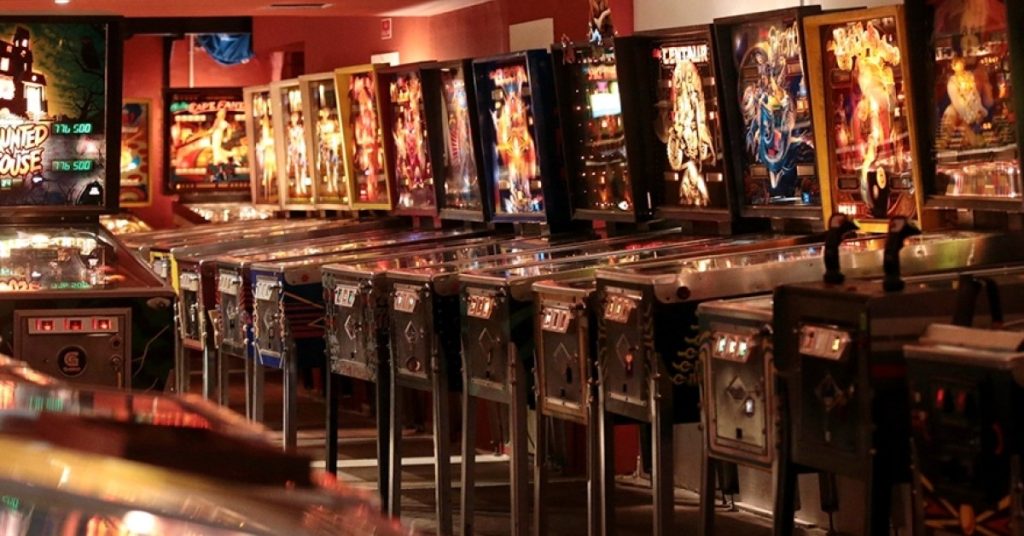
The Budapest Pinball Museum — or Flippermúzeum, as locals call it — isn’t really a museum in the traditional sense. There are no velvet ropes. No stern guards telling you not to touch anything. In fact, touching everything is kind of the whole point. This is an arcade disguised as cultural preservation, a 500-square-meter underground playground where over 140 pinball machines are not just displayed but played.
It’s also, somewhat improbably, one of the highest-rated attractions in the entire city. We’re talking 4.9 stars on Google. TripAdvisor’s #1 museum in Budapest at various points. Above the House of Terror. Above the Hungarian National Gallery. A bunch of blinking pinball machines in a basement, beating out centuries of fine art.
And honestly? It makes sense.
The Origin Story: One Man’s Obsession Becomes Everyone’s Playground
The museum exists because of one guy: Balázs Pálfi. The story goes that Pálfi started collecting pinball machines as a hobby — the way some people collect stamps or vintage wines or regrets from their twenties. But pinball machines take up considerably more space than stamps, and at some point, his collection outgrew his apartment, his storage unit, and probably his relationships.
So he did what any reasonable person would do: he opened a museum.
What started as a personal collection has grown into Europe’s largest continuously operating interactive pinball exhibition. The museum has been featured in the BBC, New York Times, Sydney Morning Herald, and Frankfurter Allgemeine Zeitung. International pinball enthusiasts make pilgrimages here. Some fly from other continents specifically to play machines they’ve only read about.
The key word, though, is “interactive.” Most museums are about looking. This one is about playing. Every single machine — from 1940s relics to modern digital marvels — is set to free play. No coins needed. No limits. Just you, the flippers, and however many hours you can spare.
What You’ll Actually Find Inside
Walking into the Flippermúzeum feels like entering a very loud, very flashy time machine. The space is carved into several rooms, each packed with machines arranged roughly by era. Exposed brick walls. Dramatic lighting. And everywhere, the symphony of arcade sounds: bells, bumpers, digital explosions, and the occasional triumphant shout from someone who just beat a high score.
The Collection: 140+ Machines Spanning 80 Years
The museum’s collection tells the complete story of pinball, from its mechanical origins to its modern digital incarnation.
Pre-Flipper Era (1880s-1940s)
Before flippers existed, there were bagatelles — tabletop games where balls rolled down a tilted surface, bouncing off pins toward scoring holes. The museum has several of these rare antiques, including pieces from the 1880s. They’re more about luck than skill, but they’re fascinating windows into how the game evolved.
The Birth of Modern Pinball (1947)
Then there’s Humpty Dumpty — one of the first pinball machines ever made with flippers, dating to 1947. Yes, you can play it. The flippers are positioned differently than modern machines (facing outward rather than inward), which makes it feel strange and wonderful. Playing a piece of gaming history is genuinely surreal.
The Golden Age (1950s-1980s)
This is where things get really good. Rows upon rows of electro-mechanical machines from pinball’s heyday. These are the ones that define most people’s childhood memories: the satisfying thunk of mechanical scoring reels, the warm glow of backlit artwork, the distinctive smell of old electronics and nostalgia.
Pop Culture Explosion (1980s-2000s)
The museum is stacked with licensed machines from this era. Addams Family (the best-selling pinball machine ever made). Indiana Jones. Star Trek. Star Wars. Jurassic Park. Tales from the Crypt. If there was a movie, TV show, or cultural phenomenon in the last four decades, chances are there’s a pinball machine for it here.
Modern Machines
The collection doesn’t stop at vintage. There are contemporary machines too — complex, multi-level designs with digital displays and elaborate objectives. These are the games that prove pinball never really died; it just evolved.
The Star Attraction: Hercules
One machine you can’t actually play is Hercules — the largest pinball machine ever manufactured. Built in 1979 by Atari, it uses a cue ball instead of a standard pinball. The thing is absolutely massive and deeply impractical, which is exactly why it’s legendary. You can take photos with it, though. Everyone does.
Fan Favorites You’ll Want to Find
Some machines consistently draw crowds. Here are the ones worth seeking out:
The Addams Family (1992)
The best-selling pinball machine in history. Over 20,000 units were produced, which sounds like a lot until you realize how hard it is to find one in good working condition. The gameplay is brilliant — multiple modes, satisfying ramps, and the voice of Raul Julia as Gomez. If there’s only one machine you play, make it this one.
Indiana Jones: The Pinball Adventure (1993)
Another Williams classic. The Path of Adventure mode is genuinely challenging, and the theming holds up remarkably well. You’ll spend 15 minutes on this machine without realizing it.
Star Trek: The Next Generation (1993)
Possibly the most complex pinball machine ever made. Multiple cannon shots, a working viewscreen, and so many modes that you’ll need multiple plays just to understand what’s happening. Trekkies lose hours here.
Medieval Madness (1997)
Castle-storming, dragon-slaying pinball perfection. The trolls that pop up to mock you are weirdly satisfying to knock down. This machine commands premium prices at auction for good reason.
Twilight Zone (1993)
Designed by the legendary Pat Lawlor, this machine is an acid trip of bizarre features: a working clock, a gumball machine that dispenses balls, a magnetic powerball, and references throughout to the classic TV show. Complex, rewarding, and deeply weird.
Monster Bash (1998)
All the classic Universal monsters on one playfield. The Bride of Pinball mode ties everything together beautifully. Great for beginners because the goals are intuitive.
The Surprising Skill Curve
Here’s something most people don’t expect: pinball has real depth. It’s not just about keeping the ball in play — it’s about shot placement, mode activation, and strategic decision-making under time pressure.
The basic skills take minutes to learn:
- Don’t mash both flippers simultaneously (you’ll lose control)
- Learn to “trap” the ball — hold a flipper up and let the ball come to rest
- Aim for lit shots, not random targets
- Nudge the machine (gently!) to save poorly-positioned balls
But mastery takes years. Competitive pinball players earn six-figure prizes at world championships. The same machines you’re playing have been in tournament rotations. Some of the high scores on these museum machines are genuinely impressive achievements.
The museum is perfect for discovering whether you want to go deeper. Many visitors leave having discovered a new hobby.
Beyond Pinball
The museum isn’t exclusively pinball. Scattered throughout are vintage arcade games that complement the collection: air hockey, table football, early video games like Mortal Kombat and Atari Pong, racing simulators, and various shooting games. It’s a full arcade experience, not just a pinball one.
The Practical Stuff: Tickets, Hours, and How Not to Get Lost
💰 Budapest Pinball Museum Tickets (2026)
- Adults: 5,000 HUF (~$13 USD)
- Students (under 26) & Seniors (over 62): Discounted rate (verify at museum)
- Children: Same ticket, full access
Payment: Cash and cards accepted. No reservations needed for individuals.
The pricing model is genius in its simplicity: pay once, play forever (or at least until closing time). There’s no per-game charge, no tokens to buy, no nickeling-and-diming. Just unlimited access to everything that works.
🕐 Opening Hours
- Wednesday – Friday: 16:00 – 24:00 (4 PM – midnight)
- Saturday: 13:00 – 24:00 (1 PM – midnight)
- Sunday: 11:00 – 22:00 (11 AM – 10 PM)
- Monday & Tuesday: CLOSED
Note: Hours may change on holidays. Check their Facebook page for updates.
When to Visit
Saturdays are the busiest. The museum knows this and has extended Saturday hours accordingly, but if you want a more relaxed experience, consider:
- Sunday mornings (11:00-14:00): Families with young kids dominate, but it’s generally calmer
- Weekday evenings (Wednesday-Friday after 18:00): The sweet spot for adults who want space to play without competing for machines
- Late nights (after 21:00): The crowd thins out considerably
The museum recommends 2-3 hours for a visit, but honestly, plan for longer. It’s very easy to lose track of time when you’re chasing high scores.
Getting There: Directions That Actually Make Sense
The museum is located at Radnóti Miklós utca 18 in District XIII (Újlipótváros), which is a pleasantly residential neighborhood just north of the city center.
By Metro:
Take the M3 (blue line) to Nyugati pályaudvar. Exit toward the street level and walk north along Szent István körút for about 5 minutes. Turn right onto Radnóti Miklós utca. The museum entrance is in a basement — look for the signs.
By Tram:
Trams 4 and 6 stop at Jászai Mari tér, which is about a 7-minute walk away. Follow the Danube embankment north, then cut inland.
By Foot from Downtown:
If you’re coming from the Parliament area or St. Stephen’s Basilica, it’s roughly a 15-20 minute walk. Pleasant in good weather, especially along the Danube.
Parking:
Street parking is available in the neighborhood, though finding a spot can be tricky on weekends.
💡 Pro Tip
The museum is in a basement, so look for stairs leading down from street level. The entrance isn’t immediately obvious — you’re looking for “Flippermúzeum” signs. If you reach a courtyard, you’ve probably walked past it.
Who This Museum Is Actually For
Families with Kids
This is one of the best family-friendly attractions in Budapest that doesn’t feel like it’s for kids. Adults actually enjoy themselves here, which is more than you can say for most children’s activities.
The museum provides step stools tucked under machines for smaller children. Kids as young as 3-4 can play (with some parental assistance). There’s something magical about watching a child discover physical games in an era dominated by touchscreens. The tactile feedback of flippers, the satisfying weight of a real steel ball — it’s analog entertainment at its finest.
Couples Looking for a Unique Date
Forget the ruin bars for once. The Pinball Museum offers something different: a date where you’re actually doing something together rather than shouting over music. Competition breeds connection. High-fiving over a multiball jackpot creates memories. And the machines themselves provide endless conversation fodder — “Oh man, I had this game at the arcade near my house growing up!”
Nostalgic Adults
If you’re of a certain age (let’s say born before 1990), this museum is basically a time machine to your youth. The sounds, the lights, the specific feeling of a flipper button under your finger — it all comes flooding back. Visitors regularly get emotional here. Not crying emotional, but definitely “I need to call my brother” emotional.
International Pinball Enthusiasts
Yes, people fly internationally specifically to visit this museum. The collection includes rare machines that pinball collectors dream about. If you’re part of the global pinball community, this is a pilgrimage site.
Anyone Trapped in Budapest During Bad Weather
Rain check on your thermal bath plans? Weather ruining your walking tour dreams? The Pinball Museum is entirely indoors and endlessly entertaining. It’s one of the best rainy day activities in the city.
Solo Travelers
Traveling alone in Budapest? The Pinball Museum is actually a great solo activity. There’s something meditative about standing at a machine, entering a flow state, and tuning out the world. You don’t need a companion to enjoy it, and the social atmosphere means you might end up chatting with fellow enthusiasts anyway.
Unlike some activities that feel awkward alone — certain restaurants, couples-oriented tours — this one doesn’t carry that weird “table for one” energy. You’re just another player pursuing high scores. Nobody questions it.
The “I Don’t Really Like Museums” Crowd
Let’s be honest: not everyone loves traditional museums. Standing in front of paintings. Reading plaques. The enforced silence. The inevitable museum fatigue setting in after 45 minutes.
The Pinball Museum is for you. This is a museum where engagement is mandatory. Your hands are busy. Your reflexes are tested. You’re not a passive observer — you’re an active participant. Time flies rather than drags. When someone says “we spent four hours there,” it’s usually said with surprise, not complaint.
If your travel partner is a museum enthusiast but you’re not, suggest this as a compromise. It scratches the “cultural activity” itch while remaining genuinely entertaining.
The Psychology of Pinball (Why This Place Actually Works)
There’s a reason this museum has a 4.9 rating while other attractions struggle for 4.0. The experience is optimized for satisfaction in ways that most venues don’t achieve.
Instant Gratification + Skill Development
Modern entertainment often fails at one of two things: either it’s too easy (boring) or too hard (frustrating). Pinball threads the needle perfectly. A complete beginner can keep a ball in play and feel accomplishment. But there’s always another level — a higher score, a harder mode, a multiball you haven’t triggered yet. The ceiling is effectively infinite.
Physical Engagement
In an era of touchscreens and passive consumption, there’s something deeply satisfying about physical buttons with real feedback. The thunk of a flipper. The crash of a multiball jackpot. The slight vibration of a well-timed nudge. Your body is involved in ways that swiping on a phone never achieves.
Nostalgic Resonance
For anyone who grew up before smartphones, arcade culture holds a special place. The Pinball Museum doesn’t just recreate that era — it preserves it in working form. The sounds, the lights, even the smell of old electronics — it’s a sensory time machine.
Social Bonding Through Competition
Humans are wired for friendly competition. The Pinball Museum provides endless opportunities: challenging your partner to beat your score, competing with strangers for high-score bragging rights, or simply cheering when someone triggers a multiball. It creates shared memories in ways that passive observation can’t match.
Value Perception
The unlimited play model is genius. At 5,000 HUF, you’re paying roughly 15-20 euros. That’s the cost of two fancy cocktails at a rooftop bar, which you’ll consume in 30 minutes. The museum offers 4+ hours of entertainment for the same price. The value math is undeniable.
How This Compares to Other Budapest Museums
Budapest has extraordinary museums. The question is where the Pinball Museum fits in your itinerary.
Traditional History Museums
The Hungarian National Museum, House of Terror, and Budapest History Museum offer serious historical content. These are important if you want to understand Hungary’s complex past. The Pinball Museum won’t teach you about 1956 or the Holocaust — it’s pure entertainment.
Verdict: Don’t skip the serious museums for pinball. But also don’t feel guilty about including something fun.
Art Museums
The Hungarian National Gallery and Museum of Fine Arts are genuinely world-class collections. If you’re an art lover, they’re essential. But they’re also contemplative, quiet experiences that require a certain mood.
Verdict: Do the art museums when you’re feeling reflective. Do the Pinball Museum when you want energy.
Other Interactive Museums
Budapest has several interactive museums: the Labyrinth, various escape rooms, and the Szamos Chocolate Museum. The Pinball Museum has better replay value than most. You can visit multiple times and have different experiences based on which machines you focus on.
Verdict: If you only have time for one “fun” museum, this is the one.
The Memento Park Comparison
Memento Park — the outdoor museum of communist statues — is thematically opposite to the Pinball Museum but similarly excellent. One preserves grim history; the other preserves joyful culture. Interestingly, both are created from personal passion and attract international pilgrims.
Verdict: Do both. They’re perfect contrasts.
The Café: Fuel for Extended Play
After two hours of aggressive flipper action, you’re going to need sustenance. The museum has a small café/snack bar near the entrance serving:
- Soft drinks and water
- Coffee and tea
- Light snacks, pastries, and sweets
- Various American-style treats
The café is non-alcoholic (the museum maintains a family-friendly policy), but honestly, alcohol and pinball don’t mix that well anyway. You need reflexes.
The café area also provides a place to rest your feet and discuss strategy before diving back in. Couples use it for breather breaks. Parents use it to recover while their kids burn off remaining energy.
What Visitors Are Saying
The reviews for this place are almost suspiciously positive. Here’s what people consistently mention:
The Value Proposition
“For about €13, you get unlimited play on 140+ machines. I spent 4 hours here. That’s like €3 per hour of entertainment. Where else can you get that?”
The Atmosphere
“Great atmosphere and huge selection of games. Definitely worth a visit!” — A typical Reddit review from r/pinball
The Nostalgia Factor
“Playing Humpty Dumpty — one of the first pinball machines with flippers — was surreal. I was touching history while also having a blast.”
Family-Friendly Without Being Childish
“Wonderful place to visit with kids. Hundreds of pinball and other machines. The machines start from 1931 and go until 2024. Everyone had something to enjoy.”
The Unique Experience
“It’s pretty cool playing in the basement of an old building like this. Got to play a Humpty Dumpty there too. It’s neat to play a piece of pinball history.”
The Crowd
“There was a real mix of people and age groups there. Good atmosphere.”
The only consistent criticisms:
- The space can feel cramped when busy (visit off-peak)
- Some machines are occasionally out of order (they maintain aggressively, but with 140+ machines, something’s always being fixed)
- The basement location has limited accessibility options
Tips for Making the Most of Your Visit
1. Wear Comfortable Shoes
You’ll be standing for hours. This isn’t a sit-down museum. Your feet will thank you.
2. Start with the Vintage Machines
The older mechanical machines require different techniques than modern ones. Get a feel for pinball history before diving into the complex digital games.
3. Read the Plaques
Each machine has an informational sign explaining its history, rarity, and significance. It adds context and turns playing into learning.
4. Don’t Skip the Non-Pinball Games
The air hockey, table football, and retro arcade games are equally fun and provide variety when your wrists need a pinball break.
5. Take Photos with Hercules
You can’t play the giant Hercules machine, but you can pose with it. It’s basically a rite of passage.
6. Check the High Score Boards
Some machines display all-time high scores. If you’re competitive, see if you can make the list.
7. Ask the Staff for Recommendations
They know which machines are in the best condition and which ones are hidden gems. They’re enthusiasts themselves and happy to share knowledge.
8. Visit Late if You Want Space
After 21:00 on any night, the crowds thin significantly. Night-owl gamers get more room to breathe.
Combining with Other Attractions
The Pinball Museum is in Újlipótváros, a neighborhood worth exploring on its own. While you’re in the area:
Nearby Food Options
District XIII has excellent dining options that are less tourist-trapped than downtown. Check out the restaurants along Pozsonyi út or Szent István körút for authentic Hungarian and international cuisine.
Margaret Island
Margaret Island is about a 15-minute walk north. Perfect for a post-gaming stroll, especially in warmer months.
Nyugati Train Station
The beautiful Nyugati pályaudvar building, designed by the same firm that built the Eiffel Tower, is right there. Worth admiring even if you’re not catching a train.
The Danube Promenade
The Danube embankment on the Pest side offers great views of Buda Castle across the river. Nice for a sunset walk after an afternoon of pinball.
Suggested Itinerary:
- Afternoon at the Pinball Museum (13:00-17:00)
- Early dinner in Újlipótváros
- Sunset walk along the Danube
- Evening drinks at a rooftop bar with Parliament views
Private Events and Group Bookings
The museum offers private event rental for:
- Birthday parties (especially popular for kids)
- Corporate team-building events
- Bachelor/bachelorette parties (non-alcoholic, remember)
- Any group wanting exclusive access
For group bookings, contact the museum in advance, especially during holiday seasons when demand is high. The private event room at the back can accommodate groups while still providing access to all machines.
Accessibility Notes
One honest caveat: the museum is in a basement of a historic building, which creates accessibility challenges. There’s no elevator access, and the stairs are the only way in and out. For visitors with mobility limitations, this is unfortunately a significant barrier.
The museum provides:
- WiFi throughout
- Accessible restrooms (once inside)
- Step stools for children
- Card and cash payment options
Pets are not permitted — the constant noise and flashing lights would stress most animals.
A Brief History of Pinball (Because Context Matters)
Understanding a bit of pinball history makes the museum experience richer. Here’s the crash course:
The Pre-Flipper Era (1880s-1947)
Pinball evolved from bagatelle — a tabletop game where balls rolled down an inclined surface, bouncing off pins into scoring holes. These early games were entirely luck-based. The museum has several working bagatelles from the 1880s that demonstrate the concept.
By the 1930s, pinball had evolved into recognizable machines with plungers and bumpers, but still no flippers. The balls would launch, bounce chaotically, and drain. Skill was minimal. This era’s machines felt more like gambling devices than games — and indeed, they were often used for gambling.
The Flipper Revolution (1947)
In 1947, D. Gottlieb & Co. released Humpty Dumpty — the first pinball machine with flippers. Suddenly, players had control. They could aim. They could save the ball. Skill mattered.
The museum has a working Humpty Dumpty. Playing it is genuinely weird because the flippers are positioned facing outward rather than inward like modern machines. It takes adjustment. But you’re playing history.
The Golden Age (1950s-1980s)
With flippers established, pinball exploded in creativity. Electro-mechanical (EM) machines dominated, featuring:
- Mechanical scoring reels (the satisfying click-click-click)
- Chimes and bells (no electronic sounds)
- Backlit artwork (gorgeous hand-painted glass panels)
- Increasingly complex playfields
This era’s machines are the ones that older visitors remember from childhood arcades. They’re simpler than modern machines but arguably more charming.
The Electronic Era (1980s-1990s)
Solid-state electronics replaced mechanical systems. Digital displays replaced scoring reels. Sound chips replaced bells. The complexity expanded exponentially:
- Multi-level playfields
- Elaborate modes and objectives
- Licensed themes from major movies and franchises
- Voice acting and soundtracks
This was pinball’s commercial peak. Machines like The Addams Family, Twilight Zone, and Medieval Madness became legendary. The museum is particularly strong in this era.
The Decline and Revival (2000s-Present)
The arcade industry collapsed in the 2000s as home gaming improved. Major pinball manufacturers shuttered. Enthusiasts mourned.
But pinball didn’t die — it evolved. Boutique manufacturers emerged. New machines targeting collectors appeared. Pinball bars opened in cities worldwide. Competitive tournaments grew. The culture survived, smaller but passionate.
The Budapest Pinball Museum exists because of this cultural resilience. It’s preservation and celebration of a medium that nearly disappeared.
Frequently Asked Questions
How much does the Budapest Pinball Museum cost?
Admission is 5,000 HUF (~$13 USD) for a full-day ticket with unlimited play. Discounts available for students under 26 and seniors over 62. One ticket = unlimited access to all machines.
Do I need to make a reservation?
No reservations needed for regular visits. Just show up during opening hours. For private events or group bookings, contact the museum in advance.
How long should I plan to spend there?
Most visitors spend 2-4 hours, though dedicated enthusiasts have been known to stay until closing. The unlimited play model encourages lingering.
Is it suitable for children?
Absolutely. Children as young as 3-4 can play with help from step stools and parents. It’s one of the best family activities in Budapest.
Can I buy tickets online?
Yes, tickets are available online through the museum’s website and platforms like Tiqets. You can also purchase at the door.
Are all machines always working?
With 140+ machines, some are occasionally under maintenance. The staff works hard to keep everything running, but expect maybe 5-10% to be out of order at any given time.
Is there food available?
Yes, a small café offers soft drinks, coffee, snacks, and pastries. No alcohol served — the museum maintains a family-friendly policy.
What if I’ve never played pinball before?
Perfect time to learn! The variety of machines means there’s something for every skill level. Staff can provide tips, and the older mechanical machines are actually easier to grasp than complex modern ones.
Is the museum wheelchair accessible?
Unfortunately, no. The museum is in a basement with stair-only access. This is a significant limitation of the historic building location.
When is the best time to visit?
For fewer crowds: weekday evenings (Wednesday-Friday after 18:00) or late nights (after 21:00). Saturdays are busiest. Sunday mornings tend toward families with kids.
Can I leave and re-enter?
Check with staff about re-entry policy — this varies based on crowd levels and may require a hand stamp or wristband.
Is photography allowed?
Yes, photography is encouraged. The machines are extremely photogenic. Just be mindful of other players and avoid using flash on backlit artwork.
Do they sell merchandise?
Yes, the museum sells t-shirts and pinball-related merchandise. A souvenir t-shirt is a solid memento.
What currency is accepted?
Both Hungarian Forints (HUF) and card payments are accepted. Euro is generally not accepted directly.
Can I bring my own food and drinks?
Outside food and drinks are typically not permitted — the museum has its own café for refreshments.
📍 Budapest Pinball Museum – Essential Info
- Address: Radnóti Miklós utca 18, 1137 Budapest, District XIII
- Tickets: 5,000 HUF (~$13 USD) adult | Discounts for under 26 & over 62
- Hours: Wed-Fri 16:00-24:00 | Sat 13:00-24:00 | Sun 11:00-22:00 | Mon-Tue CLOSED
- Getting There: M3 Nyugati pályaudvar (5 min walk) | Tram 4/6 Jászai Mari tér
- Time Needed: 2–4 hours
- Website: flippermuzeum.hu
- Facebook: @flippermuzeum
Pro tip: Go on a weekday evening for smaller crowds, or late Saturday night when families have cleared out.
Gift Tickets and Special Occasions
The museum offers gift tickets — perfect for birthdays, holidays, or “just because” surprises. For anyone who appreciates games, nostalgia, or unusual experiences, a Pinball Museum ticket is an excellent gift.
For Birthdays:
Kids’ birthday parties at the museum are increasingly popular. Private room rental, unlimited games, and a unique venue that beats yet another bouncy castle. Adult birthday celebrations work well too — gather your pinball-curious friends for an evening of competitive gaming.
For Tourists:
If you’re hosting visitors from abroad and want to show them something they absolutely cannot experience at home, the Pinball Museum qualifies. Most cities don’t have anything like this. It’s distinctly Budapest while being universally accessible.
For Team Building:
Corporate groups book the museum for team events. The competitive element naturally creates camaraderie. Plus, it’s way more memorable than another PowerPoint presentation.
Final Verdict: Is the Pinball Museum Worth It?
Let me put it this way: this is one of the very few tourist attractions in Budapest where I’ve never heard anyone express regret about going. Not once. The formula is basically foolproof:
- Unlimited entertainment for a fixed price
- Multi-generational appeal (rare in any activity)
- Physically engaging in a way most museums aren’t
- Excellent rainy day option
- Genuinely unique — there’s nothing else quite like this in Europe
The only real question is whether pinball appeals to you at all. If the idea of standing at a machine, mashing flipper buttons, and chasing blinking lights sounds tedious, then maybe skip it. But if there’s even a flicker of interest — a childhood memory, a curiosity about gaming history, or just a desire to try something different — the Pinball Museum delivers.
For ~$13 of unlimited nostalgia, competition, and pure arcade joy? That’s one of the best entertainment values in the city.
Go play.
Prices verified: January 2026
Planning your Budapest trip? Check out our complete first-timer’s guide or explore more museums and attractions.