🎯 TL;DR – Budapest Card for Museums
The Quick Verdict (72-Hour Card)
Bottom Line: For most visitors, buying tickets separately saves €20–€30. The Budapest Card only shines for museum marathons — not casual sightseeing.
The calculator app on my phone has gotten more use in the past month than it has all year. Not for anything dramatic—just me, sitting in various Budapest coffee houses, obsessively running the numbers on the Budapest Card to figure out once and for all whether this thing actually saves tourists money on museums.
The short answer? It depends. The longer answer involves spreadsheets, strategic itinerary planning, and the uncomfortable realization that most visitors dramatically overestimate how many museums they’ll actually enter during a city break.
The Budapest Card markets itself as the golden ticket to the city’s cultural institutions—over 20 free museums, unlimited public transport, a thermal bath, and various discounts. Sounds brilliant on paper. But here’s what the glossy marketing materials conveniently omit: several of the most popular museums either aren’t included at all or offer only token discounts. The House of Terror? Full price. Hospital in the Rock? A sad 10% off. The Hungarian Parliament? Completely separate system.
So let’s do what most “Budapest Card worth it” articles fail to do: actual mathematics with current 2025 prices, honest assessments of what’s included versus what’s excluded, and practical scenarios that reflect how real tourists actually behave.
What the Budapest Card Costs in 2025 and What You Actually Get
The Budapest Card underwent significant changes in 2025. Since July, management transferred to BKK (Centre for Budapest Transport), and as of September 16th, cards became available at over 300 BKK ticket vending machines throughout the city—a massive convenience upgrade from the previous system of hunting down tourist info points. If you’re not familiar with the BKK system, check out my guide to the BudapestGO app for navigation tips.
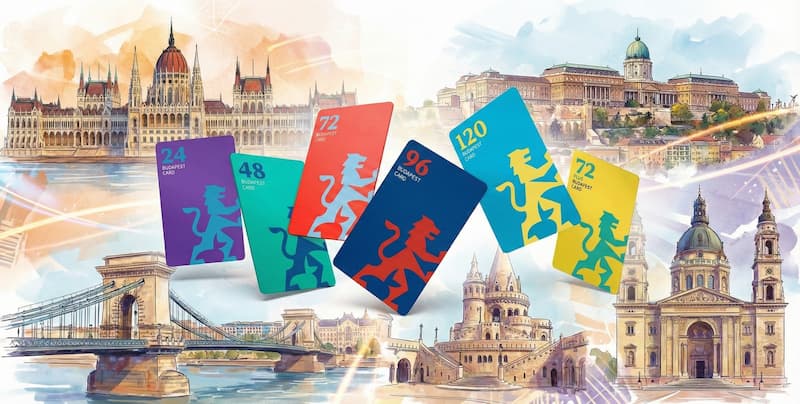
Current pricing breaks down across five duration tiers, plus a premium option. All prices listed are current as of late 2025:
The 24-hour card runs 16,990 HUF, which converts to approximately €44. The 48-hour version costs 21,990 HUF (roughly €57). The most popular choice, the 72-hour card, sits at 27,990 HUF (about €72). For longer stays, the 96-hour option costs 34,990 HUF (€90), and the maximum 120-hour card runs 38,990 HUF (€100).
Then there’s the Budapest Card 72+ (Plus), the premium tier at 47,990 HUF (approximately €120)—a €48 upgrade over the standard 72-hour version. I’ll break down whether that premium makes sense later.
Per-day value improves as duration increases. The 24-hour card works out to €44 per day, while the 120-hour drops to just €20 daily. This math matters because extracting value from a 24-hour card requires genuinely exhausting museum-hopping, while a 72 or 120-hour version allows a more civilized pace.
Every Budapest Card includes unlimited use of Budapest’s entire public transport network—metro lines, trams, buses, trolleybuses, and the HÉV suburban railway within city limits. It also includes one free entry to Lukács Thermal Bath, two guided walking tours (one in Buda at 2pm, one in Pest at 10am daily), and a Danube cruise. Plus, the eco-friendly Castle Bus that loops through the Castle District becomes your unlimited hop-on transport.
The cards activate upon first use rather than purchase date, remaining valid for one year if unactivated. Write your start date, time, and signature on the card’s back—inspectors absolutely do check, and the fines for invalid cards are unpleasant.
Ready to buy? You can purchase the Budapest Card online through GetYourGuide with instant confirmation and skip the queue at pickup points.
The Complete List of Museums Actually Free with the Budapest Card
Marketing materials trumpet “20+ free museums,” but the devil lurks in the details. Some genuinely valuable institutions are included. Others are so niche that only specialists would seek them out. And crucially, several must-visit attractions that tourists assume are covered simply aren’t.
The Hungarian National Gallery in Buda Castle represents the card’s crown jewel. Regular adult admission costs 5,400 HUF (about €13.50), and you could easily spend two to three hours here exploring Hungarian art from medieval altar panels through 19th-century masterpieces. Combined with its Castle District location, this alone justifies a significant chunk of the card’s cost—if you actually go.
The Museum of Fine Arts at Heroes’ Square charges around 5,200 HUF (€13) normally and houses an impressive collection spanning ancient Egyptian artifacts through Spanish Old Masters. Another two to three hour commitment, easily.
The Hungarian National Museum downtown costs 3,500 HUF (€8.75) and covers Hungarian history from the Magyar conquest through modern times. The building itself, a gorgeous neoclassical structure, housed the assembly where Sándor Petőfi read his revolutionary poem in 1848.
Budapest History Museum, located beneath Buda Castle, runs 3,800 HUF (€9.50) and includes the fascinating medieval palace excavations. Unlike most Budapest museums, this one stays open on Mondays.
The Ludwig Museum of Contemporary Art at the Palace of Arts costs 3,300 HUF (€8.25) and showcases international contemporary works. It’s a trek to get there—south of downtown—but worth it for modern art enthusiasts.
Aquincum Museum, at around 3,000 HUF (€7.50), preserves remarkable Roman ruins in northern Budapest. The open-air archaeological park requires good weather and a willingness to journey well beyond the tourist center.
Memento Park, also 3,000 HUF (€7.50), collects Communist-era statues in an open-air setting southwest of the city. Getting there involves a 30-40 minute bus journey from Kelenföld station—factor in half a day.
The Vasarely Museum in Óbuda costs 3,800 HUF (€9.50) and displays hypnotic optical illusion artworks by the Hungarian-French artist Victor Vasarely. It’s virtually empty most days and unexpectedly mesmerizing.
Kiscelli Museum, another Óbuda location at 3,000 HUF (€7.50), occupies a former monastery and covers Budapest history with particular strength in 18th-century art and furniture.
The Ferenc Hopp Museum of Asiatic Arts on Andrássy Avenue charges 2,800 HUF (€7) for its collection of Asian artifacts accumulated by a 19th-century optician with impressive travel habits.
Robert Capa Contemporary Photography Center runs 3,000-5,000 HUF (€7.50-12.50) depending on exhibitions, honoring the legendary Hungarian-American war photographer.
The Underground Railway Museum at Deák Ferenc tér costs just 900 HUF (€2.25) and takes maybe 30-45 minutes. It’s housed in the original 1896 metro tunnels—Europe’s first underground railway after London.
Additional free inclusions cover the Kunsthalle (Műcsarnok) at Heroes’ Square, Mai Manó House of Photography, Óbuda Museum, the Goldberger Textile Collection, Budapest Gallery exhibition spaces, and the Medieval Jewish Prayer House in the Castle District.
The Critical Museums NOT Included That Every Tourist Wants to Visit
Here’s where the Budapest Card’s value proposition starts crumbling for typical visitors. Several of Budapest’s most compelling and heavily-marketed attractions either provide no discount whatsoever or offer such minimal savings that they barely register.
The House of Terror on Andrássy Avenue—arguably Budapest’s most emotionally impactful museum, documenting both fascist Arrow Cross and Communist secret police atrocities—receives absolutely no discount with the standard Budapest Card. You pay the full 4,000 HUF (approximately €10) regardless. Tickets can only be purchased on-site, no online booking available. This museum regularly appears at the top of “must-see Budapest” lists, yet the card provides zero value here.

Hospital in the Rock, the underground nuclear bunker museum beneath Buda Castle, offers only a pitiful 10% discount. Regular admission costs 5,800 HUF (€14.50), so your card saves you exactly €1.45. Given that this guided-only tour frequently sells out and requires advance booking at sziklakorhaz.eu, the minimal discount feels almost insulting.
The Hungarian Parliament tours operate on an entirely separate system. The Budapest Card provides zero access and zero discount. Book well in advance at the official Parliament website—English tours sell out fast.
The Ethnographic Museum—the spectacular new building in City Park that opened in 2022 as one of Europe’s largest ethnographic collections—offers only 25% discount rather than free entry. Surprising, given its status as a flagship Budapest attraction.
Széchenyi Thermal Bath, the most photographed bathhouse in the city and the one most tourists envision when they picture Budapest’s thermal baths, provides only 20% discount. The card includes free entry to Lukács Bath instead—which is actually a legitimate perk if you’re open to a less touristy experience, but not what most visitors expect. For a deeper dive into which baths work best with the card, see my Budapest Card thermal baths savings guide.
St. Stephen’s Basilica dome and treasury access isn’t covered. Neither is Fisherman’s Bastion’s upper terrace (the lower terrace remains free regardless). The Great Synagogue operates independently. Basically, several items on the typical “Budapest bucket list” exist outside the card’s ecosystem entirely.
Calculating Your Personal Break-Even Point: The Math That Actually Matters
Here’s where most “Budapest Card worth it” articles fail completely. They list what’s included without calculating whether typical tourist behavior actually extracts sufficient value. Let me fix that—or use my Budapest Card savings calculator to run your own numbers.
The 72-hour card costs €72. A 72-hour public transport pass costs approximately €14.40 on its own. That means you need to extract roughly €57.60 in museum, bath, and tour value to break even.
Scenario A: Museum enthusiast achieves value
Imagine visiting the Hungarian National Gallery (€13.50 saved), Budapest History Museum (€9.50), Museum of Fine Arts (€13), Hungarian National Museum (€8.75), and Memento Park (€7.50). That’s €52.25 in museum value alone. Add Lukács Bath (worth €12-15) and participate in both included walking tours (combined value €20-25), and you’ve extracted €84-92 in attraction value against a €72 card. Net savings of €12-20.
Scenario B: Average tourist loses money
They visit one or two museums, spend an afternoon at Széchenyi Bath (only 20% discount), walk around the Castle District (mostly free anyway), explore ruin bars (not museum-related), and wander along the Danube Promenade (free). Their actual extraction might look like Budapest History Museum (€9.50), one Heroes’ Square museum (€13), and a discounted Széchenyi visit saving maybe €4. Total value extracted: approximately €26.50 against a €72 card. Net loss of around €31.
The 24-hour card presents the steepest challenge. At €44 with roughly €7 transport value, you need €37 in museum value in a single day. That requires racing through three major museums back-to-back—an exhausting pace that few travelers maintain. Forum discussions consistently rate this duration as “nearly impossible to justify.”
The transport value alone doesn’t save the card. Public transport represents only 16-24% of the total cost across all card durations. The remaining 76-84% must come from actual attraction usage.
The Budapest Card 72+ Premium: Is the Upgrade Worth €48 Extra?
The Budapest Card 72+ costs €120—a €48 premium over the standard 72-hour version. That’s a substantial upgrade cost, so let’s evaluate what you actually get.
The Plus version includes MiniBUD airport transfer as a round-trip door-to-door shuttle service, valued at approximately €20-25. You get one return ride on the Buda Castle Funicular, worth €8-10. Entry to Matthias Church (normally €10) becomes included. The Danube cruise upgrades to the enhanced Duna Bella by Legenda experience with drinks, adding €15-20 in value. And oddly specifically, you get a free chimney cake from Molnár’s Kürtőskalács—maybe €4-5 worth.
Total additional value sits around €57-70, which actually approaches break-even on the €48 upgrade cost.
The Plus card makes sense for travelers arriving via Budapest Airport who’d use both airport transfers anyway, plan to ride the funicular, and intend to visit Matthias Church. For those taking taxis or staying near the Castle District—where the funicular feels redundant—the standard card proves sufficient. For more on getting from the airport to the city, I’ve written a detailed guide.
One consideration: the MiniBUD shuttle requires advance booking and operates on their schedule, not yours. If your flight lands at an awkward hour or you prefer the flexibility of a taxi, this “benefit” loses practical value.
What Real Visitors Actually Say: TripAdvisor Reviews and Forum Consensus
Analysis of over 100 TripAdvisor reviews (averaging a mediocre 3.0 out of 5.0 stars) plus extensive Reddit and travel forum discussions reveals consistent patterns. For my complete breakdown on this topic, see my Budapest Card benefits and drawbacks article.
What users praise consistently:
Transport convenience ranks as the most appreciated benefit. Users describe “not fumbling with tickets” and “hopping on any tram or metro without thinking” as genuinely liberating, especially for travelers unfamiliar with Hungarian ticket validation systems. Budapest’s public transport inspectors have developed something of a legendary reputation for catching confused tourists, so the peace of mind carries value beyond pure mathematics.
Lukács Bath inclusion surprises many positively. This less-crowded thermal bath provides a more authentic local atmosphere without the Instagram-posing masses of Széchenyi. Several reviewers specifically noted they wouldn’t have discovered Lukács without the card pushing them toward it—and ended up preferring the experience.
The Castle Bus and walking tours represent overlooked perks. The eco-friendly Castle Bus provides convenient hop-on transport throughout the hilly Castle District, and the daily 2-hour walking tours offer legitimate value when actually attended. Multiple reviewers mentioned forgetting about the walking tours entirely until their final day.
What frustrates card holders most:
Major attractions not included tops every complaint list. Users consistently express surprise and disappointment that House of Terror, Parliament, Hospital in the Rock, Matthias Church (standard card), and the Castle Funicular require additional payment.
Confusing card variants cause problems. Multiple card types—Budapest Card Classic, Budapest Card Plus, discontinued digital variants—lead to misunderstandings about what’s actually covered. The digital Tourist Pass and e-XPLORER Pass were discontinued in 2025, leaving only the physical Budapest Card, but older online advice still references these defunct products.
The break-even difficulty appears repeatedly in forum discussions. The consensus often quoted runs something like: on straight cost analysis, you won’t save more than the extra cost of the card unless you rush about driven exclusively by that goal.
The Monday Museum Closure Problem Nobody Warns You About
Here’s practical advice that most guides bury in footnotes or ignore entirely: the overwhelming majority of Budapest museums close on Mondays.
The Hungarian National Gallery closes Monday. Museum of Fine Arts, closed Monday. Hungarian National Museum, closed Monday. House of Terror, closed Monday. Ludwig Museum, closed Monday. Memento Park, closed Monday. The list continues extensively.
The Budapest History Museum represents a notable exception, remaining open daily. The Robert Capa Center and a few smaller institutions also buck the trend. But if your only full sightseeing day falls on Monday, the card loses significant value.
Strategic card timing matters enormously. Starting a 72-hour card on Friday morning maximizes museum access across Friday, Saturday, and Sunday—three days with full museum availability. Starting on Sunday morning means Monday and Tuesday fall within your 72 hours, with Monday being a near-total museum washout.
This isn’t hypothetical optimization. I’ve spoken with tourists who purchased the card Sunday afternoon, planning three museum-heavy days, only to discover Monday’s closures wrecked their itinerary. The card representatives at tourist information points don’t always volunteer this information unprompted.
Geographic Clustering: How to Visit Museums Efficiently
Budapest’s museums cluster geographically in ways that enable—or complicate—efficient itinerary planning. Understanding these clusters helps extract maximum card value. For accommodation planning near these clusters, check my where to stay in Budapest neighborhood guide.
The Castle District on the Buda side concentrates several major institutions within walking distance. The Hungarian National Gallery, Budapest History Museum, and Hospital in the Rock all sit within the same compact area. Allocate a full day. Start at the National Gallery when it opens, move to the History Museum after lunch, and if energy permits and you’ve pre-booked, finish with Hospital in the Rock (remembering you only get 10% discount there regardless). While you’re there, you might also explore the Labyrinth of Buda Castle—though that’s a separate admission.
Heroes’ Square and City Park group the Museum of Fine Arts, Kunsthalle, and the new Ethnographic Museum (25% discount only). Széchenyi Bath sits adjacent, making for a natural afternoon wind-down after morning museum visits—though remember the bath only offers 20% discount with the card. The House of Music Hungary also occupies City Park, though it operates independently from the Budapest Card system.
Andrássy Avenue creates a museum corridor. The House of Terror (no discount) and Robert Capa Photography Center (free with card) both sit along the M1 metro line—Europe’s first underground—about 20 minutes’ walk apart. The Ferenc Hopp Museum of Asiatic Arts occupies a side street nearby.
Óbuda, in northern Budapest, clusters several lesser-known institutions: the Vasarely Museum, Kiscelli Museum, and Óbuda Museum. Getting there requires metro plus bus or tram transfers, so batch these visits into a single half-day trip if they interest you.
Outer Budapest locations demand dedicated excursions. Memento Park requires a 30-40 minute bus journey from Kelenföld station—essentially a half-day commitment. Aquincum Museum sits at the far northern edge of the metro and HÉV network. These aren’t quick detours; they’re expedition-level time investments.
National Holidays and Free Museum Days That Undermine Card Value
Several days each year, Hungarian state museums open their permanent exhibitions for free, regardless of nationality or tourist card status. These dates significantly reduce the Budapest Card’s value proposition.
The three major national holidays—March 15 (1848 Revolution anniversary), August 20 (St. Stephen’s Day/foundation of Hungary), and October 23 (1956 Revolution anniversary)—provide free entry to permanent exhibitions at state museums. If your Budapest visit coincidentally overlaps with these dates, the card becomes substantially less valuable for museum purposes, though transport and bath benefits remain.
Additionally, various museums offer periodic free days or discounted entry for specific demographics. EEA citizens under 26 often receive free or heavily discounted museum entry regardless of the Budapest Card. Senior citizens from EEA countries also benefit from similar policies. If you fall into these categories, check individual museum websites before assuming the Budapest Card provides added value.
Insider Tips for Maximizing Budapest Card Museum Value
After extensive research and conversations with regular card users, certain strategies consistently emerge for extracting maximum value.
Book Hospital in the Rock separately and early. This guided-only tour sells out, especially during peak season. The 10% discount barely matters—what matters is securing a slot. Visit sziklakorhaz.eu several days before your planned Castle District day.
Attend both walking tours. Most card buyers skip these entirely, leaving €20-25 in value unused. The Buda tour at 2pm covers the Castle District; the Pest tour at 10am explores the downtown area. Both depart from designated meeting points listed in your card documentation.
Don’t sleep on Lukács Bath. Yes, it lacks Széchenyi’s fame and photogenic neo-baroque architecture. But the thermal waters are equally authentic, the local crowd creates a more genuine atmosphere, and your card covers full entry rather than a mere discount. Many tourists who initially feel disappointed about “only” getting Lukács end up preferring the experience. For more on Budapest’s thermal bath culture, I’ve covered this extensively.
Start your card on Friday morning. This maximizes museum access across three days without Monday interference. Saturday mornings at major museums get crowded; Friday provides a calmer alternative.
Combine Castle District museums into one day. Walking from the National Gallery to Budapest History Museum takes five minutes. Both are card-free entries. Stack them alongside the free views from the Castle grounds, the free lower terrace of Fisherman’s Bastion, and the included Castle Bus.
Use the Danube cruise for transport. The included cruise operates as both a sightseeing experience and a practical way to transit between Pest and Buda. Board near Parliament and disembark near Chain Bridge rather than taking a tram.
The Realistic Negative: What Actually Bothers Card Users Most
Every balanced assessment needs to acknowledge genuine drawbacks, and the Budapest Card has a significant one: the psychological pressure to “maximize value” can actively diminish your experience.
Several forum discussions and review complaints center on the same phenomenon. Tourists purchase the card, realize they’ve spent €72, and then feel compelled to rush through museums simply to justify the expense. Instead of lingering over a painting that genuinely moves them or taking an unplanned coffee break when fatigue hits, they’re checking spreadsheets and calculating whether squeezing in one more museum will push them into positive savings territory.
This pressure runs directly counter to what makes Budapest’s museum scene special. The Hungarian National Gallery rewards slow exploration. The House of Terror (which you’re paying for separately anyway) demands emotional processing time. Thermal baths require relaxation, not schedule-watching.
The tourists I’ve seen extract the most genuine value from the Budapest Card aren’t the ones obsessively optimizing—they’re the ones who genuinely wanted to visit four or five museums anyway and simply benefited from the bundled pricing. For everyone else, the card can transform cultural exploration into accountancy exercise.
If you catch yourself resenting a museum because you “have to” visit it for card value, the card has failed you. Better to absorb a €20-30 “loss” buying tickets individually while actually enjoying your trip.
When the Budapest Card Makes Perfect Sense
Certain visitor profiles consistently extract genuine value from the Budapest Card, and if you recognize yourself in these descriptions, purchase with confidence.
The dedicated museum enthusiast who travels specifically to experience cultural institutions will likely break even and save money. If you’re the type who views museums as the primary purpose of city travel rather than an occasional detour, the card rewards your priorities.
Visitors who want the thermal bath experience but specifically prefer avoiding tourist crowds benefit from the included Lukács entry. You’re getting a legitimate €12-15 value on an experience that might appeal more than the famous Széchenyi anyway.
Travelers anxious about public transport logistics appreciate the unlimited transport benefit beyond its pure monetary value. Never worrying about ticket validation, inspector encounters, or exact-change requirements provides genuine peace of mind.
Group travelers planning coordinated museum days can stack efficiency. When four people coordinate schedules to hit the same museums together, the commitment device effect of the card helps everyone follow through on cultural intentions rather than defaulting to “let’s just walk around.”
Return visitors who’ve already done the Parliament tour, House of Terror, and Széchenyi Bath—and now want to explore secondary museums—find excellent card value. These visitors aren’t missing the excluded headliners; they’re specifically targeting the included institutions.
When You Should Skip the Budapest Card Entirely
Equally clear visitor profiles should avoid the Budapest Card, saving money and hassle in the process.
The short-stay visitor spending 24-48 hours simply cannot extract sufficient value. The math requires too many museums in too little time. Buy a transport pass and one or two individual museum tickets instead.
Visitors primarily interested in free sights—Parliament exterior, Chain Bridge walks, Fisherman’s Bastion lower terrace, Danube promenade, ruin bar exploration—gain almost nothing from the card. Budapest offers remarkable experiences that cost nothing beyond transport.
Tourists whose Budapest must-list centers on Széchenyi Bath, House of Terror, and the Parliament tour are specifically targeting attractions that provide minimal or zero card benefit. These visitors should purchase those experiences individually.
Travelers who prefer walking to public transport waste the substantial transport value baked into the card price. Budapest’s central areas are eminently walkable; if you enjoy urban exploration on foot, you’re paying for transport you won’t use.
EEA citizens under 26 or over 70 often qualify for free or heavily discounted museum entry independently of any tourist card. Check your eligibility before purchasing.
Budget-conscious visitors who will genuinely feel stressed by the card’s cost lose value through psychological burden alone. The €72 represents real money for many travelers. If that number creates anxiety, skip it—the stress negates the convenience.
The Alternative Approach Most Budget-Savvy Tourists Choose
The consistent recommendation from travel forums, expat communities, and budget travel sources converges on the same alternative: purchase a 72-hour transport pass (approximately €14.40) and buy individual museum tickets as you go.
This approach typically costs €40-50 in museums/attractions plus €14.40 in transport—totaling €55-65 for tourists who realistically visit 2-3 museums. Compare that to €72 for the Budapest Card, and the savings become apparent.
More importantly, this approach preserves flexibility. You’re not committed to visiting a fourth museum simply to justify the card. If you wake up exhausted on day two and want a slow coffee-and-pastry morning instead of more galleries, no financial pressure prevents it. If the weather turns gorgeous and you’d rather walk along the Danube than enter another building, you’ve lost nothing.
Individual tickets also allow you to prioritize what you actually want to see. Spending €10 on the House of Terror and €14.50 on Hospital in the Rock—two museums excluded from full card benefits—makes perfect sense if those are your genuine priorities.
Summary: The Bottom Line on Budapest Card Museum Value
The Budapest Card functions as a commitment device rather than an automatic money-saver. It rewards disciplined planning and aggressive sightseeing while penalizing casual exploration. For visitors who genuinely want to immerse themselves in Budapest’s remarkable museum scene—from world-class fine art to Communist-era history to Roman ruins—the card can save €20-40 on a properly planned 72-hour itinerary.
But most tourists overestimate their museum stamina. After walking miles through castle districts, crossing bridges, and soaking in thermal baths, the motivation to spend another two hours in yet another gallery diminishes. The card’s break-even threshold of 4-5 museums represents a genuine commitment that conflicts with Budapest’s other pleasures.
Before purchasing, conduct one honest exercise: list every included museum you will definitely visit, add their admission prices, include Lukács Bath if you’ll actually use it, add walking tour value if you’ll attend, and add transport value. If that total exceeds the card price by at least €10-15, buy the card. If not, the transport pass plus individual tickets preserves your flexibility and likely your budget too.
Budapest’s museums are genuinely excellent. The question isn’t whether they’re worth visiting—they absolutely are. The question is whether bundling them into a single prepaid card suits your particular trip. For many visitors, honesty reveals that it doesn’t.
If you’ve decided the card fits your itinerary, you can purchase the Budapest Card through GetYourGuide with instant confirmation and multiple pickup locations across the city, including the airport. All durations are available—24-hour, 48-hour, 72-hour, 96-hour, and 120-hour options—so you can match the card to your exact trip length.
For a deeper dive into all card benefits beyond museums, check out my comprehensive Budapest Card savings guide.
Frequently Asked Questions About the Budapest Card and Museums
Is House of Terror included in the Budapest Card?
No, and this surprises almost every tourist who assumes it would be. The House of Terror on Andrássy Avenue—one of Budapest’s most impactful and heavily-promoted museums—provides zero discount with the standard Budapest Card. You pay the full 4,000 HUF (approximately €10) admission regardless of card status. Tickets can only be purchased on-site, cash or card accepted.
How many museums do I need to visit to make the Budapest Card worth it?
For the 72-hour card (€72), you need to extract approximately €57-58 in museum and attraction value after accounting for the included transport (worth roughly €14.40). Practically speaking, this requires visiting 4-5 major museums like the Hungarian National Gallery, Museum of Fine Arts, and Hungarian National Museum, plus using Lukács Bath and ideally attending the included walking tours. Three museums or fewer almost always means individual tickets cost less.
Does the Budapest Card include Széchenyi Bath?
Only as a 20% discount, not free entry. The card includes free entry to Lukács Thermal Bath instead—a more local, less touristy thermal bath that many visitors end up preferring. If Széchenyi is specifically on your must-do list, factor in paying the remaining 80% of admission on top of your card cost. For more details, see my Budapest Card thermal baths guide.
What’s the difference between Budapest Card and Budapest Card 72+?
The Budapest Card 72+ (Plus) costs €120 versus €72 for the standard 72-hour version—a €48 premium. The upgrade adds MiniBUD airport shuttle transfers (round-trip), one funicular ride, Matthias Church entry, an enhanced Danube cruise with drinks, and a free chimney cake. Worth it primarily for travelers using both airport transfers who also plan to visit Matthias Church and ride the funicular.
Are Budapest museums open on Mondays?
Most are not. The Hungarian National Gallery, Museum of Fine Arts, Hungarian National Museum, House of Terror, Ludwig Museum, Memento Park, and many others close Mondays. The Budapest History Museum notably remains open daily. If your only full sightseeing day falls on Monday, the Budapest Card loses significant museum value. Start your card on Friday to maximize three full museum days (Friday, Saturday, Sunday).
Can I use the Budapest Card for online museum booking?
No. The card cannot be used for online advance reservations—you must present it physically at each museum entrance. For attractions requiring advance booking like Hospital in the Rock, book your time slot separately and present your card at arrival for whatever discount applies (only 10% for Hospital in the Rock, unfortunately).
Is the Budapest Card worth it for one day?
Almost never. The 24-hour card costs €44 with only about €7 in transport value, requiring roughly €37 in museum admissions within a single day. That means visiting 3+ major museums back-to-back—an exhausting pace that creates stress rather than enjoyment. The universal forum consensus rates the 24-hour version as “nearly impossible to justify.” Stick to the 72-hour minimum if you buy at all—or consider the 96-hour or 120-hour options for even better per-day value.