Budapest's Airbnb Ban: Zero Days a Year in One District, Legal in the Rest
On this page
- District VI’s Ban Is a Full Stop, Not a Cap
- How It Became Law: A Referendum, Then the Kúria
- Enforcement Is Real, and the Ban Is Now Before the Constitutional Court
- District VIII, Not District I, Is the Next District to Watch
- The City-Wide Moratorium Is Still the Bigger Constraint
- What Early Data Shows in District VI
- Where You Can Still Book Short-Term Rentals
- District VI’s Hotel Boom Fills the Gap
- Budapest Isn’t Doing This Alone
- Our Take: Messy, Probably Right, Not Finished
- Practical Booking Tips for Budapest in 2026
- Budapest Airbnb Ban: The Numbers
- Frequently Asked Questions About the Budapest Airbnb Ban
- Can I still book an Airbnb in Budapest in 2026?
- Is the District VI ban being legally challenged?
- What happens if I accidentally book an illegal rental in District VI?
- Why did Budapest ban Airbnb in District VI?
- Which Budapest districts might ban Airbnb next?
- Are District VI hotels more expensive now because of the ban?
- Can Airbnb hosts in District VI convert to a hotel or guesthouse license?
- Is Budapest still a good value destination for tourists in 2026?
District VI banned every short-term rental in the district on January 1, 2026, and that ban is the only one actually in force anywhere in Budapest. Everywhere else, Airbnb-style bookings work exactly as they did last year, though one more district is now close behind.
If you’re scrolling listings for a 2026 trip and a place that used to show up on Andrássy Avenue has vanished, that’s why. Terézváros, home to the Opera House, the top stretch of Andrássy, and a dense cluster of ruin bars, became the first district in Hungary to prohibit private short-term accommodation entirely. No Airbnb, no Booking.com apartment, nothing that isn’t a licensed hotel, guesthouse, or hostel.
It doesn’t end the story, though. District VIII is now working through its own rules, the ban itself is being contested in court, and enforcement has produced real numbers since January. Here’s what actually changed, what’s still pending, and where you can book without worrying about any of it.
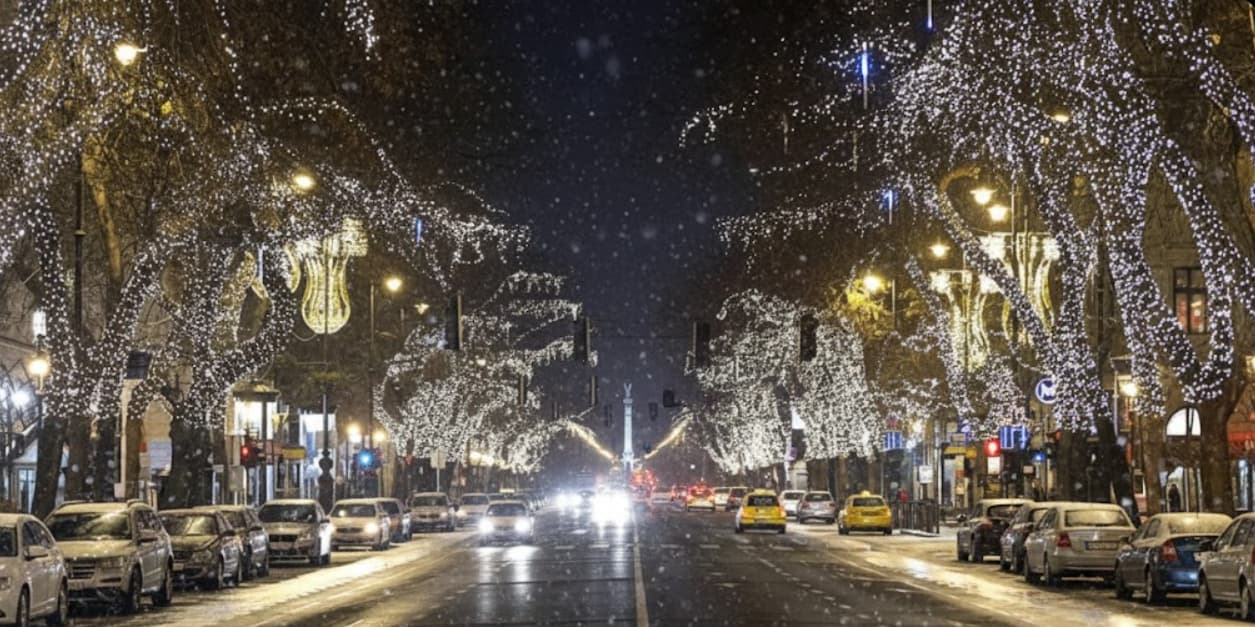
Andrássy Avenue in District VI, the UNESCO World Heritage boulevard at the center of Budapest’s Airbnb ban.
District VI’s Ban Is a Full Stop, Not a Cap
Terézváros didn’t cap short-term rentals. It set the allowed number of nights at zero, which is a different thing entirely.
The ordinance, numbered 26/2024. (X.31.), took effect January 1, 2026, and applies to every property in the district regardless of who owns it or which platform lists it. Not 30 days a year, not 90: zero. Only hotels, licensed guesthouses (panzió), and registered hostels can legally host overnight guests. Roughly 2,700 previously active short-term listings were affected across the district’s 2 square kilometers, in a neighborhood of about 29,000 housing units and 35,000 permanent residents, meaning close to one in ten homes had been running as tourist accommodation before the ban.
For trip planning, the takeaway is simple: any Terézváros listing on Airbnb or Booking.com that isn’t a hotel, hostel, or licensed guesthouse is either outdated, mislabeled, or operating illegally. Skip it.
How It Became Law: A Referendum, Then the Kúria
Terézváros residents voted on the ban in a consultative referendum in September 2024, and 54% of participants backed it. Hungary’s Supreme Court, the Kúria, upheld the ordinance in November 2025, clearing the way for it to take effect on schedule.
Turnout was around 20% of the district’s roughly 35,000 residents, so critics point out that under 4,000 people effectively decided the question for the whole district. Supporters counter that the people who showed up had a clear view of what living above an unregulated Airbnb feels like: late-night arrivals, a rotating cast of strangers in the stairwell, and a neighborhood that was starting to function more like a hotel district than a place people actually lived.
Mayor Tamás Soproni pushed the ordinance through against opposition from the capital’s government office, led by Sára Botond, which argued the district had overstepped its authority. The Kúria disagreed and ruled the ban lawful in November 2025, after a 14-month preparation period.
Enforcement Is Real, and the Ban Is Now Before the Constitutional Court
Terézváros started inspecting properties in the first week of January 2026, working with the police and Hungary’s National Tax and Customs Administration (NAV). By mid-May 2026, the district had run 633 on-site inspections, opened 57 proceedings (33 already concluded), and collected 28 million HUF in fines.
Individual violators face 200,000-500,000 HUF (about $630-$1,580); companies face up to 2,000,000 HUF (about $6,300); and a property can be closed for up to 45 days. Enforcement is straightforward because almost every short-term listing sits on one of two platforms, Airbnb or Booking.com, both searchable and cross-referenceable against municipal records. Hiding an illegally rented apartment that’s publicly listed with photos and an address is not really an option.
What the ban’s status doesn’t settle: the Hungarian Apartment Rental Association filed a challenge with Hungary’s Constitutional Court in early March 2026, arguing the ordinance oversteps what a municipality can do, since a full ban is a different legal question than a proportionate restriction. The court has not ruled. The ban stays in force while the case is pending, but it is not the last word yet, and a reversal would matter more to hosts weighing whether to convert their properties than to a tourist booking a week in Budapest.
District VIII, Not District I, Is the Next District to Watch
District I (the Castle District) gets mentioned most often as the “next” ban, and it is genuinely in talks: deputy mayor Csilla Fazekas has raised tighter rules, including a possible full ban, and opened discussions with neighboring district mayors about coordinating. But as of this writing, District I has no ordinance, no vote, and no date. Treat “considering” as exactly that.
District VIII (Józsefváros) is further along and is the one worth tracking if you’re planning a stay there. The district council confirmed the results of its public consultation in June 2026, and a detailed ordinance is expected in September 2026, set to take effect January 1, 2027, when the city-wide moratorium lifts. The framework being discussed would freeze short-term rentals at roughly their current 3.5% share of the district’s housing stock, cap any single building at 20% of its floor area, and push the Palace Quarter and Corvin Quarter toward under 5% over time, with condo associations able to veto new listings the way District VII already allows. Local coverage has called it Budapest’s second-strictest regime after Terézváros.
None of this is law yet. Short-term rentals in District VIII are legal today, and the earliest anything changes is January 2027. Just don’t book a District VIII apartment on the assumption that the rules there will look the same a year from now.
The City-Wide Moratorium Is Still the Bigger Constraint
Beyond any single district, Budapest has run a two-year, city-wide moratorium on new short-term rental registrations since January 1, 2025, and it doesn’t lift until December 31, 2026. No new Airbnb-style permits are being issued anywhere in the capital during that window. Existing registered properties keep operating, except in Terézváros, but nothing new can enter the market.
Alongside the moratorium, the national government raised the annual flat-rate tax on short-term rentals from 38,400 HUF to 150,000 HUF (about $120 to $470), which squeezes the margins on smaller apartments enough that some owners have switched to long-term leases instead.
Between the moratorium capping supply, the tax increase squeezing margins, and Terézváros eliminating the activity outright, Budapest’s short-term rental market is being reshaped from three directions at once. The legal firm DLA Piper has described the trajectory plainly: a more regulated framework is where Hungary’s private accommodation market is headed.
What Early Data Shows in District VI
Property portal ingatlan.com reported that available long-term rental listings in Terézváros rose to roughly 1,250 in January 2026, a 28% jump from January 2025, largely former Airbnb units returning to the regular rental market. Median monthly rent in the district dropped 1% year over year to 282,500 HUF (about $890), a notable move in a Budapest market where rents had generally been climbing.
Mayor Soproni told Balkan Insight that price growth in District VI has slowed to about 7% since the ban, compared to 15-18% in neighboring districts without similar restrictions. Only around half of the estimated 2,700 former Airbnb apartments are expected to convert to long-term rentals; the rest may sell or sit vacant, so the full picture is still forming. For a tourist, none of this changes much beyond fewer apartment listings and more hotel choices in that one district.
Where You Can Still Book Short-Term Rentals
Short-term apartment rentals are fully legal in most of Budapest. District VI is the only district with an outright ban.
- District V (Belváros-Lipótváros): the downtown core along the Danube, home to Parliament, St. Stephen’s Basilica, and the Central Market Hall. Prices run highest here, but the location does the work.
- District VII (Erzsébetváros): the Jewish Quarter and ruin bar heartland, and the neighborhood most similar to what Terézváros used to offer. Existing short-term rentals here are unaffected by the district’s own September 2025 cap on new large-scale conversions. See our ruin bars guide for the neighborhood’s nightlife.
- District IX (Ferencváros): Central Market Hall proximity, a growing craft beer scene, and prices well below the inner-city average.
- District XIII (Újlipótváros): a genuinely residential feel, good tram access, and some of the best value near the center.
District VIII (Palace Quarter) is legal too, for now; see the section above before you count on it staying that way. Whichever district you land in, check that the platform lists the property as licensed. All major booking sites flag this. For the full neighborhood breakdown, see our complete guide to where to stay in Budapest.
District VI’s Hotel Boom Fills the Gap
Terézváros has close to 40 operating hotels and four more in development, a striking density for a 2-square-kilometer district. Austrian coffee brand Julius Meinl is opening its first Budapest hotel on Hegedű Street, and the Wing Group is converting the historic Andrássy Palace into a premium hotel. Several operators who ran portfolios of short-term apartments are seeking hotel or guesthouse licenses instead, with renovation projects underway on Paulay Ede Street and Szív Street; new national rules requiring shared breakfast areas for all inns add cost, but well-funded operators are absorbing it.
Short-term stays haven’t vanished from District VI so much as they’ve been pushed into a more regulated, licensed form. The apartment you liked might still exist. It’s a boutique guesthouse now, and it probably costs more.
Budapest’s accommodation landscape keeps shifting district by district, but hotels, hostels, and apartments in most areas remain plentiful.
Budapest Isn’t Doing This Alone
European cities have been tightening short-term rental rules for a few years now, and Budapest’s move fits the pattern rather than leading it. Barcelona plans to eliminate short-term tourist rentals city-wide by November 2028. Vienna requires permits with strict annual caps. Amsterdam limits rentals to 30 nights a year. Spain fined Airbnb €65 million in 2025 over consumer protection violations. Dubrovnik has cracked down on unregistered listings.
The pattern: cities where tourism and housing pressure collide hardest are the ones writing the strictest rules, and Terézváros fits that description closely. What sets Budapest apart is the approach. Barcelona banned city-wide; Budapest is going district by district, so crossing from Terézváros into District VII, sometimes one block, puts you back in Airbnb-friendly territory. That patchwork has critics, but it also means the practical impact on visitors is far smaller than a blanket ban would be.
Our Take: Messy, Probably Right, Not Finished
The ban solves a real problem with a blunt tool, and it has real casualties. A former Hungarian State Opera ballerina told Balkan Insight the ban left her “devastated,” since her Airbnb income had become her main income after she left the stage. She’s one of a number of pensioners and small owners who followed every rule and now face a different financial picture entirely.
The counterargument holds up, too: pulling nearly 2,700 apartments, close to one in ten homes in the district, out of the long-term housing supply was not sustainable, and the early numbers (more rental listings, slightly lower rents) point in the direction supporters hoped for. Soproni’s goal of making District VI affordable for “mid-career teachers or policemen” is ambitious, but it’s not contradicted by the data so far.
The district previously collected over 2.1 billion HUF a year in tourism tax, about 700 million of that from Airbnb hosts and guests, and expects to lose roughly 300 million HUF of it, a loss Soproni has called manageable given the growing hotel sector. Some in the rental industry argue Barcelona-style smarter regulation (complaint hotlines, noise monitors, revocable licenses) would have solved this without a full ban; Barcelona’s own move to ban Airbnb outright by 2028 undercuts that argument somewhat.
The Constitutional Court case is the one open variable that could still change the calculus for hosts, though not for a short-term visitor’s plans. For tourists, this remains close to a non-event: book a hotel in District VI, or book an apartment one block over in District VII.
Practical Booking Tips for Budapest in 2026
- Want District VI specifically? Book a hotel, hostel, or licensed guesthouse. Booking.com, Expedia, and Hotels.com all flag licensed properties. A suspiciously cheap listing that doesn’t look like a hotel is worth skipping.
- Want the apartment experience? Look at Districts V, VII, or VIII. District VII in particular offers the same walkable, ruin-bar-adjacent feel that made District VI popular in the first place, and shares a literal border with it.
- On a budget? District XIII (Újlipótváros) runs up to 40% cheaper than downtown with easy tram access. District IX is another solid value pick near the Central Market Hall.
- Book early. Demand is redistributing from Terézváros apartments into hotels and neighboring districts, so popular District V and VII properties are seeing more pressure than usual.
- Verify the license. Major platforms display this in the listing details. If you’re booking direct with a host, ask. It costs 30 seconds and avoids a canceled trip.
For more detail, see our guides to where to stay in Budapest and Budapest’s ruin bars.
Budapest Airbnb Ban: The Numbers
| Fact | Detail |
|---|---|
| Banned since | January 1, 2026, District VI (Terézváros) only |
| Legal status | Upheld by the Kúria, November 2025; challenged at the Constitutional Court since March 2026, no ruling issued |
| District VIII (Józsefváros) | Drafting rules: 3.5% district cap, 20% per-building cap, under 5% target in the Palace/Corvin core. Expected September 2026, effective January 1, 2027 |
| District I (Castle District) | Talks only. No ordinance or date set |
| City-wide moratorium | No new short-term rental registrations anywhere in Budapest, January 1, 2025 to December 31, 2026 |
| Still fully legal | Districts V, VII, IX, XIII, and most of the city’s 23 districts |
| Fines, individuals | 200,000-500,000 HUF (about $630-$1,580) |
| Fines, companies | Up to 2,000,000 HUF (about $6,300) |
| Property closure | Up to 45 days for violations |
| Enforcement to date | 633 inspections, 57 proceedings (33 concluded), 28 million HUF in fines by mid-May 2026 |
| Hotels in District VI | Nearly 40 operating, 4 more in development |
| Legal stays in District VI | Hotels, licensed guesthouses (panzió), registered hostels only |
| Annual short-term rental tax | 150,000 HUF (about $470), up from 38,400 HUF (about $120) |
Dollar figures are converted at 1 USD = 317 HUF, the ECB reference rate on 31 July 2026, and rounded hard. Rates move, so treat them as ballpark, not receipts.
Last verified: August 2026.
Frequently Asked Questions About the Budapest Airbnb Ban
Can I still book an Airbnb in Budapest in 2026?
Yes, everywhere except District VI. Short-term rentals are fully legal in most districts, including the popular tourist areas of District V, VII, VIII, and IX. District VIII is drafting stricter rules for 2027, but nothing has changed there yet. No new registrations are being approved city-wide until December 31, 2026, though existing registered properties keep operating.
Is the District VI ban being legally challenged?
Yes. The Hungarian Apartment Rental Association filed a challenge with the Constitutional Court in early March 2026, arguing a full municipal ban goes further than what local governments are allowed to impose. No ruling has been issued. The ban remains in force while the case is pending.
What happens if I accidentally book an illegal rental in District VI?
The property can be closed for up to 45 days, and the host faces fines from 200,000 to 2,000,000 HUF depending on whether they’re an individual or a company. Enforcement targets hosts, not guests, but a mid-stay closure would still leave you without a room. Stick to listings platforms flag as licensed hotels, hostels, or guesthouses.
Why did Budapest ban Airbnb in District VI?
A consultative referendum in September 2024 passed with 54% support, driven by rising rents, noise, and the fact that close to 2,700 apartments, roughly one in ten homes in a district of 29,000 housing units, had shifted to tourist accommodation.
Which Budapest districts might ban Airbnb next?
District VIII (Józsefváros) is furthest along: its council confirmed a public consultation in June 2026 and expects to finalize rules in September 2026, taking effect January 1, 2027. Reporting has called it Budapest’s second-strictest regime after Terézváros, though it caps and restricts rather than banning outright. District I (Castle District) is still just talking about options with neighboring district mayors, with no ordinance or date set.
Are District VI hotels more expensive now because of the ban?
Not dramatically, at least not yet. Nearly 40 hotels operate in the district, with four more coming, including Julius Meinl’s first Budapest property and the Andrássy Palace conversion. That competition, plus new guesthouses converting from former Airbnb units, is keeping prices in check, and budget hostels remain part of the mix.
Can Airbnb hosts in District VI convert to a hotel or guesthouse license?
Yes, and several are already doing it, including renovation projects on Paulay Ede and Szív Street. Conversion means meeting stricter building and safety codes, securing new licenses, and often getting sign-off from the condo association. New national rules also require a shared breakfast area for every inn, which adds cost smaller operators sometimes struggle to absorb.
Is Budapest still a good value destination for tourists in 2026?
Yes. One district out of twenty-three has an outright ban, and Budapest remains one of Europe’s best-value capitals. A central hotel room runs about 25,000-60,000 HUF ($80-$190) a night, still well under comparable stays in Vienna, Prague, or Barcelona. See our guide to costs in Hungary for the full breakdown.
Find a bed, pick your district
Booking through these links supports the site at no extra cost to you. How this works.