🎯 TL;DR
Bábolna thermal bath sits 99km northwest of Budapest—sodium-bicarbonate healing waters, certified therapeutic indications, Finnish sauna, kids’ splash zone, and water slides, all at roughly a quarter of Széchenyi prices. The adjacent National Stud Farm (est. 1789) turns a spa day into a full regional excursion. You need a car or train ticket. That’s the trade-off. Worth it.
📋 Bábolna Beach and Thermal Bath at a Glance
| Best For | Families, therapeutic spa seekers, Budapest escapees who’ve given up on Széchenyi queue management |
| Time Needed | 3–5 hours (pair with the stud farm and you’re looking at a full day) |
| Cost | ~2,500–3,500 HUF adults (~$7–10 USD); children ~1,500–2,000 HUF (~$4–6 USD) |
| Hours | Seasonal — extended summer hours; reduced winter schedule; outdoor areas summer-only |
| Getting There | 99km from Budapest via M1 motorway (~1h 10min); MÁV Budapest–Győr train line stops at Bábolna |
| Skip If | You have no transport, require UNESCO-grade baroque architecture, or consider queuing a spiritual practice |
I drove to Bábolna Strand- és Termálfürdő fully prepared to be underwhelmed. Ninety-nine kilometres of motorway, Komárom-Esztergom county’s flat agricultural panorama, and then—a spa complex that actually knows what it’s doing. Not an photogenic fantasy palace. Not a Budapest-priced disappointment with a 45-minute locker queue. Just functional thermal bathing in a place where Hungarians actually go to feel better rather than to post content about feeling better.
From Horse Breeding Estate to Geothermal Destination
Bábolna’s identity was written in horse hooves long before anyone thought to drill for thermal water. Understanding where you are historically makes the whole visit land differently—this isn’t a spa town that grew up around a spring. It’s an agricultural estate of genuine European significance that discovered, somewhat later in life, that it was sitting on geothermal potential worth developing.
The Habsburg Imperial Stud Farm Legacy
The town of Bábolna exists, essentially, because of horses. The Bábolna National Stud was established in 1789 under Habsburg imperial patronage, originally to supply the military with quality horses and to develop Arabian and half-blood breeding lines for the monarchy’s cavalry. This wasn’t a provincial hobby farm—it was a state-level strategic asset, one of the most significant equestrian establishments in Central Europe at the time.
The estate’s architecture reflects that ambition. Riding halls, stables, and administrative buildings were designed with the permanence and formality of imperial infrastructure. The stud farm weathered the dissolution of the Habsburg empire, two world wars, decades of socialist collective management, and post-communist privatisation chaos to emerge as the Bábolna Ménesbirtok—a national heritage institution still operational today. When you drive into Bábolna, the sheer scale of the equestrian estate on your left tells you immediately that this small town punches significantly above its population weight.
The Bábolna horse breeding estate history runs deep enough that most Hungarian schoolchildren can tell you about it. The Arabian bloodlines developed here influenced equestrian breeding programmes across Europe. By the time the thermal bath development entered planning discussions, the stud farm had already given Bábolna a visitor infrastructure—event spaces, parking culture, a town identity built around day-trippers coming for equestrian shows.
Discovering the Geothermal Resource
Hungary sits on remarkable geothermal geology. The Pannonian Basin creates conditions where thermal water reaches the surface—or near-surface—across a substantial portion of the country, and Komárom-Esztergom county is no exception. Exploratory drilling in the Bábolna area confirmed what the regional geology suggested: sodium-bicarbonate-rich thermal water at temperatures suitable for balneological application, sitting at depths that made extraction economically viable for municipal development.
The discovery of this geothermal resource in the Bábolna area wasn’t particularly surprising to anyone familiar with northwest Hungary’s thermal bath density—the corridor between Budapest and Győr includes facilities at Esztergom, Tata, Komárom, and Győr itself. What the Bábolna thermal water offered was a specific mineral profile with certified therapeutic applications and temperatures ranging comfortably into the high-thirties and low-forties Celsius range, well suited to extended therapeutic bathing without the physiological stress of the higher-temperature pools found at some traditional Hungarian spas.
From HUF 500 Million Investment to Regional Attraction
The development of the thermal bath complex required significant municipal and regional investment—figures in the range of several hundred million forints for a facility of this specification are typical for Hungarian thermal bath infrastructure projects of this scale. The complex opened during summer 2020, which was, to put it diplomatically, a complicated moment in the global leisure industry. That the facility established itself despite an opening-year context that made “public swimming pool” a fraught concept says something about the underlying demand for accessible regional thermal infrastructure.
By the time I arrived, the facility had settled into its operational rhythm. The construction is modern rather than heritage—this is not a spa with a century of ornate tilework and poolside frescoes. It compensates with practical planning: covered indoor areas, logical visitor flow, equipment that works. As a regional attraction, it has carved out a clear identity as the thermal bath day trip from Budapest that doesn’t require you to budget like you’re treating yourself to something extraordinary.
Therapeutic Waters: Mineral Composition and Medical Applications
The word “thermal” gets applied to Hungarian spa facilities with varying degrees of precision. At Bábolna, the therapeutic credentials are legitimate—the water carries official balneological certification, the mineral composition has been analysed, and the facility operates with the kind of seriousness about its waters that distinguishes a genuine spa from a heated public pool with premium pricing.
Mineral Profile: What’s Actually in the Water
Bábolna thermal water is classified as sodium-bicarbonate-calcium type with measurable concentrations of magnesium, hydrogen-carbonates, and trace mineral content. The water emerges from depth at temperatures between 38–51°C, cooled to bathing-appropriate temperatures for the various pool installations. The sodium and bicarbonate content gives the water a characteristic slightly alkaline quality—you’ll notice it on your skin within about twenty minutes, that particular softness that well-mineralised thermal water produces and that no amount of bath salt product at home replicates.
The specific mineral profile places Bábolna’s water in a category recognised by Hungarian balneological science for its effects on musculoskeletal tissue. The calcium and magnesium content contributes to the water’s classification for joint-related therapeutic applications. This isn’t marketing—it’s the basis on which the facility received its official therapeutic certification from Hungarian health authorities, a process that involves independent water analysis and clinical assessment of therapeutic indications.
For context: not all Hungarian thermal baths hold therapeutic certification. Many are simply warm pools with pleasant water. Bábolna’s certified status is one of the reasons the facility attracts visitors with genuine therapeutic intent rather than exclusively recreational day-trippers.
Certified Therapeutic Indications
The officially recognised therapeutic indications for Bábolna thermal water include conditions in the rheumatic and degenerative joint disease category—arthritis, arthrosis, and post-injury joint rehabilitation are among the applications for which the water has received formal recognition. Chronic musculoskeletal complaints, particularly those involving the spine and major joints, are within the certified therapeutic scope.
What this means in practice: if you’re travelling with a grandparent whose GP has suggested thermal bath therapy, or if you yourself have a condition in these categories, Bábolna is operating with the appropriate credentials rather than simply providing warm water and hoping for the best. The certified therapeutic thermal bath Hungary designation matters for health insurance purposes in some cases and for the broader credibility of the treatment.
What it doesn’t mean: a single day-trip will not cure your chronic back pain. The therapeutic model for balneological treatment involves regular, repeated exposure over weeks. The certification establishes what’s possible with consistent use—which is precisely why the season pass and multi-visit structures exist, serving a local and regional population that treats the facility as part of ongoing wellness management rather than a one-off tourist experience.
Medical Consultation and Physiotherapy On-Site
Facilities operating at the certified therapeutic level in Hungary typically offer or coordinate with physiotherapy and balneological medical consultation services. At Bábolna, the integration of medical-adjacent services alongside the recreational thermal offering creates an environment that serves both visitor types without the clinical atmosphere putting off families looking for a normal spa day.
If you have specific therapeutic goals, it’s worth contacting the facility directly before your visit to understand what physiotherapy or medical consultation services are available, their scheduling, and any additional costs involved. The combination of certified therapeutic thermal water with professional physiotherapy input is where the genuine rehabilitative value of facilities like this gets realised—the water does part of the work, and skilled hands do the rest.
Pool Installations: Therapeutic Through Recreational Spectrum
Bábolna’s pool layout covers the full visitor spectrum from serious therapeutic soaking to children demanding slides, without any of these constituencies particularly annoying the others. The zoning is logical, the temperatures are clearly marked, and the various installations operate with enough independence that you can spend three hours entirely in the thermal pools without once being splashed by a six-year-old—if you choose correctly.
Indoor Thermal Pool
The indoor thermal pool is the facility’s core therapeutic installation—temperature maintained in the 36–38°C range, water quality at the standard expected from a certified balneological facility, and the year-round availability that makes Bábolna functional as a winter destination. The indoor pool space is designed for extended therapeutic use: shallow enough for standing soaking, with areas suited to movement therapy and basic aqua-exercise. The natural light situation in covered pools of this type varies; Bábolna’s indoor area functions rather than dazzles, which is appropriate for a facility where you’ve come to treat your joints rather than to appreciate the architecture.
Outdoor Thermal Pool
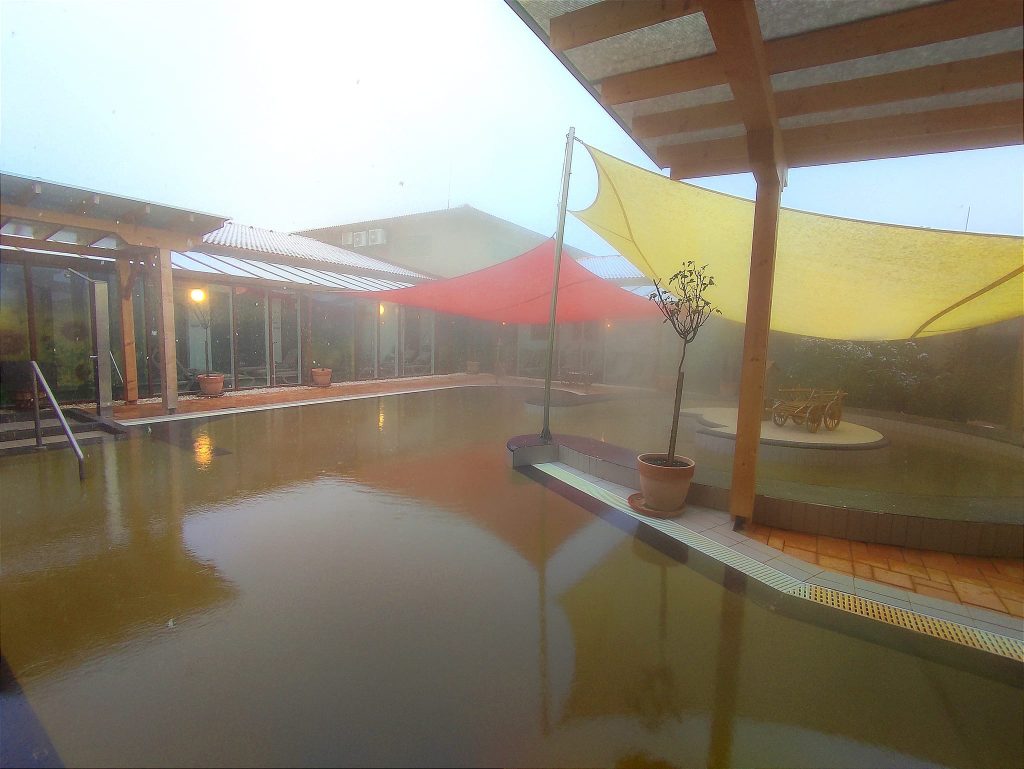
The outdoor thermal pool operates seasonally and delivers the experience that justifies the drive from Budapest on a clear summer or early-autumn day. Temperature in the 36–40°C range, open sky, the particular satisfaction of thermal water when the air temperature requires a jumper—this is the pool where I spent most of my visit. The outdoor thermal also connects to the broader beach area in a way that allows easy movement between the heated therapeutic water and the cooler recreational zones, which is useful for families managing children who want activity and adults who want to just sit in warm mineral water without discussion.
Beach Swimming Pool
The beach pool—”strand” in the Hungarian naming convention that gives the facility its full title—operates at standard swimming temperature rather than therapeutic warmth. This is where the facility earns its “beach” designation: a larger, cooler pool oriented toward recreational swimming and the general summer leisure that Hungarians do extremely well when given appropriate infrastructure. The beach pool area is summer-oriented, and the surrounding space is designed for the kind of day where you alternate between swimming, sunbathing on the grass, buying something from the snack bar, and repeating until the children are exhausted enough to consider departing.
Children’s Splash Zone and Water Play Area
The children’s section operates with the kind of engineering specifically designed to make every adult in a five-metre radius wet against their wishes. Spray Park infrastructure—jets, sprayers, tipping buckets, interactive water features at child-appropriate heights—creates an area where children between approximately three and ten years old will need to be physically removed when it’s time to leave. The water temperature in the splash zone is kept warmer than the main beach pool, which is considerate of the fact that children generating less body heat than teenagers tend to exit pools blue-lipped and denying they’re cold while visibly shivering.
For parents: the children’s area is visible from adjacent seating, which allows the kind of supervision-at-a-distance that makes spa days with young children possible rather than purely theoretical.
Water Slides: Specifications and Age Requirements
Water slide installations at Hungarian thermal facilities operate under safety regulations that establish minimum height and age requirements. At Bábolna, the slides serve the intermediate age group—children old enough for the excitement but not yet old enough to be bored by it—with the standard height minimums (typically 120cm+ for the larger slides) enforced by the facility staff. Specific slide specifications and current age/height requirements should be confirmed with the facility before bringing a child of borderline eligibility, to avoid poolside negotiation that nobody wins.
Accessibility Features for Elderly and Mobility-Impaired Visitors
Accessible thermal bath design has improved significantly in Hungarian facilities built or substantially renovated post-2010, and Bábolna as a modern (2020) facility was designed with the EU accessibility standards that apply to public leisure infrastructure. Stepped and ramped pool entries are available, and the facility layout is navigable without stairs at the critical transition points. For visitors with significant mobility impairment, I’d recommend a direct call to the facility before visiting to confirm current accessibility infrastructure—these details change, and a phone call takes three minutes and prevents a 200km round trip of frustration.
Wellness Facilities: Scandinavian Standards in Provincial Hungary
The sauna suite at Bábolna resolves a question I hadn’t thought to ask until I arrived: can a provincial Hungarian thermal bath deliver sauna infrastructure that holds up against Scandinavian expectations? The answer, somewhat to my surprise, is substantially yes—the sauna facilities function at a level that goes beyond token provision and into genuine wellness programming.
Finnish Sauna and Steam Room
The Finnish sauna operates at the temperatures the Finns actually use—around 80–90°C, with the possibility of löyly (steam from water on hot stones) that makes a Finnish sauna worth the distinction from a generic hot room. The construction uses the expected timber lining, tiered benches, and proper sauna stones. This is not a decorative sauna that runs at 65°C to avoid frightening people who’ve never sat in a real one. The steam room operates at lower temperature with higher humidity—the standard complement to the dry sauna, useful for respiratory benefits and for people who find dry heat less comfortable than wet heat at the same effective thermal load.
Sauna facilities in provincial Hungary have historically been underdeveloped relative to the thermal pool infrastructure—the assumption that Hungarians come for the water rather than the sauna led to decades of sauna provision as afterthought rather than feature. Bábolna’s approach represents the newer model, where sauna is treated as a distinct wellness offering rather than a locker room amenity.
Cold Plunge and Cool-Down Facilities
A sauna without cold water infrastructure is like a sentence without punctuation—technically there, but missing the structure that makes it work. The cold plunge at Bábolna provides the temperature contrast that drives the circulatory benefits of the sauna cycle. Outdoor air cooling between sessions is also available, which during Hungarian summers provides a different kind of contrast and during the shoulder seasons provides a rather more aggressive version of the same. The cold plunge temperature is properly cold—not refreshingly cool, but the kind of cold that takes your full attention for the first three seconds and then transitions into a particular alert calm.
Relaxation Rooms and Rest Areas
Between sauna sessions, the protocol is rest. Bábolna provides designated relaxation space for this purpose—quiet areas where the ambient temperature is comfortable, horizontal surfaces are available, and the expectation is stillness rather than activity. For visitors using the sauna as a therapeutic tool rather than a social one, the quality of the rest space between sessions matters nearly as much as the sauna itself. The facility’s approach here is functional; the spaces do the job without the spa hotel luxury that adds significantly to cost.
Cabana and Private Space Rental
For families or groups who want a fixed base in the outdoor area, cabana rental provides a private space with shade, seating, and storage that removes the eternal sunbed-claiming exercise. Cabana rental costs extra beyond the admission ticket and is best booked in advance for summer weekends when the facility operates at higher capacity. The value proposition is straightforward: if you’re arriving as a group of four or more and planning a full day, a fixed private space removes logistical friction that adds up over several hours.
Ticket Prices and Opening Hours: Everything You Need to Budget
Pricing at Bábolna operates in a different universe from Budapest’s tourist-facing thermal establishment pricing. The comparison is worth making explicitly because it’s the single most persuasive argument for the 99km drive, and because visitors who don’t check in advance sometimes assume provincial spas match city prices. They do not, and in this case, the difference is significant enough to be one of the facility’s main selling points.
Adult and Child Admission Prices
Current Price Reference Table
| Facility | Ticket Type | Price |
|---|---|---|
| Bábolna Strand- és Termálfürdő | Adult day ticket (estimated seasonal) | ~2,500–3,500 HUF (~$7–10 USD) |
| Bábolna Strand- és Termálfürdő | Child day ticket (estimated) | ~1,500–2,000 HUF (~$4–6 USD) |
| Széchenyi Thermal Bath | Full-day ticket (online from) | ~16,000 HUF (~$43 USD) |
| Lukács Thermal Bath | Adult day ticket | ~4,500–6,000 HUF (~$13–17 USD) |
| Esztergom Thermal Bath | Adult day ticket (estimated) | ~3,000–4,500 HUF (~$8–13 USD) |
| Rába Quelle Győr | Adult day ticket (estimated) | ~3,500–5,000 HUF (~$10–14 USD) |
| Brigetio Spa Komárom | Adult day ticket (estimated) | ~2,500–4,000 HUF (~$7–11 USD) |
Prices are estimates. Verify current rates directly with each facility before visiting. Prices verified: February 2026.
Adult admission at Bábolna Strand- és Termálfürdő runs approximately 2,500–3,500 HUF (~$7–10 USD) depending on season, with weekday and weekend differentials common at Hungarian thermal facilities. Children’s tickets land around 1,500–2,000 HUF (~$4–6 USD). A family of four—two adults, two children—arrives at a total outlay in the range of 8,000–11,000 HUF for admission, which represents the kind of pricing that makes a spontaneous midweek decision feasible rather than requiring a budget conversation.
Senior and Disability Discounts
Reduced admission for pensioners is standard at Hungarian public thermal facilities, and Bábolna follows this convention. Disability discounts and carer admission policies exist but vary; the detail that matters most is whether the discount applies automatically or requires documentation. Bring a valid Hungarian pensioner card or EU-recognised disability documentation to confirm eligibility at the gate. The saving is typically 20–30% off standard adult admission, which across a regular visiting pattern adds up to meaningful annual saving for local therapeutic users.
Seasonal Opening Hours
Bábolna operates on a seasonal schedule that distinguishes between the summer beach season—when the outdoor pools, splash zones, and beach areas are fully operational—and the winter schedule, when the indoor thermal pools carry the facility through the colder months. The summer season typically runs May through September with extended hours and full facility access; the winter schedule reduces to the indoor thermal components and wellness facilities. Exact hours change annually and with Hungarian public holidays, so checking the facility’s current schedule before making a 200km round trip is not optional advice—it’s the thing that separates visitors who arrived during closing day from everyone else.
What’s Included vs. What Costs Extra
Standard admission covers the thermal pools, beach pool, splash zone, and the facility’s common areas. Sauna access may require a separate sauna ticket or an upgraded admission tier—this is common at Hungarian thermal facilities and worth clarifying when purchasing. Cabana rental, physiotherapy, any massage services, and equipment rental (locker coin deposit is typically refunded) all operate outside the standard admission price. The food and beverage operation is obviously additional. Budget approximately 3,000–5,000 HUF per adult beyond admission for a full-day visit with a meal and one or two extras.
Photography Policy Inside the Facility
Photography policy at Hungarian thermal baths is governed by a combination of privacy law and common sense that the facilities enforce with varying degrees of consistency. The general principle: personal photography in the water areas is restricted to your own group, and photographing other visitors—particularly in changing or showering areas—is prohibited and may result in removal from the facility. Drone photography is not permitted at public thermal facilities. If you’re visiting professionally or with specific content creation intent, contact the facility communications department in advance; a politely sent email requesting permission for photography often works, and avoids the alternative.
Multi-Visit Passes and Group Arrangements
Bábolna’s pricing structure rewards commitment. If you live within a reasonable driving distance—or are visiting the region for an extended period—the multi-visit and season pass options change the cost calculus significantly, bringing the per-visit price down to a level that makes spontaneous mid-week therapeutic bathing feel like a reasonable lifestyle choice rather than a planned expenditure.
Season Passes and Multi-Entry Value
Season pass structures at Hungarian thermal facilities typically offer access for the summer season or year-round, priced at a multiple of the daily ticket that pays for itself within a relatively small number of visits. At Bábolna’s pricing level, a season pass covering ten visits delivers per-visit cost in the range of single-digit dollar equivalents—meaningful saving for the regional population that uses the facility therapeutically rather than recreationally. The season pass is also the mechanism through which Bábolna serves its core local constituency: the older Komárom-Esztergom residents whose GPs have recommended regular thermal bathing as part of managing chronic musculoskeletal conditions.
Group Booking and School Visit Arrangements
Groups of ten or more typically qualify for negotiated rates at Hungarian public thermal facilities, and Bábolna accommodates school visits, corporate wellness groups, and organised day trips from regional social care or senior centres. Group bookings require advance arrangement rather than gate negotiation—contact the facility’s reception or group booking coordination directly, ideally several weeks before the intended visit date for larger groups. School visits during the academic year often access dedicated time slots that avoid the weekend leisure crowd, which benefits both the students and the adults who’d prefer their therapeutic bathing unaccompanied by forty primary school children.
Online vs. Gate Purchase Options
The Hungarian thermal bath industry has, with varying enthusiasm, adopted online ticketing over the past few years. At Bábolna, checking whether online pre-purchase is available before your visit is worthwhile—not because gate queues are severe (they’re not, at a provincial facility of this size), but because some facilities offer online-exclusive pricing or the convenience of skipping the ticket window entirely. The facility website is the authoritative source for current ticketing options; third-party booking platforms sometimes list outdated pricing for smaller regional facilities.
Transportation Logistics and Parking Infrastructure
Getting to Bábolna requires planning that Budapest’s central thermal baths don’t demand. This is the facility’s most straight up limitation, and pretending otherwise would be disrespectful to your time. You need either a car, a train ticket, or a friend with a car and sufficient goodwill to be talked into a weekday thermal excursion. Once this logistical hurdle clears, everything else is straightforward.
Getting There by Car from Budapest
From Budapest, the M1 motorway westbound is your route. The drive covers approximately 99km and takes around 70 minutes in normal traffic conditions—add 15–20 minutes for Budapest exit traffic during morning hours. The M1 is a motorway vignette-required route; ensure your Hungarian motorway sticker is current before departure. The turn-off for Bábolna is clearly signed, and the town is small enough that navigation to the thermal bath complex is straightforward once you’re in the municipal area. Parking is on-site and, as a provincial facility, does not present the spatial argument with other drivers that characterises Budapest spa parking on summer weekends.
Train and Bus from Budapest
MÁV operates the Budapest–Győr main line with a stop at Bábolna station. Journey time from Budapest Keleti or Kelenföld is approximately 60–80 minutes depending on service type. The station is within manageable walking distance of the thermal bath complex, or a short taxi/rideshare trip—confirm current availability of local transport in advance, as Bábolna’s taxi infrastructure is regional rather than metropolitan. Train frequency on the Budapest–Győr corridor is good by Hungarian rural standards; InterCity and regional trains both serve the route. Check the MÁV schedule for current timetabling, particularly for the return journey—missing the last suitable train and facing a 99km taxi ride back to Budapest is a costly way to have extended your visit.
Parking: Capacity, Cost, and Location
On-site parking at the thermal bath complex is the standard arrangement for provincial Hungarian facilities of this type—a dedicated car park adjacent to the entrance, sized for the expected visitor volume. Parking cost varies and may be included in admission, validated at the ticket window, or charged separately; confirm the current arrangement when purchasing your ticket. Capacity is not the concern it is at Budapest thermal facilities; arriving at peak summer weekend times may require finding an adjacent space, but the parking arms race that characterises the Széchenyi car park situation does not apply here.
Road Trip Angle: Budapest–Győr Corridor Stop
For travellers already moving between Budapest and Győr—whether heading to the Győr thermal scene at Rába Quelle, continuing toward Bratislava or Vienna, or exploring the Transdanubian corridor—Bábolna positions naturally as a mid-journey stop. The detour from the M1 is minimal. Combining a two-hour thermal bath session at Bábolna with the Bábolna National Stud and continuing to Győr for the evening creates a day-trip circuit that covers distinctly Hungarian territory—agricultural estate history, certified thermal bathing, and regional city culture—without doubling back to Budapest.
Food Service: Surpassing Standard Spa Fare Expectations
Spa food at Hungarian provincial facilities has historically been the weakest element of the visitor experience—the obligatory lángos (fried dough), overpriced soft drinks, and a hot counter with rotating gulyás that may have seen better days. Bábolna’s food operation performs above this baseline, which is both welcome and worth noting because it affects the decision about whether to pack a full picnic or trust the facility.
On-Site Restaurant and Snack Bar
The facility’s food service operates across both a restaurant element and a more casual snack bar format suited to the between-pools appetite. The restaurant serves Hungarian main dishes at midday—pörkölt, grilled meats, the standard structural elements of Hungarian lunch—while the snack bar handles the lighter, faster-moving category of fried items, sandwiches, cold drinks, and the ice cream that becomes non-negotiable somewhere around the second hour of a summer beach day. Both operations are within the facility perimeter, so exiting and re-entering is unnecessary for food purposes.
Price Ranges and Menu Highlights
Main course pricing at provincial Hungarian spa restaurants typically runs 2,000–4,000 HUF (~$6–11 USD) for hot dishes—significantly below Budapest restaurant pricing for comparable food. The menu at facilities like Bábolna leans toward Hungarian comfort food rather than dietary adventurism, which is entirely appropriate for a place where people have just spent two hours in warm mineral water and have opinions about what they’d like to eat that don’t involve a curated tasting menu. The lángos is obligatory. Get the one with sour cream and cheese. You’re at a thermal bath in rural Hungary; dietary restraint can wait until tomorrow.
Eating in Bábolna Town: Nearby Alternatives
Bábolna town offers limited but functional dining options for visitors who prefer to eat outside the facility—the town centre is small enough that options are measured in single digits rather than restaurant districts. Hungarian village étterems (restaurants) in this category typically serve lunch from around noon to 14:30 and operate on a daily-special model. For visitors combining the thermal bath with the National Stud Farm, there may be food service associated with the stud farm visitor facilities during event days. Planning the food dimension of your day in advance is worthwhile if you have strong preferences; improvising in a small provincial town is manageable but not exciting.
Beyond Bathing: Complementary Attractions in Bábolna
The case for Bábolna over other thermal bath day trips from Budapest is partly the price, partly the crowds (absent), and partly the fact that this particular town has a companion attraction of genuine European cultural significance sitting immediately adjacent to the spa. The Bábolna National Stud is not a manufactured tourist addition—it’s the reason the town exists, and visiting without at least walking through the stud farm grounds is a missed opportunity.
Bábolna National Stud: Equestrian Shows and Museum
Equestrian shows run on a seasonal schedule—typically summer weekends and special event dates. Entry fee applies for shows, while the grounds and some facilities may be accessible more informally. The stud farm museum is the component most relevant to visitors interested in the Habsburg agricultural history of the Pannonian plain; the exhibition contextualises Bábolna within the broader story of Hungarian agricultural development and imperial estate management in a way that the thermal bath complex, understandably, does not attempt.
Full-Day Itinerary: Thermal Bath Morning, Stud Farm Afternoon
The recommended Bábolna day trip structure: arrive at the thermal bath by 10:00, spend three to four hours across the thermal pools and wellness facilities, eat on-site around 13:00, then walk or drive the short distance to the National Stud for the afternoon. If you’ve timed your visit to coincide with an equestrian show (check the stud farm calendar in advance), the afternoon component gains a specific anchor event. If not, the stable tours and museum carry two hours comfortably. Departure by 17:00 gets you back in Budapest before the motorway evening peak.
This structure works particularly well for visitors with children who reach thermal bath saturation point around hour three—children who are done with the water are not done with horses, and the transition between activities keeps the day functional rather than involving the kind of circular negotiation that can characterise family day-trips without a clear second act.
Cycling to Brigetio Spa and Rába Quelle
For cyclists using the Budapest–Győr cycling infrastructure or the Danube cycling route, Bábolna connects to a broader thermal bath touring circuit. Brigetio Spa in Komárom lies approximately 20km south, reachable via the regional road network on a route that passes through the Danube bend landscape of Komárom-Esztergom county. Rába Quelle in Győr is accessible for stronger cyclists as a day-tour endpoint approximately 40km northwest—Győr as an overnight destination makes the full circuit viable for multi-day touring. Both facilities offer separate admission and represent distinct thermal water profiles; the Komárom and Győr thermal infrastructure is sufficiently developed that the cycling circuit delivers a different thermal experience at each stop.
Bábolna Town Centre
Bábolna town centre is small, architecturally cohesive in the way that agricultural estate towns often are, and worth a thirty-minute walk between activities. The urban scale is human rather than grand—the stud farm architecture dominates any aesthetic reading of the town, and the rest is pleasant provincial Hungarian urban fabric of the type that exists across Transdanubia without generating particular tourist attention. There’s a market, a church, the occasional coffee option, and the strong sense of a place that does its business without performing for visitors, which is, in its own way, restorative.
Visitor Preparation: Essential Items and Facility Protocols
Hungarian thermal bath protocol has a specific logic that first-time visitors often encounter without warning and then adapt to immediately. Nothing about the system is complicated, but arriving without the right equipment or the right information creates unnecessary friction at the point of entry. Consider this section the briefing you’d get from a local friend who’s done this before.
What to Pack: The Essential Checklist
Pro Tip: What to Bring to Bábolna Thermal Bath
Swimwear (two sets if possible—one for thermal pools, one dry for travel home), flip-flops or pool sandals, towel (or rent on-site), sunscreen for outdoor areas, a 200 HUF coin for locker deposit, a small waterproof bag for phone and valuables, and enough cash for food, drinks, and any rental items. Cards are increasingly accepted but cash remains useful at provincial facilities.
The practical additions: a change of clothes for the journey home, because departing a thermal bath in damp swimwear through a car journey is an experience nobody needs more than once. A light layer for the post-sauna cool-down periods. Goggles if you plan to use the lap swimming option in the beach pool. Children’s water shoes for the splash zone, where the surface textures vary.
Locker System: Coins, Keys, and Sizes
Hungarian thermal bath lockers operate on a coin-deposit system: insert a 200 HUF coin to lock, retrieve the coin when you unlock. The coin is returned to you—it’s a deposit, not a payment. Arrive without a 200 HUF coin and you’ll find yourself borrowing one from the ticket desk or a sympathetic stranger, which is a manageable situation but avoidable. Locker sizes at provincial facilities are generally adequate for a day-bag, shoes, and clothing; oversized baggage is better left in the car.
Towel and Equipment Rental
Towel rental is available at Bábolna if you’ve arrived without one—rental fee is typically in the 500–1,000 HUF range, which is more than a supermarket towel and less than a premium hotel amenity. Swimwear rental exists at some Hungarian thermal facilities but is not universally available; do not rely on this without confirming in advance. Equipment rental for things like aqua noodles, armbands, or children’s flotation devices may be available from the facility or on-site vendors.
Family and Child-Specific Requirements
Children under a certain age—typically 3 years old, but confirm current policy—may require swim nappies rather than standard nappies in the pool areas. This is standard practice at all certified therapeutic facilities in Hungary and non-negotiable from the facility’s hygiene management perspective. Children must be supervised in the water areas; the splash zone is designed for independent child use within adult supervision distance. Families with pushchairs or prams should note that pool surrounds are navigable but wet—leave pushchairs in the designated dry areas.
Best Time to Visit: Day, Week, and Season
Weekday mornings in the shoulder seasons (April–May, September–October) represent the Bábolna thermal bath at its best from a crowd management perspective. Weekends in July and August bring regional families in volume—the facility handles it, but the atmosphere shifts from therapeutic calm to active leisure. Wednesday and Friday evenings (when the facility operates extended evening hours) offer a different and pleasant experience: the outdoor pools after 18:00 in summer, the falling light over the agricultural landscape, fewer families with young children. Winter weekday visits in the indoor thermal complex are practically empty and deeply restorative if your tolerance for provincial quiet is calibrated correctly.
Seasonal Programming and Special Event Calendar
Bábolna’s event calendar is modest by Budapest standards—this is not a facility running weekly parties, themed wellness weekends, or international spa festivals. What it offers instead is a clean seasonal structure and the particular advantage of shoulder-season availability that the city’s thermal establishments, operating under constant tourist demand, can’t quite match.
Summer Beach Season Events
The summer season—running approximately late May through early September—represents the facility’s full operational expression. The beach pool area activates, the outdoor thermal opens, the splash zone runs at full capacity, and the snack bar works overtime. Summer programming may include evening openings, family event days, and seasonal promotions coordinated with the National Stud’s equestrian show schedule. The stud farm’s major annual events (check the Bábolna National Stud website for current programming) tend to cluster in summer and provide natural anchor dates around which to plan a combined visit.
Winter Thermal Programming
Winter operation at Bábolna concentrates in the indoor thermal pool and wellness facilities. The reduced visitor volume and therapeutic atmosphere of a warm mineral pool in cold-weather context represents a different product from the summer beach experience—and one that’s arguably better suited to the facility’s therapeutic credentials. Winter opening hours are reduced; the specific schedule varies by year and should be confirmed directly. Outdoor areas including the beach pool are closed; the water slides are seasonal. What remains is the core: hot water, sauna, cold plunge, and the kind of deep muscular relaxation that a Hungarian winter weekend afternoon calls for.
Shoulder Season: The Insider’s Timing Advantage
April, May, and October are when Bábolna thermal bath works best for anyone who prioritises experience quality over seasonal completeness. Outdoor areas may be operational depending on temperature; indoor facilities are fully available; admission prices are at standard rates without summer premium; and the visitor count is a fraction of peak season. The agricultural landscape around Bábolna in spring and autumn has its own particular character—the flatlands that look monotonous in summer acquire a different quality when the light angles change. If you have flexibility in your planning, the shoulder season case is strong.
Comparative Analysis: Bábolna Versus Budapest’s Thermal Establishments
This comparison gets made implicitly every time someone from Budapest considers a day-trip thermal bath excursion, so let’s make it explicit. The question isn’t whether Bábolna is as impressive as Széchenyi—it isn’t, and it doesn’t try to be. The question is whether the specific advantages Bábolna offers justify the transport investment, and for significant portions of the visitor market, they clearly do.
Bábolna vs. Széchenyi Thermal Bath
Széchenyi Thermal Bath (Állatkerti krt. 9-11, Budapest) charges approximately 16,000 HUF (~$43 USD) online for full-day access. It offers a century-old neo-baroque building of genuine architectural magnificence, immediate access via Budapest public transport, and international name recognition that makes it the default thermal bath recommendation for every tourist guide published in the last twenty years. It also offers: dense tourist crowds year-round, a locker queue that functions as its own attraction, pool temperatures and mineral profiles that vary by pool, and the particular experience of soaking in hot water surrounded by people who are primarily there because TripAdvisor told them to be.
Bábolna offers none of the architecture, the brand recognition, or the metropolitan convenience. It offers certified therapeutic water at roughly one-fifth the price, no meaningful queuing, and the reasonable expectation that the majority of people around you are there because a joint hurts or a doctor recommended it. For therapeutically-motivated bathing, Bábolna wins on every criterion except location.
Bábolna vs. Lukács Thermal Bath
Lukács Thermal Bath (Frankel Leó u. 25-29, Budapest) is the Budapest thermal establishment that authentic-thermal-bath advocates recommend when someone asks for “something less touristy than Széchenyi.” Adult tickets run ~4,500–6,000 HUF (~$13–17 USD). Lukács is good—older infrastructure, real local clientele, certified therapeutic waters, the kind of atmosphere where the regulars have their own towels on specific benches and resent you mildly for sitting where you shouldn’t. It’s more accessible than Bábolna (Budapest public transport), less expensive than Széchenyi, and represents authentic Budapest thermal culture.
The Bábolna case against Lukács is: lower price still, outdoor space (Lukács has a courtyard but no beach), the companion attraction of the National Stud, and the family infrastructure including the splash zone and water slides that Lukács, operating in a century-old urban building, cannot accommodate. If you’re a solo visitor prioritising authentic Budapest thermal culture, Lukács wins. If you’re a family looking for a full day out, Bábolna’s proposition is stronger.
Bábolna vs. Esztergom and Tata
The Bábolna counterargument: the National Stud is a heritage attraction of comparable depth to Esztergom’s secular heritage, with a specialist appeal (equestrian history, Habsburg agricultural estate culture) that makes for a more distinctive itinerary. The thermal water certification at Bábolna is robust. And the price point remains competitive.
Who Should Choose Bábolna Over Budapest?
Families with children aged 4–14 who want a full day of varied activity rather than a single heritage building. Visitors with genuine therapeutic intent who want certified balneological water without Budapest pricing. Budget-conscious travellers who’ve already done Széchenyi and want an authentic regional experience. Motorists on the Budapest–Győr corridor who want to turn a transit route into an itinerary. Equestrian enthusiasts who want the stud farm and are happy to add thermal bathing. Anyone who finds the phrase “99km each way” less intimidating than “45-minute locker queue.”
Frequently Asked Questions
How far is Bábolna thermal bath from Budapest?
Approximately 90–100km west of Budapest via the M1 motorway, with a driving time of roughly 70 minutes in normal traffic conditions. The MÁV Budapest–Győr train line stops at Bábolna station, with journey times of approximately 60–80 minutes from Budapest Keleti or Kelenföld depending on service type. The motorway vignette requirement for the M1 applies to car travellers; ensure your Hungarian e-vignette is current before departure.
Is Bábolna thermal bath open in winter?
Yes—the indoor thermal pool and wellness facilities operate year-round, including the Finnish sauna and steam room. The winter schedule reduces hours compared to summer, and outdoor areas including the beach pool and water slides are closed from approximately October through April. The indoor thermal pool in winter is a different and, in many ways, superior experience to the summer beach season—quieter, more therapeutically focused, and atmospherically appropriate for the season. Always confirm the current winter schedule directly with the facility before visiting.
What is the admission price for Bábolna thermal bath?
Adult day tickets are estimated at approximately 2,500–3,500 HUF (~$7–10 USD) with seasonal and weekday/weekend variation. Children’s tickets run approximately 1,500–2,000 HUF (~$4–6 USD). Senior and disability discounts are available. Season passes and multi-visit options offer significant saving over single-day pricing. The price table earlier in this article provides a comparison with other regional facilities. Confirm current prices directly with the facility—the website and gate rates are the authoritative sources, and provincial Hungarian facilities update pricing seasonally.
Can children visit Bábolna thermal bath?
Yes—Bábolna is well-suited to family visits. The facility has a dedicated children’s splash zone with spray features and water play at child-appropriate scale, a beach pool for general summer swimming, and water slides with minimum height requirements (confirm current specifications directly, as the standard threshold is around 120cm for the larger slides). Children under approximately three years of age may be required to use swim nappies in the pool areas. The outdoor layout is accessible for families with pushchairs in the dry areas adjacent to pools.
Is there parking at Bábolna thermal bath?
Yes—on-site parking is available at the complex. As a provincial facility without Budapest’s urban land constraints, Bábolna does not experience the parking pressure that makes arriving by car at Széchenyi on a summer weekend an exercise in optimism. Parking cost is either included in admission or charged separately at modest rates; confirm the current arrangement at the ticket window. The car park is adjacent to the main entrance, making the transition from vehicle to facility straightforward for families with equipment.
What are the therapeutic benefits of Bábolna thermal water?
Bábolna thermal water carries official Hungarian balneological certification for therapeutic applications including rheumatic conditions, degenerative joint disease, and musculoskeletal complaints. The sodium-bicarbonate-calcium mineral profile at temperatures of 38–51°C (cooled to bathing temperature in pools) has documented effects on soft tissue and joint health with regular therapeutic use. This is not a substitute for medical treatment, and a single day-trip will not resolve a chronic condition—the therapeutic model requires regular, repeated exposure. The certification means the water has been independently analysed and the therapeutic claims reviewed by Hungarian health authorities rather than written by a marketing department.
Can you combine Bábolna thermal bath with the National Stud farm visit?
Yes—and this is the recommended itinerary. The Bábolna National Stud (operational since 1789) is within easy walking or short driving distance of the thermal bath complex. Morning thermal bathing, on-site lunch, afternoon stud farm visit with museum and equestrian show (if timed with the seasonal show schedule) creates a full-day programme that uses the 200km Budapest round trip more efficiently than a thermal bath visit alone. Check the National Stud show calendar before booking your visit date to maximise the afternoon component.
Final Assessment: Who Should Prioritise Bábolna
I’ve tried to present Bábolna thermal bath without either underselling or over-inflating it. It’s a good provincial Hungarian thermal facility with certified therapeutic waters, competitive pricing, functional amenities, and a companion heritage attraction that elevates the day-trip proposition. It’s not a destination that will make you rearrange your travel plans. It will make your existing plans better if Transdanubia is already in your itinerary.
Perfect For: The Ideal Bábolna Visitor Profile
You are the ideal Bábolna visitor if: you have a car or willingness to use the train; you want certified therapeutic bathing rather than heritage tourism; you’re travelling with family and need the splash zone to absorb children while you soak in peace; you’re price-conscious enough that the Széchenyi ticket makes you briefly consider whether spa tourism is a reasonable life choice; or you have genuine musculoskeletal reasons to seek out properly mineralised thermal water. If any of these apply, the 99km is justified.
Consider Alternatives If…
You lack personal transport and find the train logistics unappealing. You want thermal bathing in a historically significant architectural setting—in which case Széchenyi, Rudas, or Gellért serve that need in Budapest without additional travel. You’re spending only two days in Hungary and the 200km round trip represents a significant proportion of your available time. Or you prioritise Danube scenery alongside your thermal experience, in which case Esztergom offers a stronger landscape component.
Zoli’s Verdict
I went expecting to write 500 words of polite ambivalence. I ended up staying five hours, eating one more lángos than was technically necessary, spending twenty minutes longer in the sauna than intended, and driving home via a route that took me past the stud farm gate at evening light because I wanted to see the horses again. Bábolna is the thermal bath day trip from Budapest that doesn’t ask you to manage expectations—it just asks you to make the drive. That’s a reasonable trade.
📍 Essential Information
| Facility | Bábolna Strand- és Termálfürdő |
| Location | Bábolna, Komárom-Esztergom County, Hungary |
| Distance from Budapest | ~99km via M1 motorway (~70 min by car) |
| Adult Admission | ~2,500–3,500 HUF (~$7–10 USD) — verify current rates |
| Child Admission | ~1,500–2,000 HUF (~$4–6 USD) — verify current rates |
| Summer Hours | Typically May–September, extended hours; confirm annually |
| Winter Hours | Indoor thermal and wellness facilities; reduced schedule |
| Train Access | MÁV Budapest–Győr line, Bábolna station |
| Website | babolnafurdo.hu |
| Companion Attraction | Bábolna National Stud (Bábolnai Ménesbirtok) — walking distance |
Prices verified: February 2026. Admission prices are estimates — confirm current rates directly with the facility before visiting.


