TL;DR: Budapest’s thermal baths look intimidating but are simple once you know the system. Buy your ticket (locker or cabin), get a wristband, change, shower, and follow the steam. Széchenyi from 13,200 HUF (~$36), Rudas from 12,000 HUF (~$32), Lukács from 7,000 HUF (~$19). Gellért and Király are both closed for renovation in 2026. Best for anyone who wants to stop Googling and start soaking.

Budapest thermal baths use a wristband-and-locker system: you purchase a ticket with locker or cabin access, receive an electronic wristband at the entrance, change in gender-separated changing rooms (locker) or a private cubicle (cabin), shower before entering, and then freely explore the thermal pools, saunas, and steam rooms. Most baths are open daily from 6 AM to 8 PM, with prices ranging from 7,000 to 15,800 HUF (~$19–$43) in 2026.

That First Step Through the Door Is the Hardest Part

I still remember my first thermal bath visit in Budapest. I’d read exactly zero guides, walked into Széchenyi with the confidence of someone who’d been to a public pool before, and proceeded to spend twenty confused minutes holding a wristband I didn’t know how to use, standing in a corridor that smelled like sulphur and chlorine, watching old Hungarian men in speedos shuffle past me with the quiet authority of people who’d been doing this since the Cold War.

Nobody tells you the important stuff. Not the travel blogs that spend 800 words describing how the water “feels like a warm hug” and then skip over the part where you’re standing half-naked in a changing room trying to figure out which direction the pools are. Not the Instagram posts that make Széchenyi look like a Renaissance painting instead of the cheerful, chlorinated maze it actually is. And definitely not the ticket office, which assumes you already know what a “cabin” means in this context (spoiler: not a log cabin).

This guide is everything I wish someone had told me before my first visit. No poetic descriptions of “ancient healing waters.” Just the practical, sometimes awkward, genuinely useful truth about what happens from the moment you walk through the doors of a Budapest bath until the moment you walk out, pruney and relaxed, wondering why you stressed so much in the first place. I’ve navigated every major bath in this city dozens of times. Let me walk you through them so your first visit doesn’t start with a confused panic in the lobby.

The Wristband System Every Bath Uses (And Nobody Explains)

Here’s the single most important thing to understand about Budapest’s thermal baths: every bath uses an electronic wristband system, and this one piece of rubber controls your entire experience. When you buy your ticket at the entrance — either from the cashier or a self-service machine — you’ll receive a waterproof wristband with an embedded chip. Put this on your wrist immediately and do not take it off until you leave. This isn’t a souvenir bracelet. This is your locker key, your cabin door lock, your payment method for food and massage, and your exit ticket all rolled into one.

At Széchenyi and Rudas, the wristband works on an NFC system. You hold it against your locker or cabin door to lock and unlock it. The satisfying click when it engages is the sound of your belongings being secured. At Lukács, the system is similar but slightly older — you’ll scan the bracelet and turn a physical knob to green (locked) or red (unlocked). Every bath has slightly different hardware, but the principle is identical: wristband does everything.

Here’s what trips people up: the wristband is also your wallet inside the bath. If you order a beer at the pool bar, buy a towel rental, or book a massage, they’ll scan your wristband and the charge gets added to your tab. You settle the total when you leave. This means you can wander around the entire bath complex without carrying cash or worrying about wet money. It also means you might get a surprise at the exit when you realize that third beer was not, in fact, free. If you lose the wristband, you’ll face a replacement fee that ranges from 5,000 to 10,000 HUF (~$14–$27) depending on the bath, so wear it tight.

Locker vs. Cabin: The Decision That Defines Your Experience

Every Budapest bath forces you to make this choice at the ticket counter, and if you’ve never been before, it feels like picking between two mysteries. Let me demystify it. A locker is exactly what it sounds like — a metal storage box, roughly 120 cm tall by 30 cm wide, where you stash your clothes and belongings. If you choose locker access, you’ll change in a communal changing room, separated by gender. Think school gym vibes. People are changing around you. Nobody is staring at you. Everyone is focused on their own business. Hungarians have been doing this since they were children and they genuinely do not care what you look like naked.

A cabin is a small private cubicle — think a fitting room at a clothing store, but with a bench and a lock. You change inside it, leave your stuff inside it, and lock the door with your wristband when you leave. Cabins cost an extra 1,000 HUF (~$3) on top of the locker price, and here’s the key detail most guides miss: only one person in your group needs to buy a cabin ticket. A couple can share one cabin. You change one at a time (it’s snug), but you can both store your belongings inside. At Széchenyi, the cabin upgrade from locker is exactly 1,000 HUF on weekdays — that’s less than a dollar more per person if two of you share.

My recommendation for first-timers: get the cabin. Not because the communal changing rooms are bad — they’re perfectly fine — but because having a private space to return to during your visit is genuinely comforting. You can go back, dry off, check your phone, sit for a minute between pools. It’s your home base. The few extra forints are worth the peace of mind, especially if you’re navigating the bath for the first time and want a familiar spot to retreat to when you inevitably get turned around in Széchenyi’s endless corridors.

What to Bring, What to Leave Behind, and the Flip-Flop Situation

Let’s talk packing. This is where most first-timers either overthink it or underthink it spectacularly. Here’s your complete checklist, refined through years of trial and embarrassment.

Swimsuit: Non-negotiable. Budapest’s baths require swimwear in all public areas — this isn’t Germany or Austria where textile-free zones are common. A standard bikini or swim trunks works perfectly. Speedos are extremely popular among Hungarian men (and I mean all Hungarian men, regardless of age or physique), so if you’ve ever wanted social permission to wear one, this is your moment. Board shorts are technically allowed but will feel heavy and uncomfortable in the thermal water. Women can wear one-piece or two-piece suits with zero judgment either way.

Flip-flops or pool sandals: This is the item people most often forget, and it matters. Most baths technically require footwear in the walkways and changing areas for hygiene reasons. In practice, enforcement varies wildly. At Széchenyi, plenty of people walk barefoot and nobody says a word. At Rudas, the tile floors get genuinely slippery and you’ll want sandals for safety more than rules. My advice: bring cheap flip-flops. They take up no space, they prevent slipping, and they keep your feet off floors that thousands of wet feet have walked across today. You can buy them at the bath gift shops, but you’ll pay tourist markup — 2,000–3,000 HUF (~$5–$8) for what costs 500 HUF at a Tesco.

Towel: You can rent towels at every major bath, but it’s not cheap. At Széchenyi, towel rental runs 6,900 HUF (~$19) — nearly half the price of your entry ticket. Bring your own. A quick-dry microfiber travel towel is ideal; it packs small and dries fast between pools. If you’re staying at a hotel, many won’t mind if you borrow a pool towel for the day (just ask at reception).

Swimming cap: Only required if you want to use the lap swimming pools (the cold, lane-marked pools designed for actual exercise). You do not need a cap for thermal pools, soaking pools, or the outdoor pools at Széchenyi. If you’re visiting purely for the thermal experience — which most tourists are — skip the cap. But if you want one, they’re available for rent or purchase at each bath.

What to leave in your locker: Your phone is a judgment call. Officially, phones are allowed poolside at most baths (Rudas’s rooftop is explicitly phone-friendly). In practice, bringing an expensive phone into a humid, wet environment is risky. I usually bring mine in a waterproof pouch for photos and then leave it in the cabin. Valuables, jewelry, watches — all stay locked up. Bring a water bottle (you’ll dehydrate faster than you expect in thermal water), and leave the books and electronics behind. This is a screen-free experience, and that’s part of why it works.

The Changing Room Experience (Yes, There Will Be Nudity)

If you chose a locker ticket, the changing room is your first real cultural immersion in Budapest bath culture. Here’s how it works at most baths: you enter the gender-separated changing area, find your assigned locker (the number on your wristband matches the number on the locker), and change. That’s it. There’s no ceremony, no special protocol, no secret handshake.

But let’s address the elephant in the room, because it’s the thing every first-timer worries about: yes, people will be naked around you, and no, it’s not a big deal. Hungarian bath culture treats nudity in the changing room with the same casualness that other cultures treat shaking hands. Elderly Hungarian men will walk to the showers fully nude, towel slung casually over one shoulder, making eye contact and saying “jó napot” (good day) without a flicker of self-consciousness. Women’s changing rooms are slightly more modest on average, but you’ll still see people changing without elaborate towel-wrapping maneuvers.

The rule is simple: change efficiently, don’t stare, and nobody cares. If you’re shy, change in a bathroom stall — every changing room has them. Or spring for the cabin. But I promise you, after about ninety seconds in the changing room, you’ll realize that absolutely nobody is looking at you. Everyone is either focused on their own locker struggle, chatting with a friend, or heading to the pools with the purposeful stride of someone who has done this a thousand times.

One important step before you hit the pools: you must shower. This isn’t optional and it isn’t just suggested. Every bath has showers near the changing area, and you’re expected to rinse off before entering any pool. It takes thirty seconds. Use the shower. It’s both a hygiene requirement and a courtesy that Hungarian bathers take seriously. You’ll also want a quick rinse between different pools, especially when moving from a thermal pool to a cold plunge — it helps your body adjust and keeps the mineral-heavy thermal water from mixing into the regular pools.

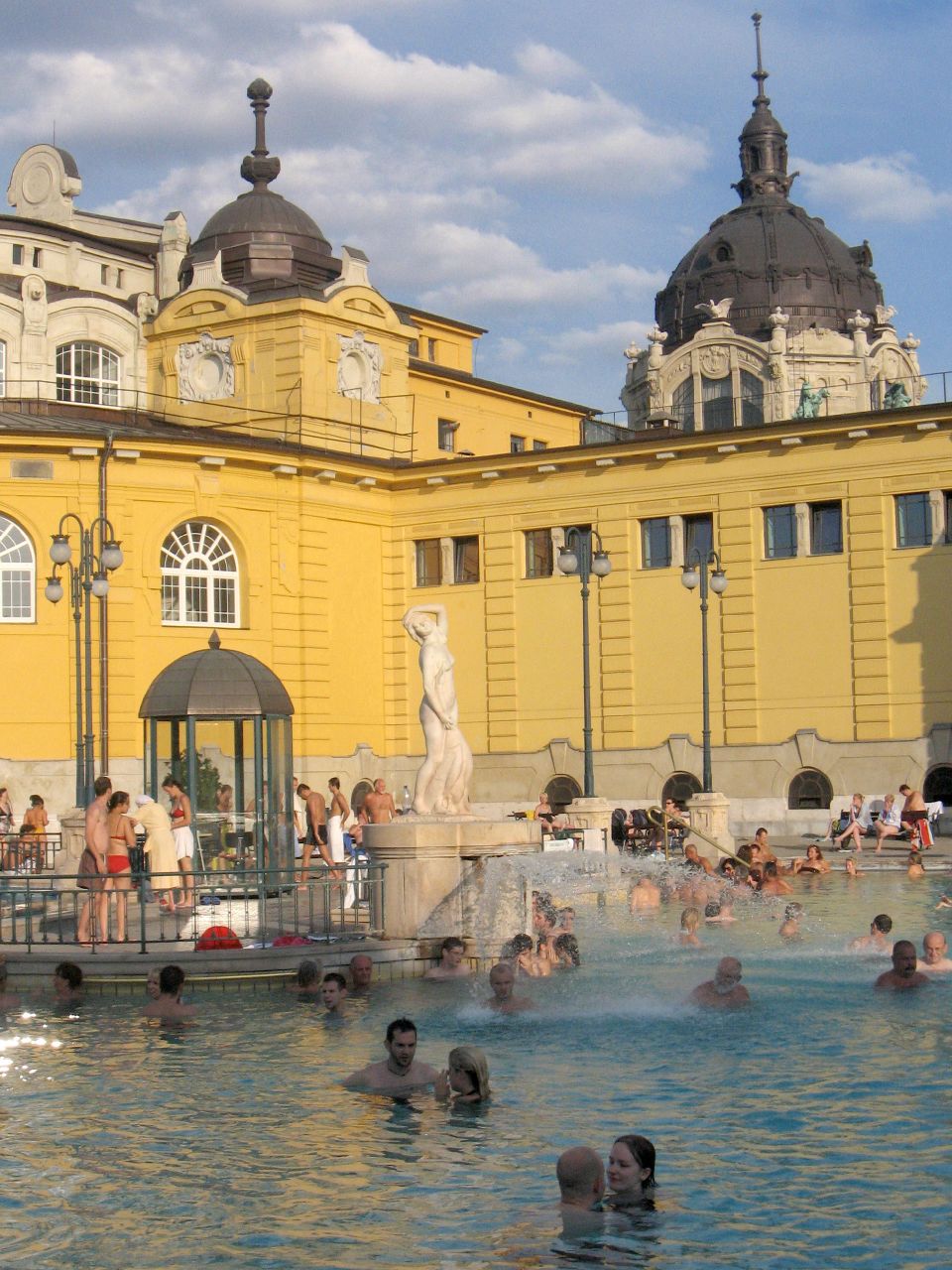
Széchenyi Thermal Bath is Budapest’s largest, most famous, and most confusing bath complex. If you’ve seen a single photo of Budapest baths — the sunny yellow neo-Baroque building with steam rising from bright blue outdoor pools — that’s Széchenyi. It sits in the middle of City Park (Városliget) in District XIV, looking like a Habsburg palace that someone filled with water. It has 18 pools across indoor and outdoor areas, multiple saunas, steam rooms, massage suites, a beer spa experience, and corridors that seem designed by someone who believed in the spiritual value of getting lost. The bath’s own FAQ page literally says: “I got lost in the labyrinth of the huge Széchenyi Baths. Where am I?” That should tell you everything.

Here’s your survival guide. When you enter the main building from the Állatkerti körút entrance, you’ll buy your ticket in the lobby. Cabin users are typically directed upstairs, where the cabins line long corridors on the first floor. Your wristband number corresponds to a specific cabin — find it, change, lock up, and head down. Locker users are directed to the ground-floor changing rooms, separated by gender. Once you’re in your swimsuit and have showered, the adventure begins.

The indoor section is a network of interconnected rooms, each containing one or more thermal pools at different temperatures. The water ranges from a refreshing 28°C in the swimming pools to an absolutely scorching 40°C in the hottest thermal pools. My strategy for first-timers: start in the middle range. Find a pool around 34–36°C and let your body acclimate before working up to the hotter pools. The temperature is posted on a sign next to each pool — look for it before you get in, because discovering a pool is 40 degrees by feel alone is not a pleasant surprise.

The indoor thermal pools are smaller, quieter, and significantly less crowded than the outdoor area. They’re tiled in whites and blues, with vaulted ceilings that amplify every splash and whisper. Some of these rooms feel genuinely ancient, even though the building dates from 1913. There’s a particular room with a series of thermal pools at graduated temperatures — you can pool-hop from warm to hot to very hot without ever leaving the same room. This is where the regulars go. If you see a cluster of older Hungarians sitting silently in a pool, eyes closed, looking like they’ve achieved a state of transcendence, you’ve found the right room.

The outdoor area is what you’ve seen on Instagram: three large pools in a grand courtyard, surrounded by the yellow palace walls. The two side pools are thermal pools (around 36–38°C), warm enough to be comfortable even in winter, complete with built-in jets, bubble seats, and a whirlpool current that sweeps you around in a lazy circle. This is where the party atmosphere lives — tourists chatting, people taking photos, the occasional chess game on floating boards. The central pool is a swimming pool (around 26–28°C), significantly cooler and intended for laps. If you wander into it expecting thermal warmth, you’ll get a very cold surprise.

The most common mistake at Széchenyi? People never find the indoor pools. They walk outside, soak in the famous outdoor pools, and leave without realizing there’s an entire labyrinth of quieter, hotter, less crowded pools inside the building. Don’t be that person. Take at least thirty minutes to explore the interior. Follow the corridors, peek into every room, and find the steam rooms and saunas tucked away on the upper floors. The sauna section is upstairs and includes dry saunas, steam rooms, and cold plunge pools — a complete thermal circuit that most casual visitors completely miss.

Rudas is the bath I send people to when they want something more atmospheric than Széchenyi’s Instagram circus. Built by the Ottomans in 1550, this is the most architecturally significant bath in Budapest — a genuine 16th-century hammam with an octagonal pool under a domed ceiling pierced by star-shaped light openings. Walking into the Ottoman section feels like time travel. The light filters through the stone dome in geometric patterns, the water is dark and mineral-rich, and the acoustics turn every ripple into a cathedral echo. Rudas sits at the foot of Gellért Hill on the Buda side, right along the Danube, at Döbrentei tér 9 in District I.

Rudas is effectively two baths in one, and understanding this split is essential for navigating it. The Ottoman section (also called the Turkish bath) is the historic core: a main octagonal pool at 36°C surrounded by four smaller pools at different temperatures ranging from 28°C to 42°C, plus a cold plunge pool. This section has a specific quirk that catches visitors off guard: on Tuesdays, it’s women-only; on Wednesdays, it’s men-only. Every other day of the week, it’s mixed. If you show up on a Tuesday as a man expecting to commune with Ottoman ghosts, you’ll be turned away with an apologetic shrug.

The wellness section is the modern wing, added during renovations. This is where you’ll find the swimming pool, additional saunas, a hot tub, and — the crown jewel — the rooftop panorama pool. This heated pool on the roof of the building offers a direct view across the Danube to the Parliament building, the Chain Bridge, and the Pest skyline. In winter, sitting in the warm water while cold air hits your face and city lights shimmer on the river is one of Budapest’s genuinely transcendent experiences. The rooftop is accessible with your standard entry ticket; you don’t need to pay extra.

Navigation at Rudas is simpler than Széchenyi but has its own quirks. After entering and changing (lockers are on the ground floor, cabins available for a small supplement), you’ll face a choice of direction. Go left for the Ottoman section, go right for the wellness wing. You can move between them freely throughout your visit. My recommended route: start in the wellness area to warm up in the swimming pool and saunas, then move to the Ottoman section when you’re properly acclimated (the 42°C pool under the dome hits different when you’re already warm), and finish on the rooftop for golden hour views. On Friday nights, Rudas opens for night bathing from 10 PM to 3 AM — the rooftop pool under starlight, with the illuminated Parliament across the river, is worth adjusting your schedule for.

One practical note: Rudas is smaller and more intimate than Széchenyi, which means it fills up faster. Weekend afternoons can get genuinely crowded, especially the rooftop pool (which isn’t huge). For the best experience, arrive before 10 AM on a weekday or aim for the Friday night session. The night bathing attracts a younger crowd and has a completely different energy — less therapeutic, more social, with ambient lighting and occasional DJ sets turning the ancient Turkish bath into something that feels like a low-key club.

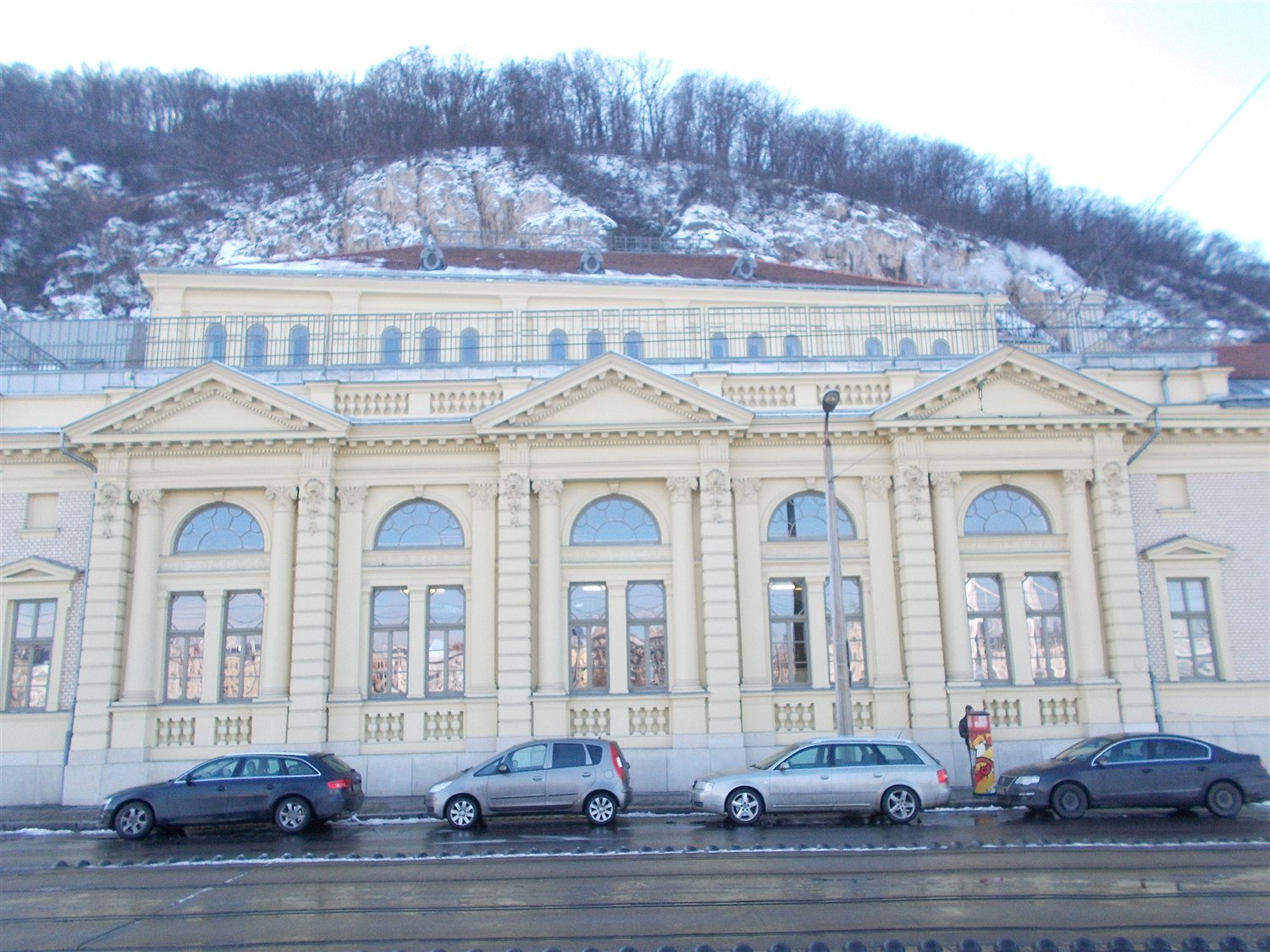
If Széchenyi is the blockbuster movie and Rudas is the indie film, Lukács is the neighbourhood pub where everybody knows your name. Located on the Buda side at Frankel Leó út 25-29 in District II, just a short walk from Margaret Bridge, Lukács is where actual Budapestians go to soak. Until 2011, it was almost exclusively a local bath, barely registering on the tourist radar. It’s gained some international attention since, but it still maintains a wonderfully unpretentious, neighborhood feel that the bigger baths have lost.

The good news for navigation-anxious first-timers: Lukács is much simpler to navigate than Széchenyi or Rudas. The layout is essentially a courtyard design. You enter, change, and walk out into an open-air area with two outdoor pools — one for swimming (around 21-25°C, colder and for laps) and one thermal pool (around 32-36°C, for soaking). There are additional indoor thermal pools and a separate sauna section (the “sauna world”) which opens at 2 PM on most days. The whole complex is compact enough that you can see almost everything from the central courtyard. No labyrinth, no getting lost, no printing a map beforehand.

What makes Lukács special isn’t the architecture (it’s pleasant but not jaw-dropping) or the Instagram potential (modest). It’s the atmosphere and the price. This bath has a history as a meeting place for Budapest’s intellectuals — writers, artists, academics — and that contemplative, slightly bohemian energy persists. The crowd skews older and more local than the other major baths. Conversations happen in Hungarian. The cafe serves simple, honest food at reasonable prices. Nobody is here for a photo op. People are here because the medicinal water genuinely helps their joints, because their grandfather came here, because it’s Tuesday and this is what they do on Tuesdays.

Lukács is also the most affordable major bath in Budapest. A weekday ticket is just 7,000 HUF (~$19), and there’s an afternoon entry from 4 PM for just 3,800 HUF (~$10). Students get weekday access for the same 3,800 HUF. Compare that to Széchenyi’s 13,200 HUF starting price, and Lukács becomes very attractive for budget-conscious visitors. It’s also free with the Budapest Card, which makes it the undisputed king of value if you’re already using the card for public transport and museum access.

The bath also hosts the Beer Spa — a novelty experience where you soak in a wooden tub filled with beer-infused water while drinking unlimited beer. It sounds absurd because it is absurd, but it’s become a popular attraction within the Lukács complex. It requires a separate booking and isn’t included in standard entry, but if you want a story to tell back home, it delivers. The Beer Spa operates within the Lukács grounds but functions as its own experience with dedicated staff.

Gellért and Király Are Closed — Here’s What to Know in 2026

If you’ve done any research on Budapest baths, two names keep appearing in every guide: Gellért and Király. I need to save you a wasted trip. Both are closed in 2026.

Gellért Thermal Bath, the Art Nouveau masterpiece on the Buda side that appears in approximately 90% of all “Budapest bath” Google Image results, has been closed since October 2025 for a major structural renovation. This isn’t a quick refresh — the building needs extensive work, and the expected reopening is sometime around 2028. The exterior is still photogenic behind scaffolding, but you cannot enter, swim, or visit. Plenty of outdated guides and third-party booking sites still advertise Gellért tickets. Do not buy them. If you see “Gellért Bath tickets” being sold online for 2026, that’s either a scam or a site that hasn’t updated its listings.

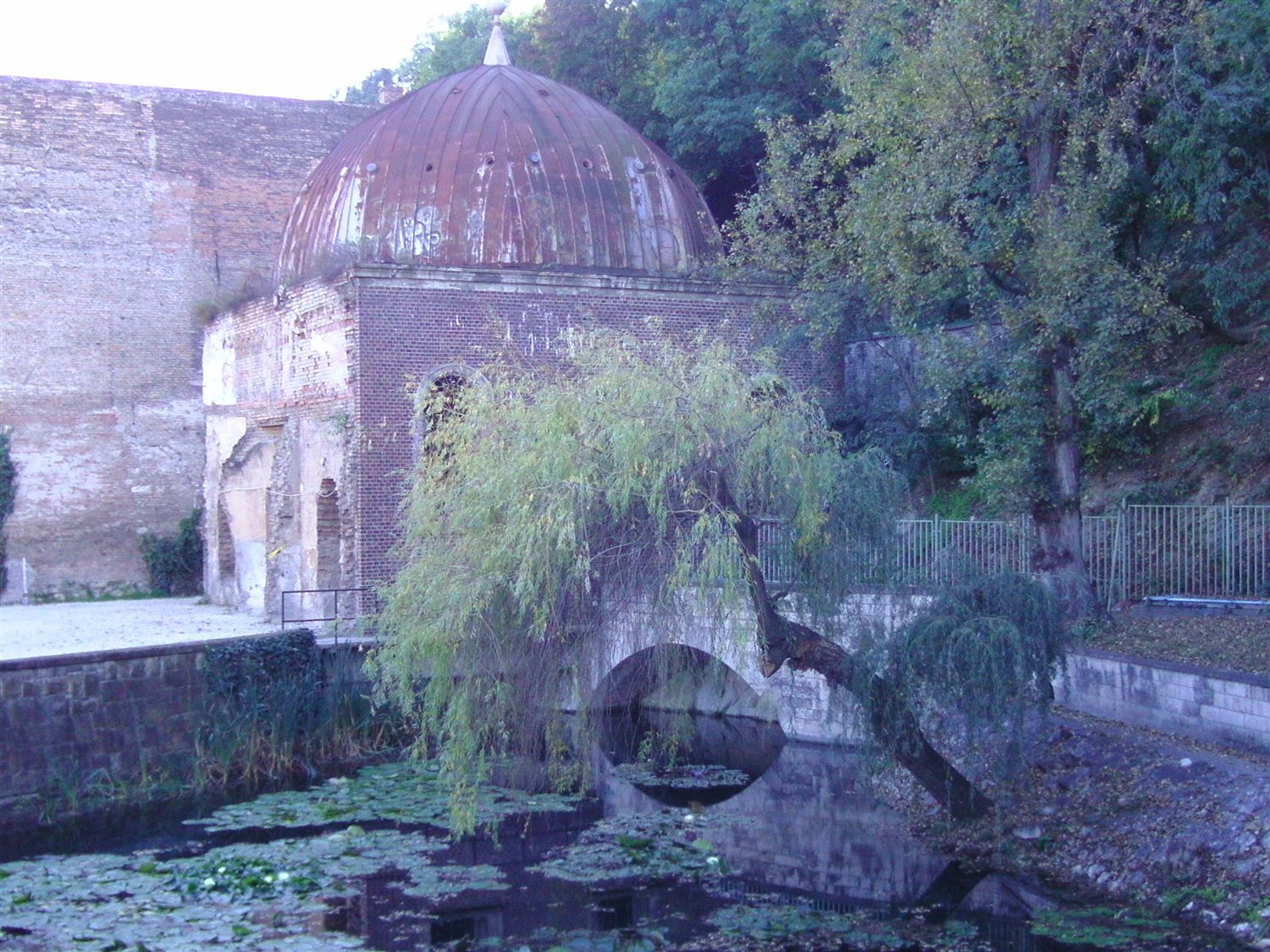
Király Bath, the small Ottoman-era bath in District I known for its intimate, historic atmosphere, is also closed for restoration. The expected reopening is late 2026, but Hungarian construction timelines are optimistic by nature, so plan accordingly. When it does reopen, it’ll be worth the visit — Király’s tiny octagonal pool under an Ottoman dome is arguably even more atmospheric than Rudas — but for now, it’s off the table.

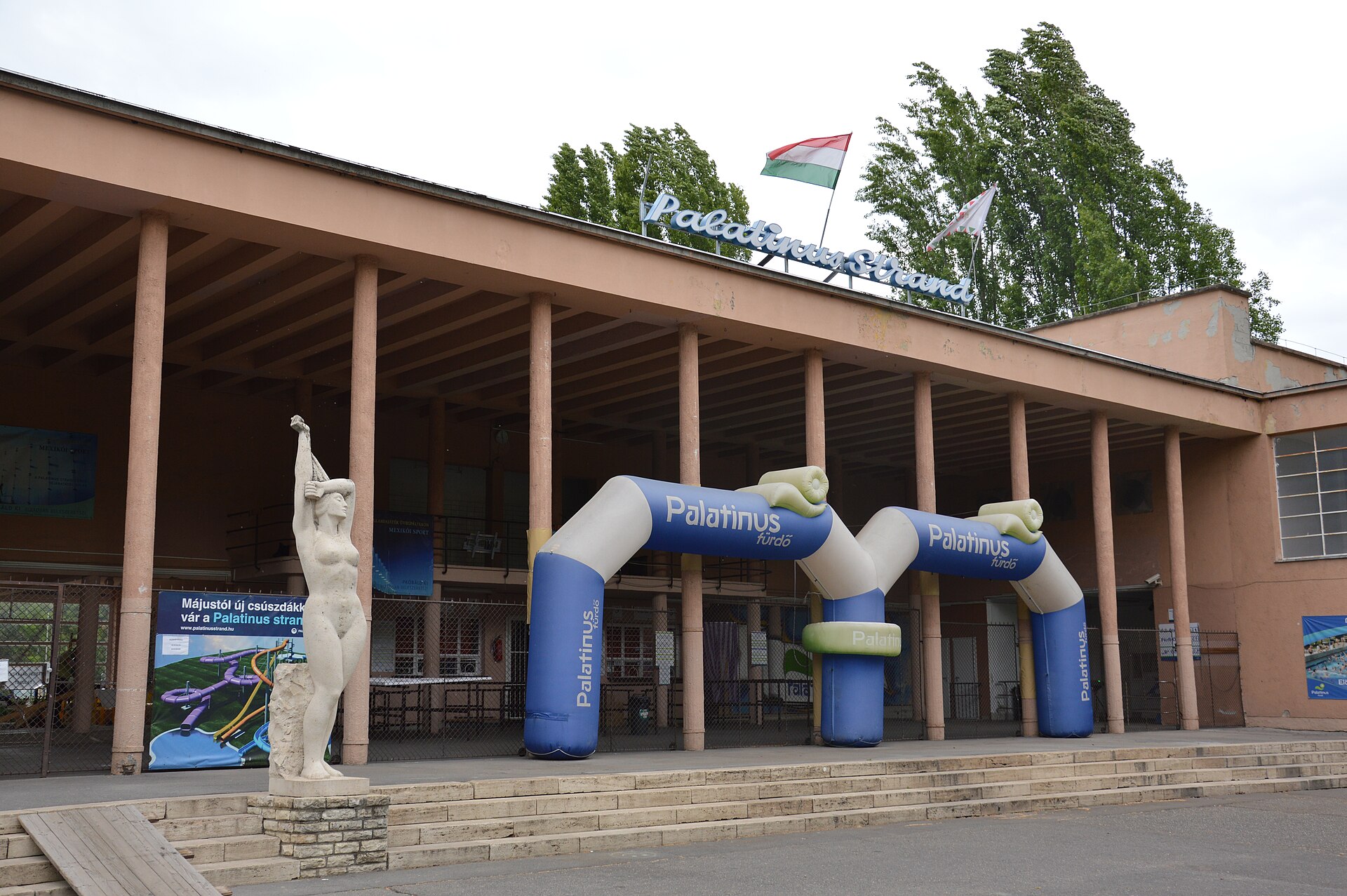
The practical impact: Széchenyi, Rudas, and Lukács are your three main options for a traditional Budapest bath experience in 2026, and they’re more than enough. Veli Bej, a smaller boutique bath near Margaret Bridge (5,700–7,200 HUF / ~$15–$19), is an excellent alternative if you want a quieter, more refined experience without the crowds. And Palatinus on Margaret Island (3,600–3,900 HUF / ~$10–$11) is perfect in summer, though its winter hours are limited (9 AM to 4 PM daily).

How Locals Actually Use the Baths (It’s Not What You Think)

Tourist bath culture and local bath culture in Budapest are almost two different activities happening in the same building. Understanding how Budapestians use the baths will transform your visit from “tourist attraction” to “authentic cultural experience.”

First, locals go early. Széchenyi opens at 6 AM, and by 6:15 the first regulars are already in the water. These are people in their 60s, 70s, and 80s who come every single day — some with prescriptions from their doctors, because thermal water therapy is recognized by Hungarian healthcare and partially covered by insurance. They have their spots, their pools, their routines. The man in the far corner of the 38°C pool at Széchenyi? He’s been sitting there every weekday morning for eleven years. The group of women doing gentle exercises in Lukács’s thermal pool at 7 AM? They’ve known each other since the 1990s. Don’t intrude on these rituals — observe them with respect, find your own spot, and appreciate that you’re sharing space with a tradition that’s been continuous for five hundred years.

Second, locals use the baths for socializing, not photographing. The chess players in Széchenyi’s outdoor pool aren’t performing for tourists — they’re playing serious games with opponents they’ve faced hundreds of times. Friends catch up over coffee in the bath cafe after a soak. Business conversations happen poolside. The bath is a social institution the way a British pub or a Viennese coffee house is — a third place between home and work where community happens naturally. This is why you’ll notice that locals rarely bring phones to the pools. The bath is a phone-free zone by cultural convention, if not by rule.

Third, locals cycle through pools strategically. They don’t just pick one pool and stay there for two hours like most tourists do. The traditional Hungarian bath routine involves alternating between hot and cold: twenty minutes in a thermal pool, a quick cold plunge or cold shower, a rest period on a deck chair, then repeat. The hot water dilates blood vessels; the cold water constricts them. This alternation is the core of the therapeutic benefit, and it’s why you’ll see regulars moving between pools with quiet purpose. Try it yourself — the feeling after a cold plunge following a 38°C soak is extraordinary. Your skin tingles, your mind clears, and you understand why Hungarians have been doing this for centuries.

2026 Prices for Every Major Bath (So You Can Stop Googling)

Budapest bath pricing is designed to confuse. Weekday, weekend, morning, afternoon, locker, cabin, fast track — the permutations multiply faster than you can calculate. Let me break it down clearly with 2026 verified prices so you can budget properly.

Széchenyi Thermal Bath is the most expensive but offers the most pools. Weekday entry with a locker costs 13,200 HUF (~$36), with a cabin it’s 14,200 HUF (~$38). Weekend and holiday prices jump to 14,800 HUF (~$40) for a locker and 15,800 HUF (~$43) for a cabin. The best deal is the Good Morning ticket, valid for early entry on weekdays: 10,500 HUF (~$28) with a locker or 11,500 HUF (~$31) with a cabin. If you want to skip the ticket line entirely, the Fast Track option costs 15,200 HUF (~$41) for a locker and 16,200 HUF (~$44) for a cabin. A 20-minute massage will set you back 11,800 HUF (~$32), and towel rental is 6,900 HUF (~$19) — bring your own towel.

Rudas Thermal Bath has simpler pricing. A weekday all-zone ticket (covering the Ottoman section, wellness area, and rooftop pool) costs 12,000 HUF (~$32). On weekends, that rises to 15,000 HUF (~$41). The Friday night bathing session (10 PM–3 AM) is also 15,000 HUF (~$41). No locker-vs-cabin confusion at Rudas — the standard ticket includes locker access, with cabins available for a small supplement on-site.

Lukács Thermal Bath is the budget champion. Weekday entry is just 7,000 HUF (~$19), weekend entry is 8,000 HUF (~$22), and the complex weekend ticket (including sauna world) is 8,900 HUF (~$24). Students pay only 3,800 HUF (~$10) on weekdays, and there’s a late afternoon entry (from 4 PM) also at 3,800 HUF. A 20-minute massage at Lukács costs 9,000 HUF (~$24). And remember: Lukács is free with the Budapest Card.

Veli Bej Bath ranges from 5,700 to 7,200 HUF (~$15–$19), making it a mid-range option with a boutique feel. Palatinus on Margaret Island is the cheapest at 3,600–3,900 HUF (~$10–$11), though it’s primarily an outdoor/summer experience with limited winter hours (9 AM–4 PM).

A note on timing: Budapest bath prices typically increase in March or April each year, usually by 5–10%. The prices above were verified in January 2026. If you’re visiting later in the year, check the official websites for updates. Also, avoid third-party booking sites that charge commission. The official bath websites (szechenyibath.hu, rudasfurdo.hu, lukacsfurdo.hu) sell tickets at face value, and buying directly is always the cheapest option.

The Best Time to Visit (And When to Absolutely Avoid)

Timing your bath visit might be the single biggest factor in whether you have a transcendent experience or a frustrating one. Budapest received over 20 million visitors in 2025, and a huge percentage of those visitors hit the baths. The difference between a 7 AM Tuesday visit and a 2 PM Saturday visit is the difference between peaceful meditation and a crowded waterpark.

The golden window is weekday mornings before 10 AM. This is when the regulars are there, the pools are peaceful, and you can actually find a spot in the thermal pools without touching a stranger’s elbow. Széchenyi’s Good Morning ticket reflects this — it’s discounted specifically because early visitors thin out before the main crowd arrives. If you can manage to be at the gates when they open (6 AM at Széchenyi, 6 AM at Rudas, 7 AM at Lukács), you’ll have an hour of near-empty pools that feels like having a palace to yourself.

Weekday afternoons (2–5 PM) are the second-best window, especially at Lukács where the late-afternoon discounted entry kicks in. The morning regulars have left, the after-work crowd hasn’t arrived yet, and you’re in a sweet spot. Weekends, especially Saturday afternoons, are the worst time to visit. Every bath will be at or near capacity. The outdoor pools at Széchenyi become a wall of bodies. The Rudas rooftop feels like a crowded hot tub at a house party. If Saturday afternoon is your only option, go to Lukács — it’s the least affected by weekend tourist influx because it’s off the typical tourist route.

Seasonally, winter is the most magical time for outdoor thermal pools. There’s something genuinely extraordinary about sitting in 38°C water while snow falls on your head and steam rises around you like fog. The outdoor pools at Széchenyi in December or January are a bucket-list experience. Summer is busier but offers the advantage of extended hours and the ability to sunbathe between soaks. The outdoor deck at Széchenyi fills with sunbathers from May to September. Spring and autumn are the sweet spot — comfortable weather, manageable crowds, and the shoulder-season pricing that sometimes appears in March and October.

What to Actually Do Once You’re In the Water

This seems obvious until you’re standing poolside in your swimsuit for the first time, unsure of the protocol. Do you just… get in? Walk around? Sit on the edge? The answer is yes to all of those, but here’s a proper guide to your first thermal bath circuit.

Start with a warm pool (32–36°C). Don’t jump into the hottest pool first. Your body needs to acclimate, and thermal water is more intense than it looks. A 36°C pool feels pleasantly warm — like a well-heated bathtub. Sit or stand in the water for 15–20 minutes. Let the minerals work. The water in Budapest’s baths is rich in calcium, magnesium, sulphate, and bicarbonate — it’s genuinely therapeutic, not just hot water. Some pools have jets or bubbles; find a spot near the water inlet where the flow is strongest and let it massage your back. This is what locals do, and they’ll position themselves at the jets with the territorial precision of cats claiming a sunny spot.

After 20 minutes, get out. This is the part tourists skip. You’re not supposed to stay in thermal water indefinitely — the minerals and heat can cause dizziness, dehydration, and headaches if you overdo it. The recommended cycle is 20 minutes in, then out. Rest on a deck chair, drink water, cool down. If you’re feeling adventurous, take a cold plunge — every bath has a cold pool (usually 16–20°C) or cold showers specifically for this purpose. The cold shock after hot thermal water is invigorating in a way that’s hard to describe. Your skin goes electric. Your brain snaps to attention. You feel, briefly, invincible.

Then move to a hotter pool. Work your way up gradually: 36°C, then 38°C, then maybe 40°C if you’re comfortable. The 40°C+ pools are genuinely intense — most people can only tolerate 10–15 minutes in them. At Rudas, the hottest Ottoman pool hits 42°C, which feels like sitting in a pot that’s just about to simmer. It’s not for everyone, and there’s zero shame in sticking to the 36°C pools for your entire visit.

Explore the saunas and steam rooms. Every major bath has a sauna section, and they’re free with your entry ticket. Széchenyi’s sauna area is upstairs and includes multiple dry saunas at different temperatures (the hottest around 90°C), infrared saunas, and steam rooms thick enough to lose sight of the person sitting next to you. Rudas has excellent saunas in the wellness wing. Lukács’s sauna world opens at 2 PM and includes several options. The traditional sauna sequence is: dry sauna for 10–15 minutes, cold shower or cold plunge, rest, repeat. Sit on your towel in the sauna (it’s hygienic and expected).

Plan for 2–3 hours minimum. A rushed one-hour bath visit is like eating a four-course meal in fifteen minutes — technically possible but you’ll miss the point entirely. Three hours lets you do two or three thermal cycles, explore the sauna area, rest between soaks, maybe grab a coffee or a beer at the pool bar. Serious bath-goers spend four to five hours, but for a first visit, three hours hits the sweet spot between thorough and overwhelming.

Food, Drink, and the Pool Bar Situation

Every major bath has food and drink options, but manage your expectations. These are cafeterias and pool bars, not fine dining. Széchenyi has the most extensive food options, including a sit-down restaurant (the Széchenyi Restaurant in the neo-Baroque wing) and several pool bars serving beer, wine, coffee, and snacks. A draft beer poolside runs about 1,500–2,000 HUF (~$4–$5), coffee is around 800–1,200 HUF (~$2–$3), and a basic meal (soup, sandwich, or sausage plate) is 2,500–4,000 HUF (~$7–$11). Not cheap, but not outrageous by tourist-area standards.

Rudas has a simpler cafe near the wellness section. Lukács has a small buffet that serves the kind of straightforward Hungarian food — meat stews, fried cheese, pickled salads — that tastes surprisingly good when you’re hungry from hours of soaking. Prices are slightly lower than Széchenyi because Lukács attracts a less touristy crowd and adjusts accordingly.

A practical tip: drink water constantly. Thermal bathing dehydrates you faster than you realize. The mineral-rich water, the heat, the steam rooms — they all pull moisture out of your body. Bring a water bottle (refillable water fountains are available at Széchenyi and Rudas) and aim to drink at least a liter during a three-hour visit. If you feel dizzy, lightheaded, or get a headache, you’ve been in the hot water too long without hydrating. Get out, drink water, rest, and the feeling will pass. And yes, drinking a beer in the thermal pool is a beloved tradition, but beer is a diuretic — for every beer, drink an equal amount of water, or you’ll leave the bath feeling worse than you came in.

Getting There: Transport to Every Major Bath

Széchenyi Thermal Bath — Address: 1146 Budapest, Állatkerti körút 9-11 (District XIV). The easiest access is the M1 (yellow) metro to Széchenyi Fürdő station, which exits directly at the bath entrance. You literally walk out of the metro and the building is in front of you. Alternatively, trolleybus 72 stops nearby, or you can walk from Hősök tere (Heroes’ Square) in about five minutes through City Park. Opening hours: daily 6 AM – 10 PM (pool areas close 20 minutes before). Website: szechenyibath.hu

Rudas Thermal Bath — Address: 1013 Budapest, Döbrentei tér 9 (District I). Take the M4 (green) metro to Gellért tér, then walk north along the Danube for about 10 minutes (900 meters). Or catch tram 19, 41, or 56 to the Rudas Gyógyfürdő stop, which is right at the door. Bus 7 from the Pest side also stops nearby. The bath sits at the base of Gellért Hill, so combine it with a hike up for panoramic views of the city. Opening hours: daily 6 AM – 8 PM; Turkish bath has gendered days (Tuesday women-only, Wednesday men-only). Night bathing: Fridays 10 PM – 3 AM. Website: rudasfurdo.hu

Lukács Thermal Bath — Address: 1023 Budapest, Frankel Leó út 25-29 (District II). The closest public transport is tram 4 or 6 to Margit híd, budai hídfő (the Buda side of Margaret Bridge), then a 5-minute walk north along Frankel Leó út. You can also take bus 9, 109, or 209 from various parts of the city. If you’re coming from Margaret Island, it’s a pleasant 15-minute walk across Margaret Bridge and down the embankment. Opening hours: daily 7 AM – 7 PM; Tuesdays until 10 PM. Sauna world opens at 2 PM. Website: lukacsfurdo.hu

Who Should Visit Which Bath

Not every bath suits every visitor, and picking the right one can mean the difference between a transformative experience and a lukewarm disappointment. Here’s my honest assessment of who belongs where.

Széchenyi is for first-time visitors who want the full spectacle. If you’re visiting Budapest once and want the iconic thermal bath experience — outdoor pools, grand architecture, lively atmosphere, plenty of pools to explore — Széchenyi delivers. It’s also the best choice for groups, couples looking for a social experience, and anyone who values variety over intimacy. The sheer size means there’s something for everyone, even on crowded days. Families with teens (14+; children under 14 aren’t allowed in thermal baths due to cardiovascular concerns) will find the outdoor pools accessible and fun.

Rudas is for atmosphere seekers, couples, and night owls. If you care more about the historical and architectural experience than the party vibe, Rudas is your bath. The Ottoman dome is genuinely breathtaking. The rooftop pool is romantic. The Friday night sessions are perfect for a unique date night or an alternative to the bar scene. Solo travelers who want a contemplative soak will also prefer Rudas’s more intimate scale. It’s the bath I’d choose every time if I could only visit one.

Lukács is for budget travelers, repeat visitors, and anyone who wants a local experience. If you’ve visited a Budapest bath before and want something different, or if you want to see how Hungarians actually use their baths without the tourist filter, Lukács is essential. It’s also the clear choice if you’re on a budget — at 7,000 HUF weekday or free with the Budapest Card, it’s half the price of Széchenyi with arguably more cultural authenticity. The Beer Spa adds a novelty option for groups looking for something different.

Who should skip the baths entirely? People with serious heart conditions or very high blood pressure should consult a doctor first — thermal water genuinely affects circulation. Pregnant women should check with their physician, as the high temperatures in some pools aren’t recommended. Children under 14 are not permitted in thermal sections at any Budapest bath. And if you’re deeply uncomfortable with communal changing or close-quarters pool environments, the baths might cause more stress than they relieve. That said, getting a cabin and sticking to Lukács’s quieter pools minimizes all of these concerns.

Five Insider Hacks for a Better Bath Visit

Hack 1: Buy Széchenyi’s Good Morning ticket online the night before. The Good Morning ticket saves you 2,700 HUF per person compared to the regular weekday price, but it’s only available for early entry and often sells out. Buying online also means you skip the ticket line entirely — go straight to the wristband desk, scan your confirmation, and you’re in. On a busy weekday, this can save you 20–30 minutes of queue time.

Hack 2: At Széchenyi, go upstairs first. Everyone rushes to the famous outdoor pools immediately. The sauna world, the quiet indoor thermal pools, and the massage suites are all upstairs or deeper inside the building. Start there when they’re empty, then move to the outdoor pools later in the morning when you’ve already had the best of the interior. By the time you hit the outdoor area, you’ll have had an entirely different experience than the 95% of visitors who only saw the Instagram pools.

Hack 3: Visit Rudas on a Tuesday or Wednesday for the single-gender Ottoman experience. Most tourists avoid gendered days because they can only visit as a couple or group on mixed days. But the single-gender sessions are significantly less crowded and more atmospheric. If you’re traveling solo or with same-gender friends, these days offer the Ottoman dome at its most peaceful and authentic — closer to what the bath felt like in the 16th century.

Hack 4: The Budapest Card pays for itself with one Lukács visit and a day of transport. A 24-hour Budapest Card costs around 13,990 HUF and includes unlimited public transport plus free entry to Lukács (worth 7,000–8,000 HUF). If you use it for a tram or metro even once, you’ve saved money versus paying for everything separately. Check the Budapest Card website for current pricing and included attractions.

Hack 5: Bring a small plastic bag. It sounds mundane, but having a plastic bag for your wet swimsuit after the visit is a life-saver. You don’t want a soaking wet swimsuit loose in your backpack, dripping into your phone and passport. A simple zip-lock bag or grocery bag takes up zero space and prevents a soggy disaster on the way back to your hotel.

The Part Nobody Mentions: What’s Genuinely Annoying

I’d be doing you a disservice if I didn’t mention the one thing about Budapest baths that consistently frustrates visitors, including me: the signage inside most baths is terrible. Széchenyi is the worst offender — for a building that sees millions of visitors a year, the directional signs are minimal, inconsistently placed, and sometimes only in Hungarian. You will get lost at Széchenyi. Not “slightly turned around” lost. Actually lost, standing in a corridor that looks identical to three other corridors, unsure whether the outdoor pools are ahead, behind, or above you.

Rudas is better but still not great — the split between the Ottoman and wellness sections isn’t always clearly marked, and the path to the rooftop pool involves stairs that are easy to miss. Lukács, being smaller, has this problem the least, but even there, finding the sauna world on your first visit requires asking someone or stumbling upon it. The staff are helpful when you ask for directions, but there’s a fundamental gap between how these buildings were designed (for locals who already know the layout) and how they’re used today (by millions of international visitors who don’t). Until Budapest’s bath administration invests in proper multilingual signage — which they’ve been “planning” for years — bring your phone with the bath’s floor map loaded, or simply embrace getting lost as part of the experience. You’ll find the pool eventually. Everyone does.

Your Thermal Bath Visit Pairs Perfectly With These

A bath visit is a half-day experience, which leaves you with plenty of time to combine it with other Budapest highlights. After Széchenyi, you’re already in City Park — walk five minutes to Heroes’ Square, explore the Museum of Fine Arts or the recently rebuilt Városliget Museum Quarter, or rent a boat on the lake. In winter, the park hosts one of Europe’s largest outdoor ice rinks, directly adjacent to the bath. After Rudas, you’re at the base of Gellért Hill — the 20-minute climb to the Citadella rewards you with the best panoramic view of Budapest, and your post-bath muscles will thank you for the gentle stretch. After Lukács, walk south along the Danube toward Margaret Bridge and cross to Margaret Island for a stroll through the gardens, or continue to the February 2026 events happening across the city.

For a full-day bath experience, consider visiting Széchenyi in the morning and Lukács in the late afternoon. The contrast between the grand tourist spectacle and the quiet local bath gives you the full spectrum of Budapest bath culture. Or pair a morning at Rudas with a late-afternoon entry at Lukács (only 3,800 HUF) for an Ottoman-to-bohemian cultural arc that costs less combined than a single weekend visit to Széchenyi. For more bath-to-bath comparisons, check out our budget bath guide.

The Bottom Line: Just Go

Here’s the truth about Budapest thermal baths: the anticipation is worse than the reality. Every worry you have — about getting lost, about the changing rooms, about not knowing the etiquette, about looking like a tourist — evaporates approximately three minutes after you sink into your first thermal pool. The water is warm. The minerals are working. The building around you is beautiful. And suddenly, the confusing wristband system and the labyrinthine corridors and the old man in the speedo who made eye contact while you were changing are all just funny stories you’ll tell friends over dinner.

Budapest is the only major European capital sitting on a network of over 120 natural hot springs. The city has been bathing in thermal water since the Romans, industrialized it under the Ottomans, perfected it under the Austro-Hungarians, and maintained it through every political upheaval of the 20th century. When you step into a Budapest bath, you’re not just doing a tourist activity — you’re participating in a continuous cultural practice that has outlasted empires. That’s not a bad way to spend a Tuesday morning.

So pick your bath, buy your ticket, wear your wristband with confidence, and remember: if you get lost, follow the steam. It always leads to water. And in Budapest, the water is always warm.

Frequently Asked Questions

Do I need to book Budapest thermal baths in advance or can I just walk in?

You can absolutely walk in without a reservation — all major Budapest baths sell tickets at the door. That said, buying online in advance at the bath’s official website saves you queue time, especially at Széchenyi on weekends when the ticket line can stretch for 20–30 minutes. Online tickets are the same price as walk-up tickets when bought directly from the bath’s website. Avoid third-party resellers that charge a commission markup.

Are Budapest thermal baths nude or do I need a swimsuit?

Swimsuits are required in all public pool areas at every Budapest bath — no exceptions. This isn’t a Nordic-style nude spa culture. Standard swimwear (bikini, one-piece, swim trunks, speedos) is perfectly fine. The only nudity you’ll encounter is in gender-separated changing rooms and some sauna areas, where sitting on a towel without a swimsuit is common but not mandatory. When in doubt, keep your swimsuit on.

What is the difference between a cabin and a locker at Budapest baths?

A locker is a metal storage box where you keep your belongings after changing in a communal (gender-separated) changing room. A cabin is a small private cubicle where you can change privately and store your belongings behind a locked door. Cabins cost about 1,000 HUF (~$3) more than lockers. If you’re shy about communal changing or want a private space to return to during your visit, the cabin is worth the small surcharge. Couples and groups can share one cabin.

Can I visit Gellért Bath in 2026?

No. Gellért Thermal Bath has been closed since October 2025 for a major renovation and is not expected to reopen until approximately 2028. Do not purchase Gellért tickets from any third-party website — they’re either selling for future dates or haven’t updated their listings. Király Bath is also closed for restoration in 2026. Your best options are Széchenyi, Rudas, and Lukács.

How long should I spend at a Budapest thermal bath?

Plan for a minimum of 2–3 hours to properly experience the thermal pools, sauna area, and rest periods between soaks. Serious bath-goers and locals often spend 4–5 hours. A rushed one-hour visit doesn’t give you enough time to acclimate, explore, and actually relax. The recommended thermal cycle (20 minutes hot, cold plunge, rest, repeat) takes about 45 minutes per round, and you’ll want at least two rounds to feel the full benefit.

Are Budapest baths safe for my phone and valuables?

Your locker or cabin is secured by the electronic wristband system and is generally very safe for valuables. Theft from locked lockers is extremely rare. For your phone, you can bring it poolside at most baths (Rudas explicitly allows photos at the rooftop pool), but the humidity and splash risk are real. A waterproof phone pouch is a wise investment if you want photos. Most people leave their phone locked up and simply enjoy the bath screen-free.

Which Budapest thermal bath is best for a first-time visitor?

For the classic, Instagram-famous experience with the most pool variety, go to Széchenyi. For the most atmospheric and historic experience (especially the Ottoman dome and rooftop Danube views), choose Rudas. For the most affordable, authentic, and least touristy experience, pick Lukács. All three are excellent for first-timers. If you have time, visit two — the contrast between baths is part of what makes Budapest’s thermal culture so special.